 Saluki
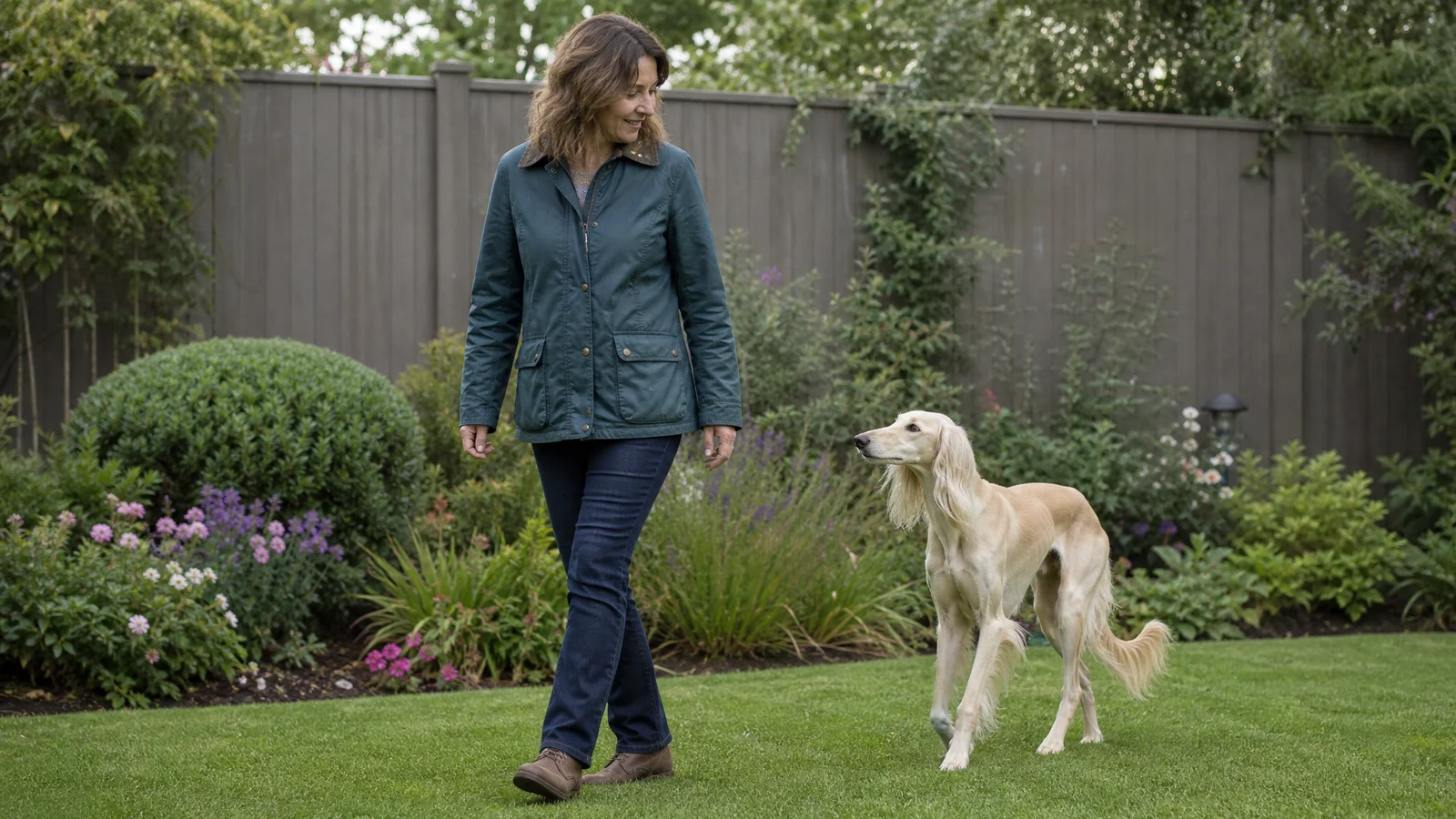
Bringing home a grown Saluki means meeting a dog who already has a body built for speed, a temperament and a past, and at first you only get to see the first two. That changes what the opening weeks are for.
A Saluki who arrives as an adult does not need a puppy curriculum or a guessed biography. They need a place where they cannot bolt, a pace that lets a reserved hound decide you are safe, and a way of paying for cues that does not depend on how much they remember from before. Once those three are in place, the lessons have something solid to stand on, whether the dog is a young adult or well into their senior years.
Below, you'll find how to make the home safe, how to read a reserved dog's pace, how to sort what they already know and how rewards rebuild the rest. Each part works for an adopted dog of any age.
A Guide to Adopting a Grown Saluki Safely
The place where they cannot bolt comes first because everything else on this page assumes the dog is still with you next month. A grown Saluki arrives with an unknown fence history, an unknown recall and the same sprint as any other Saluki.
The breed's usual advice is a well-fenced yard to keep these runners away from traffic, plus daily walks always on a leash. An adopted adult gives you every reason to follow both, because a house they have not mapped yet can make an open gate look like an invitation.
Saluki people learn early that the first week is a containment job. Walk the fence line for gaps before the first outing, keep the leash on for every trip outside, and add a second barrier to every exit your household opens often, whether that means a latched baby gate or a shut interior door, so a dog who slips past one layer still meets the next. The fence itself gets full attention in our guide to escape-proofing a Saluki yard.
Hold off on testing recall as well. A dog's answer to come in the old home says little about a new neighborhood full of fresh scents and moving things, so treat it as untested, let the leash do that job for now and save the teaching for Saluki recall training once the dog has settled.
First Adoption Tips for a Reserved Saluki
With the perimeter holding, the next question is how fast to move, and a reserved dog answers it better than any schedule. Salukis tend toward reserve with newcomers and loyalty to their own household, so a grown adoptee may spend days watching you from across the room before coming anywhere near.
Humane World's advice on bringing a new dog home says it can take days, months or longer for a dog to adjust to a new home, particularly one who has lived in multiple homes or shelters. Keep the first week or more quiet and consistent, with the same feeding and walking times and no outings to busy places. Add a first vet visit within the week, then regular checkups, so anything physical gets noticed early.
In our experience, a refused treat tells you more than an ignored cue does. A dog who suddenly turns down food is giving you a good indicator that the situation is too much and the right move is a step back, a point that runs through the San Francisco SPCA's 3-3-3 guideline for newly adopted dogs.
Letting the dog choose whether to interact, rather than forcing attention, fits the same quiet approach and suits a reserved hound especially well. Sit on the floor, look away, drop a treat nearby now and then, and let the Saluki decide when closer is comfortable.
Sorting the Cues a Grown Dog Already Knows
Once the dog is eating, resting and watching you without alarm, you can start finding out what they already know, and you can do it without a single formal test. A grown Saluki has lived by someone else's routines for years, so some cues will arrive in your house fully formed and others will seem never to have existed.
None of this needs to feel like a test to the dog. Over several quiet days, simply notice the following.
- Whether the dog turns toward their name or a kissing sound, even for a glance, since a head turn is enough to build on.
- Whether they follow a treat held at nose height for a few steps, which shows both appetite and comfort with a hand near their face.
- How they accept a collar and leash going on: standing still, ducking away or freezing each tell you where to start.
- How they react to a gate latch, a closing door or an unfamiliar sound, whether by freezing, flinching or simply looking.
Nothing on that list is a grade. It tells you which cue to try first, which handling to approach slowly and which doors need extra care while the dog learns the house.
Treat any cue the dog answers as a bonus and any they ignore as an unknown, because a cue can vanish when the room, the handler and the smells all change at once. Reintroduce it with an easy repetition and a treat before deciding the dog never knew it. If a dog who answered yesterday suddenly stops, moves stiffly or flinches when touched, call your vet before you change anything about the training.
Teaching an Adopted Saluki Again With Rewards
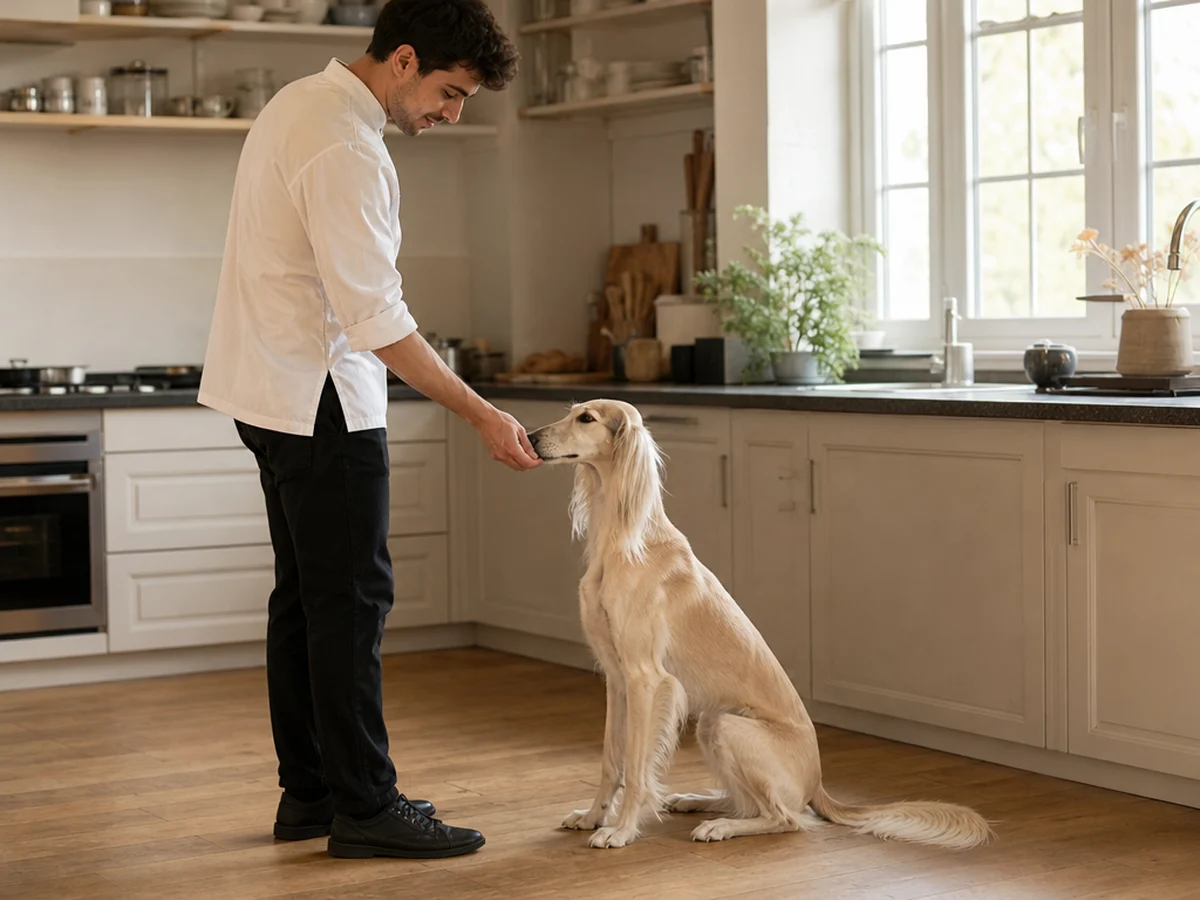
Whatever the sorting turns up, the rebuilding runs on payment. Your praise has not meant anything to this dog yet, so the reward has to be something they already care about.
The reasoning is laid out in AVSAB's handout for newly adopted dogs: a dog may not be as motivated by praise, especially at first, so tasty food rewards given every time at the start and reduced gradually keep a behavior from fading. If payment drops too quickly, the behavior will begin to fade with it, so thin it slowly.
A Five-Step Loop for One Cue
Pick the cue that looks easiest, whether the dog seems to know it already or you simply want it first. Then run this loop in your quietest room.
- Say the cue once in a calm voice and wait, since every repeat tells the dog the first request was optional.
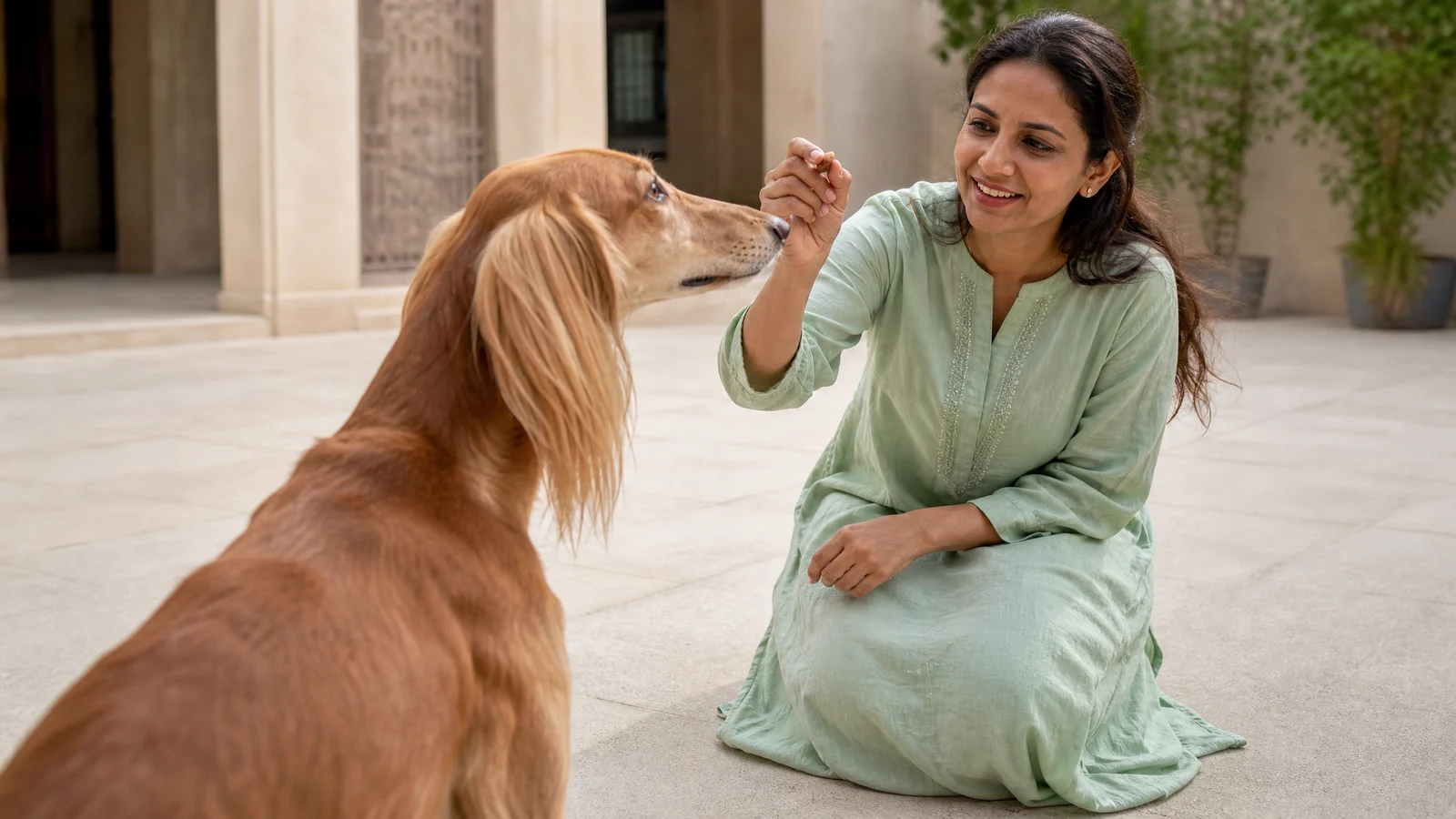
- When the dog answers, say a short marker word and deliver a treat right away, close to their mouth.
- When they do not answer, make the task easier instead of louder by stepping closer, showing the treat or asking for less, and pay the easier version.
- End the loop on a successful answer, ideally while the dog is still keen, so they leave each session wanting another.
- Once the answer is reliable in that room, alter a single variable, first the room and then a leashed spot in the yard, and thin the treats only while the answer holds.
Each pass should feel almost too easy to the dog, and if it does not, the step is still too big. Expect a Saluki to answer once and then drift off to watch the window. That is independence, not defiance, and short sessions suit it. If your adopted Saluki is still young, remember how slowly the breed matures, and see our notes on training a slow-maturing Saluki for what adolescence adds on top of a move.
Doubts That Follow an Adoption
The loop covers the lessons, but three practical doubts rarely fit anywhere in a training plan, and they shape how relaxed the house feels after the dog arrives. The answers lean on the same quiet approach as the rest of the page.
Why does my adopted Saluki follow me everywhere?
For a breed this devoted to their people, shadowing is common. A dog who trails you is usually learning where you go and what your day looks like, so reward them whenever they settle on a bed in the room you are in. The pattern to take seriously is panic when you leave, rather than simply watching you go, and that is worth raising with your vet or a reward-based behavior professional.
Can an adopted Saluki try lure coursing yet?
Not in the first weeks. A coursing day adds strange dogs, strange ground and a lure at full speed, which is a lot for a dog who is still learning your house. Wait until they settle at home and stay relaxed in busy places, check in with your vet, and then read our guide to Saluki exercise and lure coursing for how the outlet works.
What if the notes and the dog disagree?
Go with the dog in front of you. Notes written in a shelter or a foster home describe a Saluki under very different conditions, and a quiet house can change what a dog does. Treat the notes as one clue, check anything that matters, such as life with cats, slowly and on a leash with the help of our guide to small pets around a Saluki, and tell the rescue what you learn.
A Secure Gate Makes Patience Affordable
Every answer above bought time instead of demanding a lesson, and the only thing that can buy that much time is a perimeter that holds. Behind a held gate, a Saluki can take weeks to decide you are safe, turn down a treat on a bad day or lose a cue in a new room, and each of those is only a pause in the plan. That is why the gate comes first on this page: it makes every slower, quieter choice a safe one to make.
A grown dog's history may stay a blank, but what they still have to learn is no mystery. Our e-book covers all of it, front to back and in terms a newcomer can follow, and a copy is included when you add your email address on this site.
 Puppy trainingHow to House Train a Saluki Puppy
 Puppy trainingHow to Stop Saluki Puppy Biting
 Training basicsHow to Teach a Saluki to Sit
