 Saluki
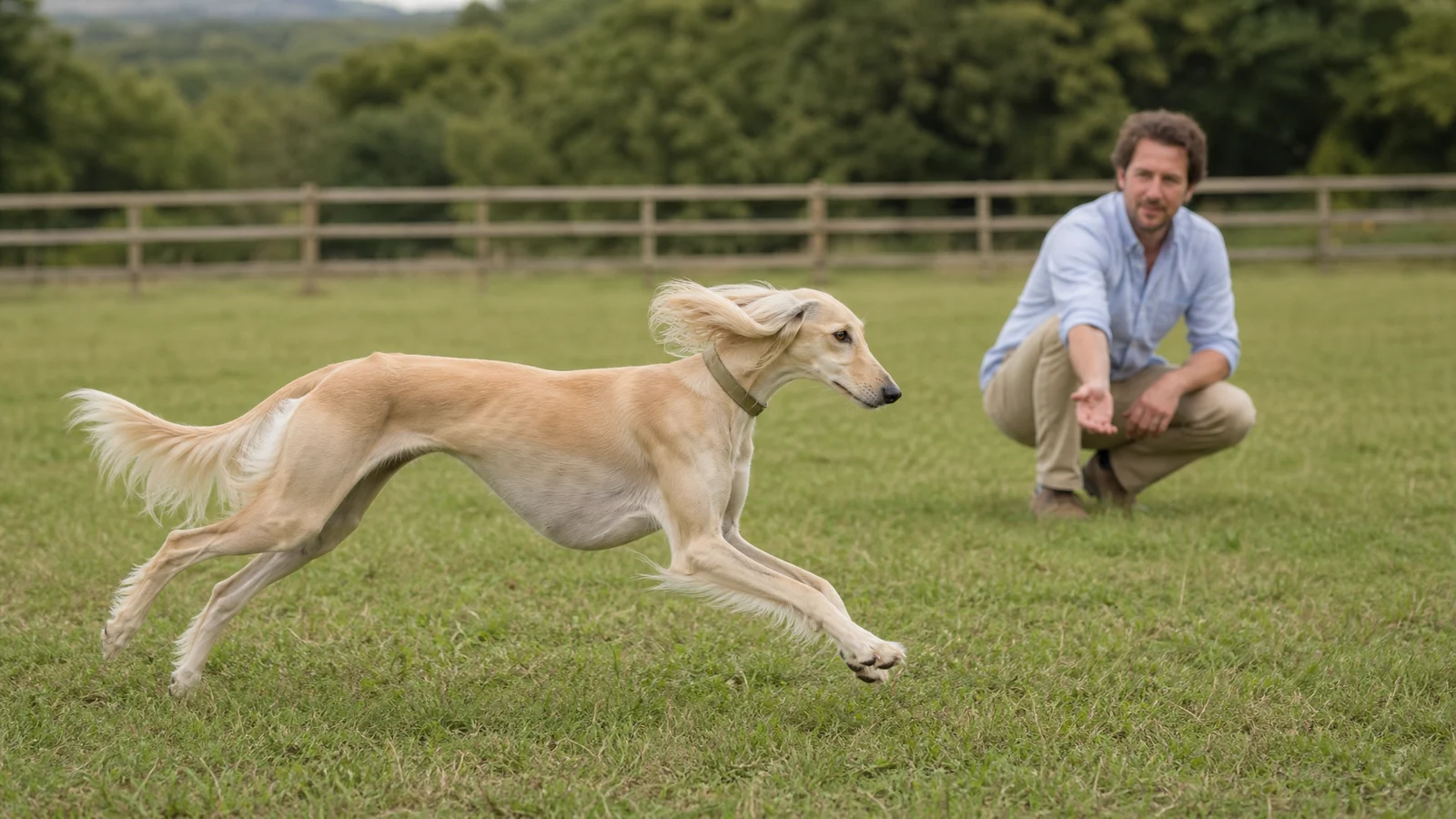
A recall cue can look reliable until motion appears at the edge of the field. The Saluki who turned quickly in the kitchen may pause, stare past the handler and begin to accelerate outdoors. The problem is not a missing word. The environment has offered a reward that ordinary practice never prepared them to leave.
Recall training therefore needs an honest contract. Coming back must pay well, practice must stay physically secure and each new distraction must be added at a distance where the hound can still choose.
This guide prices the reward, conditions one clear cue, builds distance on a line and adds motion in controlled layers. We also create an emergency turn and rules that protect the cue when a real recall is unlikely to succeed.
Define an Honest Saluki Recall
A recall is a prompt turn followed by movement all the way to the handler. Looking over and continuing in the opposite direction is useful awareness, but it is not the finished behavior. Decide where the dog should arrive and how the person will reward before adding distance.
The AKC Saluki standard describes speed, endurance and strength across difficult ground. Those abilities make management part of recall training. A response practiced on a line can improve greatly while off-leash access near roads or wildlife remains an unreasonable risk.
Use one cue for the trained return. Family members should say it once and avoid using it as background speech. If someone needs the Saluki to move from a bed or enter another room, a different everyday prompt keeps the recall from predicting many low-value interruptions.
Set a realistic response standard for each location. A prompt turn in the yard does not prove the same skill near wildlife, and a success on a quiet path does not authorize an open field. Treat every major environmental change as a new practice level.
Price the Reward for Saluki Recall
The reward must compete with the current setting, not with yesterday's quiet room. Test a few safe options indoors and notice which one produces an immediate return for another repetition. Food may work best, while a short toy chase or release back to sniffing can be valuable for some hounds.
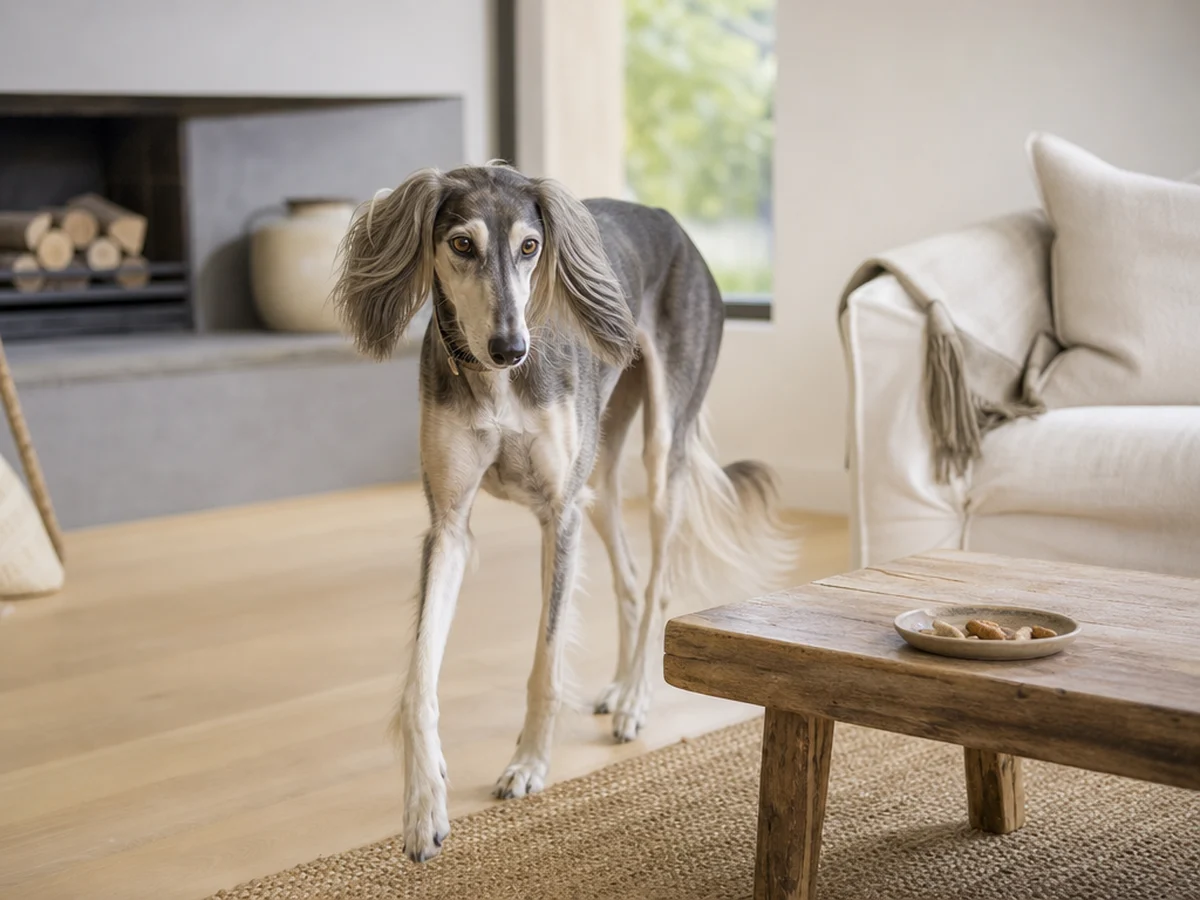
Battersea recall advice recommends something the dog genuinely wants and rarely receives outside recall practice. Reserve that reward so its meaning stays clear. Deliver it close to the handler rather than tossing it away before the arrival is complete.
Reward size and delivery can vary without turning the exercise into a gamble. Easy responses may earn one good piece, while a turn away from a meaningful distraction earns a small sequence. The Saluki should never discover that the hardest return pays less because the person ran out of food.
Notice how the reward is taken. Gentle eating followed by a relaxed release suggests the hound can learn in that setting. Snatching, immediate scanning or refusing a favorite option means the environment needs to become easier before more calls are attempted.
Condition One Saluki Recall Cue
Begin where success is almost certain. Stand near the Saluki, say the cue once and move backward as they turn. Mark the choice, feed at your legs and release the dog to continue an easy activity.
Build the foundation as a short sequence rather than a long obedience session. Each step should still look easy before another room or greater distance is introduced:
- Pair the cue with movement toward the handler from only a few steps away.
- Reward at the arrival point while gently taking hold of the walking gear.
- Release the Saluki so coming close does not always end their freedom.
- Repeat from a different room only after the current distance stays easy.
- Stop before attention fades and return to the exercise later.
Handling the collar or harness after arrival matters because real life often requires attachment of a leash. Make that touch predict another reward. Grabbing suddenly after many practices without contact can cause the hound to stop just beyond reach.
The site's Saluki puppy lesson guide gives the same priority to brief, rewarded foundations. Adult dogs benefit from the clean setup too. Age does not make a confusing cue more informative.
Ask another household member to practice only after the first handler has a clear pattern. The new person should use the same cue, arrival point and release. Consistency helps the Saluki recognize one behavior rather than learning separate versions for each voice.
Add Distance to Saluki Recall on a Training Line
Move outdoors with a supervised long line in a quiet, enclosed or low-risk area. Let the line form loose curves while the Saluki explores. Call only when their body is still soft and the distance allows the handler to move backward without reaching the line's end.
The RSPCA training guide supports using a long line so a dog can practice with some freedom before receiving unrestricted access. The line is a safety system, not a device for pulling the Saluki back. If the cue is ignored, calmly prevent further travel and make the next repetition easier.
Change distance in small steps. A close return beside interesting grass may be harder than a longer return across a plain surface, so do not judge difficulty by feet alone. Track the distraction, direction of the dog's gaze and reward response along with distance.
Vary the Path Into Saluki Recall
Occasionally call, reward and release the hound to resume sniffing. This teaches that recall does not always end the walk. At other times, attach the regular leash and leave so the behavior remains useful at true transitions.
Practice approaches from several angles. A dog moving past the handler, traveling sideways or looking back over a shoulder experiences different body mechanics from a dog already facing home. Keep the first angled recalls close and reward the full turn, not merely the final steps.
Do not let the line wrap around legs or gather speed before reaching its end. Hold enough slack for natural movement while staying ready to move with the hound. If line handling feels uncertain, shorten the working distance until both dog and person can practice smoothly.
Add a quiet pause after several returns. Let the Saluki sniff while the handler resets the line and checks the reward supply. This prevents rushed repetitions, and it gives both partners a chance to return to ordinary movement before the next cue.
Proof Saluki Recall Around Motion
Motion is a separate training layer. Begin with a helper moving an unexciting object far enough away that the Saluki notices but can still eat and turn. Call during a pause in the movement, reward the return and increase distance before the next repetition. The pause gives the hound a readable opening rather than asking them to abandon peak pursuit.
Motion Starts After the Recall
Once returns are easy, the helper can make the object move again after the Saluki reaches the handler. For some dogs, access to controlled movement becomes part of the reward. The hound learns that turning back does not always make the interesting event disappear.
Keep the physical line even when the pattern looks strong. Recall skill does not remove the chance that unexpected wildlife will appear. The related safe Saluki chase plan explains how secure running and planned finishes meet that need without gambling on an open-field response.
Motion Stops When Thinking Stops
If the Saluki freezes, leans hard into the line or refuses the reserved reward, the setup is beyond their current skill. Increase distance until ordinary eating and scanning return. Repeating the cue in that state teaches the sound to become irrelevant.
Use only a few successful motion recalls in one outing. Arousal can accumulate even when each response looks acceptable. End with calm sniffing or a familiar close-range return rather than searching for the point where the dog finally fails.
Vary the direction and type of movement on later days. A toy traveling away, crossing the field or briefly appearing behind a barrier can create different challenges. Return to greater distance whenever the new picture delays the turn.
Build an Emergency Turn Beside Recall
An emergency turn is a rapid movement with the handler, useful before the Saluki has fully committed to a trigger. Choose a separate phrase, say it brightly in an easy setting and turn away while feeding several rewards in motion. The pattern should feel automatic and generous.
Practice on ordinary walks when nothing urgent is happening. Turn away from a driveway, a quiet corner or an empty patch of grass, then resume the route. Rehearsal without pressure prevents the phrase from becoming a warning that exciting or frightening events are always near.
Use the turn before recall would be difficult. If a rabbit appears across the road, distance is more valuable than proving the cue. Move away, reward the Saluki for traveling with you and wait for their body to soften before deciding whether the walk can continue.
Keep the emergency phrase separate from the ordinary recall in your practice notes. If the turn is needed often on one route, change the route or time rather than drilling through repeated high arousal. Prevention protects both behaviors from becoming noise.
A helper can watch line position while the handler rehearses the turn in a secure area. That extra set of eyes is useful when the person must move briskly without tangling the Saluki. Build human coordination before relying on the pattern in a surprise.
Protect Saluki Recall in Daily Life
Good recall records include the calls you chose not to make. Walk closer before cueing when the hound is deeply absorbed, use the emergency turn at the first sign of motion and keep a leash attached wherever the setting has severe consequences. Successful management preserves the trained response for situations within reach.
Review practice by asking whether the Saluki turns promptly, arrives close enough for gentle handling and can return to calm activity. Maintain regular veterinary visits, and mention an abrupt loss of response that appears alongside changes in hearing, movement or comfort.
Keep the safety layer while skills grow, even on days when every response is quick. Reliable recall is built through many protected choices, not one dramatic off-leash test, and thoughtful restraint is part of the finished behavior.
 BehaviorReserved With Visitors: Guiding a Saluki's Personality Traits
 BehaviorHow High Can a Saluki Jump? Escape-Proofing Your Yard
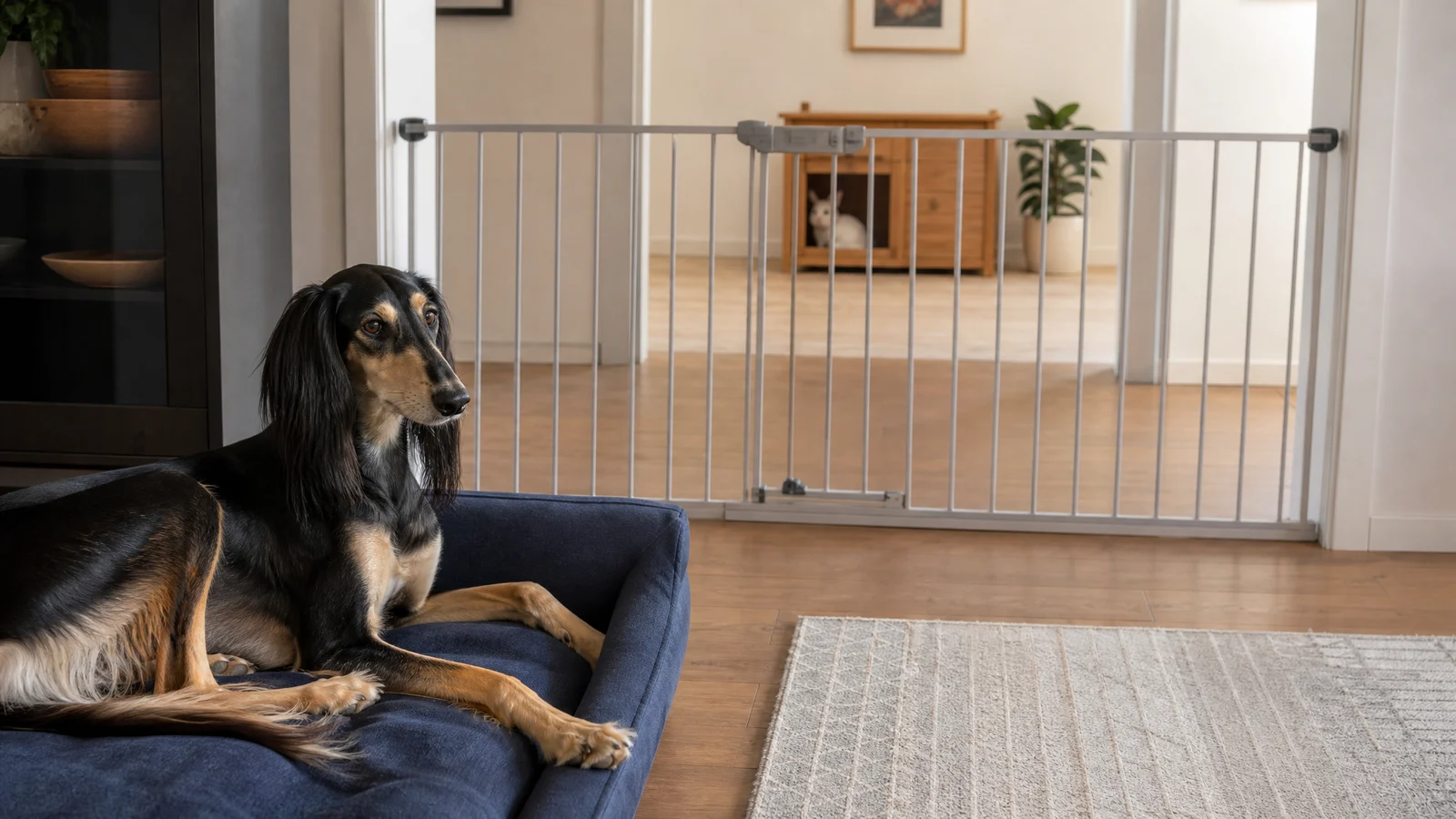 BehaviorKeeping Small Pets Safe Around a Saluki Who Chases
