 Saluki
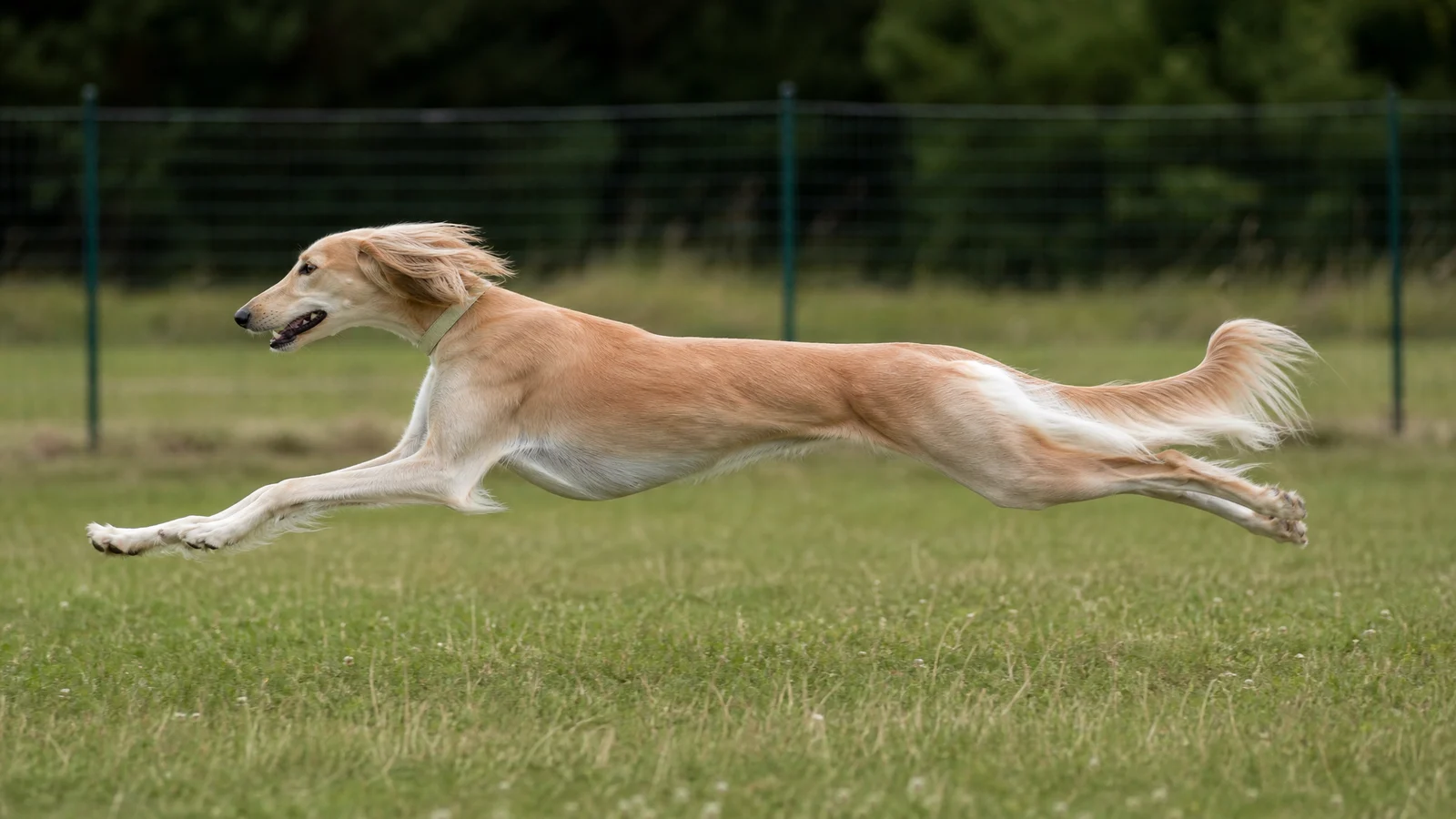
Yes, you can train a Saluki, and it goes best with patience, consistency and a setup that keeps your dog safe. The chase drive explains why it feels harder than with many breeds, because a Saluki is always ready to go after anything that moves.
That matters here more than for most dogs. A Saluki who learns that ignoring you pays off, or who slips out near a road, can turn a small habit into real danger in seconds. Handled well, the same dog is gentle, deeply affectionate and a joy to share a couch with.
Read on for the desert work behind the breed, why independent thinking is not defiance, which rewards can beat motion, the fences and lines that protect your dog, an honest look at recall, a few easy cues and a fourteen-day plan built around attention.
Desert Hunting Behind Saluki Training
To understand why your Saluki behaves the way they do, start with the job the breed was built for. The breed standard describes a dog whose whole appearance gives an impression of grace and symmetry and of great speed and endurance, coupled with strength and activity, able to take gazelle or other quarry over deep sand or rocky mountains. The hindquarters are strong, with hocks low to the ground, showing galloping and jumping power.
That is a dog who spotted something far off and committed to it at full speed. A sighthound running over open ground works well away from the person, so independent judgment was part of the job. The UKC standard still calls the Saluki "dignified, intelligent and independent."
Why Looks Matter for Lessons
The standard also asks for a gentle expression with deep, faithful, far-seeing eyes. Those eyes matter for your lessons. A Saluki notices movement long before you do, and the urge to follow it is built in rather than learned.
None of this means a Saluki can't be trained. It means you are asking your dog to choose you over a squirrel, a neighbor's cat or a plastic bag in the wind. Salukis are reserved with strangers but never shy or aggressive, so at home you usually get a calm, quiet housemate with a very strong pull toward motion.
In our experience with the breed, the households that do best make two decisions early. They make checking in with them worth it, and they arrange the world so a mistake is never costly.
Why Does Your Saluki Ignore You Mid-Chase?
If you have watched your Saluki sprint straight past your calling voice, you may have worried that something is wrong with your teaching. Nothing is.
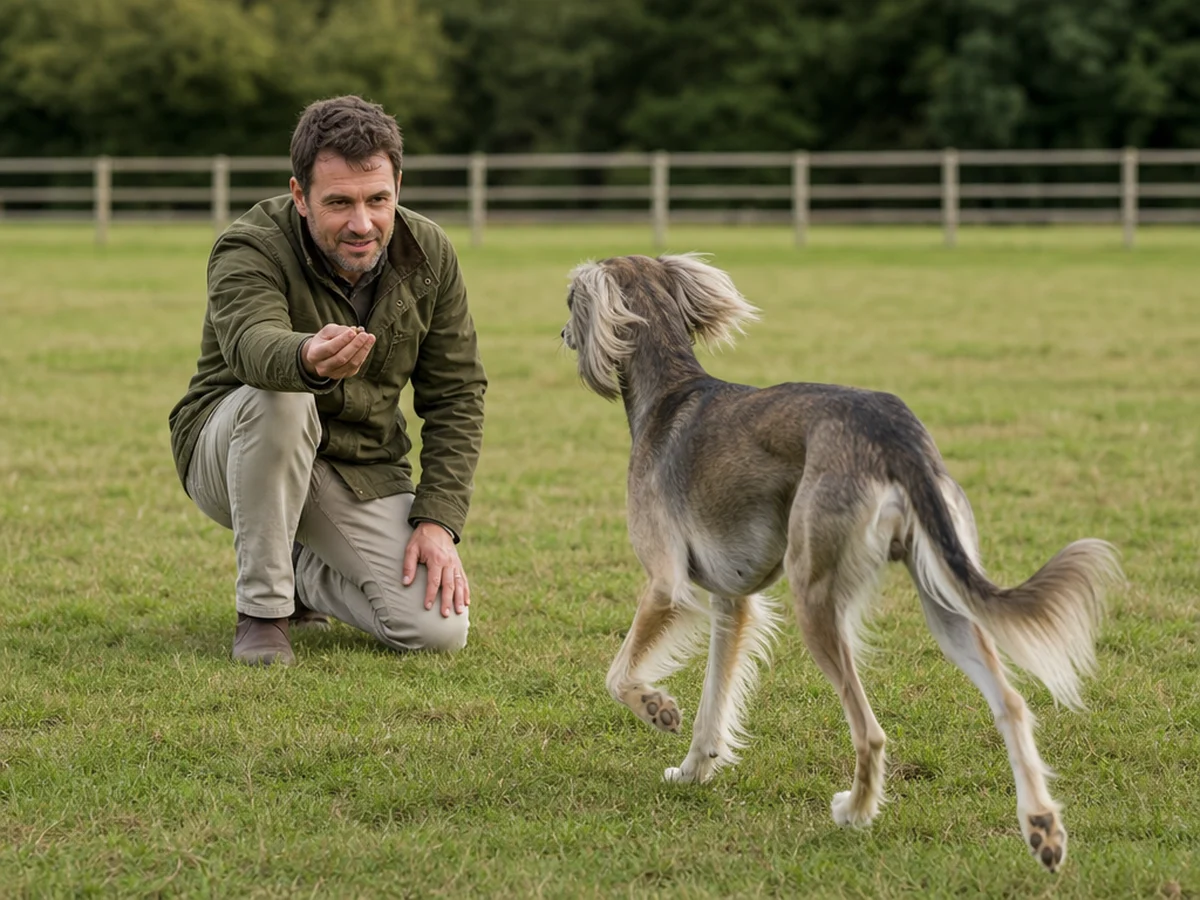
What Independent Looks Like
The breed rates 3 of 5 for trainability, which reads as agreeable rather than eager to please, and the temperament is described as dignified, gentle and independent-minded. A Saluki will cooperate, but they aren't wired to work for approval alone.
Once something is moving, the part of the dog weighing your request against the chase goes quiet, and calling louder only adds noise. Read this as a lack of competition rather than a lack of respect, because in that moment you have nothing as exciting to offer.
In daily life you will see a dog who hears you perfectly in the kitchen but seems deaf when a bird lifts off the lawn. A cue that worked yesterday in the living room can fall apart outside, because the yard holds far more to look at. Repeating a cue again and again also teaches your dog that the first one can be ignored.
Using the Bond You Already Have
The encouraging part is that the breed scores 5 of 5 for affection with family, so you have a dog who truly wants to be near you. That bond is your leverage. The breed also scores 5 of 5 for mental stimulation needs, which means a bored Saluki finds their own entertainment, and that usually looks like running, chewing or escaping.
Reward-based training suits this temperament, but it is not a free-for-all. The humane training position statement makes the point that good learning comes from clear guidelines and a predictable routine, with no fear, intimidation or pain involved. So decide what you want, stay consistent every day, and have the whole household use the same cue words.
Training Rewards That Compete With Movement
A reward only works if your dog values it more than the alternative, and for a Saluki the alternative is often being free and moving. So you need a menu rather than a single biscuit, matched to how hard the distraction is.
- Plain treats or part of the usual food work in quiet rooms at home, where little competes with you.
- Soft, smelly treats in tiny pieces suit the yard and walks, because you can hand over several quickly without slowing the session.
- Your very best treats should be saved for work near real distractions, so they keep their magic.
- Tug, a favorite toy, warm praise and a good chest scratch count too, and an affectionate breed often values them highly.
- Life rewards, such as permission to sniff, go through the gate or run in the secure yard, should follow a check-in with you.
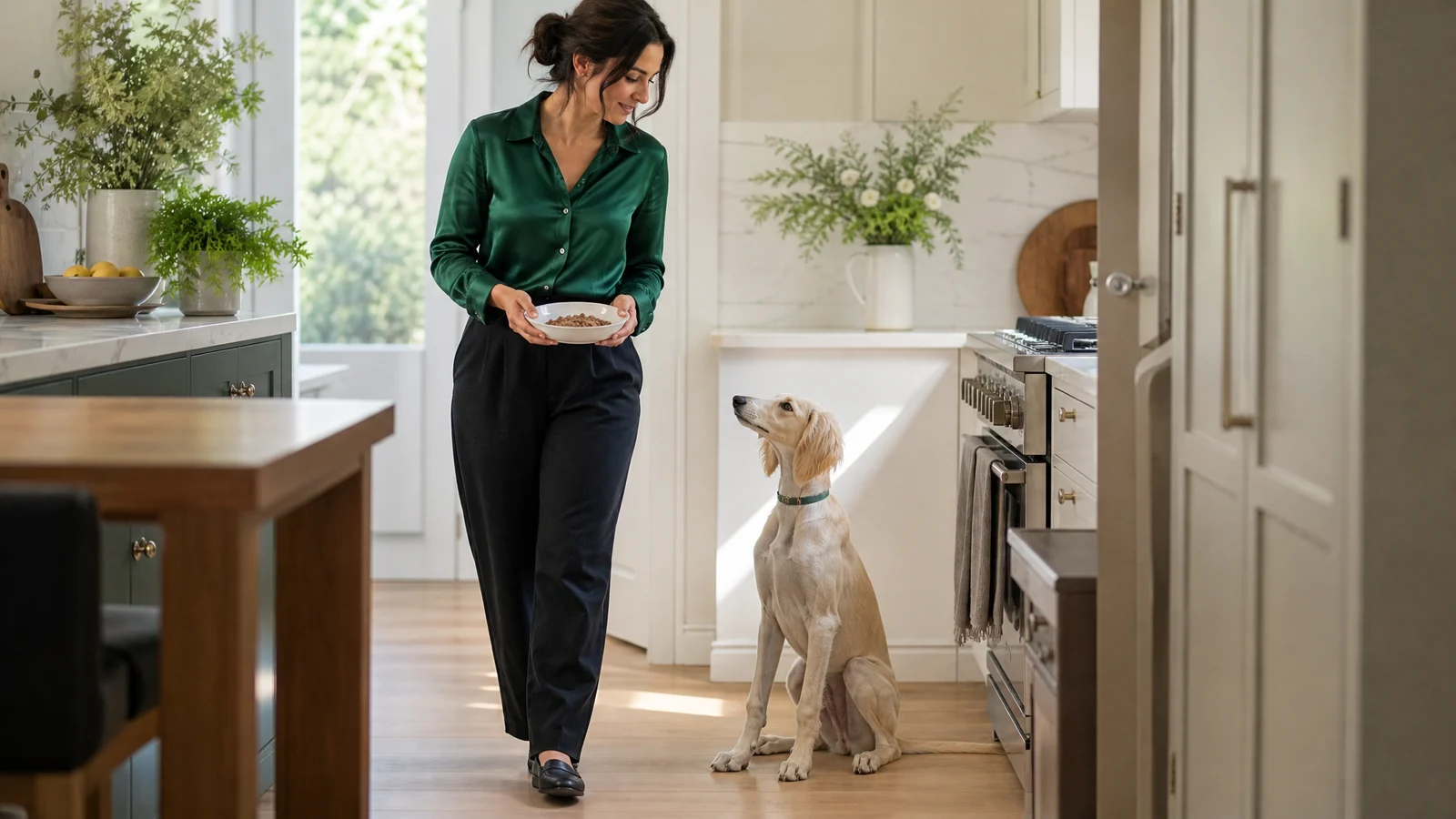
Life rewards deserve extra attention with this breed. A Saluki straining toward something has a strong want, and you can use it. Ask for a glance or a sit, say your marker word, then release them to sniff, run or move on. Your dog learns that giving you attention is how good things start.
Keep the rewards coming fast at first. A treat delivered within a second of the right behavior teaches far more than a bigger prize that arrives late, and small pieces let you repeat the exercise many times before your dog loses interest.
Short, upbeat sessions also shape how your dog feels about training. End each one while your Saluki is still keen, keep your voice light, and let a quick game or a calm walk be the last reward. A relaxed Saluki is far more willing to work with you, and that willingness is what you will lean on later when something more interesting than you is moving nearby.
Long Lines, Fences and Leash Rules in Training
Management is part of training for a chase-prone dog. Every time your Saluki rehearses running after something, the habit gets stronger, so secure surroundings stop the rehearsal before it starts.
Fencing and the Home Setup
Salukis love to run and should have a well-fenced yard to keep them safely away from traffic. Walk the fence line for gaps and weak spots, and remember the jumping power the standard describes, because a low fence is an invitation. The breed can also be an escape artist or a destructive chewer when bored or unhappy, so good fencing plus safe toys and chew-bones are a must.
Crate training gives you safe confinement at home or while traveling. Introduce it with treats so the crate becomes a comfortable den. Teach a patient wait at doors, gates and car doors too, since a dash through an open door is how many escapes begin. A dog with enough exercise is less likely to go looking for trouble, and our guide to Saluki exercise and lure coursing covers safe outlets.
Leash Habits on Walks
Daily walks, always on a leash, keep both hound and owner fit in body and mind. For more freedom without risk, clip a long line to a well-fitted harness your dog can't back out of, hold the end, and use it in quiet open spaces away from roads.
Common advice says to let a dog run off leash so they learn to stay near you. For a Saluki we would skip that. A dog who sees something run can be far away before you finish a sentence, and off-leash practice outside a fence mostly teaches them that leaving works. For manners, stop walking when the line goes tight, wait, and reward the moment it slackens.
Can a Saluki Learn a Reliable Recall?
Honestly, yes and no, and it helps to know which part is which before you start.
What Is Realistic
A dependable recall in the house, the yard and quiet places on a long line is very achievable. A recall that beats a running rabbit across an unfenced field is not something we would stake your dog's life on, and chase drive is the reason. Treat recall as a skill that improves your dog's choices, not as your safety system. Fences and leashes carry the safety load, and recall adds a bonus layer on top.
Gear helps you practice safely. A lightweight long line that won't tangle your legs, a snug harness and a treat pouch you can reach quickly are all you need. Keep the line loose so your dog never feels a tug when they turn back to you.
What to Practice
Build the habit in small, successful steps and keep the rewards generous.
- Choose one recall word that means only "come to me," say it once, and pair it with your very best treats.
- Start indoors a few steps away, mark the instant your dog turns toward you, and feed when they arrive.
- Move to the fenced yard, then to a long line in a quiet place, adding distance gradually.
- Make arriving wonderful with treats and praise, then often release your dog back to whatever they were doing.
- Practice when your dog is only mildly interested in something, and save higher distractions for later weeks.
If your dog doesn't come, don't chase them. Running after a Saluki turns into a game they will win. Turn and move away, crouch, and use a happy voice so that coming to you is the more exciting option.
Short Training Cues for an Independent Mind
An independent dog tends to lose interest in drilling, so the way you run sessions matters as much as the cues themselves.
Keeping Sessions Brief
Stop while your Saluki still wants more. A handful of tiny sessions spread across the day, each lasting just a few minutes, will teach more than one long sitting. Pick a marker word such as "yes," use small treats of a value that fits the room, and end on something your dog does easily so the next session starts with enthusiasm.
The Starter Cues
Begin with a check-in. Say your dog's name once and reward any glance toward you, since everything else grows from this. For a sit, hold a treat over the nose and slide it back over the head until the bottom lowers, then mark and reward. If your dog resists sitting, reward a stand or a down and let the habit matter more than the position.
For a down, lower a treat from a sit between the front paws toward the floor, and mark when the elbows touch down. For a wait, ask for a pause at doorways, mark it, then release with a cheerful word so your dog learns that the door opens on your signal. For loose-leash walking, reward whenever your dog is beside you with a slack line, and stop moving when it tightens.
Handling cues count too. If started young, Salukis can be trained to hold still for nail trimming and daily teeth brushing, and our grooming and handling guide shows how to practice. For a new puppy, see what to teach a puppy first.
Fourteen Days Toward a Saluki Who Checks In
The goal of the next two weeks isn't perfect obedience. The real goal is a dog who looks to you often and a household that is consistent, because attention is what everything else rests on. Here is a simple plan grouped by stretch of days.
- Days one to three: reward every glance your dog gives you at home and in the fenced yard, saying your marker word the moment eyes meet.
- Days four to seven: add short sessions of sit and down before a walk, start the wait at doors and the car, and reward a slack leash on calm routes with movement far away.
- Days eight to ten: begin recall indoors and then in the yard, paying with your best treats every single time.
- Days eleven to fourteen: try the long line in a quiet open space, add mild distractions at a distance, and keep every session short.
Don't expect a finished dog on day fourteen. The breed club's code of ethics describes Salukis as slow maturing, adding that neither dog nor bitch can be adequately assessed before reaching two years of age. Growth and patience go together. Keep regular vet visits on the calendar too, so any soreness isn't mistaken for stubbornness.
A Saluki's chase drive isn't going away, so let fences and leashes handle safety and let rewards make you the best option available. Run the plan a second time, and the check-ins will start to feel natural.
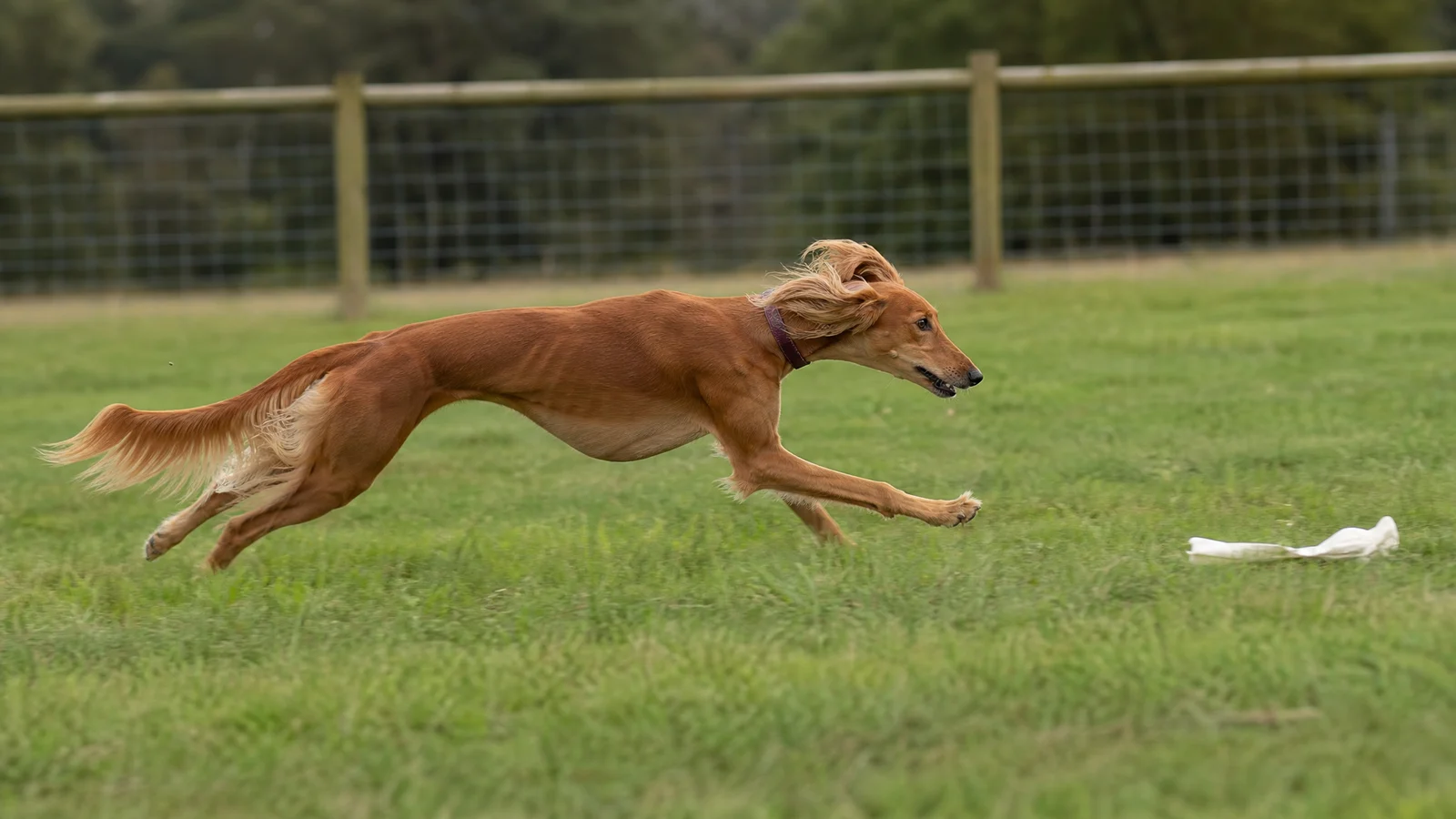 Exercise and jobsSaluki Exercise Needs and Lure Coursing as an Outlet
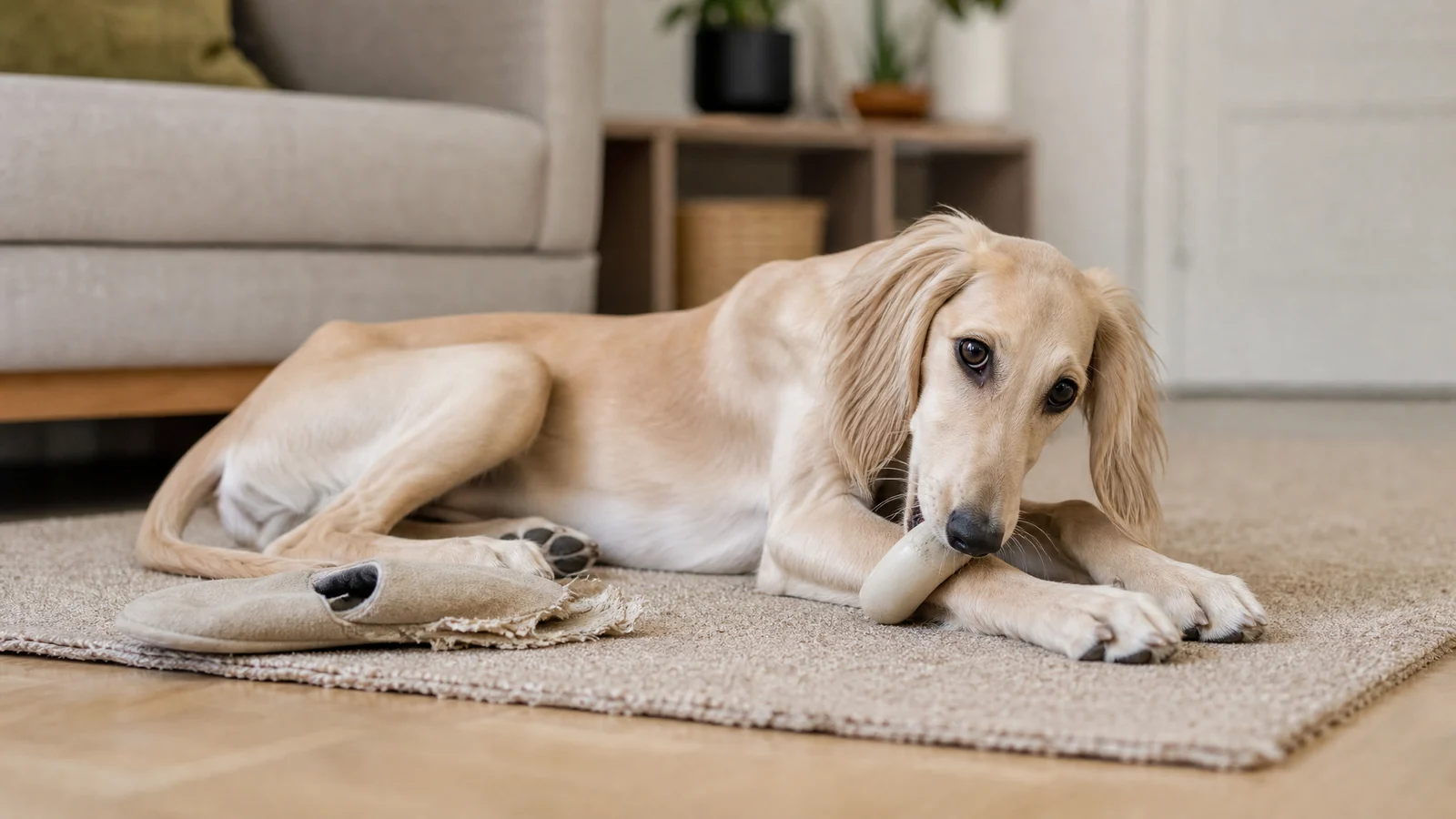 Puppy trainingWhy Is My Cute Saluki Puppy Chewing Everything?
 Puppy trainingA Reward-Based Daily Routine for Saluki Puppies
