 Saluki
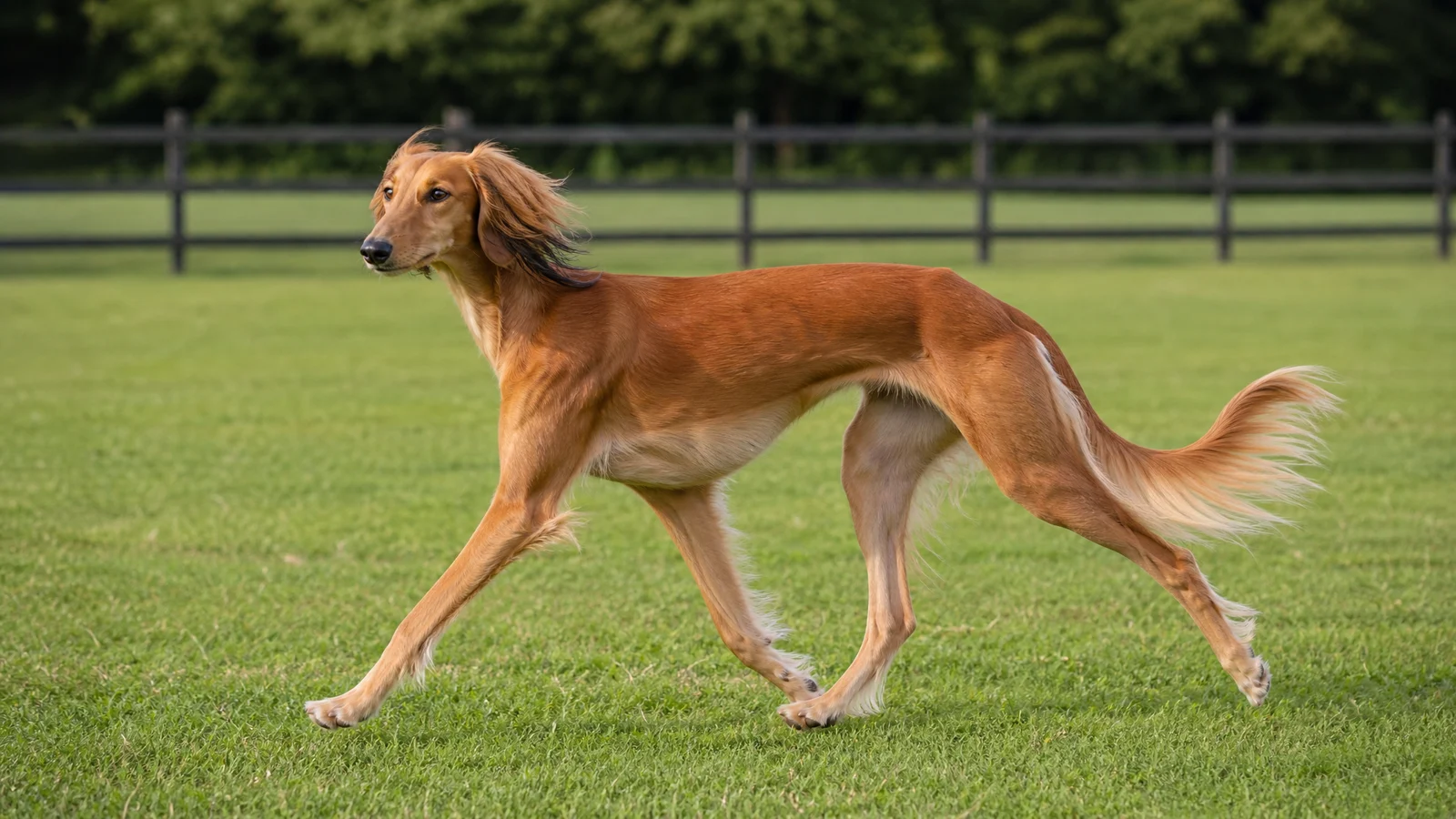
A Saluki takes longer to grow up than most owners plan for, so any training calendar you follow needs room to stretch. Dogs in general reach social maturity somewhere between 12 and 36 months of age, and a slow-maturing breed gives you plenty of that time.
That room is the reason this page exists. Six stages cover the road, from the first weeks home to a grown or adopted dog, and each stage has its own page where the method is taught in full.
Below, you'll find one short summary for each stage and a link to its full page. Read the one that matches your Saluki, then the one after it.
Treat every age on this page as a loose marker, not a deadline. A hound with the body of a one-year-old can still have the manners of a younger puppy, and the stage that fits is the one where your dog's skills sit today.
A Saluki Puppy Settles In at 8 to 12 Weeks

The road starts quietly, in the first weeks at home, when a reserved Saluki puppy is working out which parts of the new world are safe. Handling, a calm sleeping place and slow introductions to visitors matter more than any cue at this age. Our page on the first month home lays the days out in order.
Starting early matters because the best time to begin socializing a puppy falls between 3 and 14 weeks of age, when they are most open to learning about their surroundings. For a hound who is reserved with strangers, that makes slow, pleasant introductions the main job of the month.
A Mouthy, Teething Puppy at 3 to 4 Months
Once the puppy knows the house, the mouth takes over. Baby teeth are making way for adult ones, and everything within reach becomes something to test. This stage is about steering that busy mouth toward the right things to chew and rewarding calm hands, which the teething and mouthing page sets out step by step.
Mouthing at this age is a phase, but the habits built around it are not. What a puppy learns about hands and chew toys now travels with them into every stage after it.
Stronger Legs, Same Puppy Brain at 4 to 6 Months
Between the teething months and the teenage ones, the puppy gets taller, faster and bolder while self-control lags behind. For a sighthound whose instinct is to chase whatever moves, that gap is the main thing to manage, and what changes at this age is easier to handle when you know it is coming.
Management carries more weight than any cue in these months, and we put the secure space and the leash ahead of every lesson. Rewards for checking in, settling and walking beside you build the habits that sit on top of that protection. A puppy learning to turn away from movement needs many calm successes first, and each one is worth paying for.
Adolescent Wobbles Between 6 and 12 Months
The gap between strength and self-control does not close at six months, and the teenage months show it in cues that used to work. Since the adolescent stage spans 6 to 18 months in general, a Saluki may still be in it long after this section's ages end. Our adolescent Saluki training page keeps rewards working through the wobbles.
Wobbly cues come back faster when a few things stay steady around them, and the stage page does the detailed teaching. These three habits are worth keeping in place the whole way through:
- Pay at once. A fast, independent hound judges a lesson by what happens in the next second, so deliver the reward before their attention drifts.
- Practice where you taught it: When a cue slips outdoors, go back to the quiet room where it worked, then add the outside world a little at a time.
- Keep one cue word for each behavior and let everyone in the house use it the same way, so the dog is never asked two questions at once.
None of these asks for more time, only steadier timing. That is exactly what a teenager's shaky focus needs.
A Saluki at 1 Year and Up Is Still Growing Up
A first birthday feels like a finish line, yet the adolescent stage runs on well past it for dogs in general, and a slow-maturing Saluki is closer to the middle of the road than the end. The long legs are adult by now but the judgment is not, which is why the page on when Salukis calm down treats this as a stage with its own work.
By this age the cues your Saluki knows are old friends, and the training shifts toward keeping them dependable in new places and around real distractions such as visitors, other dogs and moving things. That is slow, repetitive work, and a hound who matures gradually rewards patience more than pressure. Regular veterinary visits belong on the calendar at every stage, and your vet is the right person to ask about anything that seems off.
Bringing Home a Grown or Adopted Saluki
Not every Saluki arrives as a puppy, and for a grown dog the stages above start from somewhere else. A newcomer brings a history you cannot see, so training begins with the dog in front of you instead of with a birthday. The older or adopted Saluki training page covers pacing, history and learning again.
Whatever the dog's age, the first stretch at home looks surprisingly alike. A quiet routine, handling that ends before the dog objects and a person who pays well for calm choices suit an eight-week-old puppy, and they suit a reserved adult just as well. Every Saluki's training begins in the same quiet place, no matter when they arrived.
Every age here brings lessons of its own, so our Saluki e-book covers what a hound needs at each one in clear wording. Register with your email and a copy is yours, nothing to pay.
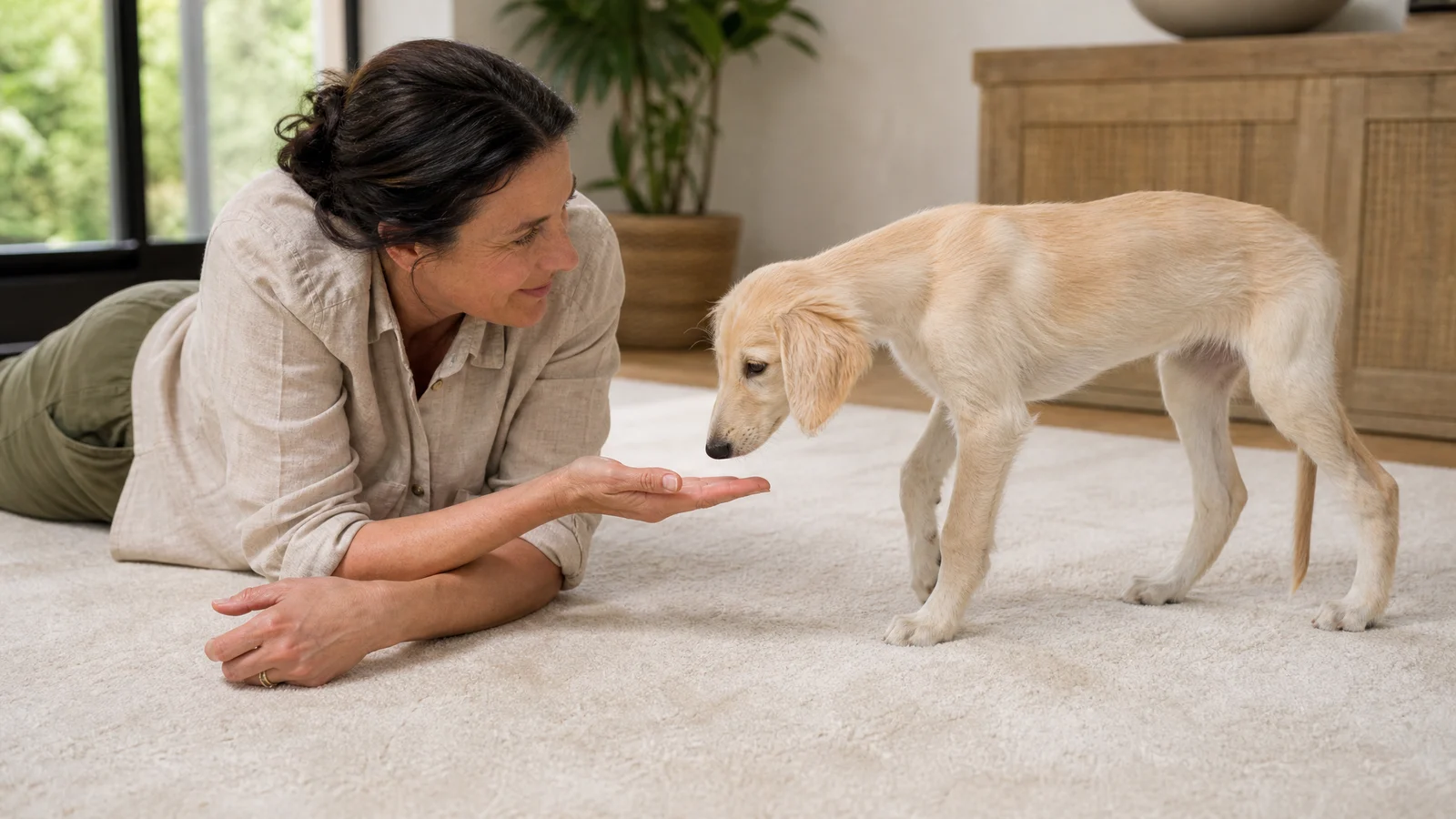 Puppy trainingSaluki Puppy at 8 to 12 Weeks: The First Month Home
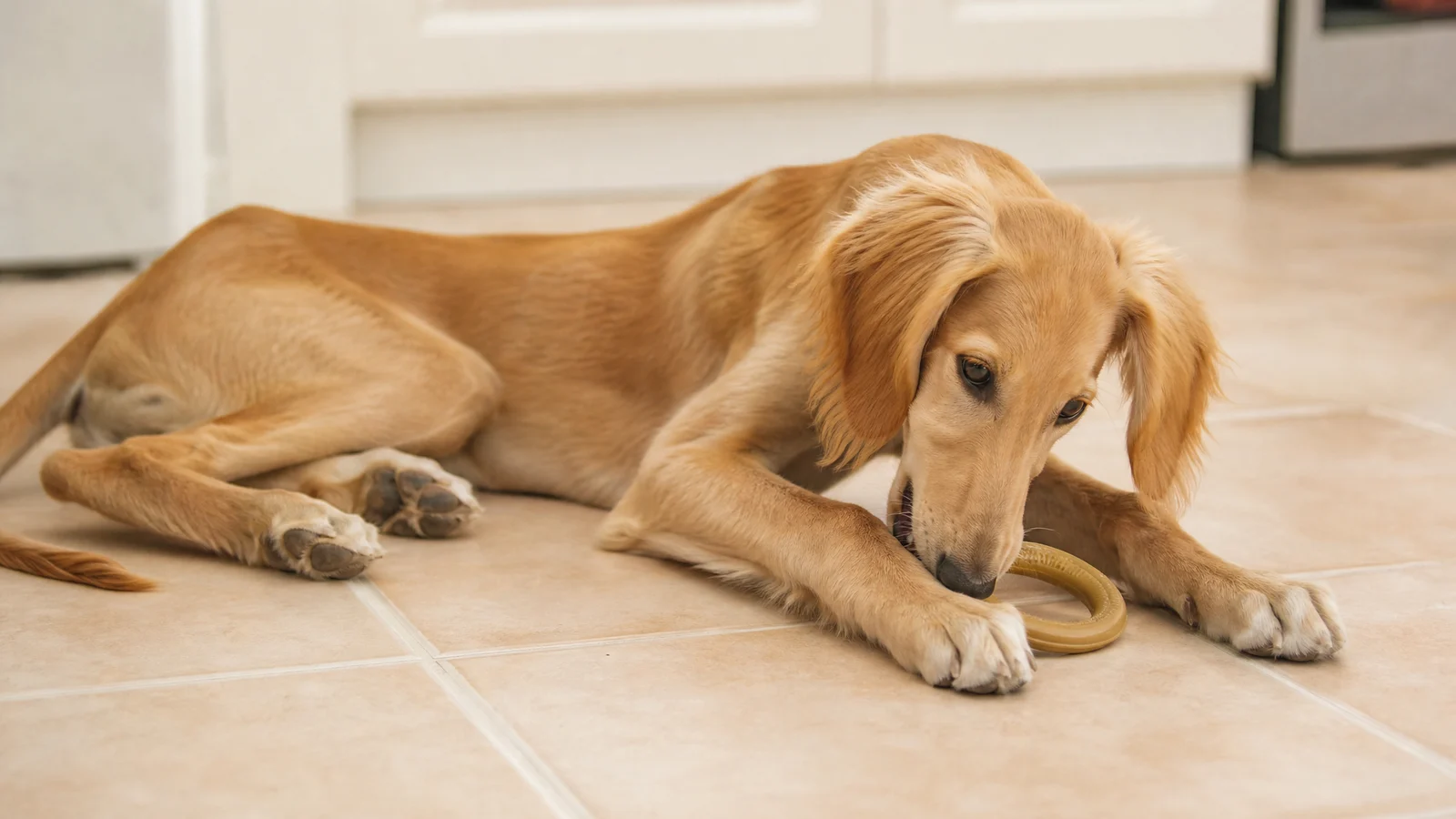 Puppy trainingSaluki Puppy at 3 to 4 Months: Teething and Mouthing
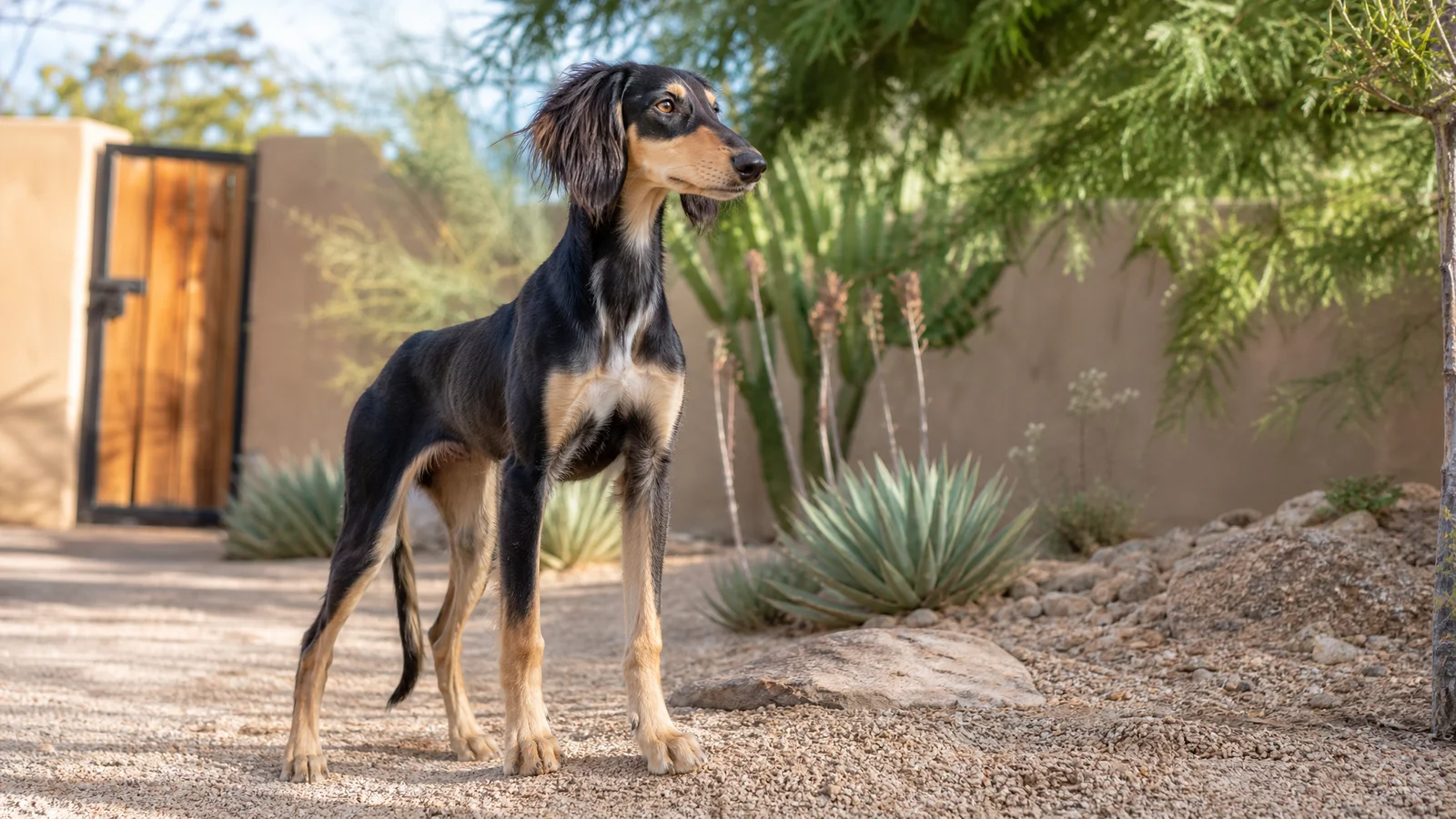 Puppy trainingSaluki Puppy at 4 to 6 Months: What Changes
