 Saluki
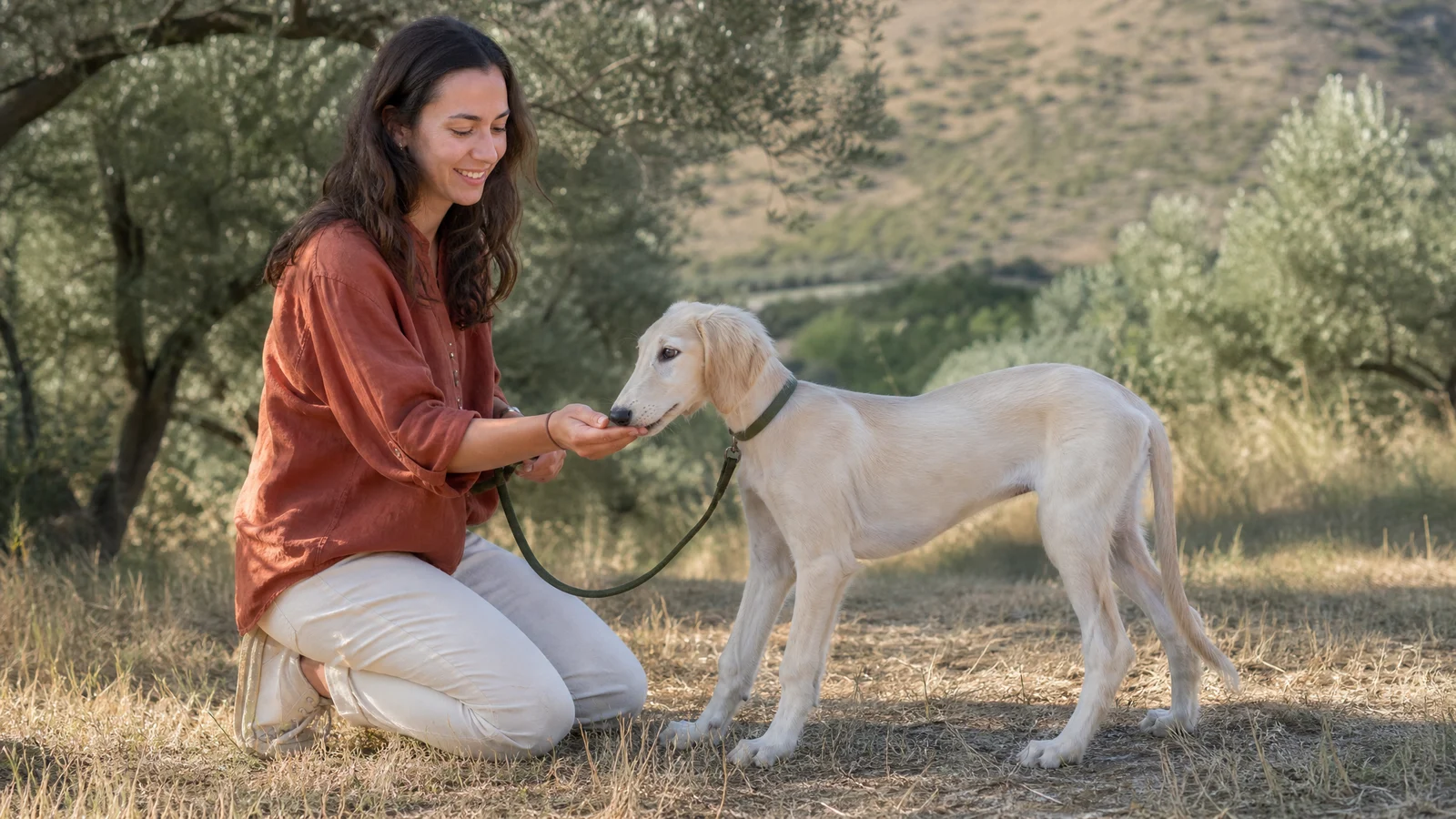
A six-month-old Saluki can look nearly grown in one moment and seem unable to remember yesterday's lesson in the next. The taller body changes what the puppy can reach and see, while attention, confidence and recovery are still developing. That mismatch makes normal variation feel like a training collapse.
Setbacks deserve observation, not a harsher response. A cue may fail outdoors because the environment changed, and hesitation may appear because an ordinary object suddenly looks unfamiliar.
This guide resets expectations for the teenage months, sorts skill gaps from confidence changes and builds a realistic daily rhythm. We use short lessons, low-pressure outings and age-appropriate activity, then review practical trends so one difficult day does not become the puppy's identity.
Reset Expectations for the Saluki Teenage Months
Return to the last version of a skill that was easy. Ask for recall at a shorter distance, practice the mat in a quiet room and use a leash where outdoor attention has become unreliable. Easier work is not starting over. It gives the puppy clear repetitions while their priorities shift.
Salukis are known for maturing gradually. That broad context supports patience, but it does not set a schedule for an individual puppy. Judge the dog in front of you and adjust the day to their current response.
Keep rewards worth earning. Food, brief toy movement, permission to sniff or movement with the handler can all support attention. Test the reward in an easy place before expecting it to compete with a busy sidewalk.
Reduce repetition when performance begins to fade. A few clear responses followed by rest teach more than continuing until the puppy wanders off. Stop while the Saluki still understands the game.
Let the environment determine the lesson length. A quiet room may support several brief skills, while a new sidewalk may make one check-in enough. Equal time does not produce equal difficulty.
Keep familiar cues available without drilling all of them daily. Rotate recall, handling, settling and walking foundations across the week. Variety protects attention while preserving the behaviors needed for safety.
Sort Teenage-Month Changes From Missing Skills
Write down the setting around a missed response. Note distance, movement, time of day and what happened immediately beforehand. A cue that works indoors but not near traffic needs gradual generalization, while a cue failing everywhere may need to be retaught more simply.
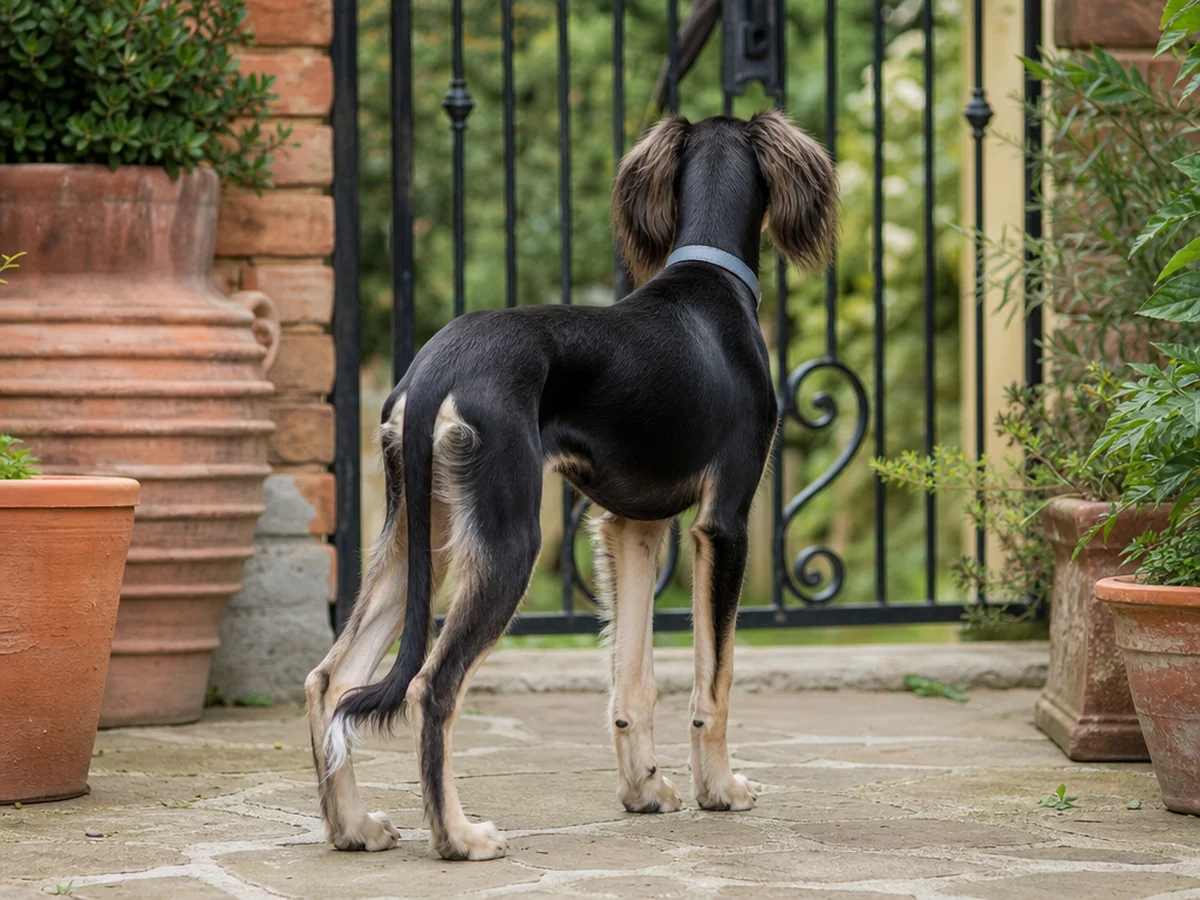
Confidence changes can look like disobedience. The puppy may stop at a new surface, avoid a noisy object or watch a stranger from farther away. Give them time to observe and choose retreat rather than pulling them closer for exposure.
The UKC Saluki standard distinguishes reserved behavior from shyness or aggression. Use neutral language when recording hesitation. Describe what the puppy did and how they recovered instead of applying a permanent personality label.
Compare the Same Skill Across Settings
House-training setbacks can also occur when routines change. Battersea puppy guidance notes that true reliability develops with physical control and that setbacks are normal. Restore frequent opportunities and reward the right location rather than assuming the puppy is making a point.
Sudden or broad behavior change needs more care than a single distracted session. Maintain regular veterinary visits and discuss new pain signs, appetite changes, unusual withdrawal or loss of previously stable abilities.
Group problems by setting before changing the plan. If every miss happens after a poor rest period, protect sleep. If they cluster near motion, increase distance and strengthen leash management rather than reteaching unrelated indoor skills.
Keep the record short enough to use. One line about location, response and recovery is more valuable than a detailed journal abandoned after a day. Review patterns at the end of the week.
Retest only after changing the condition that caused difficulty. Greater distance, a quieter hour or better rest gives the puppy a genuine new opportunity. Repeating the identical failed setup measures persistence, not learning.
Build a Daily Rhythm for the Teenage Months
A useful day alternates activity with real recovery. The puppy should not move from a long outing into visitors, then training, then another exciting event without rest. Overfilled days can produce frantic evening behavior that looks like a need for even more exercise.
Use the rhythm as a planning tool rather than a minute-by-minute schedule. The order matters more than exact clock times:
| Part of the day | Main job | Adjustment when attention is low |
|---|---|---|
| After waking | Toileting, sniffing and an easy check-in | Shorten the route and reward close to home |
| After rest | One brief foundation lesson | Move indoors and reduce distractions |
| Later outing | Calm exploration or controlled social exposure | Increase distance and leave sooner |
| Evening | Quiet enrichment and settling | Remove exciting layers and protect sleep |
The site's Saluki puppy lessons offer a broader foundation. At this age, preserve those anchors while making each training demand smaller on difficult days.
Sleep and quiet time belong in the plan. Give the puppy a predictable resting area away from household traffic. A dog who cannot disengage may need help reaching rest, not another game.
Feed training into ordinary transitions. A recall can bring the puppy inside, a mat can support family dinner and a handling repetition can precede a nap. Useful placement keeps lessons relevant without filling the day with formal sessions.
Leave margin for surprise. A loud truck, visitor or difficult walk may use the puppy's available coping capacity. Replace the next planned challenge with rest instead of insisting that the schedule remain unchanged.
Use calm indoor activities when weather or the environment disrupts the plan. Food searches, mat work and gentle handling can preserve routine without forcing an outing that the puppy cannot process well that day.
Grow Confidence During the Saluki Teenage Months
Confidence grows through choices the puppy can complete. Begin far enough from a new object or person that the Saluki can sniff, eat and look away. Reward investigation, but do not lure the dog into a distance they would not choose freely.
Use Short Observation Outings
Visit a quiet edge of an environment rather than walking through its center. Let the puppy watch bicycles, people or dogs from a comfortable distance, then leave while their body remains loose. Duration is less important than recovery.
Repeat the same place before adding novelty. Familiarity lets the Saluki learn that observation has an end and the handler will support retreat. A different location every day can keep the puppy solving new problems without consolidating confidence.
Watch the first minute after leaving. Easy sniffing and normal reward taking suggest the outing ended within capacity. Continued scanning or frantic movement means the next visit should be shorter or farther away.
Let the puppy decline an approach. Turning away from a person or object can be good judgment, especially when the Saluki then reconnects with the handler. Reward the recovery rather than immediately presenting the challenge again.
Let Nose Work Supply an Easy Win
Simple searches can give the puppy an independent task without impact or social pressure. Hide food in open boxes or scatter it in a safe patch of grass, then let the Saluki work at their own pace.
The Best Friends scent guide introduces searching with a favorite item hidden among boxes. Keep the early version easy and supervised. The job is successful searching, not a puzzle so hard that the puppy abandons it.
Use confidence outings selectively. A thoughtful menu keeps novelty from becoming the whole week:
- Choose quiet spaces with a clear retreat route and enough viewing distance.
- Introduce one new surface, sound or moving object rather than a cluster.
- Reward voluntary investigation and allow the puppy to move away.
- End after a successful recovery instead of extending the visit for completeness.
Protect a Growing Saluki During the Teenage Months
A growing puppy still needs thoughtful activity. Avoid using repeated jumping or hard turns as a way to tire the dog. The PDSA agility guide advises waiting until dogs are fully grown before jumping work.
Choose controlled walks, sniffing, foundation training and free movement in secure areas suited to the puppy. Watch footing and fatigue. A smooth, eager start does not guarantee the Saluki should repeat high-speed efforts after form changes.
The site's Saluki exercise guide helps place running inside a balanced week. At six months, the priority is building habits and body awareness rather than maximizing distance or intensity.
Keep recall protected on a leash or line outside secure areas. Adolescent curiosity can outrun current skill, especially when motion appears. Management preserves practice without requiring the puppy to make an adult decision in an unsafe place.
Monitor recovery after physical activity. The puppy should move comfortably, drink normally and settle after ordinary needs are met. Shorten future activity and consult the veterinarian when movement or recovery changes.
Avoid comparing the Saluki with mature dogs at the same park. Adult endurance and judgment are not useful targets for a growing puppy. The correct session is the one this dog can complete with sound movement and a calm finish.
Balance physical and mental work across the week. A new environment, scent search and handling lesson all require energy even when they do not look athletic. The puppy's recovery tells you how much demand the day contained.
Review the Saluki Teenage-Month Trend
Review a short log across several days instead of scoring each session. Look for recovery after surprise, willingness to reengage, sleep quality and the settings where known skills remain available. Adjust one part of the next week based on that pattern.
Compare successful settings as well as difficult ones. A skill that remains strong after rest or at a familiar distance shows where the next practice can begin. Preserve those easy anchors while adding only one new demand.
Share the weekly review with everyone who regularly handles the young puppy. One person may notice easier settling while another sees a difficult afternoon walk. Combining those observations prevents the practical household plan from being built around only the most memorable session of the week.
The six-month Saluki does not need constant progress in every direction. They need safe repetition, patient support and a routine that bends without disappearing. That steady framework leaves room for maturity without waiting passively for change, while giving the household useful decisions to make today.
 Training basicsAre Salukis Good With Kids?
 BehaviorHow to Stop a Saluki Barking
 Exercise and jobsIndoor Activities and Brain Games for a Saluki
