 Saluki
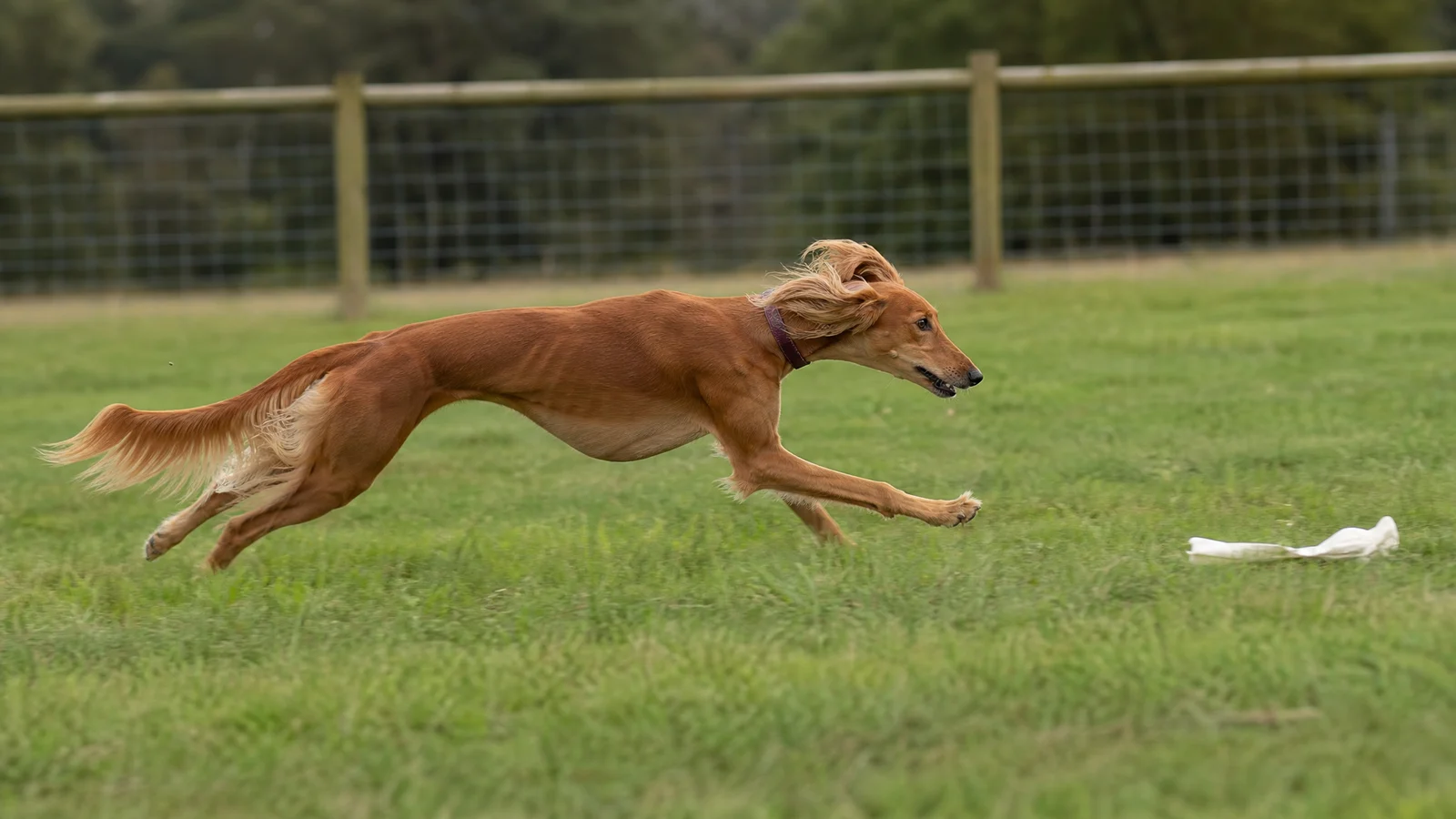
A Saluki who gets a hard, safe sprint every day tends to spend the rest of it draped over the furniture like expensive laundry. One who gets a lap of the block on a leash and nothing more tends to reshape the sofa, audit the fence for weak spots and treat the open front door as a personal invitation.
The dog is rarely the difference. The AKC rates the breed 4 of 5 for energy and 5 of 5 for mental stimulation needs, which describes a sighthound who wants a job as much as a run. Without one, a Saluki picks their own, and your upholstery will not like the choice.
Because this breed's behavior and training is our whole focus, we'll walk you through what a day of exercise should contain, then how it plays out in an apartment, around young kids, in a two-dog house and through long workdays, and finally whether lure coursing deserves its reputation.
Saluki Exercise Needs
Those two ratings turn into three daily ingredients: leashed walks, a properly fenced place to run flat out, and something for the brain to chew on. Skip one and the gap shows up at home, usually on something you paid for. Each piece works a little differently, so here they are in turn.
Body
The breed standard describes great speed and endurance, with hindquarters built for galloping and jumping power. A stroll to the mailbox and back does not touch that engine. For scale, PDSA guidance puts some dogs at one to two hours of daily activity and working breeds well above that. A healthy adult Saluki belongs nearer the busy end than the couch end, though dogs vary, so watch the dog and not a stopwatch.
Aim for a mix. Daily leashed walks keep joints, manners and routine in shape, and a short burst at full speed inside solid fencing covers the rest. A common line of advice says to run a dog until they drop. We disagree. Endless running builds a fitter Saluki who then wants even more, so make the sprint a habit and follow it with calm work.
Age changes the recipe. A puppy thrives on physical and mental exercise, but short and varied beats long and repetitive, and the days get longer as the dog grows.
Salukis mature slowly, and the parent club says neither sex can be properly assessed before two years of age, so expect teenage behavior to run on until about then. Save hard, repetitive running for a body that has finished growing, and see our Saluki puppy first lessons guide for the early months.
Mind
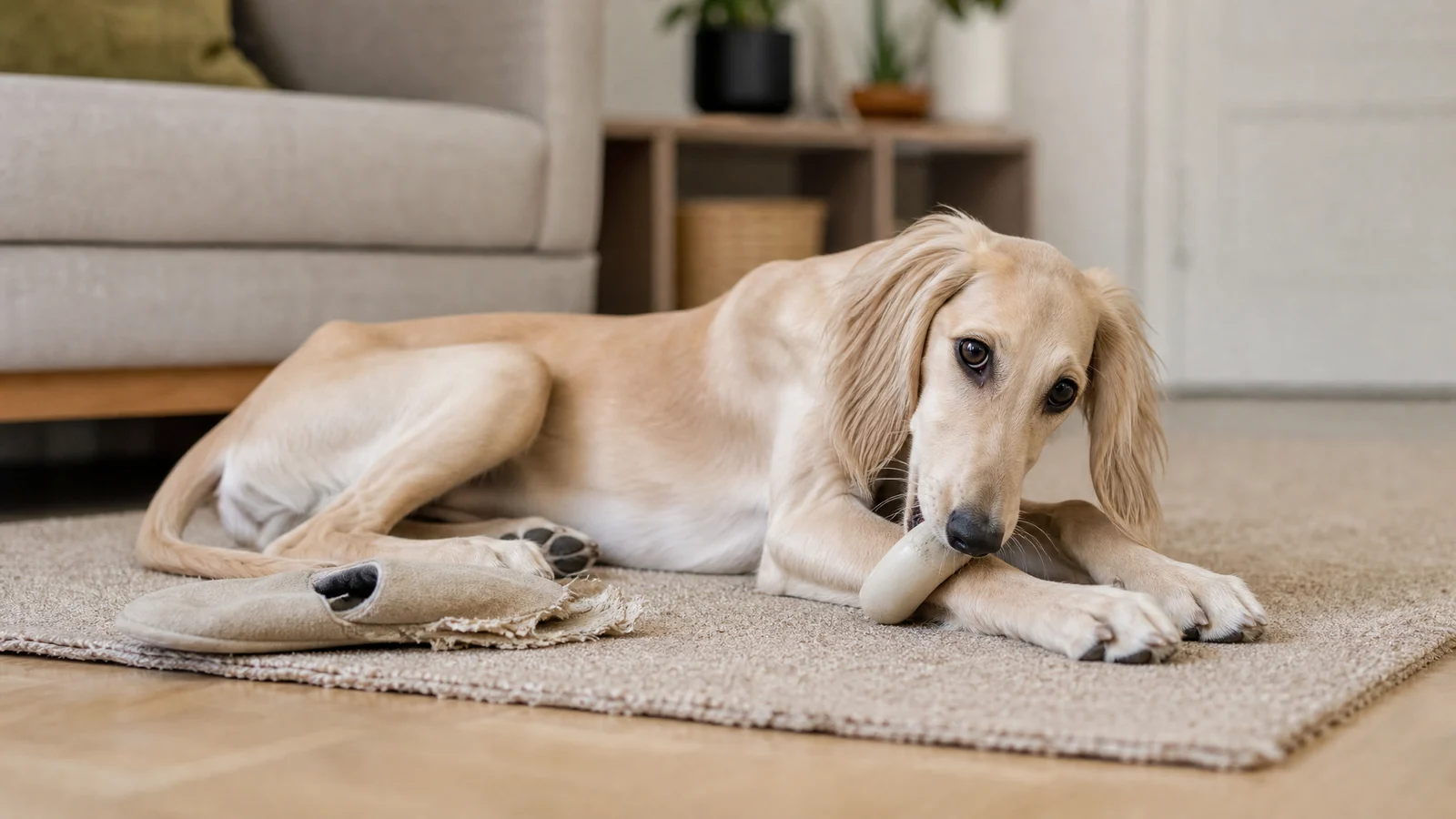
A 5 of 5 for mental stimulation means "needs a job or activity," and a walk where the dog is hurried past every interesting smell does not count as one. Dogs need to play, chase, smell and chew, and those without an outlet find their own. In a Saluki that often means shredded cushions and escape attempts.
Give the brain real work every day. Scatter treats through the grass, hide them around the house, let the dog sniff at their own pace on at least one walk, and rotate safe toys and chew-bones. A short puzzle session can settle a Saluki better than another loop of the same block, and it costs a handful of kibble.
Safety
Salukis are always ready to chase anything that moves, and they are fast enough that a mistake is over before you finish saying their name. So walks stay on a leash, and off-leash running happens only behind solid fencing. The popular idea of letting a dog burn off steam at an open park is the worst plan for this breed.
The fence matters as much as the exercise. Salukis can be escape artists, and they have the jumping power to back it up, so build or choose taller than seems reasonable, check the base for digging, test every latch and walk the perimeter after storms. Recall and impulse control are worth training in the background, and our Saluki training overview shows how to build them with rewards.
Exercise for an Apartment Saluki
A Saluki can live happily in an apartment. The coat needs little care, and the breed rates a middling 3 of 5 for adaptability. What an apartment lacks is a private run, so you have to supply the sprint on purpose. This case comes down to when you walk, where you run and how the dog behaves once you are back inside.

Walk Timing
Give the dog a proper walk at both ends of the day and treat the middle outing as a bonus. Pick the quietest hours you can manage, because narrow sidewalks full of squirrels, cyclists and scooters are exactly what a chaser finds thrilling. Vary the route so the nose gets something new, and keep the leash short around elevators, stairwells and doors, where a sudden lunge does the most damage.
Fenced-Run Access
The run is the hard part. Look for an enclosed field you can book privately, a sports area with double gates, or a public dog area at the emptiest hour. Check the height, the gaps, the latch and the soil along the base with your own eyes before you trust the place with your Saluki. In shared spaces, stay close when other dogs are around, since the breed is rated only "with supervision" there.
Plan a few real sprints each week and fill the other days with leashed walks and treat games. A few good runs beat none at all.
Indoor Calm
A tired Saluki is a graceful roommate, but calm still has to be taught. Pick a mat or bed as the default spot and reward the dog for settling on it. The breed also benefits from crate training for safe confinement at home or while traveling. Keep the crate a short-term tool and never the all-day plan, and set up a window perch so the dog can watch the street without having to run it.
Saluki Exercise With Young Kids
A home with young children can share a lot of exercise, but the rules have to be written for the humans first. The breed is rated "with supervision" for young kids, and a child sprinting across the yard looks a great deal like the things a Saluki was built to chase.
Give the kids jobs that suit the dog: scattering treats for a sniffing hunt, rolling a treat along the ground for the dog to find, or walking beside an adult on a family outing with the grown-up holding the leash. Frantic running games are out, because a squealing child at top speed lights the chase instinct, and a fast, narrow dog can flatten a small person without meaning anything by it.
Teach the kids to stop and stand still like a tree if the dog gets wound up, and teach the dog that calm behavior is what earns attention. If play climbs, end it, send the dog to their mat with a chew and try again later. The bed or crate is a no-kid zone, since a dignified, independent-minded dog values a retreat. Our Saluki temperament and house rules guide has more on setting those boundaries.
Exercise in a Two-Dog Home
A second dog looks like the cure for an energetic Saluki, and sometimes it helps. A playmate who matches their speed can provide plenty of tiring play inside a fenced yard. But two dogs can also double the problems, so decide based on what your household can manage and not on the hope that they will wear each other out.
A partner does not replace your own time with the dog. Two dogs running together can spiral, with one dragging the other after a squirrel or a bike, and a Saluki in full flight after a smaller dog can injure them in a second. Recall also weakens when each dog treats the other as the more interesting option. Stay close during every run and stop sessions before anyone gets frantic.
Give each dog some solo time. Walk them separately now and then, practice recall alone and keep training sessions one dog at a time. If you cannot keep the dogs safely managed at home or on walks, a behaviorist's help is worth getting early rather than late.
Exercise During Long Workdays
If you work away from home all day, your Saluki faces the longest stretch with nothing to do, and a bored Saluki finds their own entertainment. They can become escape artists or destructive chewers when unhappy at home, so the answer is a fixed daily schedule rather than hope. The plan below fits around a regular job and needs no staffed yard.
- Before work, give a proper leashed walk with plenty of sniffing, so the dog starts the day tired and content.
- Leave a puzzle or stuffed chew in a dog-proofed room, and hand it over calmly before you go, not in a rush at the door.
- Arrange a midday visit from a dog walker, neighbor or friend if you can. A break in the middle of the day matters more than a longer one in the evening.
- After work, do the real exercise first, either a fenced sprint or a long leashed walk, then dinner, then calm time.
- On weekends, add a longer outing such as a new route or a secure field, to make up for the quiet weekdays.
Never leave a Saluki alone in a yard for hours, because a bored dog next to a fence is how escapes happen. Rotate toys so they stay interesting, and skip the all-day crate. If the schedule is truly too tight for a dog this active, an honest look at daycare or a different arrangement is kinder than hoping the dog adapts. Regular vet visits also help rule out pain or other issues that can look like boredom.
Lure Coursing as a Saluki Exercise Outlet
The breed's history is running down gazelle, with falcons spotting game from above and Salukis following while riders came behind. Lure coursing is the modern, safe version, where the dog chases an artificial lure across a field. Suggested canine sports for the breed also include flyball and agility, so you have options if coursing is not your thing.
Who Suits It
Lure coursing suits the sound, fit adult who already loves to run, and the owner who wants an outlet the dog understands without learning anything new. Because Salukis mature slowly, wait until your dog is physically grown, and ask your vet to confirm fitness before you start.
Some dogs do not care about the lure, and that is fine. Flyball and agility suit the dog who prefers working with their person, though both involve jumping and sharp turns and call for a mature body and a calm head.
No single sport replaces daily exercise. Treat coursing as an occasional event on top of the walks and mental work. Done that way, it gives the chase instinct a legal place to go, and a dog who has had that tends to be easier to live with the rest of the week.
How to Start
Getting started is mostly a matter of finding the right people and watching before you enter.
- Ask the breeder or local Saluki owners which clubs run coursing events near you. The parent club also holds lure coursing, rally, obedience and agility trials at its national specialty.
- Go to an event without your dog first, so you can see how the day works, how dogs wait their turn and how handlers manage the excitement.
- Ask the organizers about entry rules and whether beginners can try a practice run before committing.
- Work on a calm wait using a marker word and treats for staying put, then reward a relaxed return to you when the run ends.
- Warm up before runs, cool down afterward and avoid hot weather, as you would with any hard exercise.
Your Saluki's First Move Today
You do not need a coursing club, a new sport or a full weekly schedule to begin. Set up one safe place for a leashed or fenced run today and use it. With a yard, walk the fence line and fix what needs fixing. Without one, find the enclosed field, book the hour or map the quiet leashed route.
Then take your Saluki there, let them stretch out and sprint, add a treat game afterward and let them settle. That single habit answers both ratings, the 4 for the body and the 5 for the mind, and it gives the chase instinct a place to go that is not your sofa, your fence or the road. Everything else in this article builds on it.
 Puppy trainingWhy Is My Cute Saluki Puppy Chewing Everything?
 Puppy trainingA Reward-Based Daily Routine for Saluki Puppies
 Puppy trainingWhat Should You Teach a Saluki Puppy First?
