 Saluki
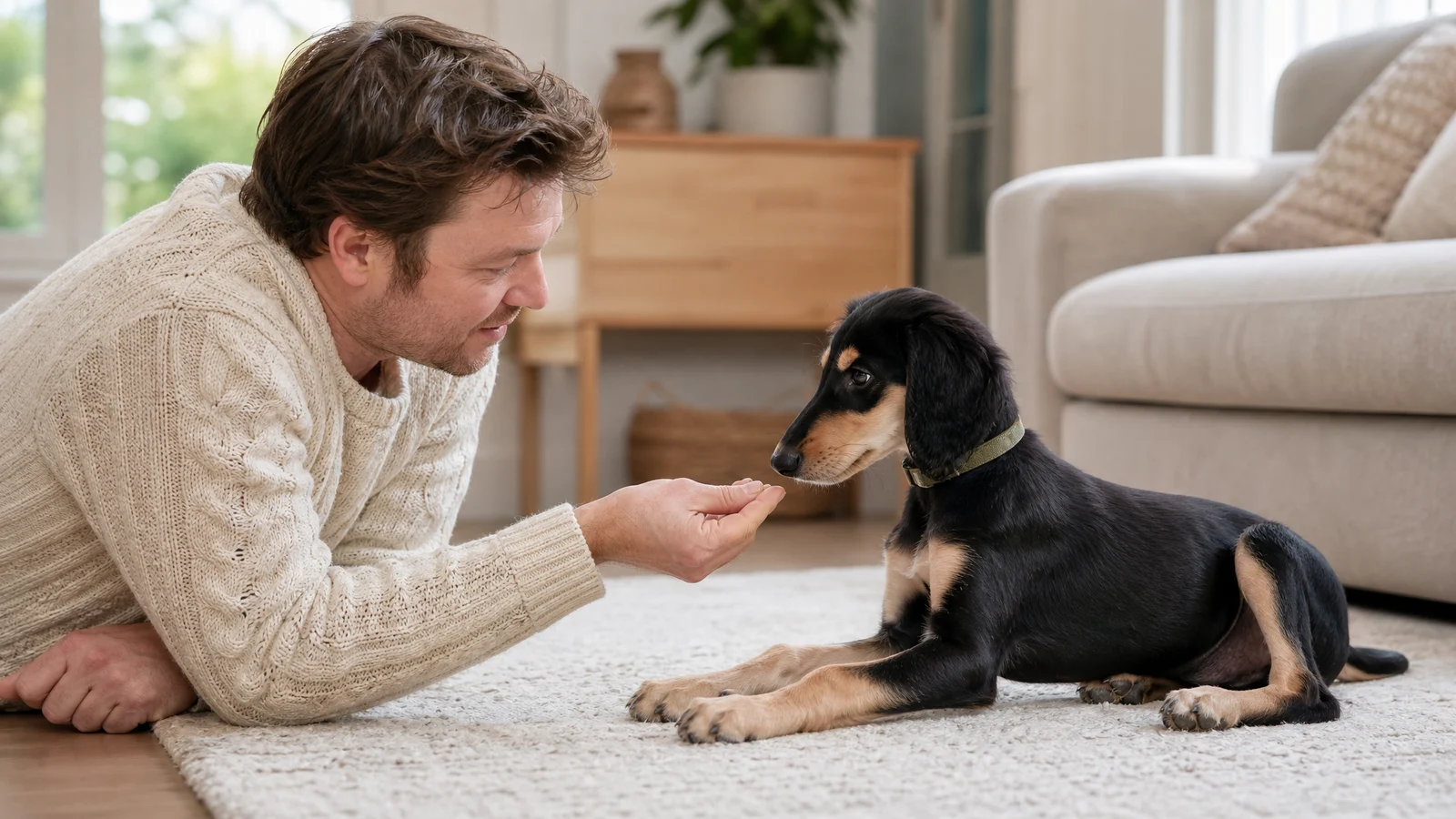
A Saluki puppy sprints laps through the living room, skids past the sofa and does not so much as flick an ear when you say their name. Ten minutes later they are curled on a cushion, soft and affectionate, as though nothing happened.
Both halves of that scene are normal. Young sighthounds run on instinct and build focus slowly, and the breed matures later than most, so early lessons work best when they are short, kind and repeated for a long time. Handled badly, this stage ends in frustration on both sides. Handled well, it gives you a calm, devoted adult. We focus on this breed's behavior and training, and patience is the habit that pays off most.
This article looks at puppy training for a Saluki from the first days home through adolescence, so you can set up a crate, teach name response and sit, make nail and teeth handling routine, manage the first real chases and tell whether the lessons are working.
The First Days Home With a Saluki Puppy
The first days are for settling, not schooling. Your puppy has just left everything familiar, and a predictable rhythm of meals, outings, naps and quiet play does more for them than any lesson. Salukis are deeply affectionate with their families, so expect a puppy who wants to stay near you. Use that early to teach that rest happens in their own space, not draped across your lap all evening.
Sleep deserves attention first. Put the crate in a room where you can hear each other at night, with a soft bed inside, and let the puppy nap there by day too. A growing hound recovers from all that sprinting while asleep, and a rested puppy has far more patience for learning. An overtired puppy often turns wild and mouthy, which looks like bad behavior but is usually a missed nap.
Because Salukis mature slowly, think in stages rather than a strict calendar. This order works well through the early months:
- Settle in and learn the daily routine, with the crate door open and treats tucked inside the bed.
- Pair the puppy's name with a treat several times a day, with no demand attached.
- Touch paws, ears and mouth briefly and reward calm, so handling is familiar before it is needed.
- Meet new people and places in small, calm doses, letting the puppy set the pace.
- Add sit and a relaxed settle once the name and crate feel easy, then begin leash manners in a well-fitted harness.
Offer safe chew toys from the start. Salukis can turn destructive when bored or unhappy, and a puppy with something suitable to chew rarely goes shopping for your furniture. Book a first vet visit early, and keep regular check-ups going as your puppy grows.
Crate Training Before Almost Everything in Saluki Puppy Training
A crate gives a Saluki puppy a safe base at home and a familiar space when you travel. It also prevents the quiet disasters of an unsupervised young hound, such as chewed cables and bolted doors. The aim is a calm den the puppy chooses, which means building it with rewards rather than shutting the door and hoping.
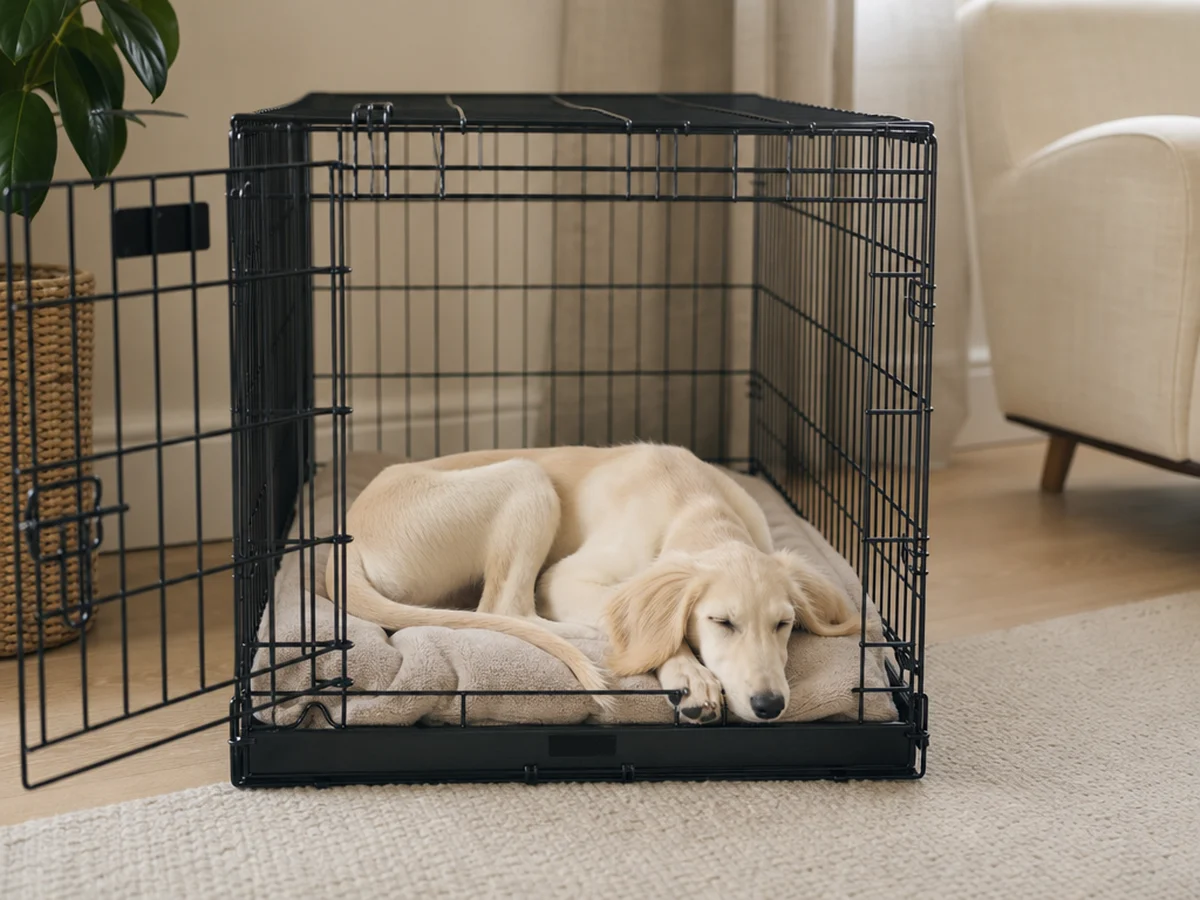
Start by marking and rewarding each step toward the crate. Best Friends describes rewarding even a nose inside, and adding a cue word such as crate only once the whole body goes in. When the puppy walks in happily, close the door for a few seconds, reward, and open it. Lengthen the time gradually over many short sessions.
Crying will come at some point, and your response teaches a lesson. Opening the door for a vocal puppy shows them that noise brings you running. The RSPCA advises waiting for a small gap in the noise before you open up. Even a single quiet breath counts, and you can stretch those pauses over days.
Keep early crate time tied to good things, such as a stuffed chew, a meal or a nap after play. Take the puppy out to relieve themselves before and after. A crate that only appears when the fun stops will start to feel like a punishment, so also use it at calm, pleasant moments.
Basic Obedience From Three Months in Puppy Training
By about three months, many puppies can handle short, upbeat sessions. The Saluki temperament is dignified, gentle and independent-minded, which in practice means a puppy who will happily ask what is in it for them. Trainability is agreeable rather than eager to please, so make rewards worth the effort and end every session while the puppy still wants more.
Name Response and Attention
Say the name once in a cheerful voice and reward the instant the puppy looks at you. Practice in a quiet room first, then the yard, then places with more going on. If the puppy ignores the name, you asked for more than their current level allows, so move closer or lower the distraction. Repeating the name again and again only teaches the puppy to tune it out.
Sit, Down and Settle
Lure a sit with a treat, mark the moment the hips touch the floor with a word such as yes, and reward. A lean hound with little padding can find hard floors uncomfortable, so practice down and settle on a rug or bed. A relaxed settle on a mat may be the most useful cue you teach, because it gives an energetic puppy an off switch.
Basic obedience also teaches manners at home and in the community, from waiting at doors to greeting visitors politely. Spread several tiny sessions through the day rather than one long one. Mental work tires a Saluki puppy in a way that laps around the yard never will, because the breed's need for mental stimulation sits at the top of the scale.
Handling Practice for Nails and Teeth in Puppy Training
If you start young, it is possible to train a Saluki to hold still for nail trimming and daily teeth brushing. The reason to begin early is simple. A puppy who has never had their paws held will treat the first clipper as a threat, and a slender-legged sighthound can pull away remarkably fast. Familiar, rewarded touch turns those moments into routine.
Build the skill in tiny steps, one short session at a time:
- Touch a paw for a second, give a treat, and repeat until the puppy offers the paw or stays relaxed.
- Let the puppy sniff the clippers or grinder while you feed treats, with no trimming yet.
- Touch the tool to one nail, reward, and stop. A single nail per session is plenty at first.
- Lift a lip and touch a tooth with a finger, rewarding calm, before you introduce a soft brush and a toothpaste made for dogs.
- Move gradually to a short daily brushing, finishing with a favorite game or chew.
Choose a calm moment, such as after a walk, when the puppy is pleasantly tired. If they squirm or pull away, you have gone one step too far, so return to the last easy stage and stay there for a few days. Daily repetition matters more than long sessions, and a habit built now saves a struggle with a fully grown, fast and strong adult.
This is general information, not medical advice. Ask your veterinarian which toothpaste, brush and chews suit your puppy, and how often nails and teeth should be checked as they grow.
Chase Instinct in a Growing Saluki Puppy
Training this breed takes patience and consistency because a Saluki is always ready to chase anything that moves. Squirrels, cats, bicycles and blowing leaves can all trigger it. You can shape the response, but you cannot remove the instinct, so plan around it from the first weeks and treat it as part of the breed rather than bad behavior.
It usually becomes more noticeable in adolescence. The PDSA says adolescence arrives around 8 to 12 months, with timing that varies by breed and size, and larger breeds tend to mature more slowly. The Saluki club goes further, describing the breed as slow maturing and not adequately assessable before two years of age. Expect a long teenage period in which a recall that once felt solid suddenly seems optional.
The rules that follow from this are firm and simple:
- Walk on a leash every time, because a fast puppy can be far away in seconds.
- Give free running only in a well-fenced yard, which also keeps a running hound away from traffic.
- Check the fence regularly, because a bored or unhappy Saluki can become an escape artist.
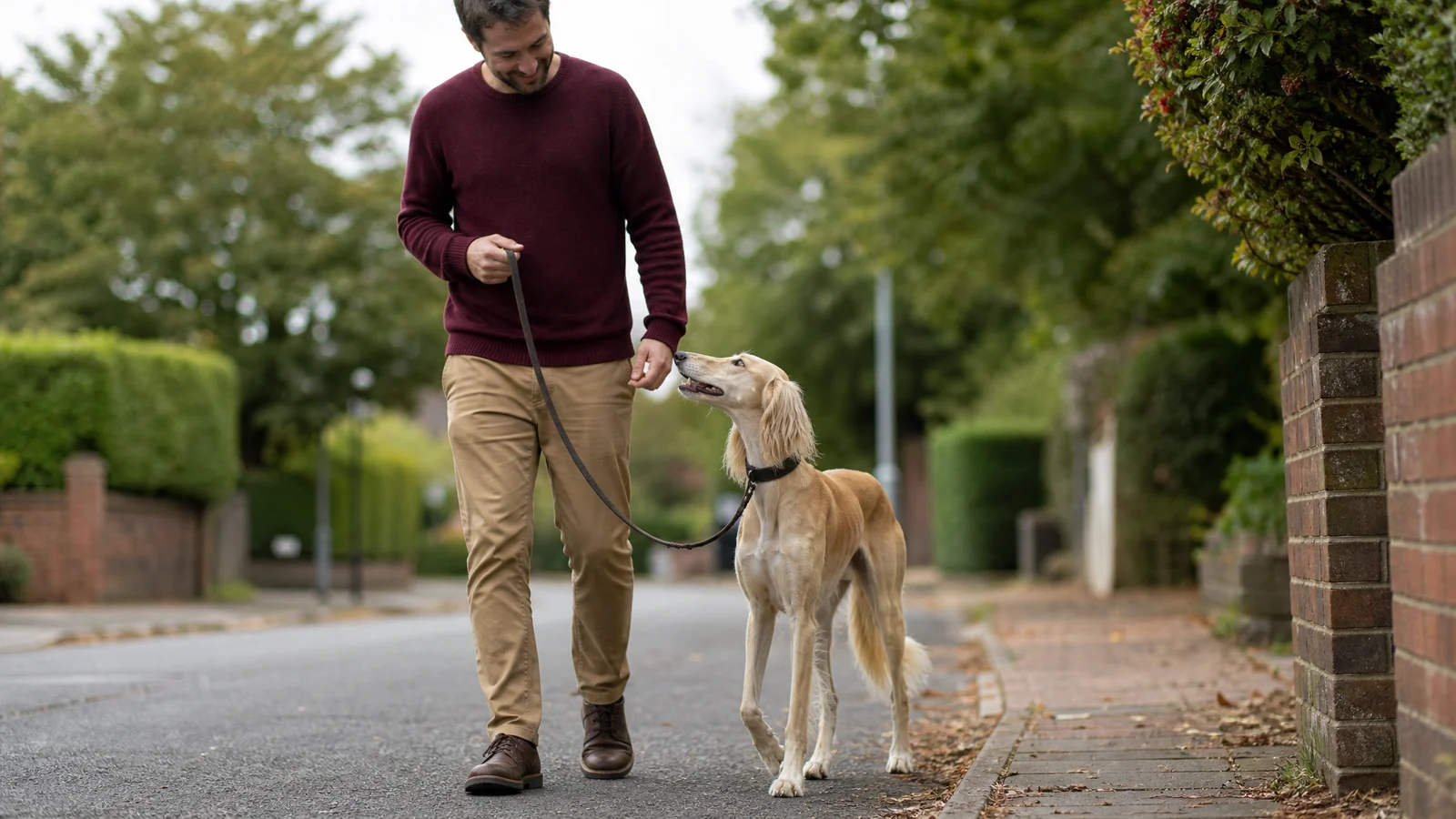
- Use a harness that suits a deep chest and slender build, sitting behind the front legs, and test that it cannot slip backward over the head. Refit it as the puppy grows.
- Reward calm looks at moving things, then reward turning back to you.
Practice recall in secure spaces with the best treats you own, and make every success generous. Do not rely on voice alone near roads or open land, however well it works at home. Management is not a failure of training in this breed. It is part of the training.
Puppy Exercise Without Overdoing It
A Saluki puppy thrives on both physical and mental exercise, and neither replaces the other. Energy is high, so a puppy with only mental games will still be restless, while a puppy with only physical outlets can be bored and destructive. A growing body should not be pushed through long, hard runs, so keep play in short bursts with plenty of rest between.
Body
Daily leashed walks keep both hound and owner fit, and a safe fenced yard allows free sprints. Let the puppy choose the pace on soft ground and stop when they slow down. For the longer view, our guide on exercise and lure coursing covers how needs change as a Saluki matures.
Brain and Social Life
Mental work can be as simple as a puzzle toy, a scent game, a new trick or a brief training session. It makes a good use of a rainy afternoon. Socialization belongs here too, and it takes a gentler approach for this breed.
Salukis are reserved with strangers but should never be shy or aggressive, so introduce new people calmly and let the puppy approach in their own time. Ask visitors to crouch, stay quiet and offer a treat rather than reach over the puppy's head. Introductions to children and other dogs go best with supervision. Aim for reserved but confident, never worried.
Reading Your Saluki Puppy Training Progress
Progress with a Saluki rarely looks dramatic. It shows up as small, steady changes, and because the breed matures slowly, the picture often looks better after several months than it did at the start, and better again by two years. Judge the trend, not one bad afternoon.
These signs tell you the lessons are taking hold:
- The puppy walks into the crate on their own and settles without fuss.
- They turn toward you when you say their name, at least indoors and in the yard.
- They accept paw handling and tooth touching with a loose, relaxed body.
- They pause and glance at you when something moves, instead of lunging straight away.
- They calm down after exercise and can switch off on a mat or bed.
Other signs call for outside help. Ask a qualified, reward-based trainer or behavior professional if the puppy panics in the crate despite gradual training, shows ongoing fear of strangers, stiffens or snaps during handling, or becomes extremely hard to settle. If your puppy suddenly acts unlike themselves, a physical cause may be behind it, so raise it at the next vet visit as well.
The main thing to hold onto is that a Saluki puppy is a fast, independent, slow-maturing sighthound who learns through patient, rewarded repetition. Build calm in the crate, keep sessions short and keep the world secure, and your puppy has the time they need to grow into the steady, affectionate companion this breed becomes.
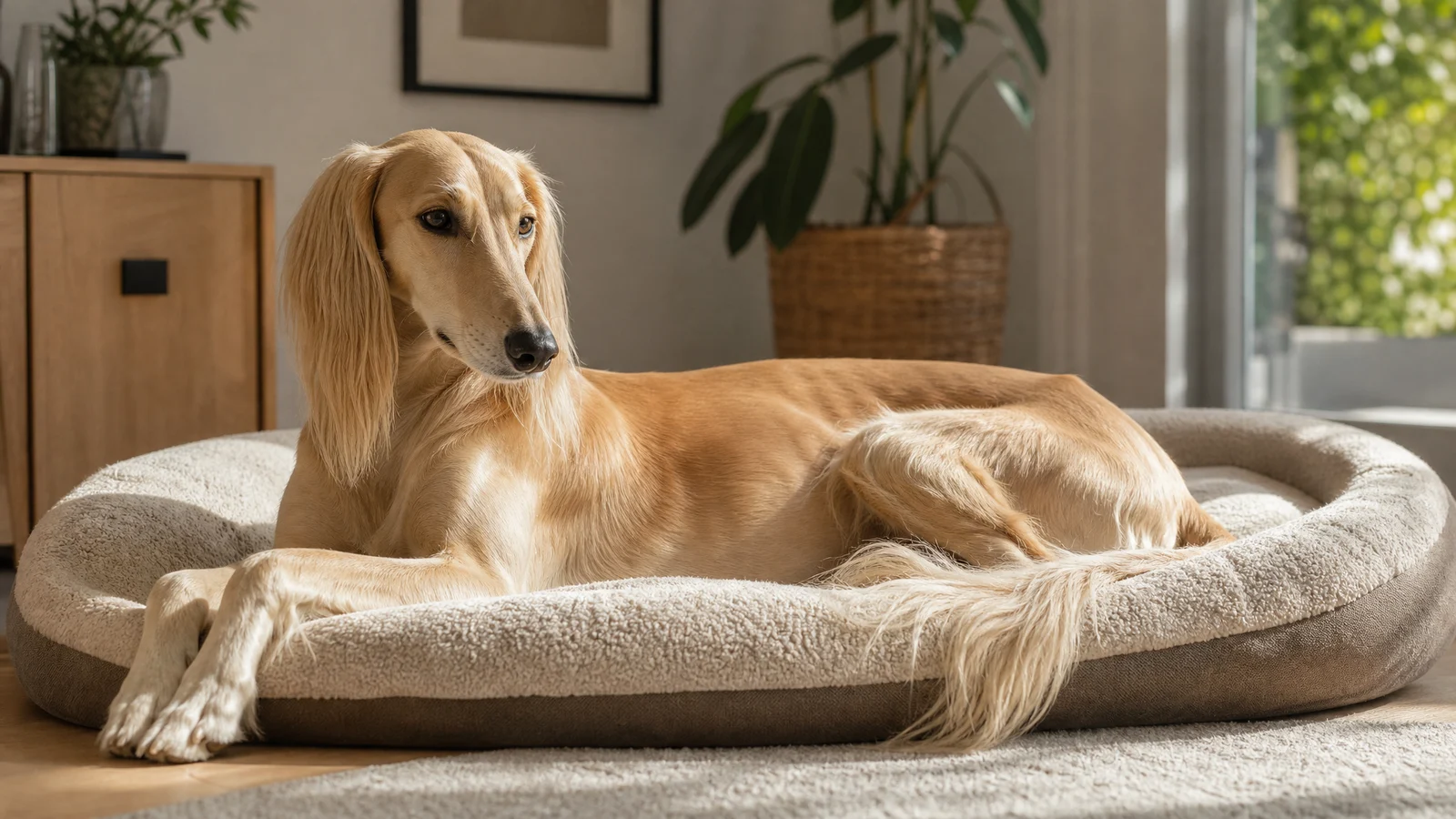 BehaviorSaluki Temperament and What It Means for Your House Rules
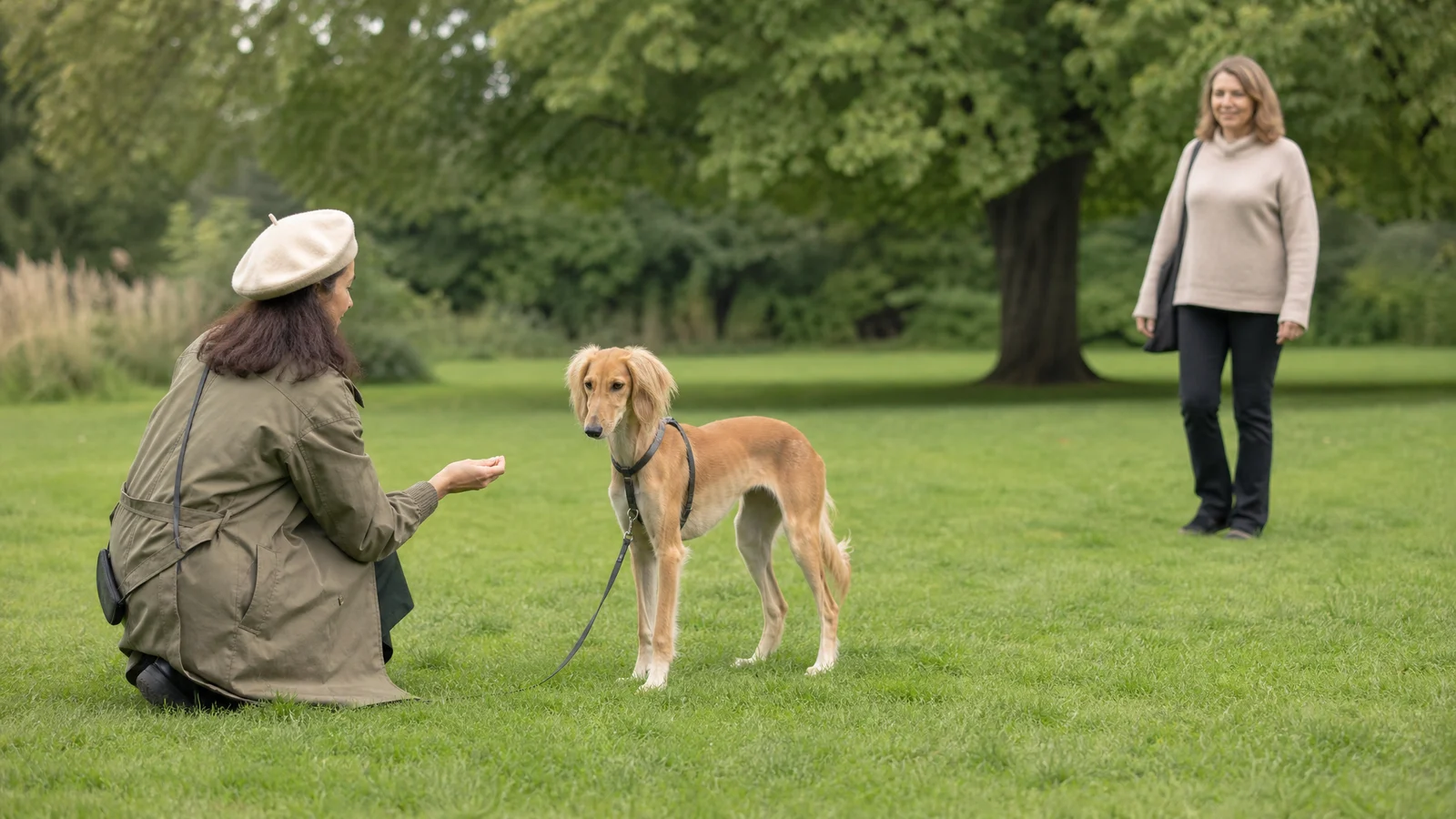 Puppy trainingSocializing a Reserved Saluki Puppy Without Pushing
 Puppy trainingTraining Through Adolescence: A Slow-Maturing Hound
