 Saluki
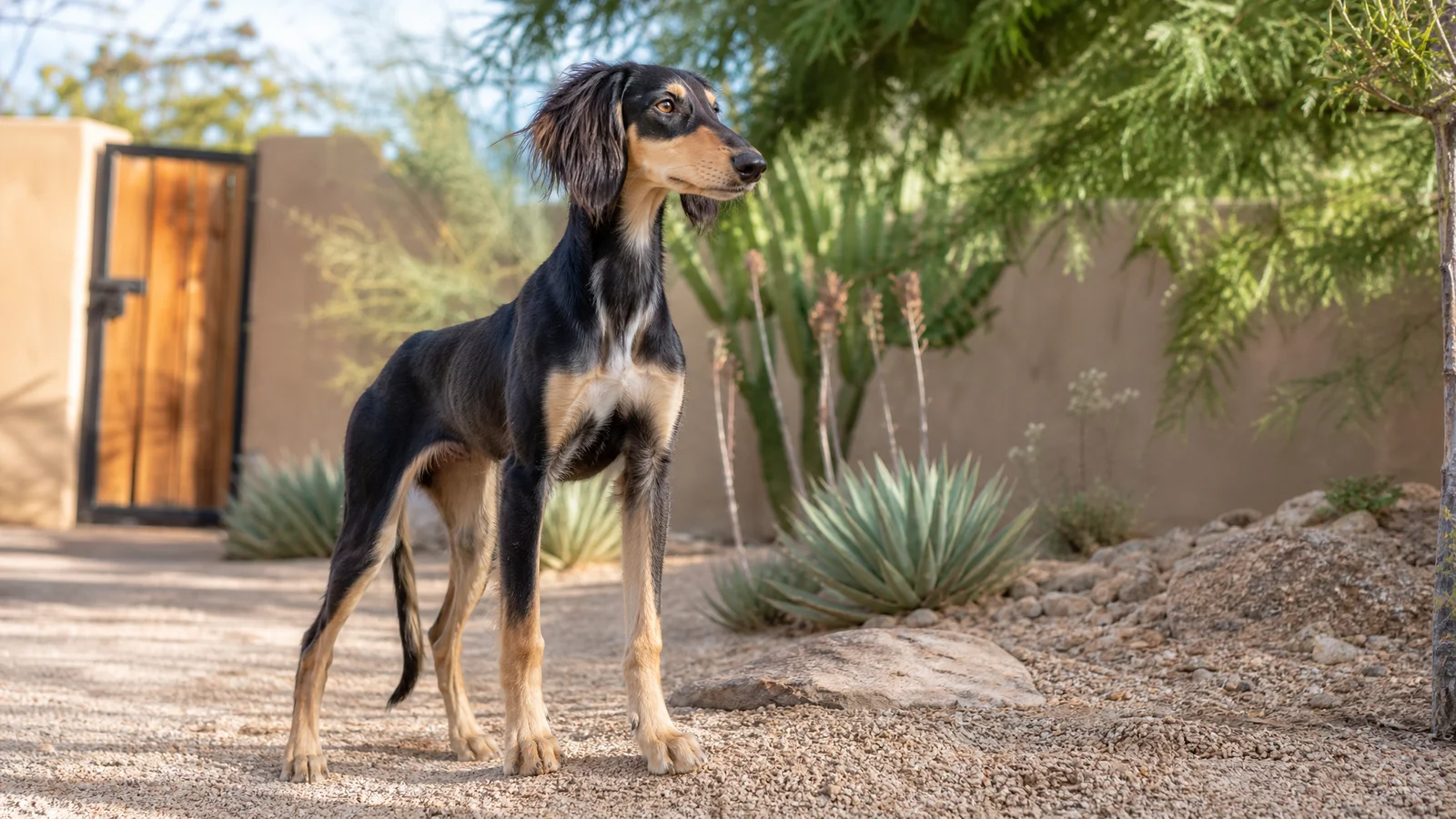
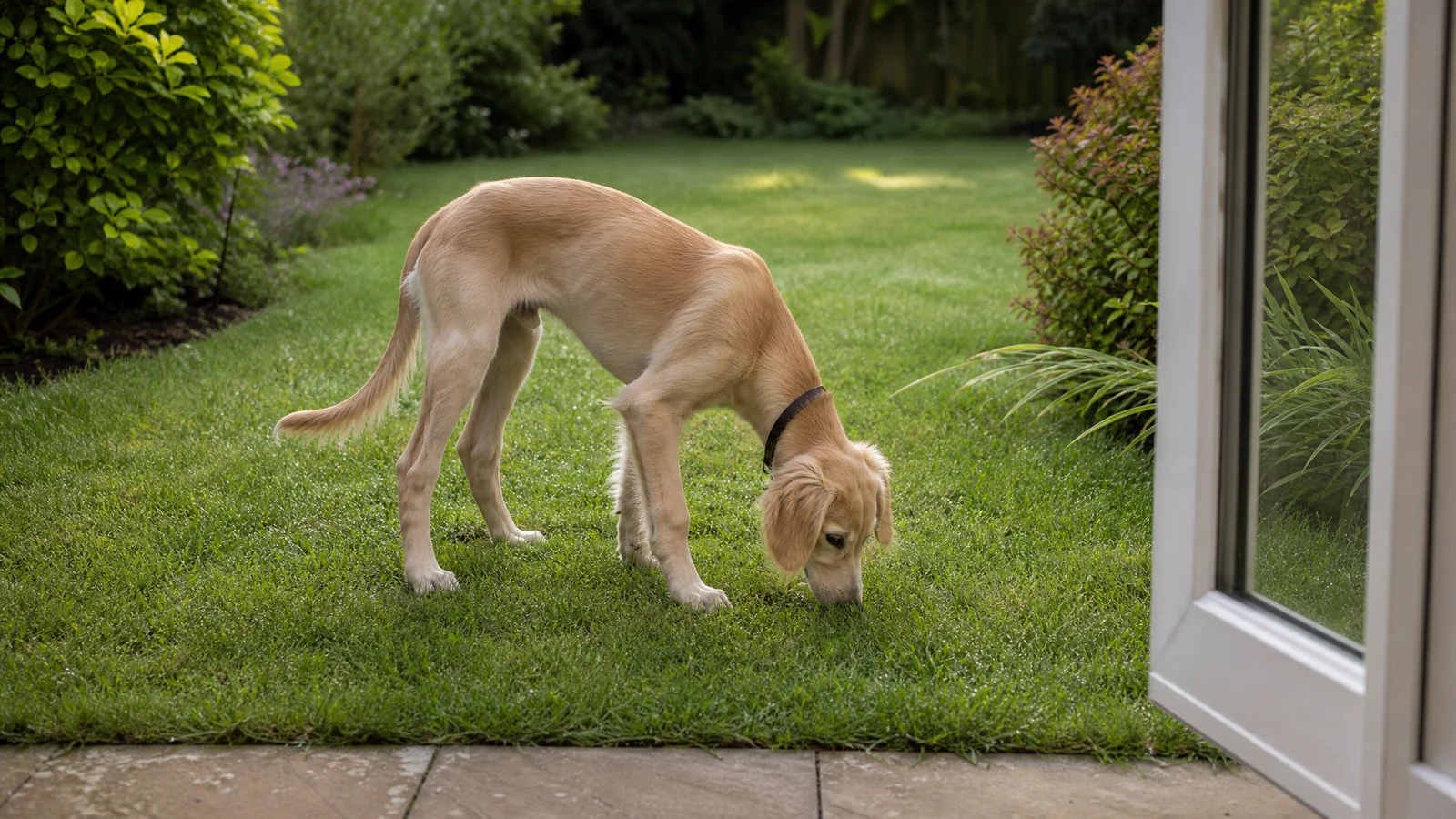
Between four and six months, a Saluki puppy gains strength and eyesight faster than self-control, and you feel that gap most at the far end of the leash, at the gate and in the doorway.
None of this means the early lessons failed. It means a puppy whose body has moved ahead of their brain needs the lessons upgraded, not restarted.
A hound who notices motion from far away has more to notice with every passing week. So the first adjustments are to what you hold, where you walk and which doors stay closed.
Read on for what changes, what slips and what to expect from a puppy who is reserved by nature. We also cover what is safe to let pass for now.
A Saluki Puppy Grows Stronger and Sees Farther
That gap starts in the body. Dogs get stronger as they age and, at around 5 months, their eyesight gets better, which means walks can get off track as they pull toward more things to smell, see and eat.
General puppy growth lands on a sighthound with extra weight. A Saluki's chase drive is already strong, and a sharper view of the distance puts more moving things in front of the puppy sooner.
So the plan for walks has to change before the puppy does. Keep outings on a leash you are already holding or inside a secure fence, and save real sprinting for the safe outlets in our Saluki exercise needs guide.
The point is to meet each new sighting with the leash already steady in your hands, because a pull that starts at full strength is much harder to rescue than one you were braced for.
Why Cues Your Puppy Knew Begin to Slip
Better eyes and a stronger body would be easy to plan around if the brain kept pace, but it lags behind, and that is where cues the puppy used to answer begin to slip. The reason sits in the head. The prefrontal cortex, which handles self-control, problem solving and social interactions, is still developing in adolescent puppies, so they are often more impulsive than adult dogs and may overreact to situations.
An independent hound can make a slip look like a decision, and it is humbling to watch a puppy who aced a sit in the kitchen look straight through you on the sidewalk. It helps to remember how much of the impulse control is still being built before you decide the puppy is ignoring you, and to make the right answer easy to find.
A Four-Step Reset for Keyed-Up Moments
When a puppy is too keyed up to answer anything, a short reset made only of easy, known cues gives their brain a quick win and brings their attention back to you. Here is how we would run it:
- Stand still first. Let the leash go slack and stop walking, because a puppy who is moving and staring at a distant sight cannot also listen.
- Ask for the easiest cue: a sit or a nose touch to your hand works well, since both are quick to answer and hard to get wrong.
- Mark and Pay at Once: a treat delivered at your knee makes the answer feel better than the pull and keeps the puppy's eyes close to you.
- Let the puppy look again only after they have answered, which teaches that the world stays interesting and that your cue is the way back to it.
Keep the reset short and easy while the stage is new, then use it in more places. If the puppy cannot answer even the easiest cue, add distance from whatever is pulling their attention. The longer project of coming when called has its own home in our Saluki recall training guide.
A Reserved Saluki Puppy May Look Warier
Cues are not the only thing that can wobble. A hound who is reserved with strangers by nature can meet visitors, new objects and unfamiliar places with more hesitation than before.
A puppy who stops at the edge of the room and watches a visitor from across it is, as Saluki people know, doing what the breed does. Hesitation like that deserves room rather than a push, so let the puppy pick the distance, pay for noticing the visitor and end the visit while the puppy is still curious instead of worried.
The American Animal Hospital Association's life-stage guidance for puppies makes the same point from the vet's side: puppies generally do not outgrow their problems, and exposure without evaluating the puppy's response may increase problem behaviors through sensitization instead of building positive socialization.
In practice that means watching the puppy's body, not the guest list. Our Saluki visitor guidance lays out the full greeting plan, and the section on help below covers what to do when hesitation turns into something more.
A Taller Puppy Needs a Different Home Setup
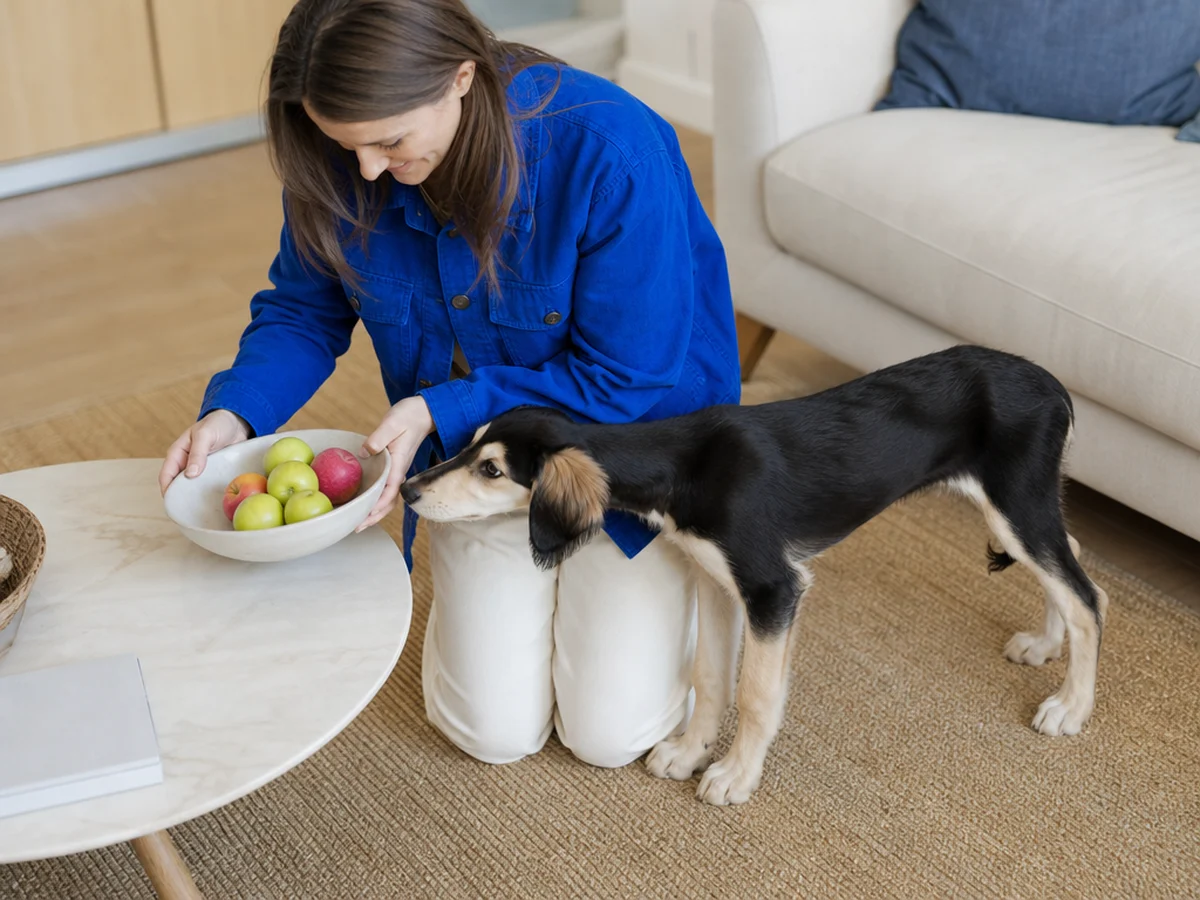
Slips and hesitation both ease when the puppy gets fewer chances to rehearse the wrong thing, and a taller body offers more of those chances than it did a few weeks ago.
Counters, trash cans and coffee tables that sat out of reach are now a stretch away, and a Saluki's long reach and good nose make the kitchen especially tempting. Move what you can, keep gates in the doorways you care about and use a crate or a gated room when nobody can watch, because a puppy who cannot reach the food cannot practice taking it.
Our Saluki counter manners guide teaches the rest. Chewing follows the same logic: keep a few safe chews in rotation so something permitted is always within reach, and trade calmly for them when the puppy picks up something else.
Management is not a sign that training has failed. For now it is part of the training, because every rehearsal you prevent is one the puppy never has to unlearn.
What This Stage Leaves Unfinished
Once the setup fits the puppy, it helps to know what even a well-run stage will not finish. The age ranges here are general puppy ranges, and a slow-maturing hound may carry some of this stage's habits into the next one, so a Saluki who still wobbles at six months is not behind. When these months are behind you, the next stage waits in our Saluki at six months guide.
Reliable recall is a long project rather than a goal for these months. That is why leashes and fences stay in the plan while the skill grows, one safe success at a time.
Regular veterinary visits keep growth on track, so mention a sudden change in appetite, movement or mood at the next one. Ask a reward-based trainer or behavior professional for help when a puppy freezes, hides or cannot recover after something new, or when a hesitation seems to deepen week after week.
Sizing Everything to the Puppy You Have Now
What stays unfinished is the other half of one idea: most of what changes in these months is the setup around the lessons, not the lessons themselves. The leash needs a steadier hold, the gate a longer reach, the practice spot an easier start and the visitor a little more distance, and none of that asks you to teach anything twice.
More changes are coming before this hound is grown, and our free e-book carries your Saluki's training through the stages ahead, with each need covered in full and explained in everyday words.
 BehaviorSaluki at 1 Year and Up: When Do They Calm Down?
 BehaviorTraining an Older or Adopted Saluki
 Puppy trainingHow to House Train a Saluki Puppy
