 Saluki
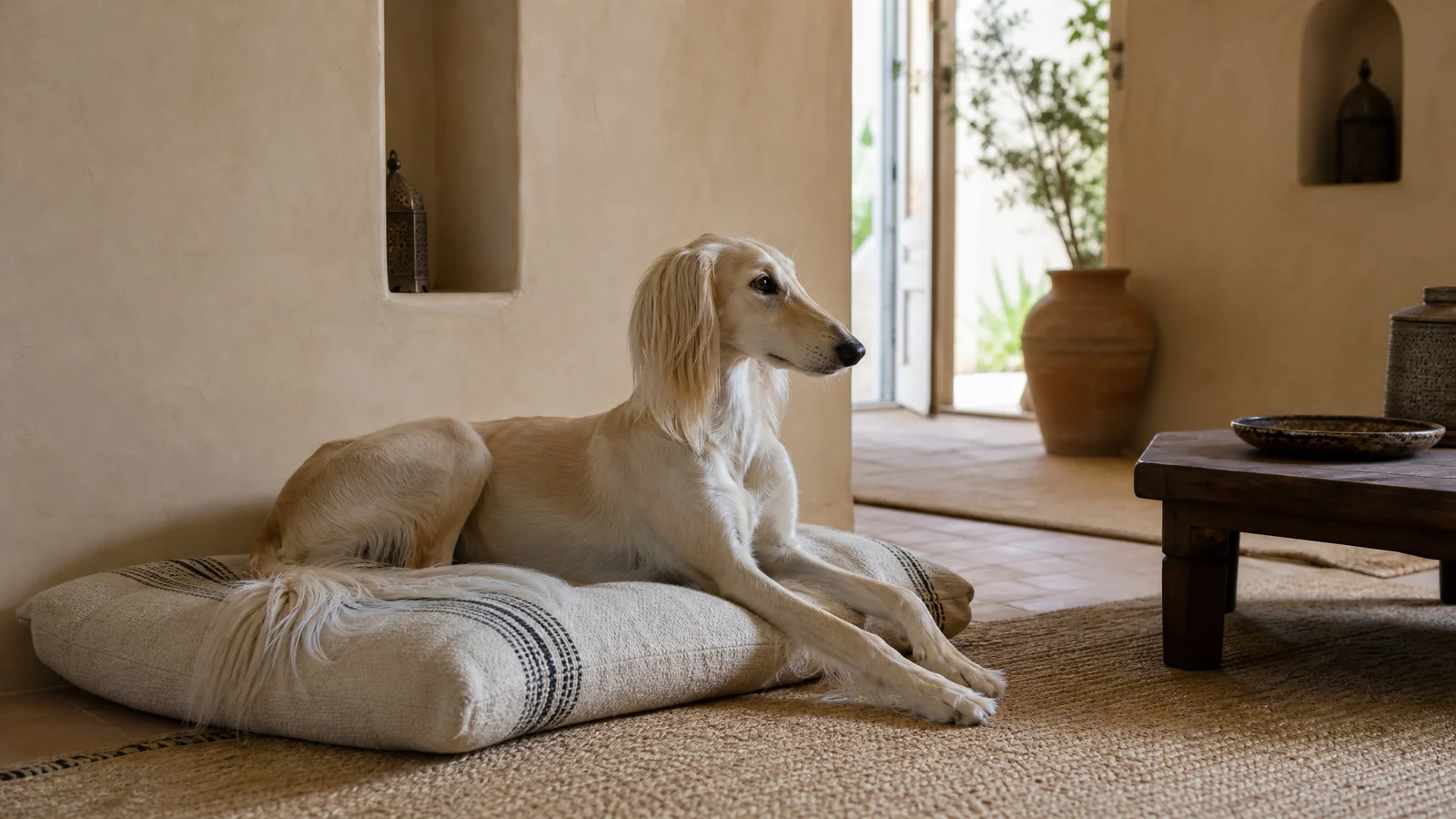
A reserved Saluki does not need to become the guest's friend for a visit to go well. The useful goal is a hound who can observe from a comfortable place, take information at their own pace and remain free from reaching hands. Pushing contact can turn ordinary caution into a conflict.
This guide carefully separates normal reserve from escalating distress, then builds a low-pressure arrival and observation routine. We cover the guest's exact job, rewarded choices at a safe distance and the decision between a brief greeting and continued separation. Neutral coexistence throughout the whole visit is treated as a complete household success, not as a disappointing step toward forced sociability.
Saluki Socializing Begins With a Distance Choice
Watch what changes when the visitor appears. A soft body, ordinary sniffing and the ability to turn away suggest the Saluki can process the scene. A fixed stare, closed mouth, forward lean or retreat without recovery means the current distance is not helping them learn.
The UKC Saluki standard describes the breed as reserved with strangers without being shy or aggressive. That distinction matters. Reserve is permission to withhold contact, while growling, lunging, frantic escape or inability to recover calls for more space and a careful safety plan.
Choose an observation station before anyone arrives. It might be a mat behind a gate, an open crate in another room or a bed beyond the guest's walking route. The Saluki needs a retreat behind them and a clear view that does not require standing in a doorway.
Test the Observation Station Without a Guest
Test the station on quiet days. Reward the hound for resting there while a household member walks in, sits down and moves around. Familiar rehearsals reveal whether the location works before an unfamiliar person adds social pressure.
Distance is not fixed for the whole visit. The Saluki may cope while the guest is seated, then become uneasy when the person stands or reaches for a coat. Move the dog farther away before those transitions rather than waiting for a reaction.
Plan the retreat as carefully as the viewing position. A narrow route behind the guest can make leaving feel impossible even when the mat appears distant enough. The dog should be able to move into a quieter room without crossing the visitor's feet or squeezing past furniture.
Use ordinary eating as one indicator, never as the only test. Some hounds continue taking food while their muscles stay tight and their attention remains fixed. Combine appetite with posture, breathing, scanning and the ability to choose rest.
Stage Saluki Socializing Before the Door Opens
Send the guest a simple script in advance. A person who learns the rules at the door may already be facing, speaking to or reaching toward the dog. Preparation lets the household concentrate on the Saluki instead of correcting a well-meaning visitor in real time.
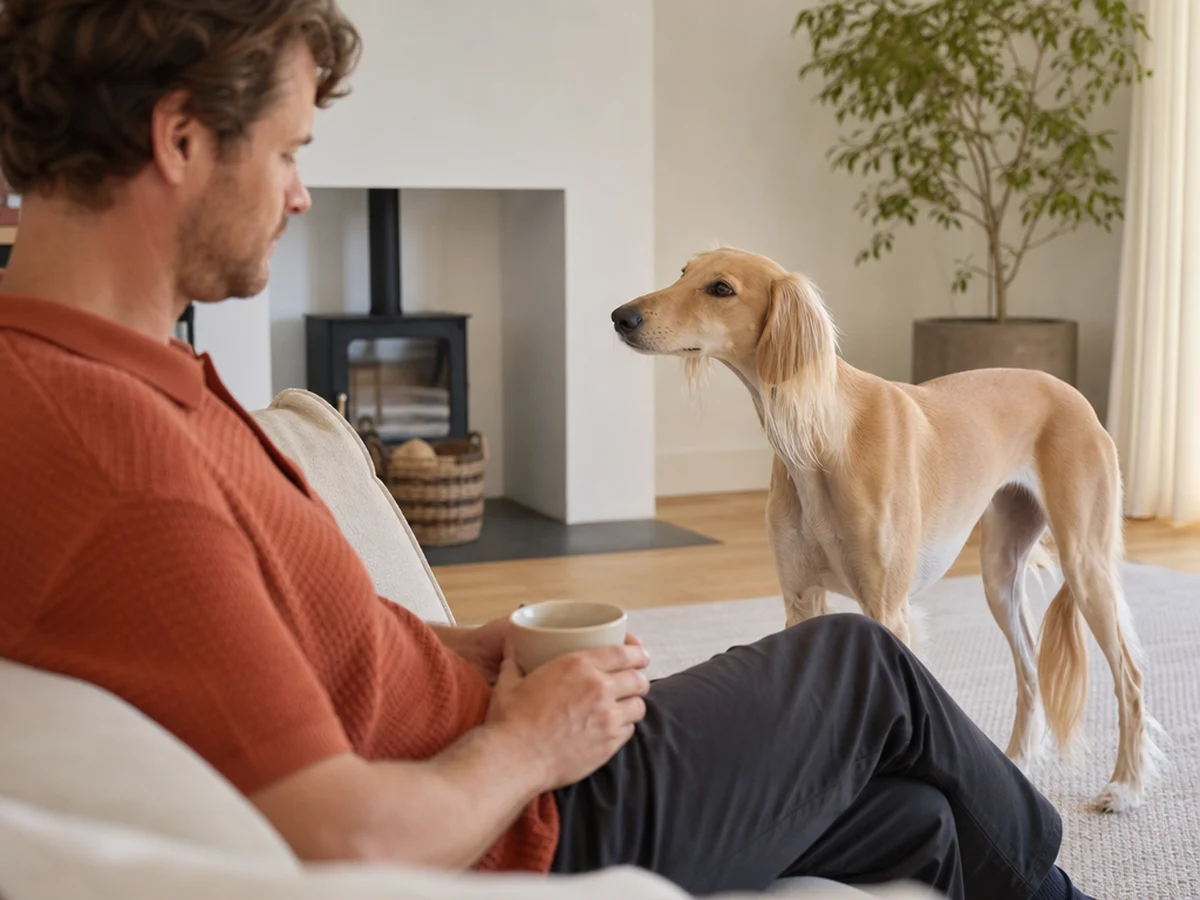
Ask the visitor to enter at an angle, place belongings down and sit without approaching. They should avoid staring, calling the dog's name or offering a hand to sniff. Scent reaches the hound without a hand in their space, and the Saluki can decide whether to gather more information.
A workable guest script is short enough to remember. Read it once with the helper before the rehearsal begins:
- Enter along the planned route and leave the dog's station undisturbed.
- Turn the body slightly away and keep hands close to the person's own lap.
- Let the handler deliver rewards so food never pulls the Saluki toward contact.
- Remain seated until the handler moves the dog behind a barrier for transitions.
- Accept that no greeting may occur during this visit.
Place Rewards Away From the Visitor
The handler should have rewards ready at the station, not by the guest's chair. Reward a glance followed by a turn away, a loose posture or a return to sniffing. Those behaviors show that the hound can notice the stranger without becoming trapped in observation.
Do not let a treat from the visitor lure the Saluki closer than they would choose without food. The dog may approach to eat, then look up and discover an unfamiliar person at close range. Handler-delivered reinforcement avoids creating that approach-and-retreat conflict.
The site's Saluki temperament guide can help families set broader household expectations. A visitor routine works best when every person already understands that calm distance is a valid social behavior.
Practice the human choreography without the dog if the room is tight. One person opens the door, the guest follows the planned path and another person checks the retreat route. Removing awkward crossings in advance prevents a handler from pulling the Saluki aside while greeting someone.
Keep arrivals separate from household commotion. Pause deliveries, meals and children's play during the first rehearsals. A simple environment makes it possible to tell whether the guest routine itself is becoming easier.
Reserved Behavior Around Strangers Can Earn Rewards
Begin with an adult helper who will follow the script and leave promptly. The helper enters, sits and becomes quiet. Reward the Saluki for checking in with the handler, relaxing on the station or choosing an activity that does not involve monitoring the person.
RSPCA training advice supports rewarding behaviors so they become more likely again. Here, the important behaviors are disengagement and composure. We are not paying the dog to move closer or asking them to suppress clear requests for distance.
Reward placement should support the next choice. Place food on the station or slightly away from the visitor, not on the edge nearest the chair. After the Saluki eats, pause long enough to see whether they settle, retreat or resume watching.
Use the same helper for several rehearsals before changing people. Familiarity with the person's smell and movement lets the dog learn the sequence. A new hat, deeper voice or faster step can then be introduced as one change rather than part of an entirely new scene.
When the Saluki Watches Quietly
Quiet watching can be a middle state rather than full relaxation. Read the hound's muscles, breathing and ability to look elsewhere. If eating becomes fast or the stare stays fixed, increase distance even though barking has not begun.
Give the Saluki another activity after a few successful observations. A sniffing search behind the barrier or rest in a quiet room ends the social exposure without drama. Short, readable visits are more useful than waiting for tolerance to run out.
When the Saluki Leaves the Station
Movement toward the guest does not automatically request touch. Call the hound back, reward at the station and examine what prompted the approach. Food, a dangling sleeve or the person shifting position may have drawn curiosity without creating comfort.
If the Saluki moves away, let them go. Do not block the retreat or ask the guest to follow. Voluntary distance is valuable communication, and honoring it reduces the need for louder warnings.
When the Saluki Cannot Recover
Restore full separation and allow the visit to continue without the dog. A closed door, sturdy gate or quiet room is not a training failure. It prevents a distressed hound from rehearsing alarm while people talk, eat or move unpredictably.
The AVSAB position statement supports reward-based work for behavior concerns. Seek qualified reward-based help if the Saluki has attempted to bite, repeatedly lunges or cannot settle even with generous separation.
Give the professional a clear description rather than a breed label. Note the distance, visitor movement, barrier and recovery time around each incident. Those conditions let a professional choose an initial arrangement without recreating the hardest moment.
Greeting or Separation for Reserved Strangers
A greeting is optional and should follow evidence, not a schedule. Compare the Saluki's behavior across the visit before deciding. The dog who approaches loosely, sniffs and moves away differs from the hound who stretches forward while keeping their weight back.
| Saluki response | What it suggests | Best next step |
|---|---|---|
| Loose approach and easy retreat | Curiosity without obvious pressure | Allow a brief sniff while the guest stays still |
| Fixed watching with fast eating | The dog is coping, not settled | Add distance and continue observation |
| Hiding, lunging or refusing food | The setup is too difficult | Use full separation for the visit |
| Resting away from the guest | Neutral coexistence is working | Protect that choice and avoid contact |
If contact is offered, the guest remains still and lets the Saluki sniff without reaching. Call the dog away after a moment and reward the return. Repeated choice matters more than the length of the interaction.
A second approach is not required. The Saluki may gather enough information once and settle elsewhere. Protect that outcome instead of calling them back for a social performance after the meaningful choice has already occurred.
Children and Moving Guests Change Saluki Socializing
Use separation when visitors cannot follow the plan. Children, large gatherings and people carrying food create movement that can erase the distance built into a quiet rehearsal. Management is the appropriate answer when the social setting cannot be controlled.
Do not ask a child to deliver treats through a barrier or remain perfectly still beside the dog. An adult manages both sides of the setup, and the Saluki rests in a separate space when the room becomes active. Safety must not depend on a young guest remembering detailed instructions.
A sudden change in comfort around familiar people deserves attention. Schedule regular veterinary care and discuss new sensitivity, withdrawal or startle responses with the veterinarian. Physical discomfort can alter tolerance even when the household routine has not changed.
The site's secure Saluki yard routine shows how barriers and planned transitions reduce rushed decisions. Visitor management uses that same clarity indoors, but the current social response sets the starting distance rather than an expected schedule.
Keep a Simple Saluki Visitor Record
After the guest leaves, note the starting distance, hardest movement and time needed to resume ordinary behavior. Compare patterns rather than labeling one session good or bad. A smaller reaction with faster recovery can be meaningful even when the Saluki still chooses no contact.
Record which choices the dog made without prompting. Resting, walking to the retreat or checking in with the handler can show increasing control. A closer approach is not automatically the best sign if posture became tighter and recovery took longer.
The finished goal is a household rule everyone can follow. The Saluki has a protected station, the guest knows how to become predictable and the handler chooses greeting only when the dog's whole body supports it. Calm separation remains a complete success whenever contact would add pressure.
 BehaviorHow High Can a Saluki Jump? Escape-Proofing Your Yard
 BehaviorKeeping Small Pets Safe Around a Saluki Who Chases
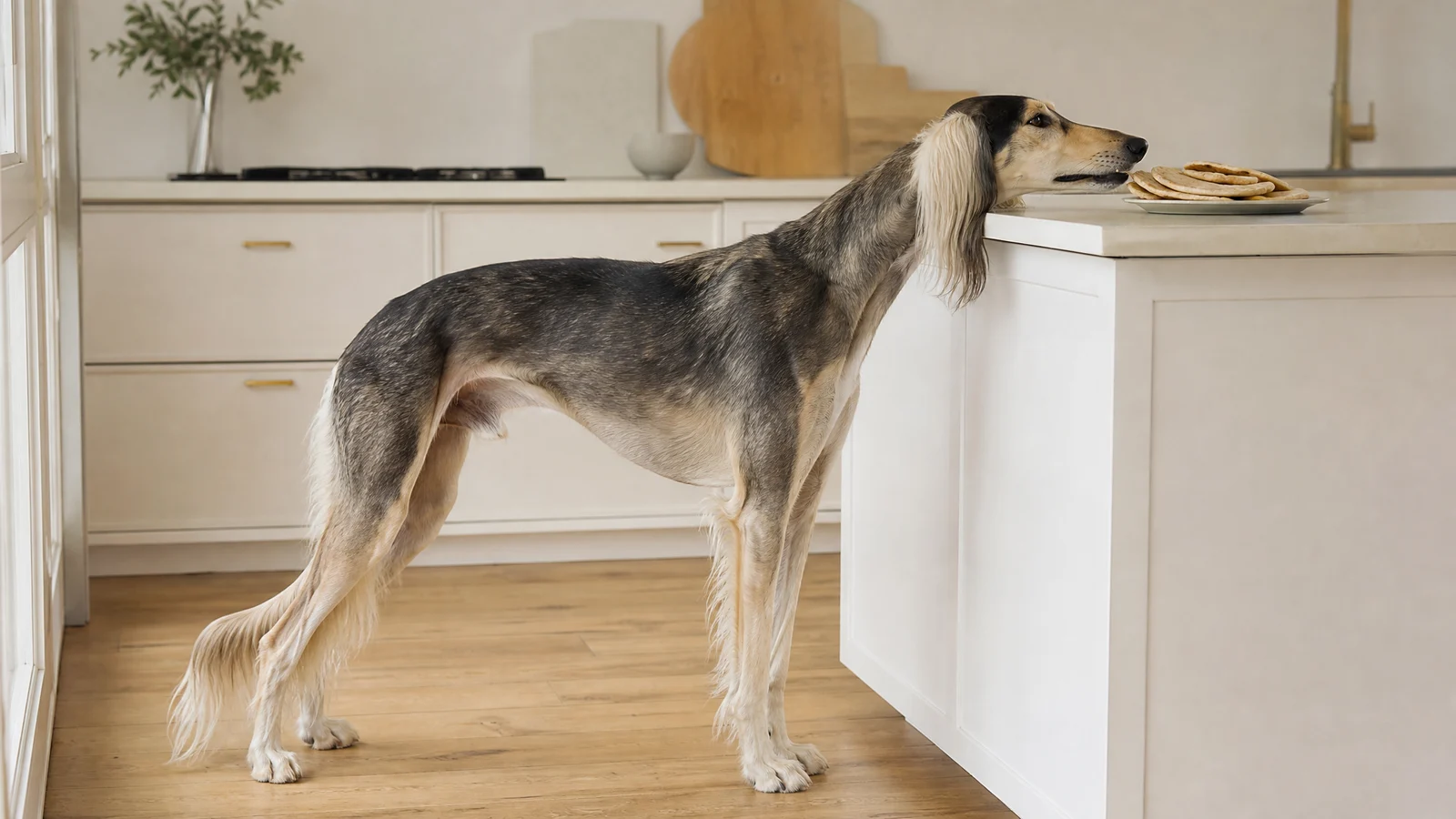 BehaviorCounter Manners for a Saluki With a Long Reach and a Good Nose
