 Saluki
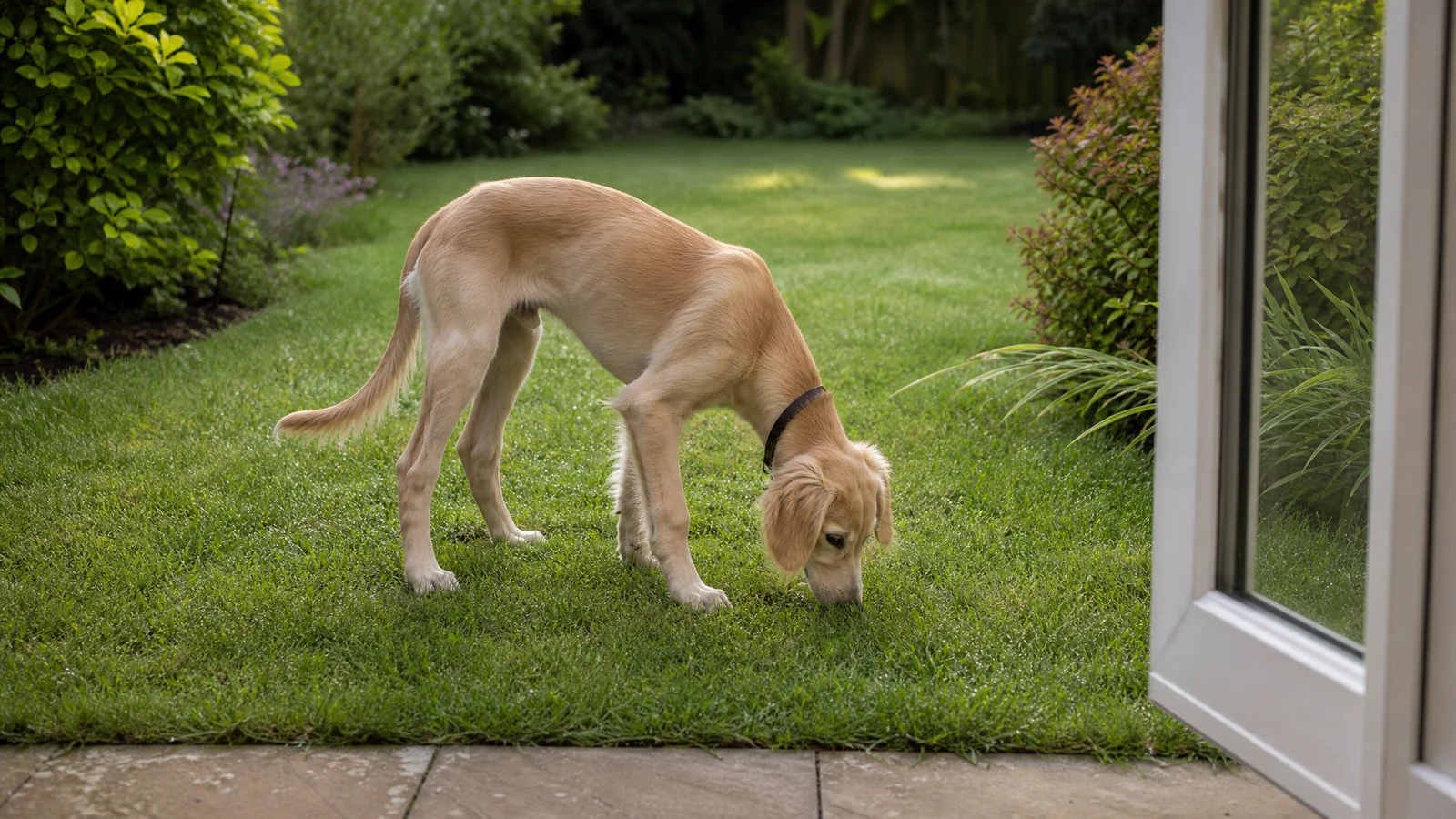
Every accident you do not see counts as practice for the wrong place, which is why house training a Saluki puppy has less to do with correcting mistakes than with being in the right spot, treat in hand, before one can happen. The puppy does not need to understand a rule. They need a routine that makes the right place easy to reach and worth the trip.
A Saluki adds two wrinkles to that routine: an independent mind that does not do things just to please you, and a hound's readiness to bolt after anything that moves, which shapes every trip outside. Read on for the setup, five stages that carry a puppy from leash-and-wait trips to a house they can be trusted in, and the fixes for the stalls that catch most owners.
Why Potty Training a Saluki Is a Planning Job
The surprise of house training is how little cleverness it asks of the puppy. Dogs naturally avoid soiling where they sleep, but outdoor toilet habits are learned, so a new puppy has no idea that the yard is the place and the kitchen floor is not. That makes the work yours to plan. You put the puppy in the right spot at the right moments and make the spot pay, and the puppy slowly notices that going there is a good deal.
A Saluki is gentle and dignified, but also independent-minded, so the payment has to be worth noticing. Small, tasty treats handed over the instant the puppy finishes outside do that job far better than a bored "good dog" from the doorway. The other trait shapes the routine just as much. A Saluki is ready to chase anything that moves, so a trip to the yard is never an unleashed romp, and every trip in this plan begins with a leash clipped on indoors.
Getting the Potty Spot Ready
Because the plan works only if you are ready at the right second, collect the kit before the first trip. Here is what to have in place so nothing needs hunting for while a puppy is circling:
- One potty spot. Choose a single patch outdoors, ideally near the door you will always use, so the smell and the place begin to mean one thing.
- A treat kept for that spot. Pick something tiny and tasty that the puppy earns only by finishing outside, and keep a handful by the door.
- A leash by the door. It goes on indoors, before the puppy reaches the threshold, every single time.
- An enzymatic cleaner. Ordinary cleaners leave scent behind, and scent pulls a puppy back to the same indoor patch.
- Set mealtimes. Food at planned times makes the toilet times predictable, while a bowl that is always full makes them random.
- A den area. A crate or pen sized so the puppy can stand, turn around and lie down covers the hours you cannot watch.
Notice what is missing: no pads and no gadgets. Everything on the list exists to make one outdoor spot easy to reach and well paid, and our crate training steps show how to make the den area a place the puppy likes.
Potty Training a Saluki Puppy, One Stage at a Time
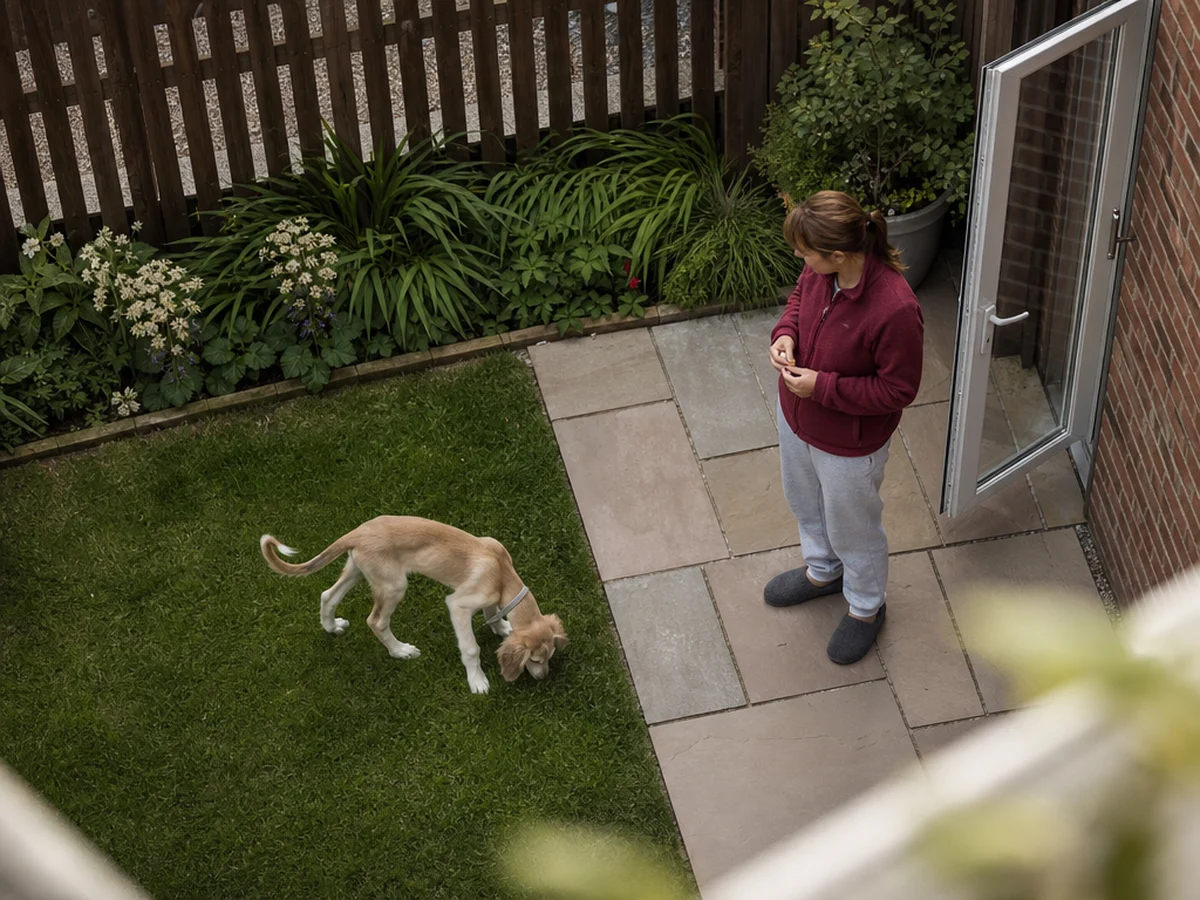
With the kit ready, the method runs in five stages, and you stay on each one until the puppy has been clean at it before you move to the next. Each stage below says what you do, what the puppy does, when to pay, how to know it is time to move on and what to do if the puppy stalls.
Stage One, the Leash-and-Wait Trip
Everything starts with a trip that is boring on purpose. Build the day around breaks within 15 minutes of waking, eating, drinking or a burst of play.
Work out a puppy's holding time first: most pups can hold it for the number of months old they are in age, plus one, so a two-month-old pup can hold it for up to about 3 hours, though this may be stretched a little during sleeping hours. In our experience that holding time works as a ceiling, so go out sooner than the math says. When the clock or the moment says go, run the trip the same way every time:
- Clip on the leash indoors and carry or walk the puppy straight to the potty spot.
- Stand still or stroll slow circles close to the spot, and stay quiet. Talking, playing or pointing things out only delays the job.
- Wait. The puppy sniffs, circles and, sooner or later, starts to go.
- The instant they finish, say a bright "yes" and hand over a few small treats, one after another, right at the spot.
- Only now release the fun: a game, a walk, a sniff around the yard.
Pay at the spot, not at the door, because the puppy connects the treat to whatever happened a second ago. If nothing happens, American Humane advises that after about 10 minutes you come back in with the puppy still on the leash and go out again 10 to 15 minutes later, repeating as needed.
When to Move On From Stage One
Stay on this stage until the puppy has finished outside on trip after trip for several days in a row. If the puppy would rather play, shorten the leash, remove toys and other animals from the area, and keep giving the puppy nothing to look at but the ground. A Saluki's eyes go to movement, so choose a spot where little moves.
Stage Two, Watching Between Trips
Most accidents happen in the gaps between trips, so the second stage is about never letting a loose puppy out of your sight. The steps are short:
- While the puppy is awake and loose, keep them in the room with you, on a leash tied to your waist or behind a gate. When you cannot watch, they go in the den area.
- Learn the warning signs: sniffing the floor, circling, pacing, whining or standing at the door.
- At the first sign, clip on the leash and go straight to the spot, carrying the puppy if you can.
- Pay outside exactly as in stage one.
If you keep finding puddles after the fact, you are not watching closely enough, so shrink the puppy's space until you can. Move on when a stretch of days passes without a puddle indoors.
Stage Three, Stretching the Time Between Trips
Once indoors stays dry, lengthen the gaps a little at a time, never by a big jump. Hold each new gap until the puppy has stayed clean at it for several days in a row, and keep the holding-time ceiling from stage one in mind.
If accidents return, you moved too fast. Drop back to the last gap that worked, watch more closely and let the clean days build again before you try the longer one. A short step backward costs a few days, and it costs far less than a puppy who learns that the carpet is acceptable.
Stage Four, Adding the Cue and a Door Signal
The puppy now goes reliably on trips, which makes this the time to attach a word and teach the puppy to tell you when they need to go. Here is how it goes:
- On trips that are already working, say a short cue word quietly just as the puppy begins to go, then mark and pay as usual. Use the same word every time, and never while the puppy is still sniffing.
- When the puppy walks to the door or stands near it, treat that as a question. Open up, clip on the leash and go to the spot.
- Pay the trip when it ends in success, so heading for the door starts to mean something good.
Move on when the cue arrives just as the puppy starts and the puppy often heads for the door ahead of you. If your puppy never signals, do not wait for one. Stay on the clock and keep watching, because the signal is a bonus and not the test of the training.
Stage Five, Opening the House Room by Room
Freedom comes last. Open one extra room, and be in it with the puppy, in sight, until the puppy has stayed clean there for several days in a row. Then add another. If an accident happens in a newly opened room, close it again and go back to the last room that worked. A puppy who is clean in the kitchen is not yet clean on a rug in the bedroom, so every new room is a small new lesson.
When a Potty Accident Happens Anyway
Even a well-run plan produces accidents, and what you do in the next minute decides whether they teach the puppy anything useful. If you catch the puppy starting, calmly pick them up, clip on the leash and carry them to the spot, then pay if they finish there. A quiet scoop is enough, and scolding adds nothing, because punishing a puppy for accidents is ineffective and may lead to further and more serious behavioral problems.
If you find a puddle later, say nothing to the puppy. A puppy is unlikely to connect it to something that already happened, so the real fix is closer watching. Clean the spot fully with the enzymatic cleaner so the scent does not draw them back, and take a soiled paper towel out to the potty spot, where the smell points to the right place.
Saluki House Training Tips for Nights and Time Alone
Everything so far assumes you are awake and watching, and nights and workdays are when you are not. Make the last trip of the evening a full stage-one trip, then expect a night trip or two while the puppy is young. Keep those quiet and dull: leash on, straight to the spot, a calm word and a treat if they go, then back to the den area and back to sleep. If nothing happens, skip the play and go back to bed.
When you have to be out, the puppy goes in the den area, sized so they can stand, turn around and lie down comfortably and no bigger, because extra room gives a puppy a corner to use as a toilet. If your day runs longer than the holding time allows, ask someone to take the puppy out. A routine that puts those trips around meals and naps is laid out in our daily routine for Saluki puppies.
When Potty Training Stalls
Stalls are where a clear plan earns its keep, because each one has a reason you can find. Match what you see to the entries below, and change one thing at a time.
Nothing happens outside, then a puddle appears indoors. The puppy finished the trip without going and then relaxed in the house. Go back out on the leash after a short while, and pay generously when it finally happens.
The puppy plays or sniffs and goes nowhere. Shorten the leash and stop talking. Interest in something moving is a hound's habit, so move the spot away from the fence line if birds or neighbors keep catching the puppy's eye.
Accidents in the den area. Check the size first. If it lets the puppy stand, turn and lie down and nothing more, and accidents continue, contact your vet before anything else.
A sudden backslide in a puppy who had been clean, or accidents that do not improve with a steady routine, call for a vet exam as the first step, because a health problem can look exactly like a training problem. As Saluki people, we would rather you check early than spend weeks retraining a puppy who was never able to hold it. Regular vet visits also give you a chance to raise toilet concerns before they grow.
Smaller Puzzles in the Potty Routine
A few details sit outside the stage-by-stage plan and still trip up many households, so here are four of them. Each is a question owners ask us, so the answers stay short.
Can a walk count as the reward?
Yes, once the puppy has finished. Potty first, then the walk, so the walk pays for the toilet instead of replacing it. Going for the walk first lets distractions beat the routine, and the walk is always on a leash.
Why does my puppy leak when greeting people?
A puppy who goes while saying hello may be excited or a little worried, not careless. Skip bending over the puppy or reaching over their head. Turn slightly sideways, get lower and pet the chest, and ask guests to keep the hello quiet. Scolding would add worry to a greeting that already has some.
Does an adopted adult Saluki need the same plan?
The stages are the same, but an adult has better control and needs fewer trips, so the clock is longer. Treat the first days in a new home as a fresh start. A previously clean adult who suddenly has accidents needs a vet visit before any retraining.
Is a leash needed inside a fenced yard?
For potty trips, yes. The leash keeps the trip boring and close to you, so you can pay at the right second, and it stops a puppy who spots movement from turning a toilet trip into a sprint. The yard is still worth securing, as our guide to escape-proofing your yard explains.
The Door Habit Outlasts the Toilet Lesson
Look at what you have been rehearsing, apart from the toilet: leash on indoors, a calm walk through the door, a pause at one spot and a reward for staying with you. For a hound who goes outside only on a leash or inside a secure fence, that is the front-door routine for every outing they will ever take.
So when accidents turn rare and the puppy heads for the door ahead of you, the toilet lesson is finished and the habit is not. A Saluki who learned to wait calmly at the spot is already practicing the manners that keep a fast dog safe. Once the potty trips run themselves, our complimentary e-book, sent by email after you sign up, goes on to everything else a Saluki puppy must learn and keeps every explanation short enough to read between trips outside.
 Puppy trainingHow to Stop Saluki Puppy Biting
 Training basicsHow to Teach a Saluki to Sit
 Training basicsHow to Teach a Saluki to Stay
