 Saluki
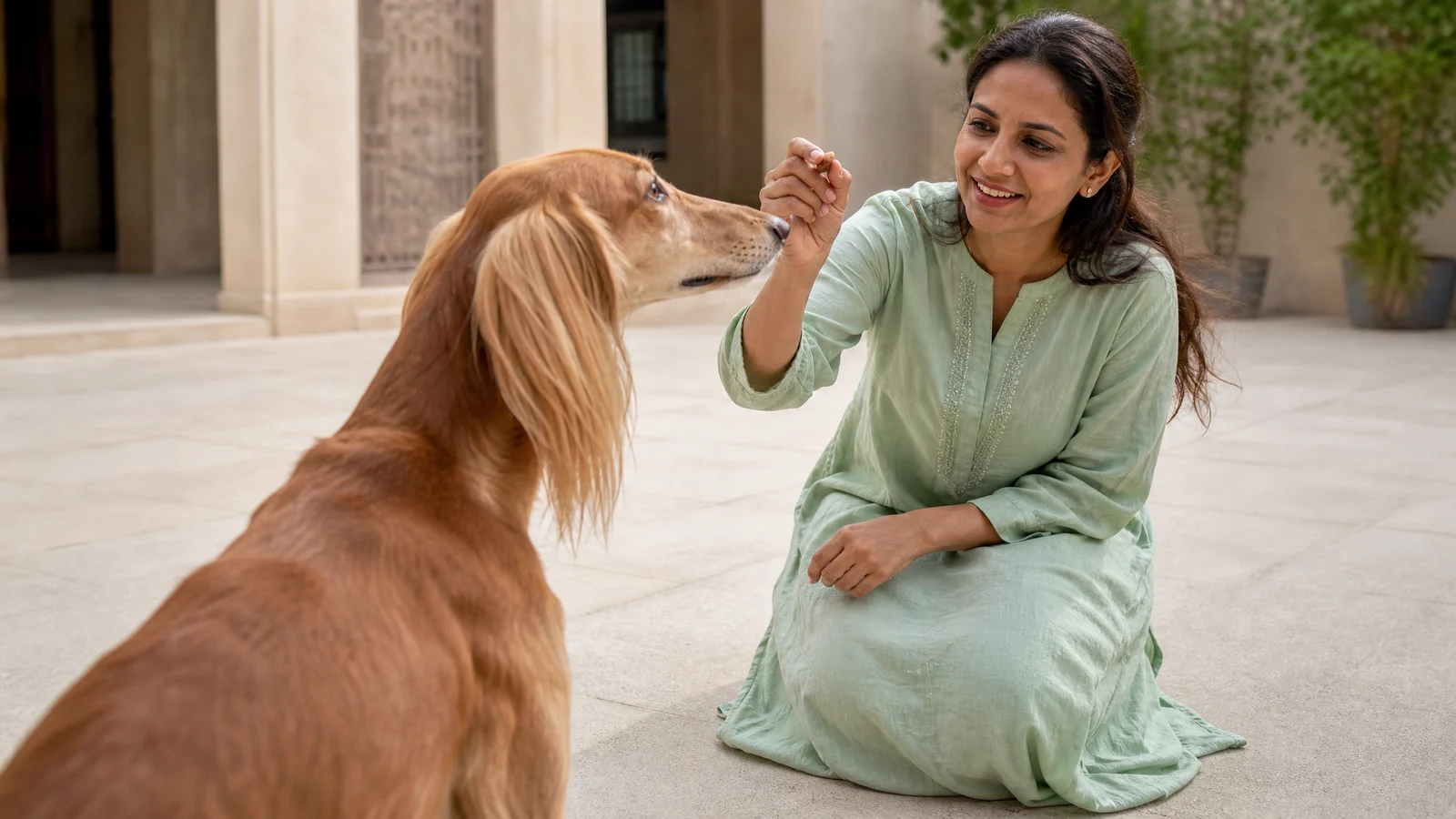
A sit gives a Saluki a simple, rewarding job in the middle of a busy house, and it makes a friendly first lesson because dogs already fold into the position on their own many times a day. A Saluki is gentle, independent-minded and quick to chase anything that moves, so the lesson has to be short, quiet and well paid. Read on for the setup, the three steps that carry a Saluki from following a treat to answering a word, and answers to the doubts that tend to follow.
What changes from breed to breed is the setup. Nothing here needs a leash, a clicker or a class.
Why Sit Works as a Saluki's First Job
That mix of traits is exactly why sit earns its place. A gentle dog never needs to be pushed into position, so the whole lesson can run on food and patience. An independent-minded dog decides whether your offer beats the room, so the pay has to be good and the room has to be dull. A hound who chases whatever moves is a reason to start where nothing outside is moving.
Sit is also useful rather than obligatory. Ask for it when a pause helps, such as before the food bowl goes down or before a visitor reaches out for a hello, and leave the rest of the day free of toll booths. It is one cue inside the wider Saluki training overview, and it suits the calm, house-rule temperament this breed brings indoors.
Setting Up a Saluki for the First Sit
With the plan set, the room does half the teaching. Gather these before the first treat leaves your hand:
- A quiet room: Close the curtains or pick a spot away from the window, since anything moving outside will outbid a treat.
- Small, soft treats that your Saluki can swallow in one bite, so the lesson never stops for chewing.
- A surface that grips. A rug or mat keeps the back feet from sliding as your dog lowers.
- Pick one marker word such as “yes”, said at the instant the rear touches down and always followed by a treat.
Treats that disappear quickly keep the rhythm going, and a marker tells your dog exactly which moment earned the pay. Having all four ready means a lesson can start and stop in a moment, which suits a dog who drifts.
One check comes before any teaching. Sitting should not be demanded of every dog: the MSPCA-Angell behavior department points out that older dogs and dogs with hip pain or other chronic pain should not be required to sit, and that a simple wait will do just as well.
Dogs differ, and a sit that is easy for one body can be uncomfortable for another. If your Saluki hesitates, seems stiff or avoids folding, skip the lesson and ask your veterinarian, and keep regular vet visits on the calendar either way.
Teaching the Saluki Sit Command in Three Steps
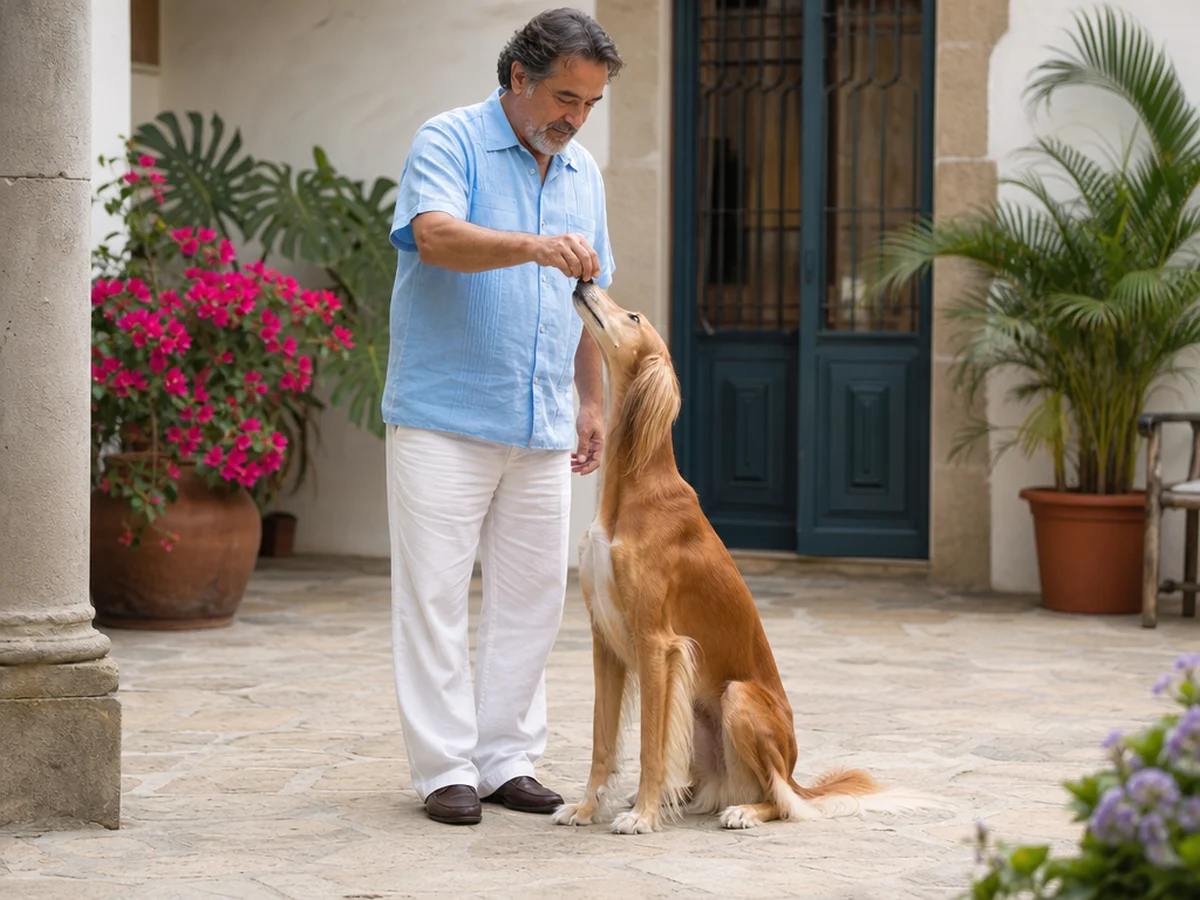
With the room ready, the method is three small moves, each one easy enough that your Saluki is rarely wrong. Stay on a step until your dog does it smoothly several times in a row, then move on.
Lure the Fold With a Treat
Start with your Saluki standing in front of you, all four feet on the floor. A dog who sits on their own at this moment has just done your job, so mark the sit and pay it. Otherwise, guide it with these steps:
- Hold a treat at your dog's nose without letting them take it.
- Draw your hand slowly back over the top of their head.
- Watch for the rear lowering as the nose follows the treat, and say your marker the instant it touches the floor.
- Hand over the treat right where your dog sits, then step away to reset.
The movement works because, as the nose goes up, the rear goes down, so you never need to touch your dog. If they back up, your hand is moving too far or too fast, so shorten the path. If they jump for the treat, hold it lower and slower. If your Saluki turns toward the window, the lesson is over for now, and a quieter room tomorrow will serve you better.
Positive Reinforcement Saluki Training Pays at the Landing
The pay is the lesson, so deliver it at the landing, not after your dog has stood up again. Say the marker as the rear touches down, give the treat while they are still sitting, then release with a cheerful word like “okay” so the sit has an end. A dog paid late learns to stand, and an independent hound will happily learn that. Move on when the rear lowers for your hand every time without a pause.
Shrink the Lure to an Empty Hand
Next the food leaves your hand. Make the same slow motion with nothing in it, mark the instant the rear lowers and pay from your other hand or a pocket. The hand is now a signal rather than a bribe, and your Saluki learns that the treat follows the sit instead of leading it. If the rear stays up, go back to a treat in the hand for a few tries, then try again.
As Saluki people, we would rather see you stop on an easy win than push for one more attempt, and once the empty hand works smoothly several times in a row, make the motion smaller until a small lift of the palm is enough.
Naming the Sit and Taking It Outside
A Saluki who sits for an empty hand is ready for a name. Once the motion is consistent, you can start adding the word in a calm voice, and try not to repeat it. Say “sit” once, pause for a breath, then give the familiar hand motion. If your dog sits, pay. If not, repeat the motion without repeating the word, because a word said over and over teaches your dog to wait for the last one.
Then change one thing at a time: the room, your position or a little background noise. A sit that works in the kitchen often vanishes in the hallway because the dog learned the place, not the word, so go back to a treat in the hand for the first tries somewhere new. Save open fields and fast-moving neighbors for your recall training and keep them out of this lesson.
Sit Doubts in a Saluki Household
The method stays the same for every Saluki, but a few situations bend it. Here are the four that matter most when the sit meets a real household.
What if my Saluki just walks away?
Walking off is information, not defiance. The lesson has probably run too long, the treat is not worth the trouble or something outside is louder than you are. End while your dog is still willing, make the next lesson shorter, move to a quieter room and upgrade the treat. An independent-minded hound returns to a lesson that pays well and ends before it gets dull.
Will a sit stop my Saluki from chasing?
No, and it should not be asked to. A sit is a manners cue for calm moments, while the urge to chase anything that moves belongs to the breed. Safety comes from a leash or a secure fence wherever something might run, not from a cue.
Will my Saluki need a treat for every sit?
Not forever. Once the sit is dependable, pay some of them with a treat and others with praise, a scratch or the thing your dog wanted, such as the door opening or the bowl going down. Keep treats coming often enough that the cue stays worth answering.
Does a crooked or sideways sit count?
Yes, if your dog folds and stays down long enough to be paid. Bodies differ, so a sit tilted onto one hip is still a sit. If it always tilts the same way, or your dog seems sore or reluctant to fold, mention it at the next vet visit.
Catching the Sits Your Saluki Already Offers
The best practice sits are the ones you did not ask for. Dogs fold down on their own all day, and a Saluki who sinks onto the rug while you pour coffee has just offered the lesson for free. Say your marker and pay quietly, and ordinary moments become extra practice with no extra effort. Those caught sits teach your hound that the position pays whether or not you asked, which keeps the cue alive long after the lessons end.
A Saluki who sits has learned only the first cue, and our e-book, which you can have at no cost, covers the cues, manners and daily habits a long-legged, independent hound needs, laid out so you never have to hunt for the next step.
 Training basicsHow to Teach a Saluki to Stay
 Training basicsHow to Teach a Saluki to Lie Down
 Training basicsHow to Teach a Saluki to Heel
