 Saluki
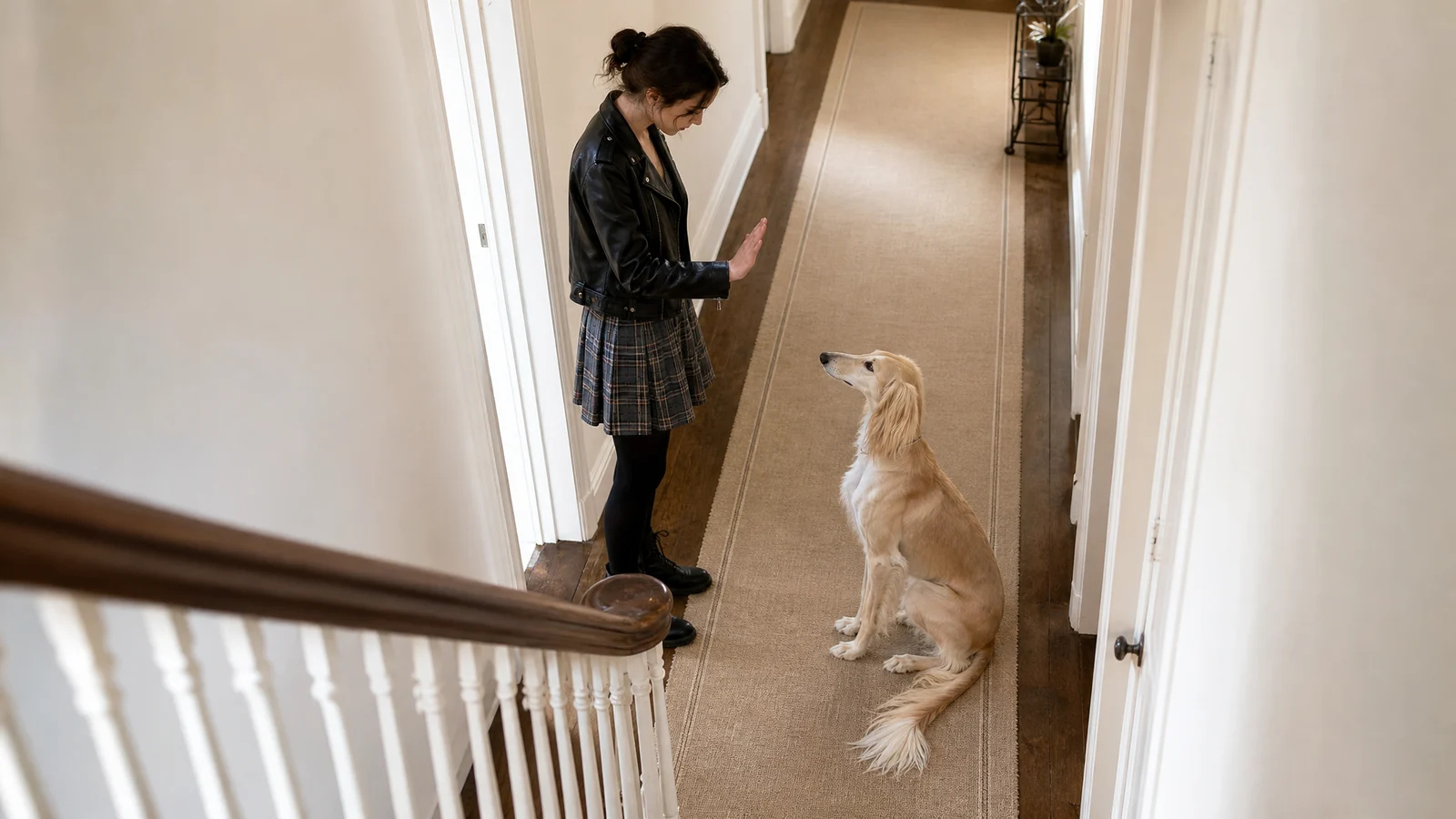
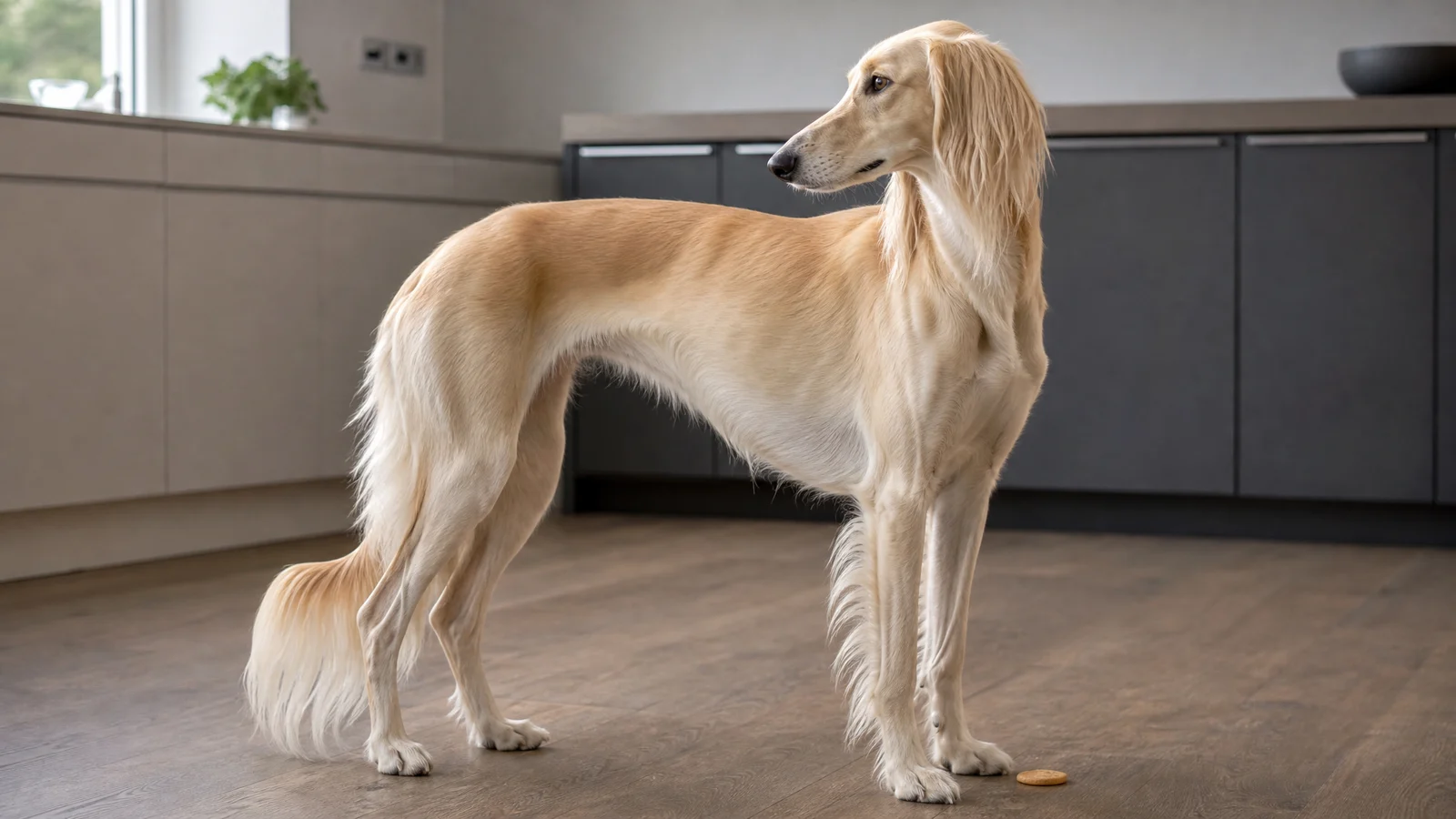
Your Saluki spots the squirrel, the cyclist or the neighbor's cat before you have finished turning your head, and a solid stay is what turns that sighting into a pause instead of a launch. A hound built for speed will not hold still just because you asked, so the hold has to be taught as a job that pays.
The method is the one that works for any dog: reward the hold, end it with a clear release word and grow time, distance and distractions one at a time. Salukis are dignified, gentle and independent-minded, so the pace stays slow and generous rather than drilled.
None of it is complicated, but the order matters, so read on for the release word, the three-part build and the fixes for a stay that keeps falling apart and a few household questions.
Stay Versus Wait for a Long-Legged Hound
Before you teach anything, decide which of two cues you are really after, because they sound alike and ask for different things. Cornell's veterinary college splits them this way: a stay means hold a position until you return or release, while a wait is a brief pause with another instruction coming soon. Dogs do not generalize as easily as humans do, so each word needs one meaning only.
For a Saluki, that means using wait at the crate door or the car door, where the pause is short, and saving stay for the longer holds, like carrying in groceries or answering the door. Pick the word you will use for each and tell everyone in the house, so a hound who reads movement closely never has to guess.
Release Word First, Then the Saluki Stay Command
A hold only makes sense to a dog who knows when it is over, so the release word comes first, before any hint of distance. We teach it before the stay itself, and we pick a word nobody uses in everyday talk, since a common one like okay tends to slip out at the wrong moment. Work through these steps in a quiet room with nothing else going on:
- Ask your Saluki to sit or lie down.
- After a second or two, calmly hand over a treat.
- Say the release word in a bright voice right after the treat.
- Step back or pat your thigh so your Saluki gets up and moves.
- Praise the movement, then repeat until the word alone sets them in motion.
These first rounds feel almost too easy, and that is the point: your Saluki is only learning that the word means free, which is what gives the hold its meaning later. When the stay arrives, pay your dog while they are still holding, never at the moment they rise, or getting up becomes the best part of the exercise.
Training a Saluki to Stay in Place
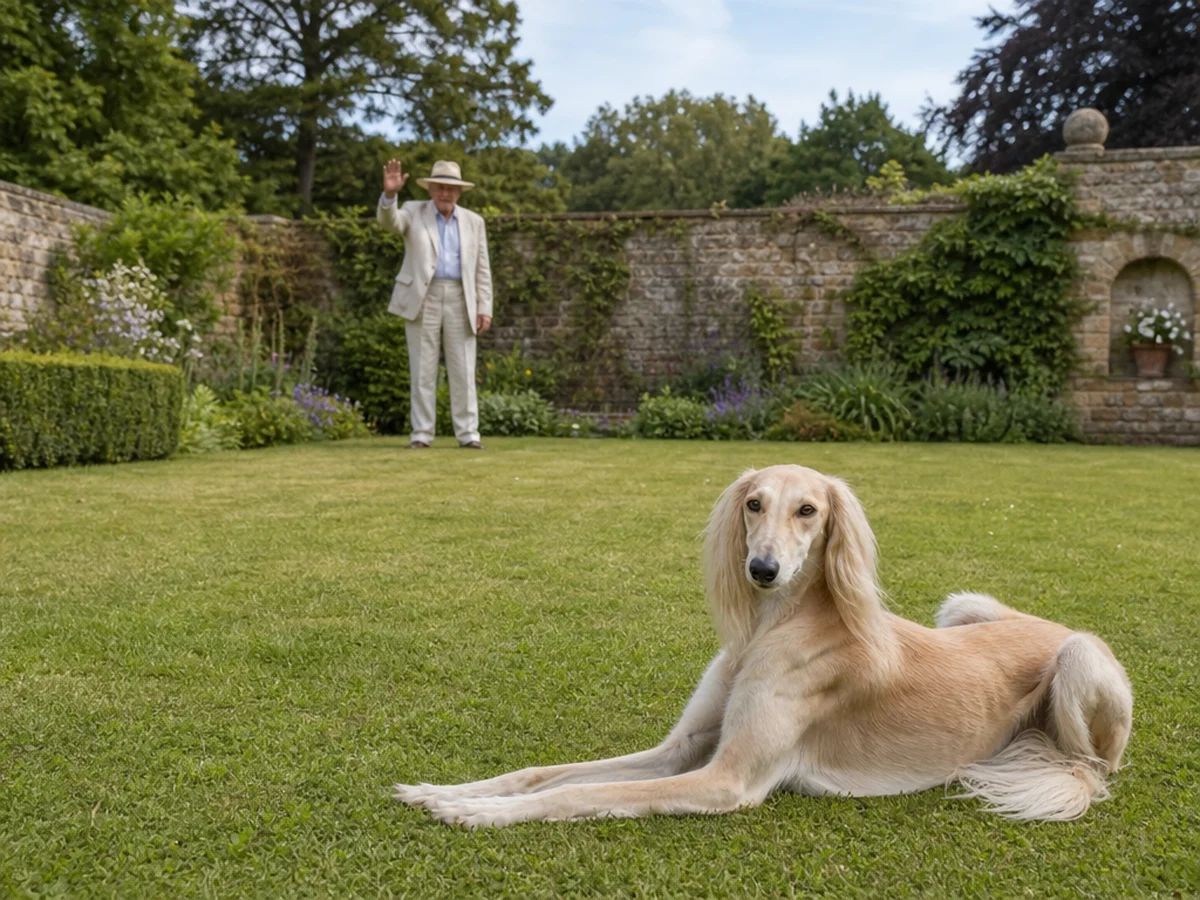
With the release word working, you can finally ask for the hold itself, and a hound who watches movement this closely needs it built in pieces. Stay is a complex behavior, so it helps to split it into three parts and work on distance, duration and distraction separately, one at a time.
Start with duration, standing right beside your dog. Ask for the sit or down, say stay with a flat hand like a stop sign, wait a second or two, then pay, release and praise. Add a few more seconds each round. Staying close matters here, because your Saluki follows motion, and a step backward can pull them up with you.
Distance comes next, and it asks more of your Saluki than duration does, because now you are the thing that moves. Add it in small steps and keep the hold short while you do:
- Ask for the stay, then take one small step back.
- Walk back to your dog right away and pay while they are still in position.
- Release, praise and let them move.
- Add one more step, and sometimes step to a different side, so the stay does not depend on where you stand.
Walk back to pay rather than calling your Saluki to you, so the hold keeps ending with your arrival. If they rise, the step was too big, so shrink it.
Letting the World Back In
Save distractions for last, since distance already carries some, and relax the other pieces whenever you add a new one: even a dog who holds for a long time beside you should go back to a short hold when the distraction is new. Begin small, like a clap or a glance at a pile of mail, then work up toward a door opening or someone walking past. Anything that moves fast outside a window belongs near the end of that list.
What to Change When a Stay Breaks
Every Saluki rises early sooner or later, and the next few seconds decide whether it becomes a habit. Do not scold or pull them back into place. Most early exits mean you asked for too much too soon, or your own movement pulled them up, so quietly restart the same exercise with an easier version.
Check three things in order: whether the release word came before they moved, whether the treat arrived inside the hold and whether the room is simply too interesting for today's version. Shorten the hold, move closer or choose a quieter spot, and pay sooner. A stay is dull work for a dog, which is why it deserves frequent pay.
If a stay your Saluki used to hold keeps failing for no clear reason, mention it at their regular vet visits, because a change in behavior is worth a professional look. The wider plan for a chase-driven hound lives in our Saluki training overview.
Quick Answers for Real Saluki Households
Each answer here leans on one idea, that a stay is a layer of safety rather than the whole plan. A few details from daily life show where that layer needs backup.
Should My Saluki Sit or Lie Down?
Either works, so choose the position your Saluki already settles into easily and can hold without shifting. A stay is about staying put, not about the shape of the body, and you can teach both positions with the same release word.
Does a Stay Make an Open Gate Safe?
No. Salukis love to run and should have a well-fenced yard to keep them safely away from traffic, and a leash anywhere else, because one fast sighting can beat any cue. Treat the stay as a second layer behind the fence. Our Saluki yard escape-proofing guide covers the first.
Does a Window Count as a Distraction?
Yes, and for a dog who tracks movement it can be the hardest one. Practice with the blinds half closed or in a room without a view, then let the window back in gradually. Pay generously the first times your Saluki holds while something moves outside.
A Stay Gives a Reserved Dog a Plan for Visitors
Put the fence, the position and the window together and you can see where this lesson earns its keep: the moment someone new comes through the door. A Saluki can be reserved with people they do not know, and a dog with nothing to do while a stranger steps closer has to invent a response. A stay hands them a plan instead, a spot to hold, a reason to hold it and a release that tells them the moment is over.
A hold like this is a first lesson in patience for a sighthound, and our Saluki e-book, offered here with our thanks for reading, treats every skill that follows in the same unhurried tone.
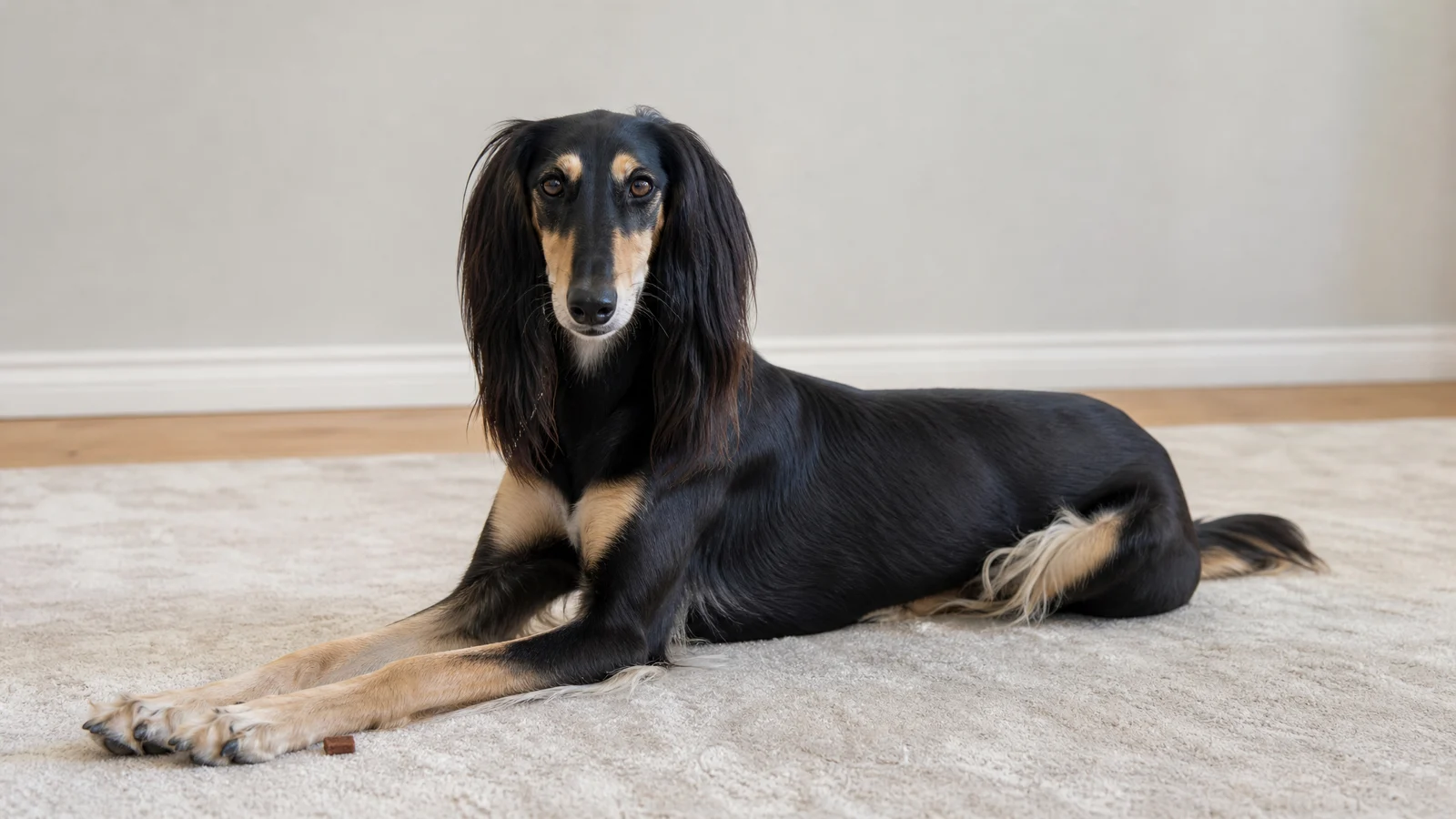 Training basicsHow to Teach a Saluki to Lie Down
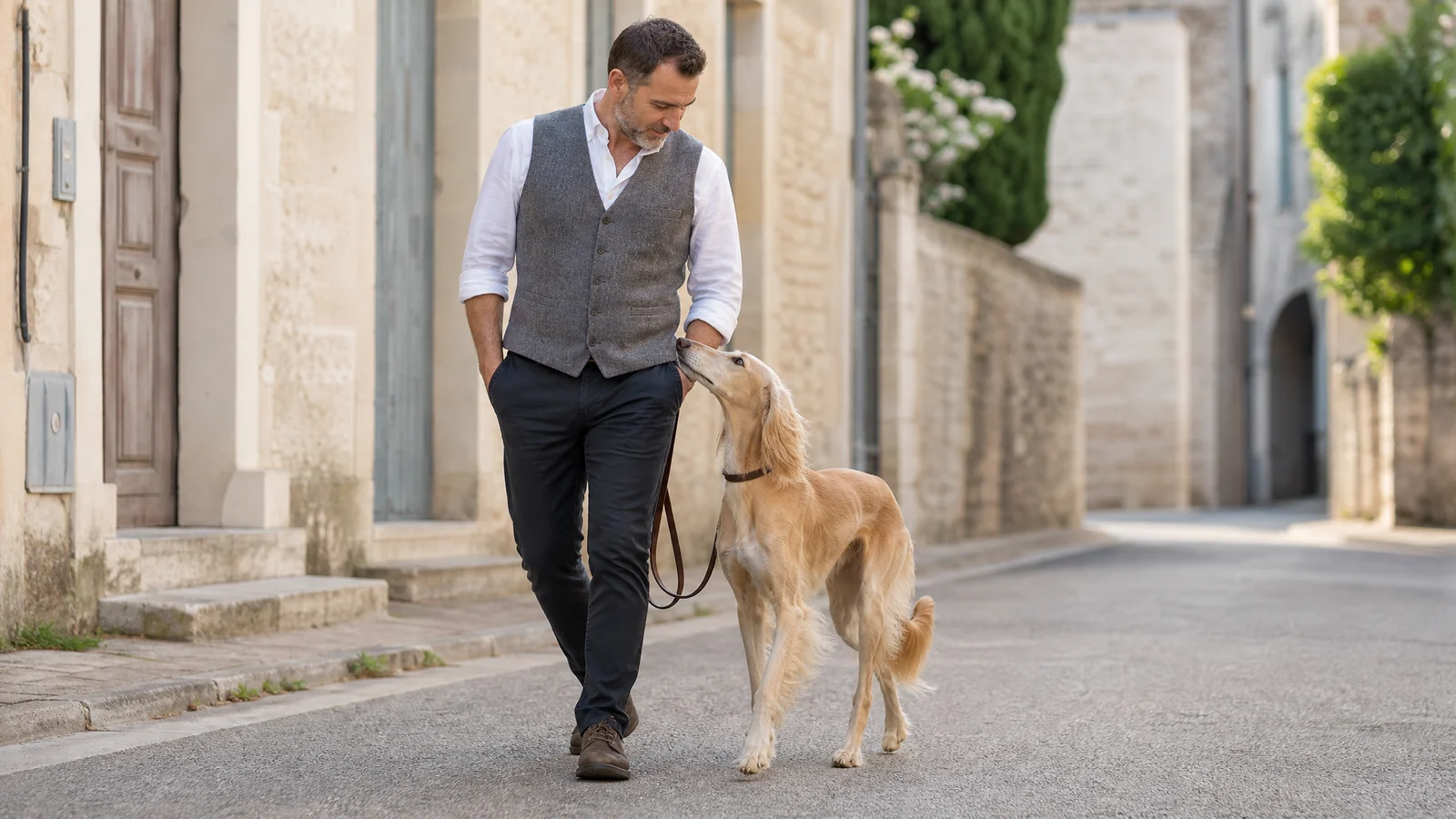 Training basicsHow to Teach a Saluki to Heel
 Training basicsHow to Teach a Saluki to Leave It
