 Saluki
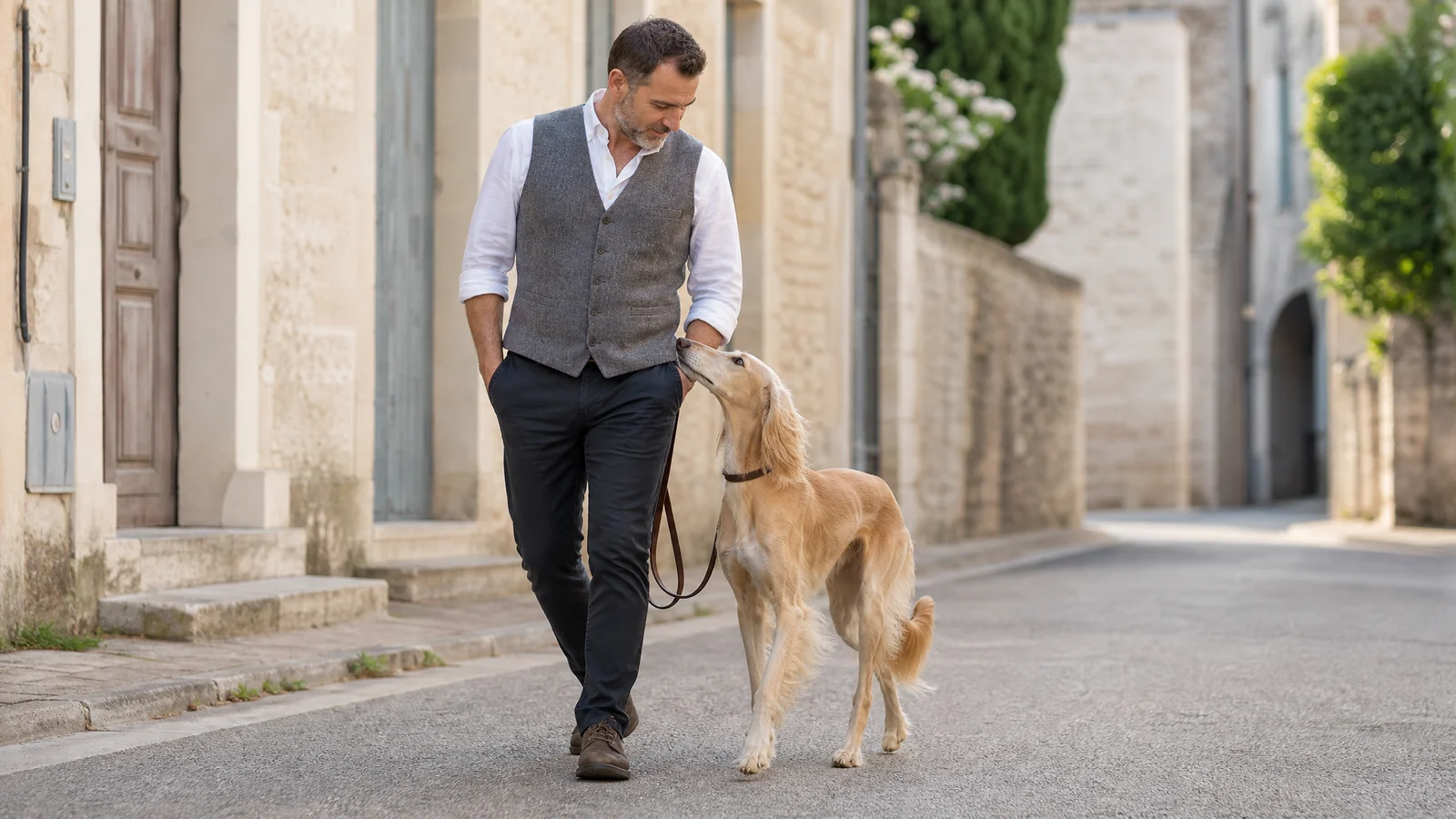
A cyclist rounds the bend on a shared trail, and your Saluki's head turns before yours does. What you need in that second is a tall, fast hound beside your leg and thinking about you, not a leisurely stroll and a leash going taut.
Heel is the lesson that builds that moment. It is a short, exact job, which is why it sits apart from everyday walking: a dog built for speed and always ready to chase whatever moves can enjoy long, relaxed stretches on a loose leash, and heel is what you ask for at gates, crowded doorways and narrow paths. Taught well and paid for generously, it becomes a position you can count on when something moves.
Below you'll find the position, the steps from a standstill to real turns, a heel cue, a release and answers to three questions a long-legged hound raises. Each stage says what to reward and what to do when your dog stalls.
Heel as a Short, Close Job for a Long-Legged Hound
The trail moment explains why heel stays narrow. Your Saluki holds one exact place beside your leg, attention on you, for a stretch you choose, while an ordinary walk can run on a loose leash and a relaxed pace. Our guide to training a Saluki covers those everyday leash habits, and this page covers the exact part.
Because the job is brief, the reward does most of the teaching, and the biggest favor you can do a sighthound is to make the spot easy to find. Pick one side for good, start somewhere dull, and expect an independent hound to think the offer over before saying yes. Rushing that thinking time is how heel turns into a standoff.
Teaching the Saluki Heel Position Without Moving
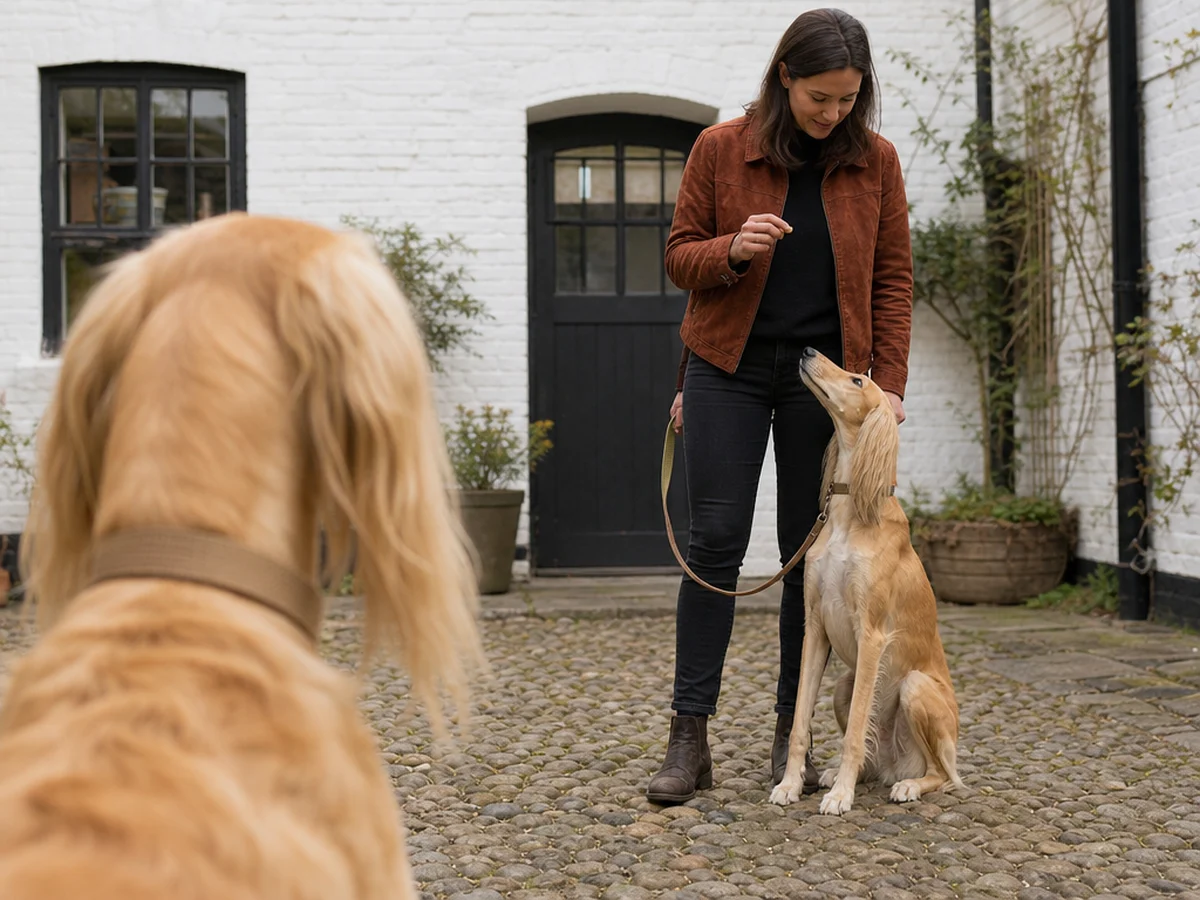
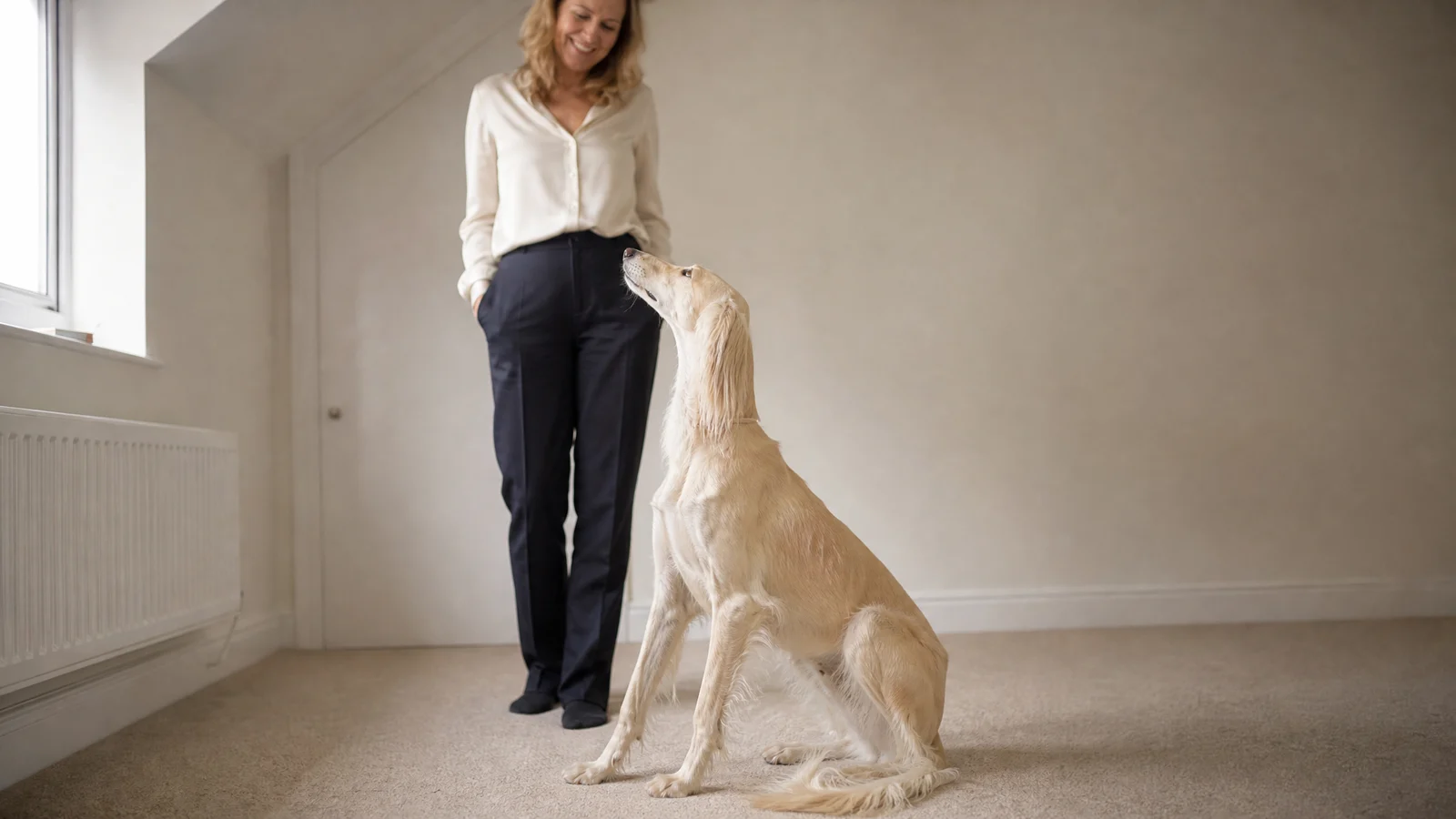
Making the spot easy to find starts with standing still, which also keeps a fast dog from turning the lesson into a race. Pick left or right and never swap, since left is the traditional heel side. The steps below build on a directed shaping technique from the AKC's GoodDog! Helpline trainers, adjusted for a tall hound.
Gather small, soft treats, pick a quiet room or hallway with the blinds down, and keep the leash slack. Then run the same short loop:
- Call your Saluki's name and point to the side you chose.
- The instant they arrive alongside you, say your marker word or click, then pay from the hand nearest the dog so they never need to cross in front of you.
- After a couple of rounds, stop calling and pointing. Wait, and let them choose to come to your side on their own.
- Mark and pay every arrival, carrying the treats in the hand nearest your dog and holding it against your chest between rewards so they follow your leg instead of the food.
The loop works because the reward lands exactly where you want your dog to live, so the spot itself becomes the interesting place. If your Saluki drifts toward a window or wanders off between rounds, close the blinds and shorten the gap between tries.
We see this stall most often when something moving is in view, because a hound's eyes keep working long after their attention should be back on you. Move on to walking when they swing into place on their own several times in a row.
Adding Steps and Turns to the Heel
A spot that holds in a quiet hallway still has to survive movement, and movement arrives in four small pieces. Take them in order, and go back a piece whenever your dog stalls.
One Slow Step at a Time
From a standing heel, take one slow step, then mark and pay the instant your dog is still beside your leg. Build to two steps, then a short string. A long-striding hound can launch ahead on step one, so walk slower than feels natural and pay at your leg, never out in front.
If they surge or lag, go back to standing for a few rewards and rebuild from there, since the standstill is the stage they already understand. Keep each session short: American Humane's walking tips put leash training at around five to ten minutes, ending on a good note.
Turns That Lose the Spot on Purpose
Once steps are smooth, make the spot harder to hold. Speed up a little, turn, or zig-zag so your Saluki loses their place and has to find it again, then mark and pay the moment they do. Start with wide, gentle turns and tighten them later, because a tall hound needs room to swing in.
A brief wobble here is the lesson working, not a failure, since finding the spot again is the skill you are building. If they stop finding it, widen the turn and go back to single steps.
Adding the Heel Command in Saluki Training
Name the behavior only after your Saluki finds the spot on their own through steps and turns. Say "heel" as they arrive, pay, and over several sessions move the word a little earlier until it comes before they move. Eye contact can follow later as a cue of its own, and one word kept for this job alone will always predict a treat at your leg.
A Release Word After Heel
Heel needs an ending your Saluki understands. Once walking nicely is solid, add a cue that says exploring is allowed, because the chance to explore works as a reward in its own right, as this Fear Free walk-or-sniff article explains. Say your release word, then let them sniff or scan the distance on a loose leash, and ask for heel again on the next stretch.
Where Heel Meets a Saluki's Temperament
Puppies, long lines and passing strangers are the places where the steps above need a little adjusting for a Saluki. Each answer below stays inside the same reward-based method.
Can a Saluki puppy learn heel?
Yes, the same steps suit a puppy or an older dog. Keep puppy sessions playful and brief, go easy on the turns, and expect the spot to wobble in adolescence, because Salukis mature slowly (slow-maturing Saluki training covers that stretch). Regular vet visits matter while they grow, and a young hound who suddenly resists walking beside you is worth mentioning at the next one.
Is a long line right for heel practice?
No. Heel lives close to your leg, so a regular leash held loosely is the right tool. Save a long line for distance work such as recall practice, where the extra length is the point, because mixing the two blurs what the leash means to your dog.
Does heel help when strangers walk past?
It can, as long as you use heel to pass people and not to introduce them. A Saluki can be reserved with people they do not know, so a clear job at your side gives them something to do while a stranger goes by at a comfortable distance. If they want more room, give it and take the wider path.
Back on the Trail With a Saluki Who Heels
Run the trail moment again with the finished skill. You spot the bike early, say your word, and your Saluki swings in at your left leg for a treat. You take a few slow steps together, release them as the wheels go by, and they get to watch it leave on a loose leash. Nothing about their chase drive has changed, and nothing needed to. What changed is that the moment now has a shape you both know: a place to go, a short job and a release at the end.
Your Saluki's other lessons deserve the same unhurried, reward-based care as heel, and our free e-book covers each of them in full without ever getting hard to follow. Hand over an email at sign-up and the book arrives by return message.
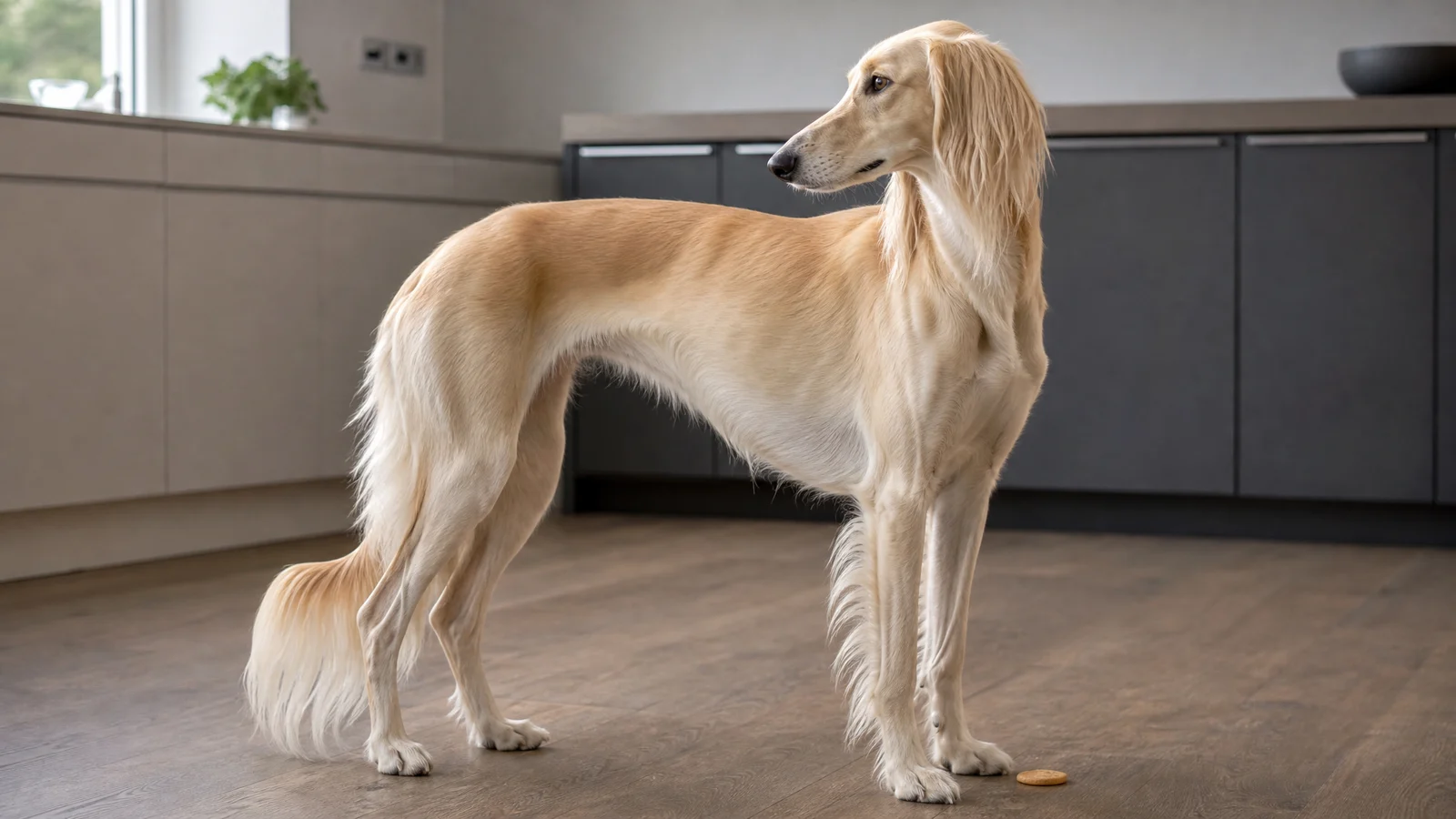 Training basicsHow to Teach a Saluki to Leave It
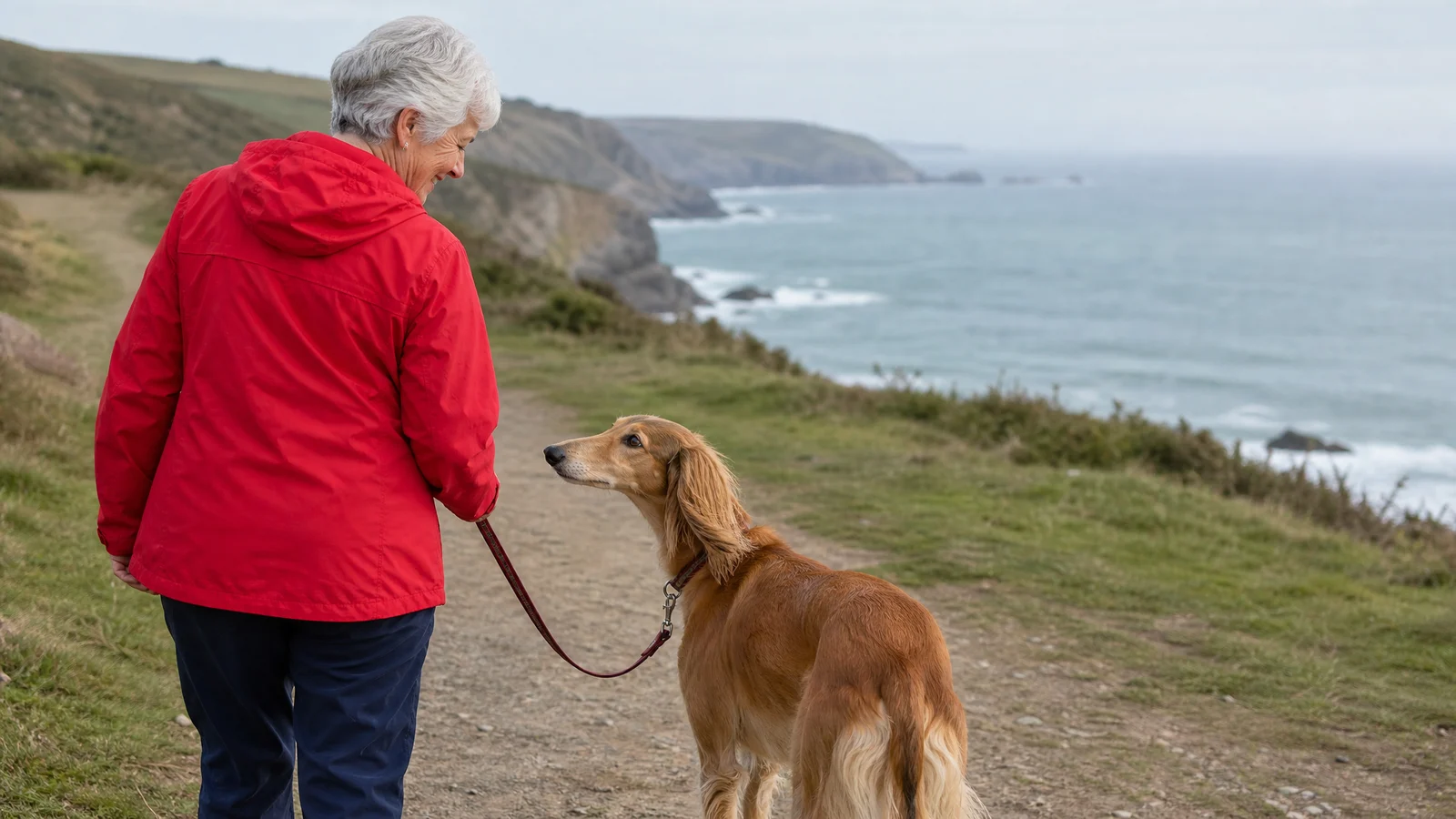 Training basicsLoose Leash Walking With a Saluki
 Training basicsHow to Teach a Saluki to Focus on You
