 Saluki
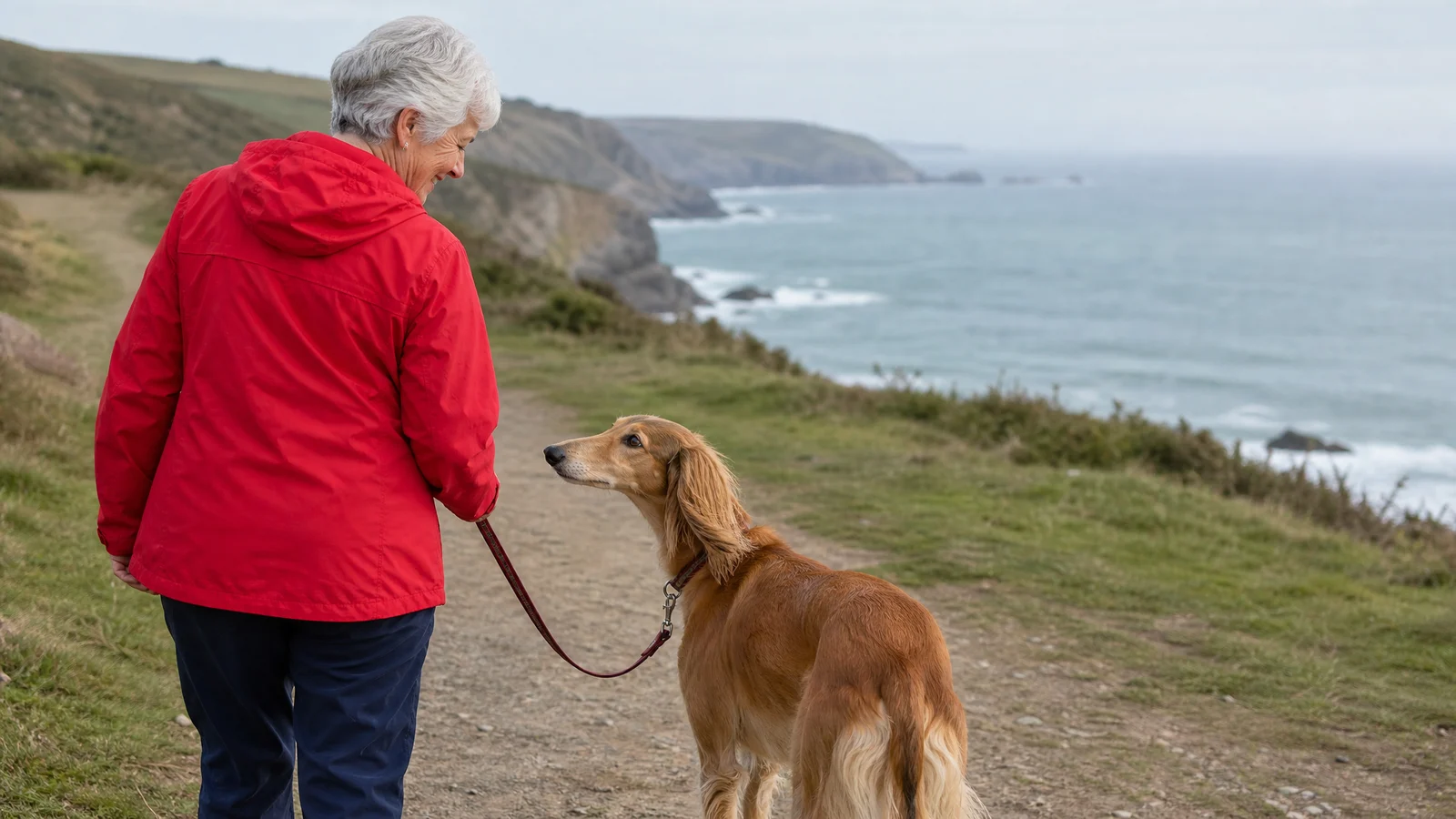
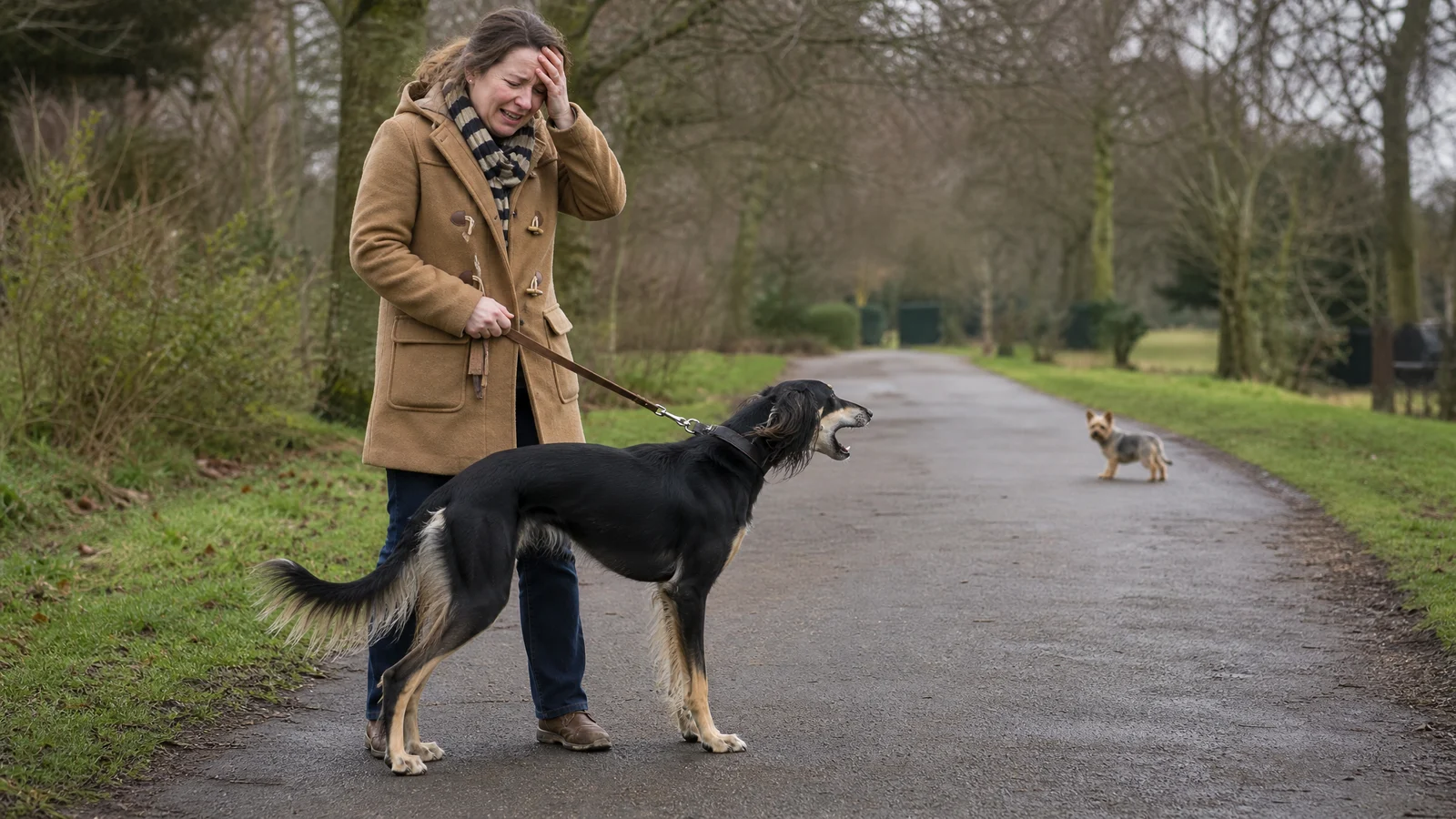
Most of a Saluki walk is quiet. The leash hangs in a loose curve, the pace is easy, and then something moves across a field you had not noticed and the line snaps tight before you know what you are looking at.
That moment is why slack matters more here than a polished heel. A leash that stays soft keeps you in touch with a fast dog and leaves you room to react, and the skill is simple to describe: the line stays loose, and moving forward is the reward, with small treats along the way for the dog who walks beside you.
Below you will find four stages for building that habit, a plan for the moment something catches your Saluki's eye, and short answers to the gear and sniffing questions that follow.
Why a Slack Leash Matters on a Saluki Walk
Slack is worth the training time because it is the one leash state that still leaves you room to act. A Saluki can be ready to chase anything that moves, so a taut line usually means the dog has already decided, and the best moment to help them has passed.
The breed's registry makes the same point in its exercise advice, where daily walks, always on a leash, will help both hound and owner stay in shape, physically and mentally, and a well-fenced yard keeps a running Saluki safely away from traffic.
So the goal is not a dog glued to your knee. It is a line that hangs in a curve while your Saluki walks beside you, a little ahead or a little behind, with you free to change direction, stop or add distance the moment something moves.
Saluki Leash Manners in Four Small Stages
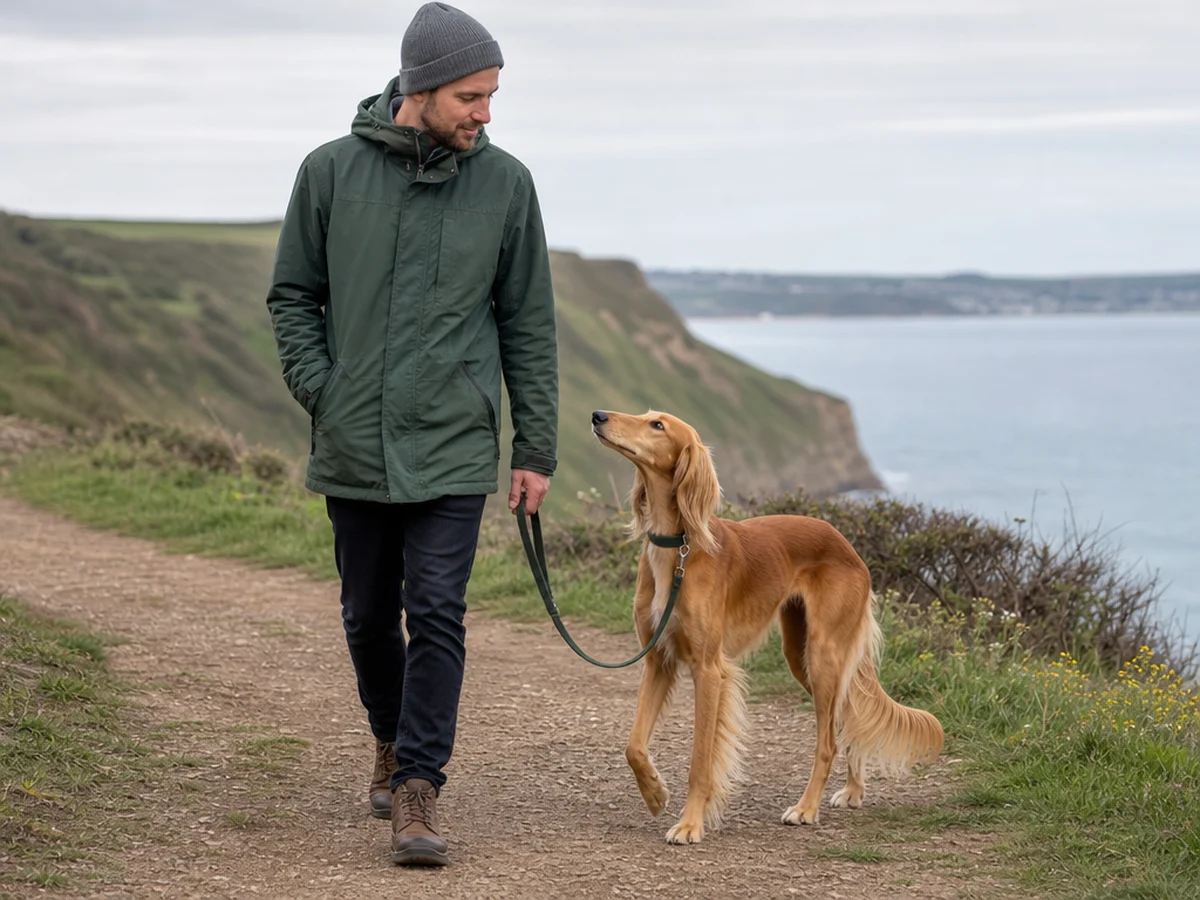
Slack only becomes a habit when your Saluki earns it somewhere easy first, so start where nothing is moving. Work through these stages in order, and stay on each one until it feels dull to you:
- Pay beside you indoors. Clip on the leash in a quiet room, stand still with small treats ready, and mark and feed each moment the line hangs loose with your Saluki near your leg. You are teaching the dog that the spot beside you is where good things happen.
- Walk a few steps. Move forward in a straight line and keep marking and feeding while the line stays soft. When it tightens, stop and wait, and the instant it softens, mark, feed and walk on.
- Turn when waiting is not enough. If your Saluki keeps leaning after you stop, turn and walk the other way, then pay the dog for coming around with you. The turn teaches them to follow your direction rather than lean against the line.
- Take it outside. Repeat the first three stages in a quiet, secure spot, then in more interesting places. Every new place resets the difficulty, so pay more often at first.
Move to the next stage when your Saluki does the current one smoothly several times in a row, and drop back a stage when a new setting scrambles things, because the surroundings change how hard the same task is.
Why Every Stop Has to Count
Consistency is what makes the stops work, and Best Friends Animal Society explains the cost of skipping it: a dog stopped for pulling only four times out of five learns that pulling can still get them moving, and the turn that follows should never come with a yank on the leash. In practice every stop is a promise, so pick a speed at which you can reliably stop, and keep treats where your hand finds them without a search.
Leash Training Tips for the Moment Something Moves
Four calm stages will hold until the first rabbit, bicycle or flapping bag crosses your Saluki's line of sight, and that moment is where the habit meets the real world. In our experience, distance does more than any treat.
- Notice what is coming before your Saluki does. When the dog's head comes up and the body goes still, mark and move away so the line stays soft, then pay for turning with you.
- If the line does tighten, stop moving and wait instead of hauling back. As soon as it softens, pay and walk on, turning away from the trigger if the dog stays locked on.
- Save the very best treat for these moments only, because it has to beat whatever just moved.
A frozen stare on a tight line is the hardest moment to teach, so avoid it by making the gap bigger rather than the reward bigger. Plan routes with long views so you spot trouble early, and keep chase practice for places built for it. Our guides to Saluki recall training and safe chase outlets cover those, because a slack leash is the safety layer, not a replacement for either.
Small Decisions on Everyday Walks
Gear, sniffing, a dog who stops dead and the question of who walks in front all decide whether these lessons survive a normal week, so each gets a short answer here.
Does gear change how this works?
The lessons above work with any plain, well-fitted collar or harness, because the teaching is in the pay and the stops rather than the equipment. If your Saluki pulls hard enough that you are tempted to buy something to fix it, ask a reward-based trainer to show you a fit and a method.
Can my Saluki sniff on a slack leash?
Yes, and a pause to sniff makes a good reward for a loose line. Give the pause its own release word so the dog learns the difference between walking with you and browsing, with the leash staying loose during both, a pairing described in Fear Free's walk-or-sniff article.
What if my Saluki stops and will not walk?
Do not drag or coax. Go back to the indoor stage and pay for any step toward you, because many dogs need time in a familiar place first. A dog who suddenly dislikes walks they used to enjoy is worth mentioning at your next regular vet visit.
Is it fine if my Saluki walks ahead?
Ahead is fine as long as the leash hangs in a curve, since the slack matters more than the position. Pay the moments beside you more often so that spot stays the most rewarding place to be, and stop when the line goes tight whichever side the dog is on.
A Walk That Leaves Room for the Sprint
All four answers lean on one idea: the leash walk is meant to be the calm half of a Saluki's day, not the whole of it. A loose leash asks a dog built for speed to travel at your pace, and that is a fair request only when the speed has somewhere else to go.
Fenced running, a lure-coursing day or another safe outlet, as laid out in our Saluki exercise needs guide, gives the sprint a home, which is why you can ask for an unhurried gait on the sidewalk without feeling you are taking something away.
Slack on the sidewalk is only the start of what a fast, independent hound must learn, and our e-book will land in your inbox as soon as you sign up here, bringing every other skill your Saluki needs the same thorough, plain-spoken attention.
 Training basicsHow to Teach a Saluki to Focus on You
 Training basicsClicker Training a Saluki
 BehaviorSaluki Leash Reactivity: What Helps
