 Saluki
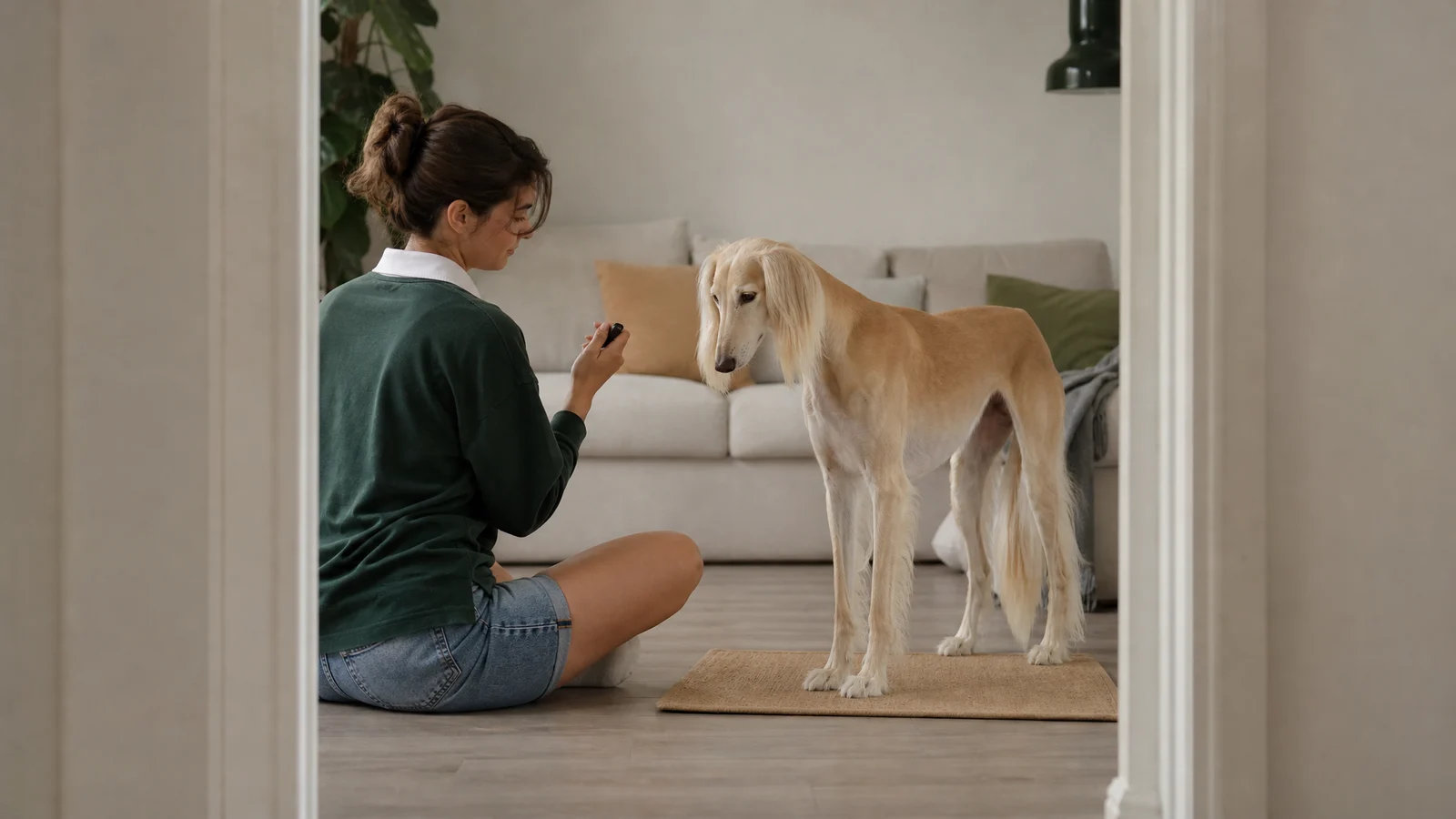
A clicker will not make a Saluki less independent, and a good lesson never tries to. What it does is tell a dog who makes their own choices exactly which choice paid.
Salukis are dignified, gentle and independent-minded, so lessons go best when the deal is easy to read. A crisp sound that always means a treat is coming is about as easy to read as a deal gets, and it asks nothing of your voice or of your dog's patience while you work out what to teach.
Read on to load the click in a quiet room, use it on a first behavior and then move the food out of sight, with answers to the snags that tend to show up along the way.
Why a Clicker Suits Reward-Based Saluki Training
Before any treats come out, it helps to be clear about what the click really is: a marker, a short signal that pinpoints the exact moment your dog did the right thing and promises a treat is on the way. Behavior teams at animal shelters work the same way, capturing, marking and rewarding what they want to see, and the marker can be a clicker or a spoken word.
What the Click Does
The sound itself is nothing special. It carries meaning only because you pair it with a reward, over and over, until it predicts one. That clarity suits an independent-minded hound, who gets to weigh every offer against everything moving outside the window, and our guide to Saluki temperament and house rules shows how far that nature shapes daily life.
Where the Click Fits
A click lets you answer a good choice from a few feet away, without a hand reaching toward a dog who may want some space. The tool is optional, though, and it is not forgiving.
- Clicker work calls for frequent practice and excellent timing.
- Plenty of excellent reward-based training happens without one, so treat the clicker as a sharper pencil rather than a requirement.
Loading the Click in the Quietest Room You Have
Pairing comes first, because a click that has never been followed by a treat is just noise. Begin in a quiet, distraction-free space, and for a Saluki this means more than a closed door: a hound who spots movement through a window can follow it, and no treat in your hand competes with a passing cyclist.
Choose the treats the same way. Offer a few kinds and watch which one makes your dog lean in, since some dogs care more about a game than a snack. Then run the pairing lesson in four small moves.
- Sit or stand with a few treats hidden in a pouch or pocket, and keep your hands still and low.
- Click once, then hand over one treat right away. Ask for nothing at all: no cue, no position, no eye contact.
- Pause for a few seconds of different lengths, then click and treat again, so the sound arrives at unpredictable moments.
- Stop when your dog looks toward you or your treat hand the instant they hear the click, because that look shows the sound now predicts food.
Every click earns a treat, even one you made by accident, so the sound never turns into a bluff. Keep these first sessions short and end them while your Saluki is still interested.
Four Paws on a Mat Make a Good First Click
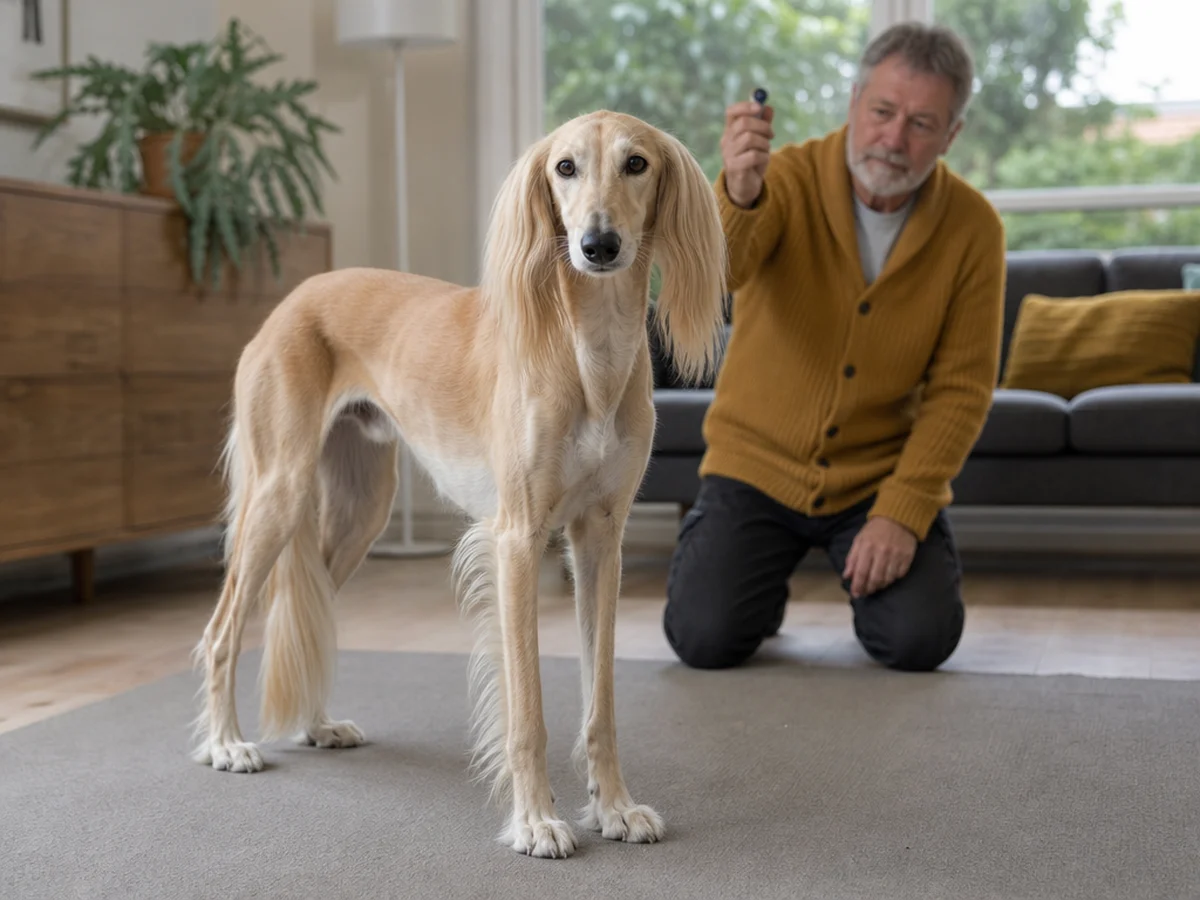
Once the click makes your dog look up, it is ready to mark behavior, and the easiest first job is one your Saluki already does for fun: stepping onto something soft. As Saluki people, we like a mat for this because it needs no cue and no touch, and your dog gets to choose it. You are not teaching a trick. You are teaching your hound that the click answers their choices. Work through the mat in four stages, keeping the treats out of sight until the click has sounded.
- Lay a folded towel or a mat on the floor, stand a step or two back and simply wait. Do not call your Saluki over or point at the mat.
- Click the instant a foot touches the mat, then give the treat just off the mat, so stepping away resets the game and every return is a fresh choice.
- When your dog steps on quickly, hold the click until both front feet are on the mat, and later until all four paws are there. Move to the next stage when the current one happens smoothly several times in a row.
- If your Saluki stalls at any stage, make the ask smaller and pay for the easier version again before you raise it.
That is shaping: paying small steps toward a finished behavior, which is how you teach something a dog has no way of guessing. The mat you build here becomes the station used in Saluki counter manners, so nothing about this first lesson is wasted.
Keeping Food in Your Pocket Until the Click
A mat that gets visited reliably is also the point where food can start getting in the way. If the treat is already in your hand when your Saluki steps on, the hand does the asking and the click becomes an afterthought, so your hound learns to watch your fingers instead of choosing the behavior.
Keep the food out of sight in a pouch or pocket, hands empty and still, and click first, then reach. If your dog stares at the pocket, wait a moment and click the next time their eyes or feet go to the mat, because that is the behavior you want to pay.
Timing matters as much as hiding: click the instant the paw lands, not after your dog has already walked off, or the click will describe the wrong moment. Fading a visible reward never means skipping payment. Every click still earns a treat, and the only thing that changes is where the treat stays until it has been earned.
Sticking Points in Marker Training for Salukis
Three snags can stall the mat lesson before the click has a chance to work. Each has a plain fix, and none of them means your dog is a poor student.
Will the click work with a window in view?
Not at first. A Saluki who sees movement through glass can follow it, so close the curtains or move to an inner room until the pairing is solid. Then let the window back in as a small test, and click the moment your dog chooses you or the mat over the view.
What if my Saluki wanders off mid-session?
Let them go and end the session there. A hound who drifts away is telling you the treat or the length missed, so try a different reward and a shorter session next time. If a dog who normally loves treats refuses every one, mention it at your next regular vet visit.
Can we practice in the yard?
Yes, once the mat works indoors, but only in a fenced space or on a leash, since a Saluki who sights something to chase will go after it. Bring the quiet-room rules along: begin where little is moving, add one distraction at a time, and keep the clicks and treats exactly as they were.
Carrying the Click Where a Clicker Cannot Go
Once practice leaves the quiet room and the yard, you will stand somewhere a clicker is awkward: a leash in one hand, a bag in the other, a doorway full of strangers. That is where a marker word earns its place, and your Saluki already knows how to learn one.
Pick a short word you never use in everyday talk, pair it with treats exactly as you paired the click, and say it in the same bright tone each time, so your hound hears one meaning wherever you stand. The click taught the idea, and the word lets the idea travel.
Wondering what to teach once the mat and the word are solid? Our Saluki e-book maps the whole road, from first lessons to polished manners, in everyday language with the whole picture in view. Put your email on this site's list and we will send a copy your way, free of charge.
 BehaviorSaluki Leash Reactivity: What Helps
 BehaviorHow to Stop a Saluki Pulling on the Leash
 Exercise and jobsEasy Tricks to Teach a Saluki
