 Saluki
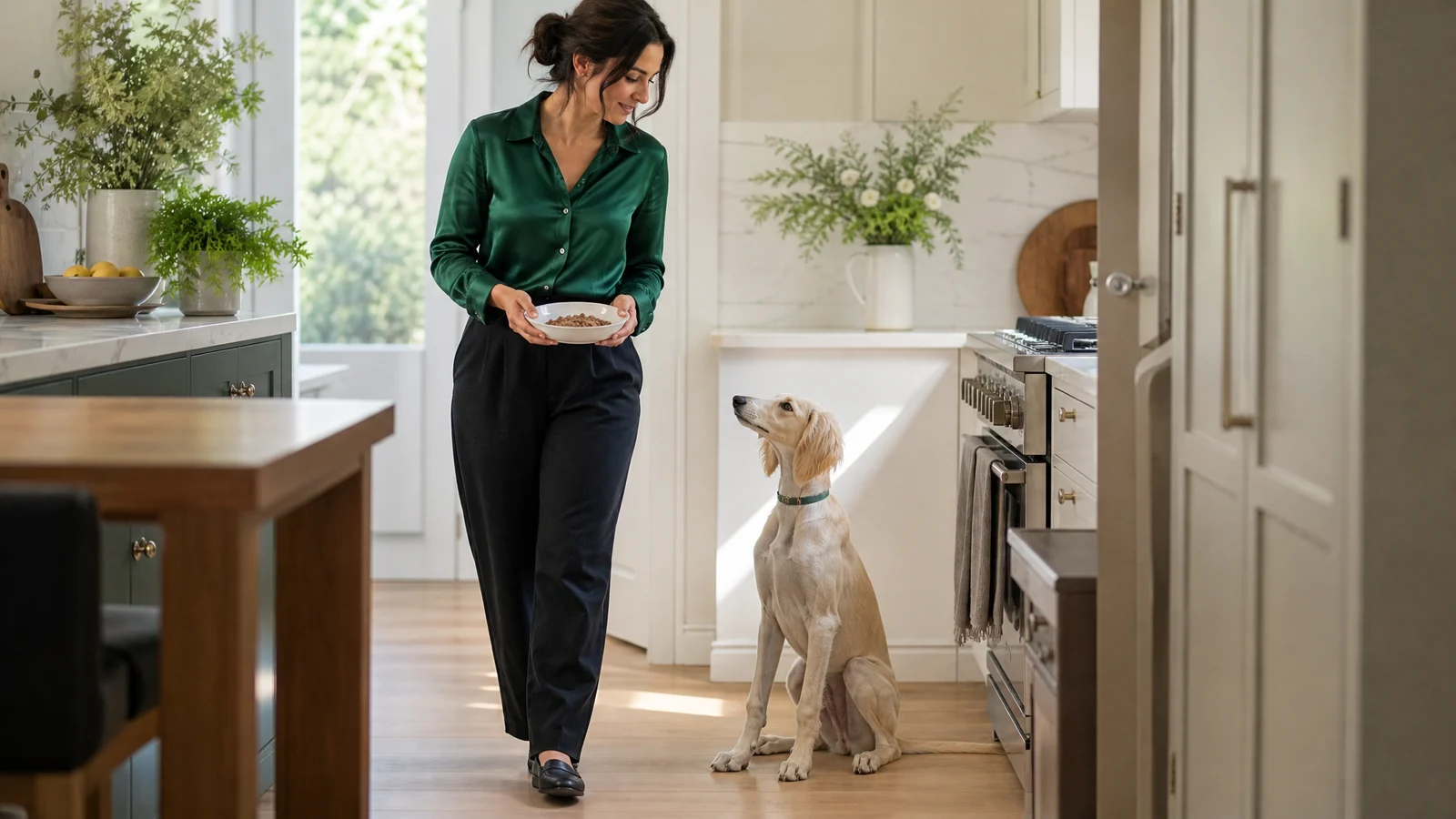
The most common routine mistake is filling every minute because a Saluki puppy seems busy. That plan usually creates a puppy who expects entertainment and an owner who cannot tell whether the dog needs sleep, movement, food, relief, or a quieter room.
A useful Saluki puppy routine is a repeating order of needs, not a rigid hour-by-hour chart. The rhythm should make good choices easy, protect rest, and give an intelligent, independent puppy many small chances to earn rewards. This guide follows that rhythm around one ordinary day and shows where a flexible routine can bend without disappearing. Below, we explain how to read each transition and adjust it without losing the pattern.
Morning Puppy Training Starts With Needs
Begin with the need most likely to be urgent after sleep: take the puppy to the usual relief area, stay quiet while they investigate, and reward success promptly. If nothing happens, go back inside with the puppy close to you, then offer another quiet opportunity soon.
Read the Puppy Before Adding Activity
A puppy who races, grabs clothing, and cannot orient may be overtired rather than underexercised. A puppy who wakes, stretches, and checks in can often manage a short learning game. Observe first, then choose the smallest useful activity.
Breakfast can support that choice: reserve part of the meal for name response, following you a few steps, or settling on a mat, then let the rest arrive without extra work. Food is a reinforcer, not a test the puppy must pass to eat.
Make Morning Movement Safe and Brief
The AKC Saluki guide recommends regular exercise and daily walks on leash. For a growing puppy, favor self-paced exploration, easy walking, and short play over sustained hard running. End while movement still looks loose and coordinated.
Movement history matters here only as context: Salukis were shaped for speed and visual attention, so sudden motion can compete powerfully with a young puppy's focus. A leash and secure space keep the lesson safe while rewards make turning back worthwhile.
We treat the first calm transition as a real training opportunity. Carry the puppy's reward to the resting area, wait for any voluntary softening, and reinforce it. Four relaxed breaths can be a better morning result than four extra cues.
Household movement should continue at a manageable level: the puppy can hear a cabinet close or watch someone cross the room without becoming the center of every event. If ordinary life repeatedly wakes them, improve the location before blaming the puppy.
Midmorning Puppy Training Includes Rest
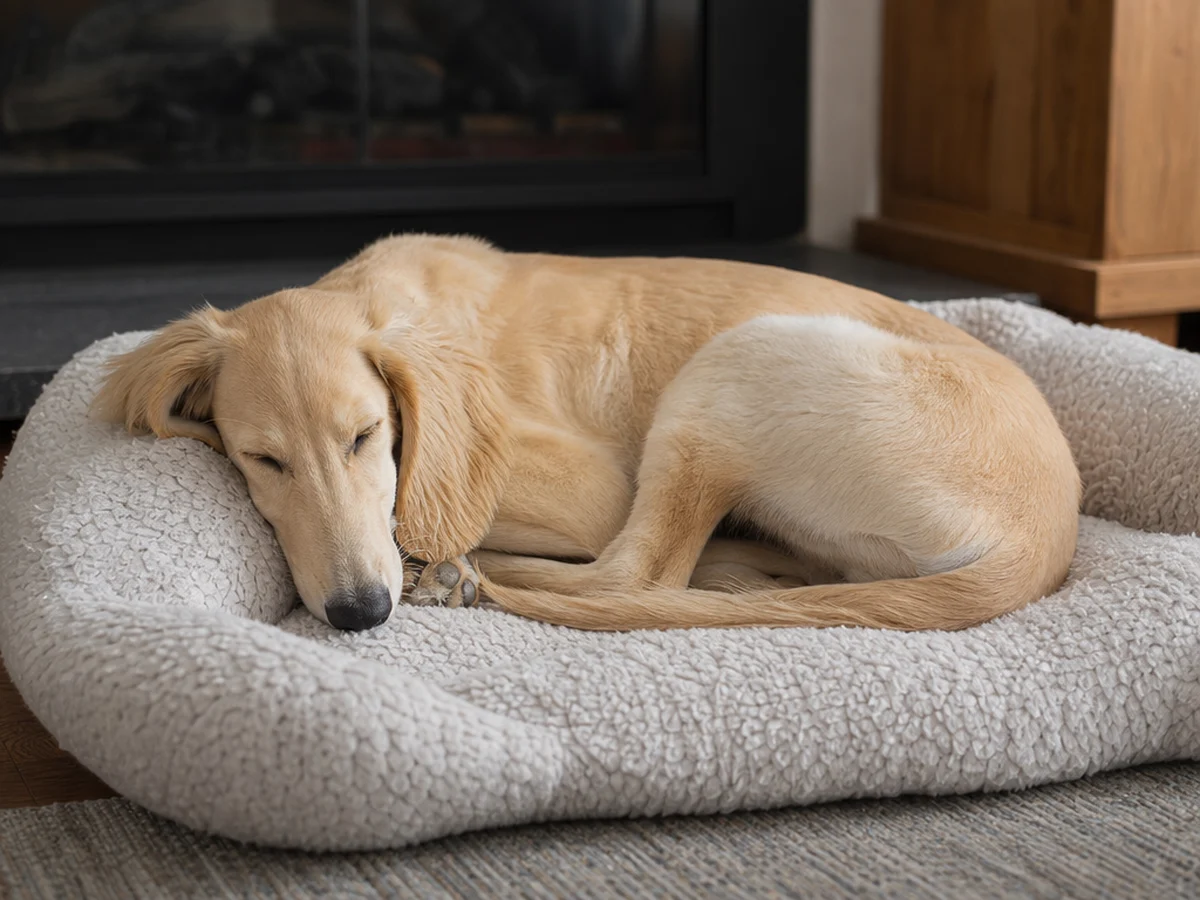
After food, relief, and a little activity, the next job is recovery. Dim the household energy, offer a comfortable resting place, and keep exciting play out of reach. Quiet periods teach a puppy that nothing happening is a normal part of home life.
Use Tiny Lessons Between Ordinary Tasks
The PDSA says training belongs in daily life because it engages the mind and reinforces cues: ask for one easy behavior before opening a door or placing a bowl, then reward. That is enough to make the routine educational.
Keep success visible. If the puppy responds twice and then wanders away, the useful session ended after the second response. Following them with more cues turns a good lesson into background noise.
Independence is part of the breed picture, not a reason to become stricter: the UKC breed standard calls the Saluki dignified, intelligent, and independent. Clear patterns and worthwhile outcomes give that mind a reason to participate.
A reset also gives you a chance to repair a poor choice. If play became frantic, do not demand an immediate formal settle. Lower the room's activity, offer water and a relief opportunity, then reinforce the first sign that the puppy can think again.
We avoid using rest as social exile: place the puppy where they can feel part of the household without being continually touched. A Saluki puppy may value quiet company more than hands-on attention after an active block.
Midday Puppy Training Resets the Pattern
Midday is less a special event than a fresh cycle. Recheck relief, thirst, appetite, body language, and the quality of the last rest. Choose what comes next from those observations instead of copying the morning exactly.
| What you notice | Likely next step | What to reward |
|---|---|---|
| Loose body and easy attention | Brief exploration or training | Check-ins and calm movement |
| Frantic grabbing or zooming | Relief break, then quiet recovery | Pauses and settling |
| Sniffing and circling indoors | Immediate trip to the relief area | Finishing in the right place |
| Avoiding contact or food | Reduce demands and observe | Voluntary approach |
This table is a decision aid, not a medical conclusion: sudden or persistent changes in appetite, elimination, movement, or behavior belong in a conversation with your veterinarian. Regular veterinary visits also help you adjust care as the puppy grows.
Expect House-Training Progress to Wobble
Battersea notes that a household pattern may become familiar over four to six weeks, although dependable physical control generally takes longer. An accident is information about timing or supervision. Clean it calmly and adjust the next opportunity.
Do not make the whole day revolve around one setback: return to the normal sequence of relief, suitable activity, food, and rest. Predictability helps the puppy recover faster than tension does.
The midday check should also account for what the owner can sustain. A routine that requires constant invention collapses on a workday. Prepare a few repeatable activities and use them in different rooms or at different difficulty levels.
- Pair relief trips with one rewarded check-in before returning indoors.
- Use a meal portion for a short search in a safe, uncluttered area.
- Practice one handling step, then release the puppy to rest.
- Offer an approved chew while family activity continues nearby.
Afternoon Puppy Training Directs Saluki Energy
Afternoon energy can be directed without turning the house into a racetrack: rotate a sniffing game, a safe chew, a few rewarded cues, and exploration. Variety matters more than piling on exertion.
Alternate body work with brain work. A varied afternoon gives movement and thought separate places instead of trying to solve every need with speed.
A simple pattern is activity, water and relief, then quiet. Within the activity block, switch between moving and thinking before arousal climbs. Four good responses spread across the afternoon can teach more than one long drill.
The AVSAB training statement makes clear that humane, reward-led work can still provide firm routines and boundaries: structure here means arranging the environment, teaching the desired action, and reinforcing it. It does not mean frightening or hurting a puppy into compliance.
Use the crate or another puppy-safe area as part of that arrangement only after it has positive value. Our Saluki crate training guide builds that comfort in graduated steps. Confinement should support rest, not replace attention or exercise.
Afternoon access can widen when observation supports it: let the puppy enter a prepared room with you, reward checking in, and leave before scavenging or grabbing begins. This is a field trip inside the home, not a permanent promotion.
When the puppy becomes absorbed by motion outside, add distance from the window or yard boundary. Reward looking back while the response is still possible. Waiting for full fixation makes both the leash and the lesson harder.
Evening Lowers the Saluki Puppy Routine
Evening often fails when the household keeps raising the volume until everyone wants bed: begin the descent earlier by shifting from chase-like play to sniffing, chewing, handling, and mat work. Reward softer movement and voluntary pauses.
Let Calm Earn Real Outcomes
The evening lesson becomes clearer when settling changes what happens next. We look for voluntary softness rather than holding a puppy still.
Calm should open doors too. A puppy who lies on a mat might receive a chew, quiet company, or permission to join the family. The reward need not always be a treat if access or rest is what the puppy values.
The RSPCA training guidance explains that food, toys, and praise can all strengthen behavior: watch which outcome changes your puppy's choices. Affection is not automatically rewarding when a tired puppy wants space.
- Reward a voluntary move toward the resting area.
- Offer a quiet activity that the puppy already uses safely.
- Lower light, movement, and social demands in small steps.
- Take the final relief trip without adding exciting play.
Prepare tomorrow before the final relief trip. Put the leash where it belongs, replenish training food, and remove tempting objects from the puppy zone. A routine survives busy mornings when the environment carries some of the work.
Chewing choices deserve their own place in the clock: our guide to safe Saluki puppy chewing shows how to prepare approved options and reward selection before furniture becomes interesting. Use that plan before the busy evening transition.
A social outing also counts as work even when the puppy never greets anyone. Pair the routine with reserved Saluki puppy socialization, then schedule quiet recovery. Observation can be mentally demanding for a young Saluki.
Evening handling can be tiny and cooperative: touch one paw, reward, and stop, or briefly inspect an ear while the puppy remains willing. Two calm exchanges preserve trust better than completing a whole grooming task through resistance.
We also separate family closeness from constant engagement. Let the puppy lie nearby without repeatedly calling, petting, or repositioning them. Choosing rest in a social room is a mature household skill worth protecting.
Nighttime Saluki Puppy Training Protects Tomorrow
Nighttime should feel boring, safe, and consistent: if the puppy wakes and appears to need relief, keep the trip quiet and direct, then return to the sleep setup. Avoid turning a necessary outing into a play session.
Protect the sleep area from late household traffic where possible. The puppy should not need to monitor every door, screen, and conversation. A small change in location can produce better rest than another round of active training.
Morning and night should connect through preparation: if the last relief opportunity, sleeping place, and first route outside stay predictable, the puppy has fewer decisions to make while sleepy. Changes also become easier to notice.
Track patterns without forcing precision. Note what happened before an easy night and before a restless one, including missed rest, unusual excitement, or changes in elimination. A few words are more useful than an elaborate log you abandon.
This routine is general training guidance, not veterinary advice. Ask your veterinarian about sudden changes in appetite, elimination, sleep, comfort, or movement, and keep regular wellness visits as your Saluki puppy develops.
For the next two weeks, keep the same sequence while adjusting timing to the puppy in front of you: during the first week, notice transitions and reward calm choices. During the second, change only one weak point, then judge the trend rather than a single day.
 Puppy trainingWhat Should You Teach a Saluki Puppy First?
 BehaviorSaluki Temperament and What It Means for Your House Rules
 Puppy trainingSocializing a Reserved Saluki Puppy Without Pushing
