 Saluki
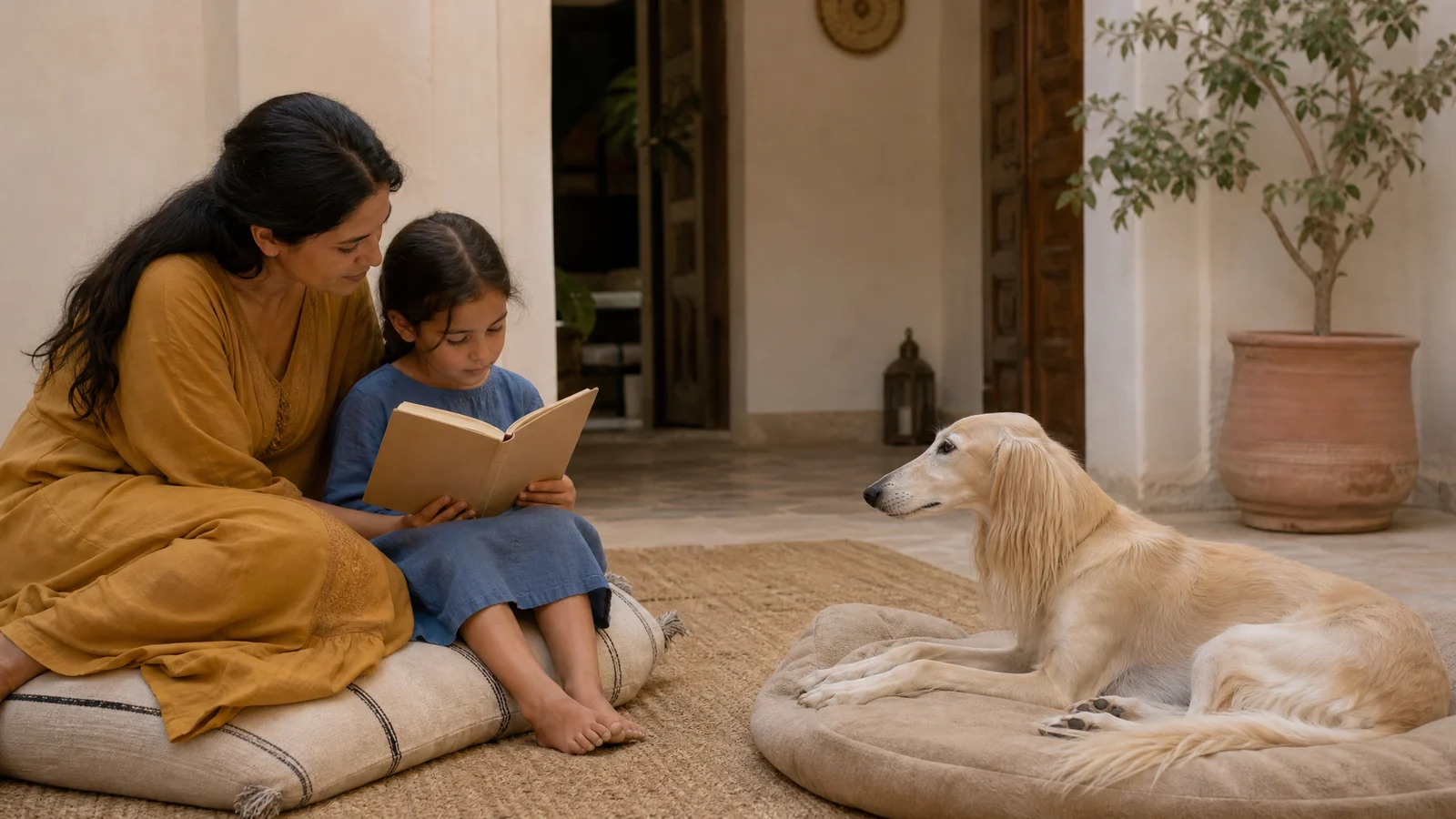
Children run, shriek, drop snacks and flop onto the floor, and a Saluki notices every bit of it. Whether that attention settles into calm tolerance or turns into a chase depends less on the dog's good heart than on how the adults arrange the house, so the honest answer to the title question is a conditional yes.
A Saluki is affectionate and gentle with their own family, but they are also a fast, independent hound who treats quick movement as an invitation. Below you will find what that means for children of different ages, where your Saluki needs a place of their own, how to handle visiting children and the practical questions parents ask most often.
What Saluki Temperament Means for Kids
A conditional yes starts with how the breed is built, and the American Kennel Club puts numbers on it. It gives the Saluki a 3 out of 5 for young children, the spot on its scale that means with supervision, and a 5 out of 5 for affection with family. Read together, those scores describe a dog who loves their people and still needs the adults to do the safeguarding.
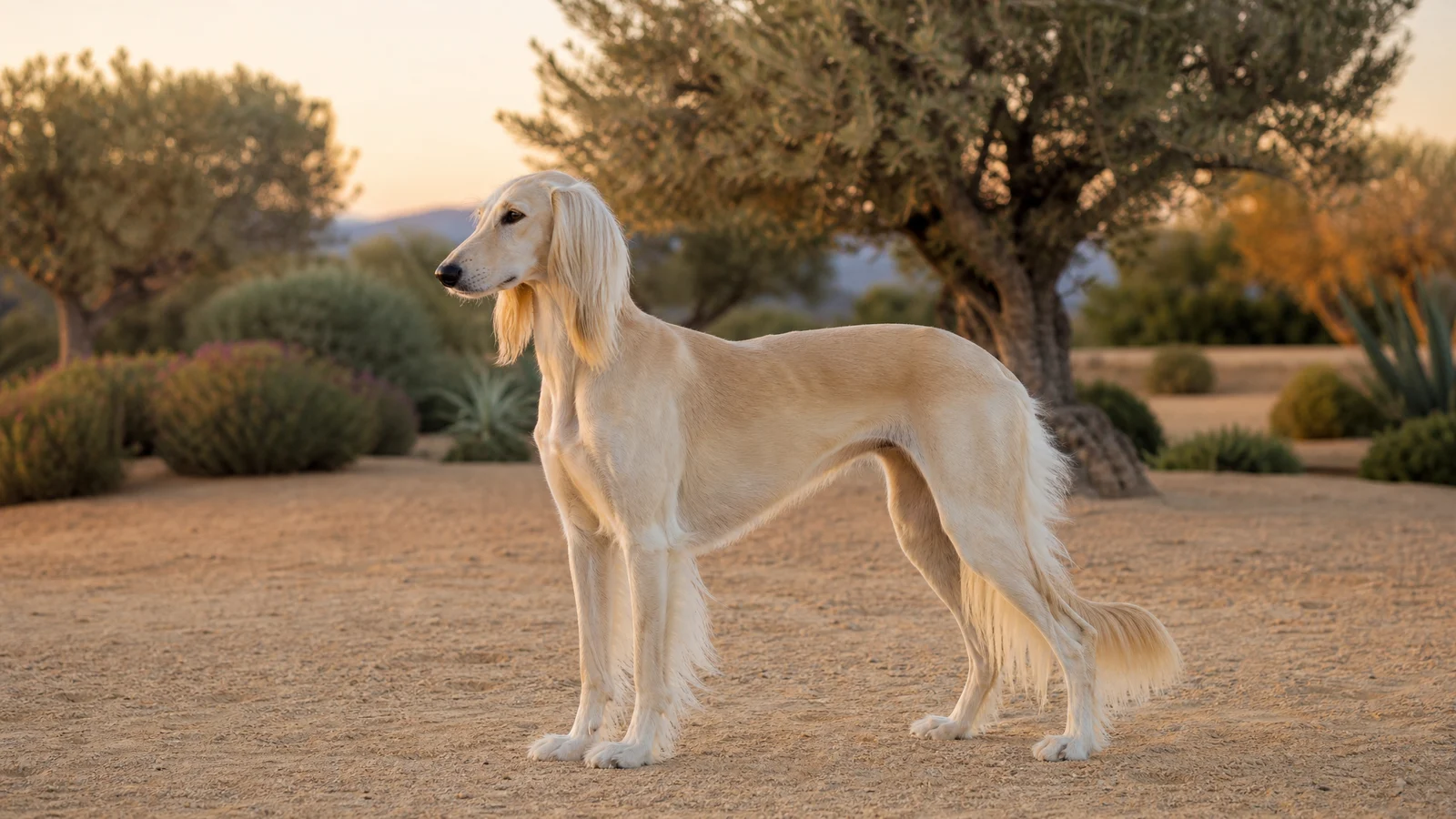
Saluki character explains why. These are dignified, gentle, independent-minded dogs, so affection tends to be quiet and on the dog's own terms.
An independent dog also has opinions about being hugged, carried or climbed on, and those are exactly the things children most want to do, which makes handling the first habit to shape.
Two more traits matter for family life. Salukis are slow to mature, so a tall young Saluki can still act like an adolescent long after they look grown, and our slow-maturing Saluki training guide covers that stretch in detail. They also carry a hound's readiness to chase, and that is the trait that clashes most directly with how children play. All of this is why supervision carries so much weight in the rating.
Supervision here means an adult who is close enough to step in within a moment and who is watching the dog as well as the child, not a parent in the next room who will hear if something goes wrong.
Why Running Kids Wake the Saluki's Chase Instinct
Supervision matters most the moment a child starts to run, because a child at full speed looks a great deal like what this breed was shaped to pursue. That makes the chase worth taking seriously before any cuddling rules, since a game can turn from fun to frightening in a few strides.
Children move in quick, jerky ways, speak in high voices and often run, and Oregon Humane Society notes that any dog may respond by chasing, nipping at heels, jumping up or even trying to knock the child down. Because most children under ten cannot manage the training steps themselves, the job of teaching the dog an easy or leave-it cue for rough play falls to the adult.
With a Saluki, the chase part of that list deserves the most respect, because speed is what the breed is for. A large, long-legged dog who sets off after a running child can knock them flat without any bad intent, so the aim is to make the chase less likely to start instead of relying on a dog who always stops. Teach the easy cue in a quiet room first, pay the Saluki when they turn toward you, and only then try it with calm children on the far side of a gate.
A Short Routine for Wild Moments
When play does turn wild, an adult can run the same short routine every time. Four moves cover it, and they work best in this order:
- Pause the game: call an end to the chasing or wrestling in a calm voice before anyone is knocked over, not after the tumble.
- Make the children boring: ask them to stop moving, fold their hands and look away from the dog, so the movement that excites the hound runs out.
- Pay the settle: once the Saluki is calm, drop a treat on the floor, so calm is what pays when the house is noisy.
- Change the setting: send the dog to their own space or the children outdoors, whichever is easier to move at that moment.
Running the routine the same way each time teaches the Saluki what the pause means, and it lets the children learn the pattern as well. In time the Saluki starts to settle at the pause itself, which is the habit that protects everyone.
A Quiet Place the Kids Do Not Enter
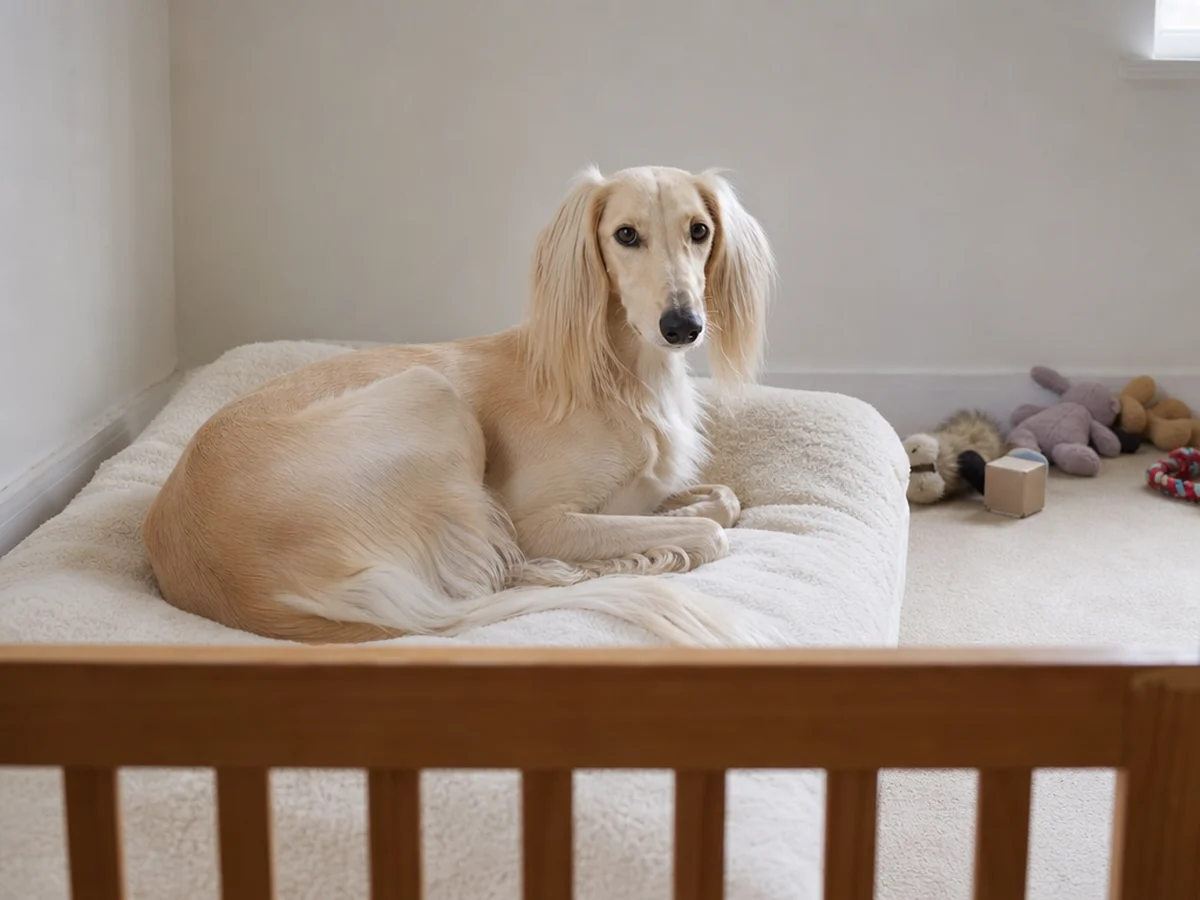
Handling play in the moment only covers the busy hours, and a Saluki also needs stretches in which nothing at all is asked of them. That calls for a place the children cannot reach.
San Francisco SPCA advises giving a dog their own space for meals, chews and rest, away from a child's activities and secure enough to use whenever a parent cannot supervise, and says children should stay out of the dog's crate and sleeping area. A shared living room is not that space, however calm it feels.
Our trainers start by making the space easy to use: a bed or crate in a corner that looks onto the household, a gate across the doorway instead of a closed door and a few chews that only appear there. A hound who can watch the family without being touched is more likely to stay relaxed than one who has to leave the room to get any peace.
Rules Every Child Follows
Every child in the house also needs the same short list of rules. Each one sticks better when the child knows what the dog is doing at that moment:
- Eating and chewing: a Saluki with a bowl or a chew is busy and not available, so children stay away until the dog walks off on their own.
- Sleeping: a Saluki lying down with closed eyes is resting, and a resting dog is not to be woken, stroked or stepped over.
- Climbing and carrying: no riding, lying on or picking up the dog, because a dog who is lifted or squashed cannot leave when they want to.
- Hugging: no arms around the neck or kisses on the face, since a hug holds a dog in place, and a scratch under the chin is a friendlier hello.
- Toys and chews: anything in the dog's mouth stays there until an adult trades for something better.
Keep the list short enough that a child can say it from memory, and add a rule only when the household has a real reason to. Regular vet visits belong in this routine too, because a dog in discomfort can have much less patience for a busy house, so mention any sudden change in how the Saluki treats the children at the next check-up.
How the Plan Changes as Kids Grow
Those rules and that quiet place suit every child in the house, but what a child can actually do with the dog changes quickly as they grow. Matching the job to the age keeps the Saluki comfortable and gives the child something real to be proud of.
Young Children and Hands-Off Time
A child under five cannot be counted on to remember a rule in the middle of excitement, however polite they were an hour earlier. With the youngest children the goal is simply for the Saluki to learn that sharing a room with a child is safe, which keeps the relationship mostly hands-off. A gate or pen does more at this age than any rule can. Place one between the Saluki and any child who is crawling or lying on the floor, and let the dog watch from the other side.
That is not a failure of the family. It is how the hound keeps their calm while the child learns to be around them.
Ages Five and Up and the Three-Second Pause
Children from about five up can start learning to read a dog, and Wisconsin Humane Society describes a three-second rule for that age. The child pets the dog for three seconds, then lifts their hands and watches. If the dog walks away, the contact is over, and if the dog looks uncomfortable, with signs such as lip licks, a shake-off or a yawn, the adult sends the child away. An adult still supervises closely throughout.
For an independent dog like a Saluki, the pause is a polite way to say no. A hound who walks off is giving a clear answer, and the rule only works if every adult honors it each time, including the days when the child is sure the dog wants more.
Teenagers and Real Jobs
Teenagers can share real work: feeding the dog their meals and running short reward-based practice sessions with an adult within earshot. Jobs like these build the relationship through food and rewards instead of touching, which suits an independent dog, and a hound who needs mental work gets something useful to do.
When Visiting Kids Arrive
A household's own children have time to learn the Saluki, and the Saluki has time to learn them, while visiting children arrive with no history at all. To a hound who is reserved with strangers, a visiting child is a stranger who also happens to be fast and loud.
The visit goes best when the plan is settled before the doorbell rings. Tell the child's parent the house rules in advance, start the visit with the Saluki in their own space behind a gate and let the dog decide whether to come out once the excitement has settled. A Saluki who prefers to watch from a distance is having a good visit, not a failed one, and our Saluki visitor guide shows how to build that distance-first habit.
Visiting children also forget rules faster than children who live with the dog, because everything in a new house is exciting. An adult stays within arm's reach of both the child and the gate, and the rule list applies to friends and relatives exactly as it does to your own children.
Food needs its own plan on visiting days. Keep snacks and party plates out of small hands and off the floor while the Saluki is loose, since a hound with a long reach and a good nose will notice every crumb, and a child holding a sandwich is at exactly the wrong height.
Kids, a Saluki and the Worries Parents Still Have
Three practical worries are left once the plan is in place. Here are plain answers to each, starting with the one that matters on the very first family walk.
Can my child walk the Saluki?
Not alone. A Saluki who spots a squirrel or a cat can pull a child off their feet, so an adult holds the leash on every walk and the child helps in other ways, such as carrying the treats. Reliable recall comes from patient training, and our Saluki recall training guide shows how it is built.
Will a reserved Saluki still bond with the kids?
Yes, in a Saluki's own way. The reserve belongs mostly to strangers, while the breed is affectionate with the family they live with. Expect closeness on the dog's schedule, such as lying nearby while the children do homework, instead of constant cuddling.
Will the rules ease once the Saluki is grown?
Some of them can, but slowly, because Salukis mature slowly and a full-sized dog can still behave like a teenager. What changes most is the children, who can take on bigger jobs. We would loosen one rule at a time and watch how the Saluki responds, while the gates, the quiet place and an adult in the room stay.
Separate Lanes for Kids and a Fast Hound
Underneath every answer above sits one fact: a home with kids and a Saluki holds two fast, restless creatures, and each of them needs somewhere to be fast. Trouble starts when both use the same room at the same time, with a child sprinting down the hallway while a hound who loves to chase watches.
The fix is not slowing either one down but giving each their own lane. The dog's running happens on a leash or inside a secure fence, as laid out in our safe Saluki chase outlets guide, and the children's wildest games happen outdoors or while the dog rests in their own place.
Give each of them a real sprint and the shared rooms have a much better chance of staying calm. If the household is already stretched thin, our free e-book gives you every part of a Saluki's training in depth, without making you wade through jargon to find it.
 BehaviorHow to Stop a Saluki Barking
 Exercise and jobsIndoor Activities and Brain Games for a Saluki
 Training basicsAre Salukis Easy to Train? Smart or Stubborn
