 Saluki
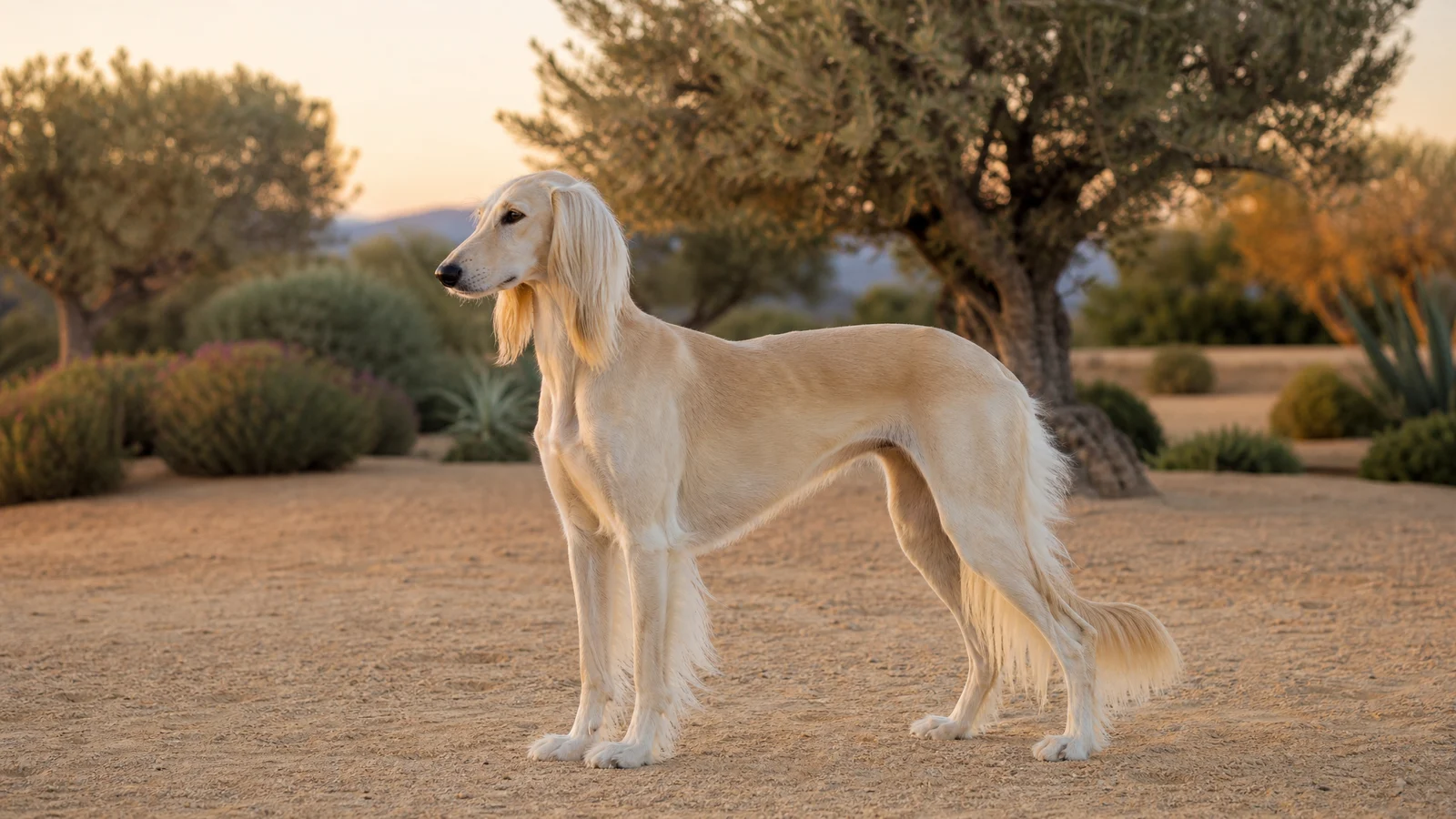
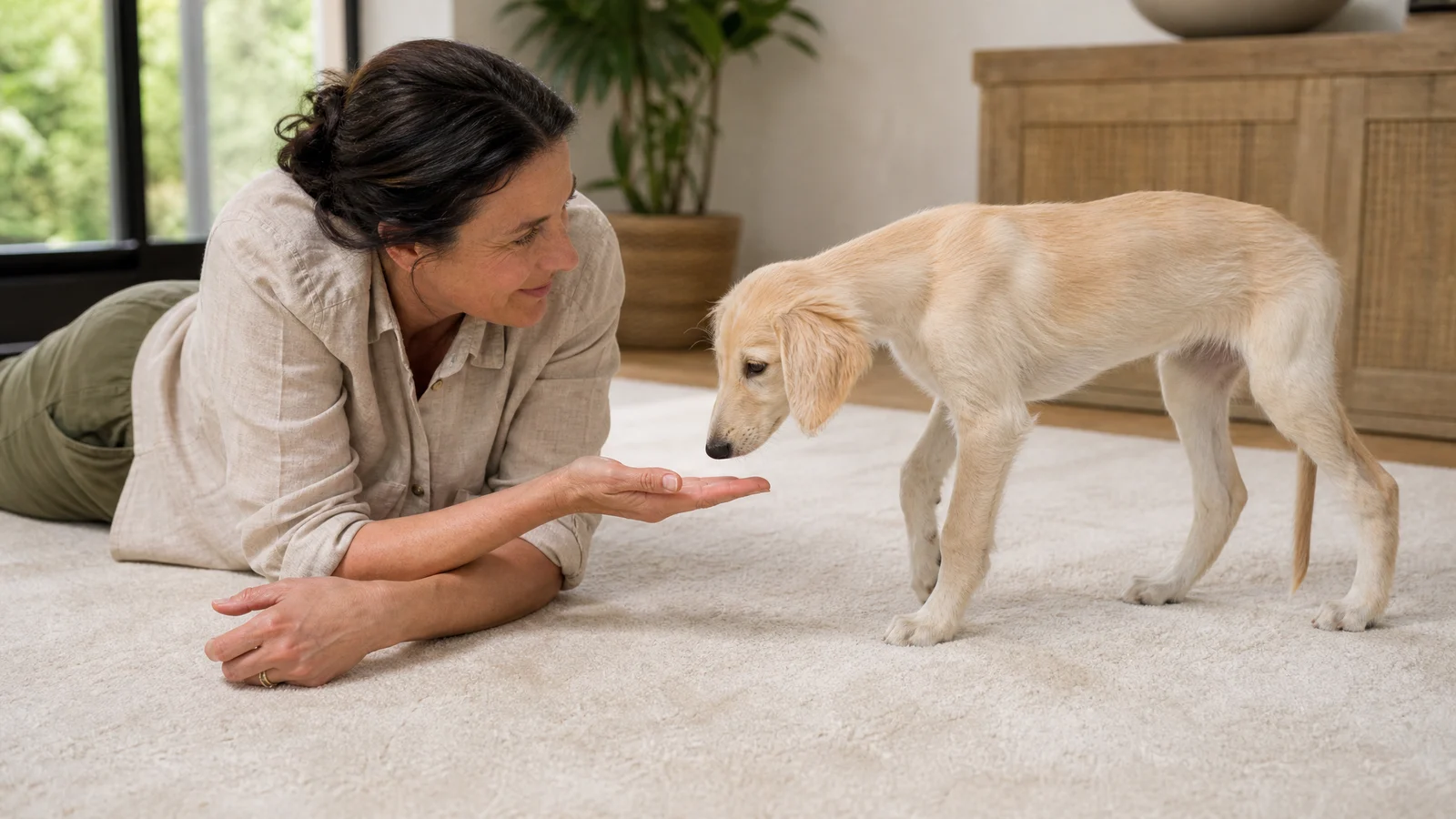
A Saluki will cooperate when your offer beats everything else in the room, and for a sighthound that is a harder bar than it sounds. That is the real answer behind the question of whether Salukis are easy to train, and it is good news for anyone willing to learn how the bidding works.
Teaching a new cue in a quiet kitchen is usually straightforward. Getting the same cue to hold when the world turns interesting takes planning, patience and the right reward. Below you will find what easy actually means for this breed, why a Saluki weighs requests the way they do, how to find the reward that moves them and how to build cues that survive outside the house.
What Easy to Train Means for a Saluki
Easy has two meanings in dog training, and a Saluki scores differently on each. Easy to teach asks how quickly a dog can learn a cue when conditions are good. Easy to rely on asks whether the dog will answer when something far more exciting is happening, and that second question is where Salukis earn their reputation.
On the breed's trainability scale a Saluki lands in the middle, agreeable rather than eager to please. That placement fits the temperament, which is dignified, gentle and independent-minded, with real devotion to family underneath. Nothing in that profile points to a dog who cannot learn. It points to a dog who expects a reason before acting, which means your training has to supply one.
Smart and Stubborn Describe One Dog
So where do the words smart and stubborn come from? Both describe the same dog from opposite sides. When a Saluki answers a cue at once, people call them brilliant. When the same dog glances at a drifting leaf and carries on past you, people call them stubborn. Nothing about the dog changed between those two moments, only the competition for their attention and the value of your offer.
That is why this page treats trainability as something you build place by place, not a trait you either got or did not. The sections that follow show how to build it.
How a Saluki's Independence Shapes Training
If a Saluki expects a reason before acting, the next question is what counts as a good reason, and the answer starts with how the breed is built. A Saluki is chase-ready, quick to notice movement at a distance and reserved with strangers, and each of those traits changes what your training has to compete with.
Chase readiness means the world is full of rival offers. A bird, a blowing bag or a jogger across the street can outbid a treat from your pocket, which is why a cue that is flawless indoors can look as if it has vanished outdoors. We see this in Salukis all the time, and it says far more about the setting than about the dog's willingness.
A Saluki is not unusual in needing patience here. A behavior lead at the Dumb Friends League puts it plainly: certain breeds are not more defiant than others, but they often have different needs, skills, intelligence and activity levels. Read that way, a Saluki who walks past your cue is a dog whose strong need to move and watch is not yet being met by the offer on the table.
Reserve With Strangers Adds a Layer
Reserve with strangers adds a second layer. A Saluki who is cautious around new people may work beautifully with you at home and go quiet when a class instructor or a visitor holds the treats, which is a comfort problem more than a trainability one. Our reserved Saluki visitor guide covers how to introduce new people at the dog's own pace, and the same patience applies whenever someone else takes over a lesson.
Finding the Reward a Saluki Will Train For
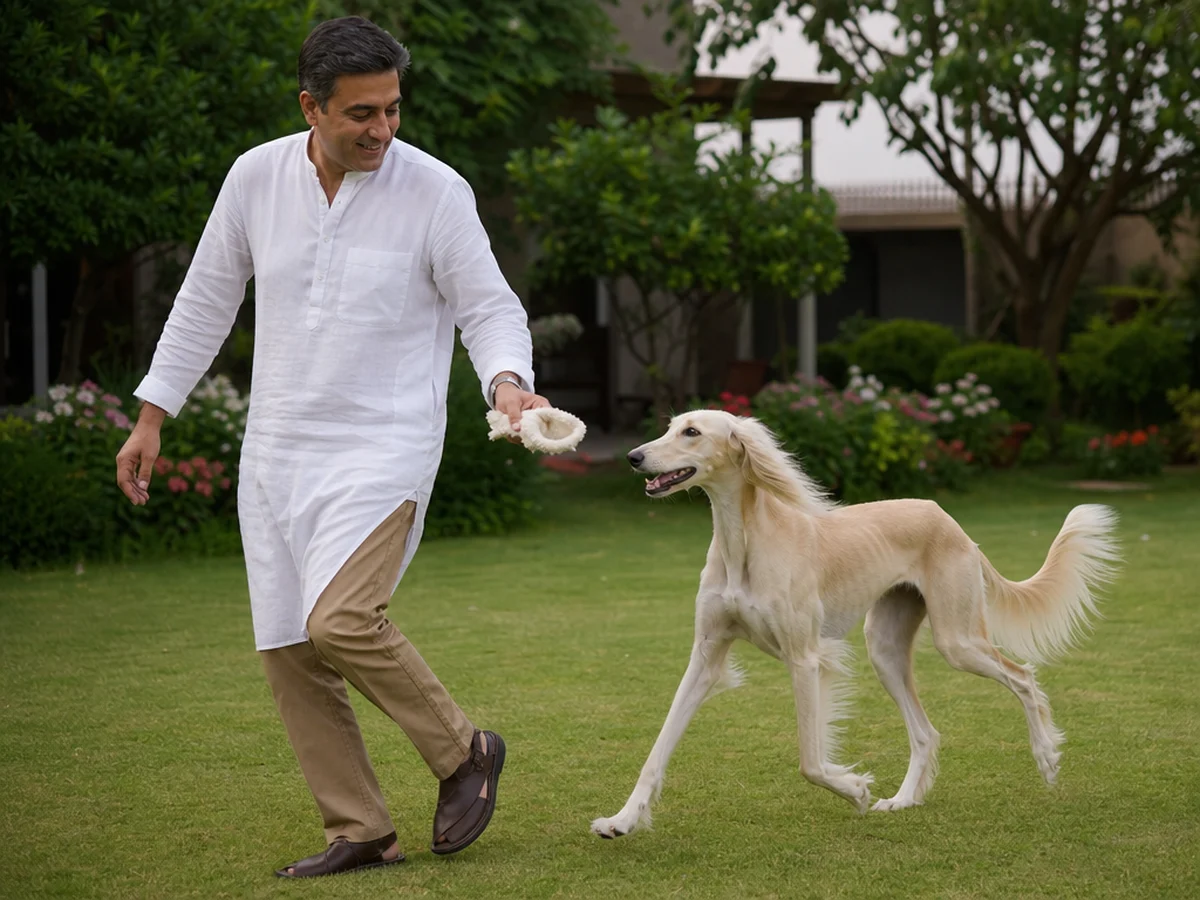
If the world can outbid you, your first job is to learn what your Saluki values most, and the answer is not always food. Guessing wastes weeks, so it helps to test.
Training tips from the American Animal Hospital Association include a simple experiment: offer a variety of potential rewards, watch which one makes your dog most eager and do not assume it is always food, because some dogs are more motivated by play or attention. For a hound who notices motion before anything else, that last point matters, since movement itself can be the prize. Here is a version of that experiment built for a Saluki:
- Pick a calm moment indoors and gather four rewards: a soft treat cut small, a different soft treat, a toy you can drag along the floor and a short game of tug.
- Offer one reward at a time after the same easy behavior, such as a sit or a step toward you, and keep each offer small so your Saluki neither fills up nor loses interest.
- Watch the body as well as the mouth. The reward that brings brighter eyes, a quicker turn back to you and a keen look at your hands is the one worth more to this dog.
- Repeat the test somewhere with mild distraction, such as a secure yard, because a reward that wins at the kitchen table may lose at the gate.
Saving the Best Offer for the Hard Places
Keep the winner as your best offer and save it for the hardest places. A reward your Saluki loves at the front door is wasted if they have already eaten it on every easy repetition in the living room.
Because Salukis notice motion first, a toy that moves is worth testing even for a dog who takes treats politely. Keep these games indoors or inside a secure fence, and let your dog win the toy at the end so the game pays. That kind of reward also gives a chase-ready dog a legal outlet for the exact instinct that tends to compete with you.
Training a Saluki Cue to Hold Away From Home
Once you know your best offer, the next job is putting it where it counts, and that means taking a cue through places one at a time instead of expecting it to travel on its own. A cue is learned in a place before it is learned anywhere, so the dog treats each new setting as a fresh lesson.
Working Through the Places in Order
Teach the cue in the quietest room first, add mild distractions only when your Saluki answers quickly there, and work outward in the order shown below. Move to the next row when your Saluki answers on the first ask, without hesitating, on different days, and stay on a row until that is true.
| Place | What competes with you | Reward to bring | Safety layer |
|---|---|---|---|
| Quiet room at home | Almost nothing | A soft treat or a quick toy game | Door closed |
| Kitchen or hallway with the family moving | Voices and footsteps | Your best treat, cut small | Leash on or gate shut |
| Secure yard | Scents and movement beyond the fence | Your best offer from the reward test | Fence checked, leash for early practice |
| Quiet street or path | Distant motion and new smells | Best offer, paid generously | Leash at all times |
Why the Safety Layer Never Loosens
Notice that the safety column never loosens. A Saluki who answers perfectly is still a Saluki, and a fast dog who spots movement can be far away before even a well-trained cue has finished leaving your mouth.
Fences and leashes handle safety while the cue handles everyday manners, and our safe Saluki chase outlets page covers where your dog can really run, while Saluki recall training owns the come cue.
Paying Enough for the Place
How much to pay depends on the place. The Animal Humane Society pairs lower value rewards with low distraction environments, like inside your home, and high value rewards with high distraction environments, like walks outside. When a cue keeps falling apart, that is a sign of going too far too fast, and the answer is to back your Saluki up to the last place where it worked. Backing up keeps the next attempt winnable.
Habits That Make a Saluki Look Stubborn
Even with the right reward and the right place, a few common habits can make a willing Saluki look as if they have stopped listening. These are the ones to watch for, along with what each one costs you:
- Paying late. A treat that arrives after your Saluki has already stood back up rewards the standing, so the dog learns the wrong lesson and you conclude they are slow.
- Asking in the exciting place first. A cue that has only ever been practiced in the living room has not yet been taught at the gate, so a failure there is a gap in practice, not defiance.
- Running long sessions. A Saluki asked for one more repetition after a good answer may drift off, so end on a good one while interest is still high.
- Handing the treats to a stranger too soon. A reserved Saluki may go quiet when a new person takes over, so let the dog settle with that person before they ask for anything.
Each of these is a setup problem, and each can be fixed without raising your voice or adding pressure. Changing one of them usually changes how smart your Saluki looks within a few days.
A less obvious habit is leaving a clever mind without daily work. Dogs need both physical exercise and mental enrichment, and enrichment guidance from the Wisconsin Humane Society treats the two as daily needs, since dogs lacking either can resort to undesirable behaviors.
As Saluki people, we check the day's workload before judging the dog: a Saluki who has had a safe run and a few minutes of nose games is simply more available for training than one who has had neither. Regular vet visits belong in the same routine, because a sudden change in how willingly a once-reliable Saluki works can have a physical cause worth ruling out.
Saluki Training Questions That Come Up Later
By the time the reward test and the place table are behind you, the doubts get narrower, mostly about timing and about who the dog will work for. Here are three that deserve a straight answer.
How long until a Saluki's cues hold?
No honest schedule exists, because every cue has to be built place by place and a Saluki matures slowly. Some answers that wobble in adolescence settle later, as our slow-maturing Saluki training guide explains. Judge each place on its own and move on only when the answer is quick and calm there.
Can an adult Saluki still learn new cues?
Yes. An adult learns the same way a younger dog does, through well-paid repetition in places that suit them, so everything on this page applies unchanged. What shifts is habit, since an older dog may have rehearsed the wrong answer to a passing bird or an open gate for years, which means more time in the early places and the same safety layer throughout.
Why does my Saluki listen to one person?
Usually because that person pays best, asks most clearly or is the one the dog trusts most. A reserved dog can also hold back with people they know less well. Give everyone the same word and the same reward, and let each person run short, easy lessons so the cue belongs to the household rather than to one handler.
Two Levers Behind Every Saluki Cue
Every section above has been working one of two levers. You can raise what your Saluki gets for answering, with a reward you tested and know is worth the effort, or you can lower what the world offers against it, with distance, a leash, a fence or an easier place.
That is the whole difference between the Saluki who seems brilliant and the one who seems stubborn: not the dog, but how well those two levers are set. Reward tests and place tables are only the start, and the rest of a Saluki's schooling fills our e-book from the first lesson to the last.
 BehaviorHow to Fix Saluki Separation Anxiety
 Puppy trainingSaluki Training Timeline: Stage by Stage
 Puppy trainingSaluki Puppy at 8 to 12 Weeks: The First Month Home
