 Saluki

Picture training a Saluki and you probably see cues: sit, stay, come when called. A good share of the real work lives somewhere else, in a gate latch that always gets closed, a leash clipped on before the door opens, and a treat timed well for a dog who is free to say no thanks. Whether this breed fits your household depends on how that kind of work sounds to you.
The habits matter because a household either keeps them up or does not. Along the way you'll see how rewards, boundaries and shared jobs fit together, and where a trainer can take some of the weight off. The guides we link pick up each skill from there.
Where the Real Work of Saluki Training Sits
If the work lives in habits rather than cue words, the first habit to look at is how you pay. A dignified, gentle, independent-minded dog will often weigh a cue before deciding whether to answer, so your reward has to win that comparison every time. That means paying quickly, paying with something the dog genuinely values and ending a session while they still want more.
A treat that wins in the kitchen can lose badly outdoors, so keep a better one in your pocket for those places and spend that treat freely when the surroundings get interesting.
Choosing What to Pay With
Finding that reward is itself part of the job. Offer a few options on separate days, such as soft treats, a bit of cooked chicken or a favorite toy, and watch which one the dog turns toward fastest. Then pick a single marker word, say that word the instant the right thing happens and deliver the reward right afterward, so the dog learns exactly which moment earned the payment.
When the Dog Says No Thanks
Plan on moments when the dog simply declines. Reward-based training answers that by changing the setup or the reward, never by pressure, so nobody raises their voice and nobody wins a standoff.
If that sounds like patience you can find on a bad day, good. If it sounds like a stretch, notice that now. When a dog declines, the useful question is what changed. Usually the task got harder than the dog could manage, the surroundings got busier, or the reward stopped being worth the effort. Make the task easier, move to a calmer spot or raise the reward, and the dog can say yes again without anyone having to win an argument.
Keeping Habits Going for Years
The patience has a long horizon. The Saluki Club of America gives a life expectancy of 10-14 years, which means a routine you build in the first months is one you will still be using in the dog's later years. Small habits survive that long, such as practice folded into meals, doorways and walks, while elaborate schedules tend to fade.
Everyday Training Skills That Smooth Home Life
Pay habits earn their keep in the ordinary skills that decide how easy a dog is to live with. None of them is glamorous, and together they make up most of a Saluki household's training week.
A rest place comes first, whether that is a crate or a mat, taught so the dog chooses to settle there and not because the door was shut on them. Handling practice comes next: touching paws, lifting a lip and holding still for a nail trim are far easier to teach to a young dog who is paid for each small step. Doors and greetings round it out, with a simple sit or a four-paws-down habit worth paying for each time.
First Steps for Each Skill
Each of those starts with a first step that takes seconds. For a rest place, toss a treat onto the mat, pay when the dog steps on it, then pay again for lying down, and only later add a closed door. For handling, touch one paw, pay, and stop. A dog who learns that handling always ends with something good soon stops treating it as a threat.
If a dog suddenly resists handling they used to accept, or seems stiff or sore, check with your vet before practicing more, because the problem may not be a training one. Regular vet visits are also the natural place to ask how your handling practice is going, since a dog who has learned to expect a treat at the end is easier to examine.
Notice how much of that list is about the home and how little is about impressing anyone. A Saluki who relaxes in their spot, tolerates grooming and greets people calmly is easier to live with than one who knows twenty tricks, and the full teaching steps sit in our how to train a Saluki guide.
Why a Saluki Needs Fences and Leashes
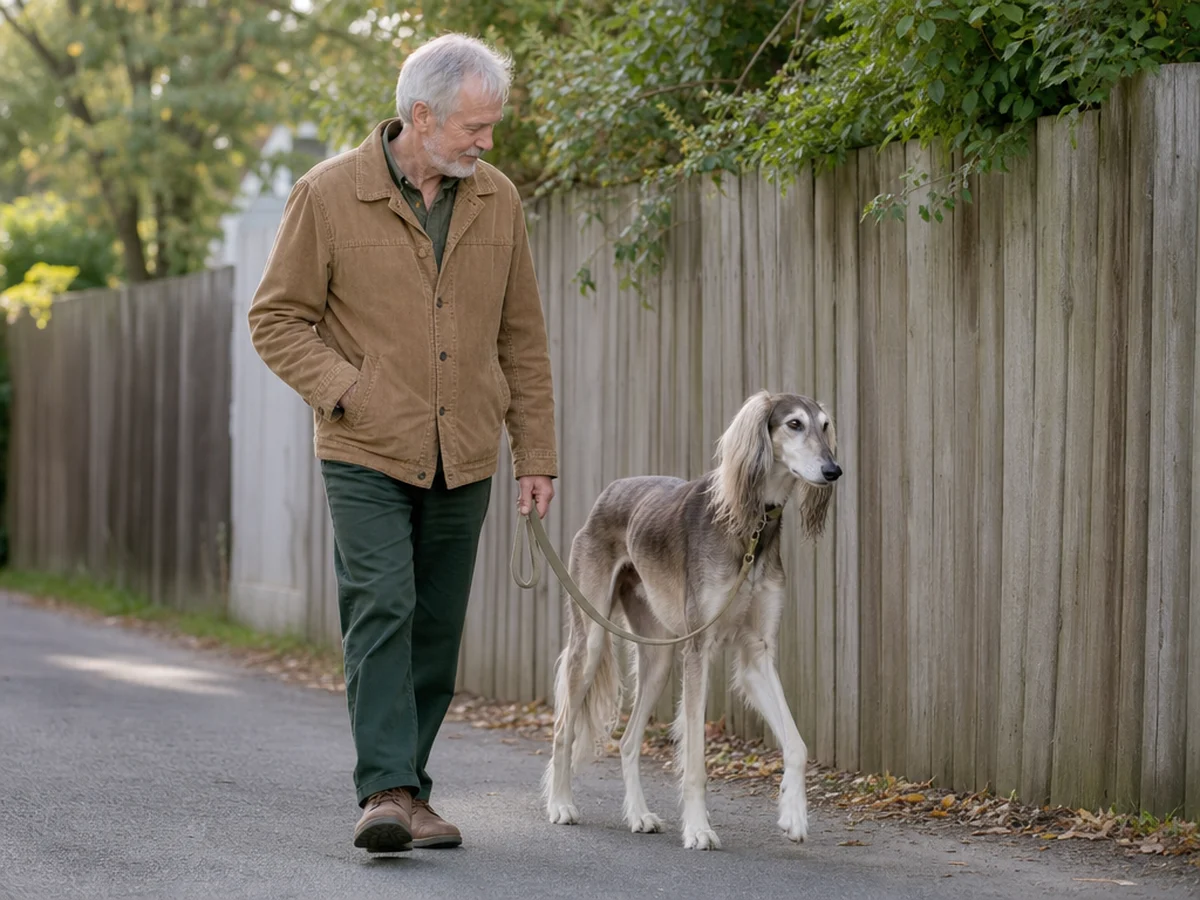
Skills like these are built indoors, where little can go wrong. Outside, the dog's instincts get a vote, and that is where this breed asks the most of a household.
Our trainers start from a plain fact about readiness. The American Kennel Club says training may take patience and consistency because a Saluki is always ready to chase anything that moves, and it is equally frank that owning one brings many special challenges, adaptable as the breed is.
So reliability gets built, never assumed, and the physical safeguards stay in place while it grows. Three of them matter most:
- A boundary that holds. A fence the dog cannot clear or slip through, with gates that latch every time.
- A leash by default. Walks outside secure space happen on a leash that fits the dog comfortably.
- A separate safe space. Somewhere the dog can rest without access to smaller animals.
Those safeguards make practice cheaper, because a mistake costs a treat and a second try rather than a dash toward the road. They also change what you expect from a cue, and our Saluki recall training guide treats recall as a protected skill. Where a dog needs a place to run, the safe chase outlets guide covers options, and the yard escape-proofing guide walks the boundary check.
Thresholds Come First
Doorways deserve their own training, because they are where fences and leashes meet the dog's excitement. Teach a pause at every threshold: the dog waits, you pay the wait, and only then does the gate or door open. It takes a little time to build, and it turns the most dangerous seconds of a walk into a routine the dog expects, which is worth more than any single trick.
Sharing Training With the Whole Household
Safeguards only work when everybody who lives in the house uses them, which brings the rest of the household into the plan. That includes the children, the other animals and the occasional visitor who has never met a dog like this one.
Children and Other Animals
Supervise every meeting between the dog and a young child, and give the child a job that pays the dog, such as dropping a treat on the mat. Two other cases need rules:
- With another dog at home, give each a separate place to eat and rest, and let them share space slowly.
- Small pets are different: protect them with doors, gates and height, never with the dog's good intentions, as our small pets at home guide explains.
Visitors belong in the plan as well. Before guests arrive, decide where the dog will rest and who is responsible for them, and let the dog watch from that spot while people settle.
A dog who has somewhere to be during the busiest minutes is far easier to guide than one left to sort out the doorway alone, and a calm routine teaches guests how to behave too.
Who Does What
Decide up front who takes each walk. That person checks the gate latch and clips on the leash before the door opens, so nobody leaves it to someone else to remember. Paying the dog is different: whoever is working with the dog at that moment pays the dog, whether that is you at the door, another adult in the kitchen or a child dropping a treat on the mat.
Everyone shares the wording. Pick one marker word and one doorway rule, and have every person use them the same way, because a dog who gets a pause from one person and a free pass from another has to guess which rule is real. Children can help with simple, supervised jobs, but they should not be the only safeguard on a gate or a door. Adults carry the responsibility, and children learn a calm, kind way to be around the dog by copying them.
Bringing In a Professional
Some households also bring in a professional for the parts that are hard to practice alone. The Certification Council for Professional Dog Trainers notes that the industry is (as yet) unregulated with no licensing requirements or regulatory oversight, so ask about independent certification and how the trainer actually works.
Look for someone who explains the rewards, shows you the plan and invites your questions. A good trainer should leave your household more capable, and the dog more willing, than before the first visit, and you can ask to watch a session before you sign up for anything.
Where a Saluki's Nature Stays Put
With structure and helpers in place, the last honest question is what the work will not do. It will not turn an independent-minded sighthound into a dog who drops everything for praise alone.
The interest in moving things stays, and so does the habit of making their own decisions. Training changes what the dog does after noticing something, with a quicker glance back at you, a pause at the gate and a calmer walk away from a squirrel, but it does not remove the noticing. That is why the fence and the leash from the last section keep their place even when everything looks good.
Choosing Your Wins
It helps to decide in advance which wins you will celebrate. A dog who looks at you when something runs by is a real success. A dog who comes back across a field every time is a goal to protect with safeguards, never a result to bet on.
When progress seems to stall, resist the urge to push harder. A stalled week is usually a sign that the setup needs adjusting, and a dog allowed to succeed again tends to rebuild confidence faster than one who is pressed. Try three adjustments:
- Go back to an easier version of the exercise.
- Pay more often.
- Shorten the session.
A Fit Decision Runs Both Ways
Everything above asks whether you suit a Saluki, and the question has a second half that gets asked less often. A dog living with you is also deciding, day after day, whether this household suits them: whether the boundary leaves room to move, whether the rewards are worth the effort, whether their own decisions get respected instead of overruled.
Read this way, the training load is partly a promise to the dog. You are agreeing to give a fast, independent animal a safe place to be themselves, and to teach them what you need without taking that away. Our free Saluki training e-book is comprehensive yet easy to follow, and every part of a Saluki's training, from first manners onward, has a place in it.
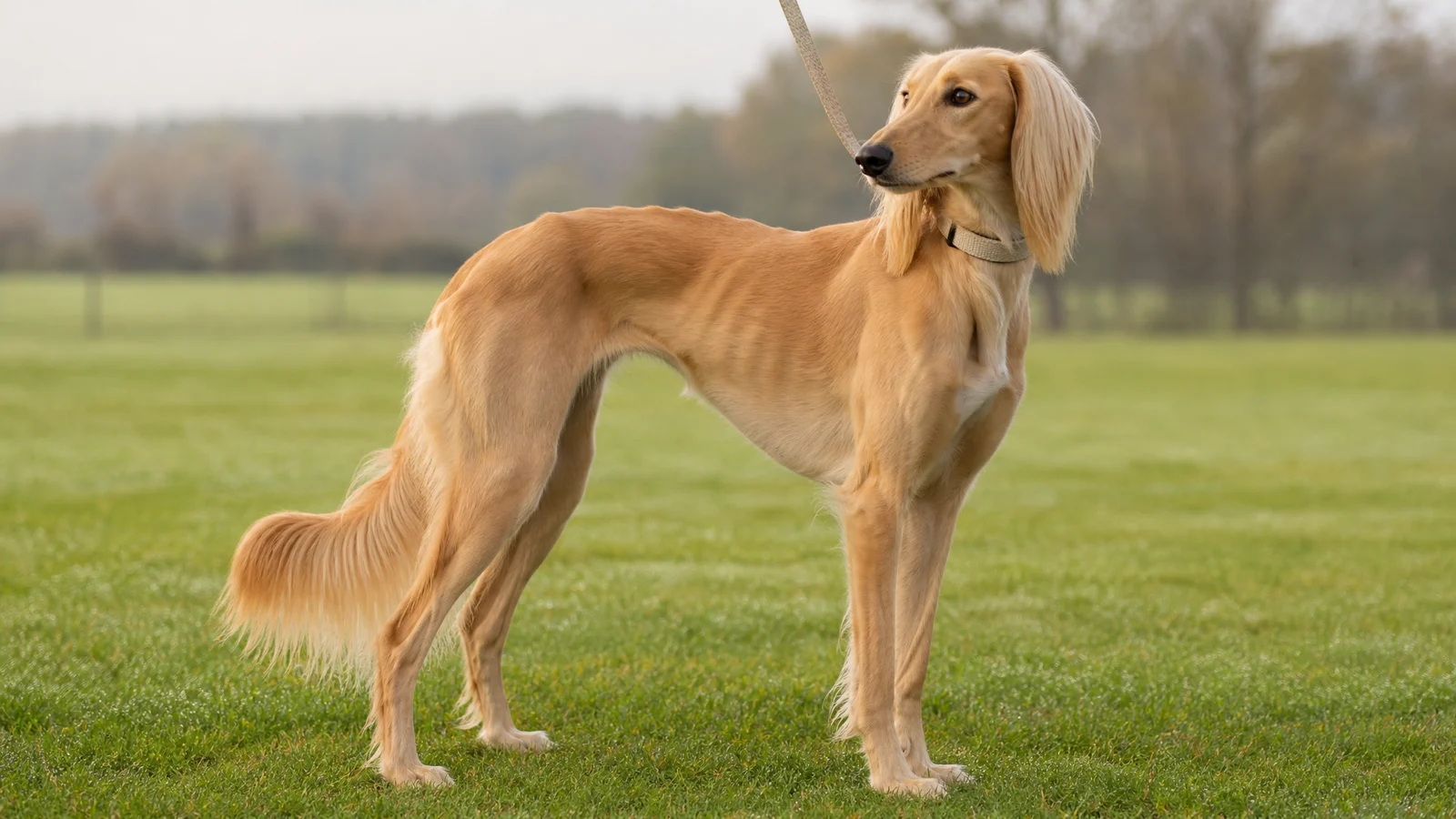 Training basicsHow to Choose a Saluki Trainer
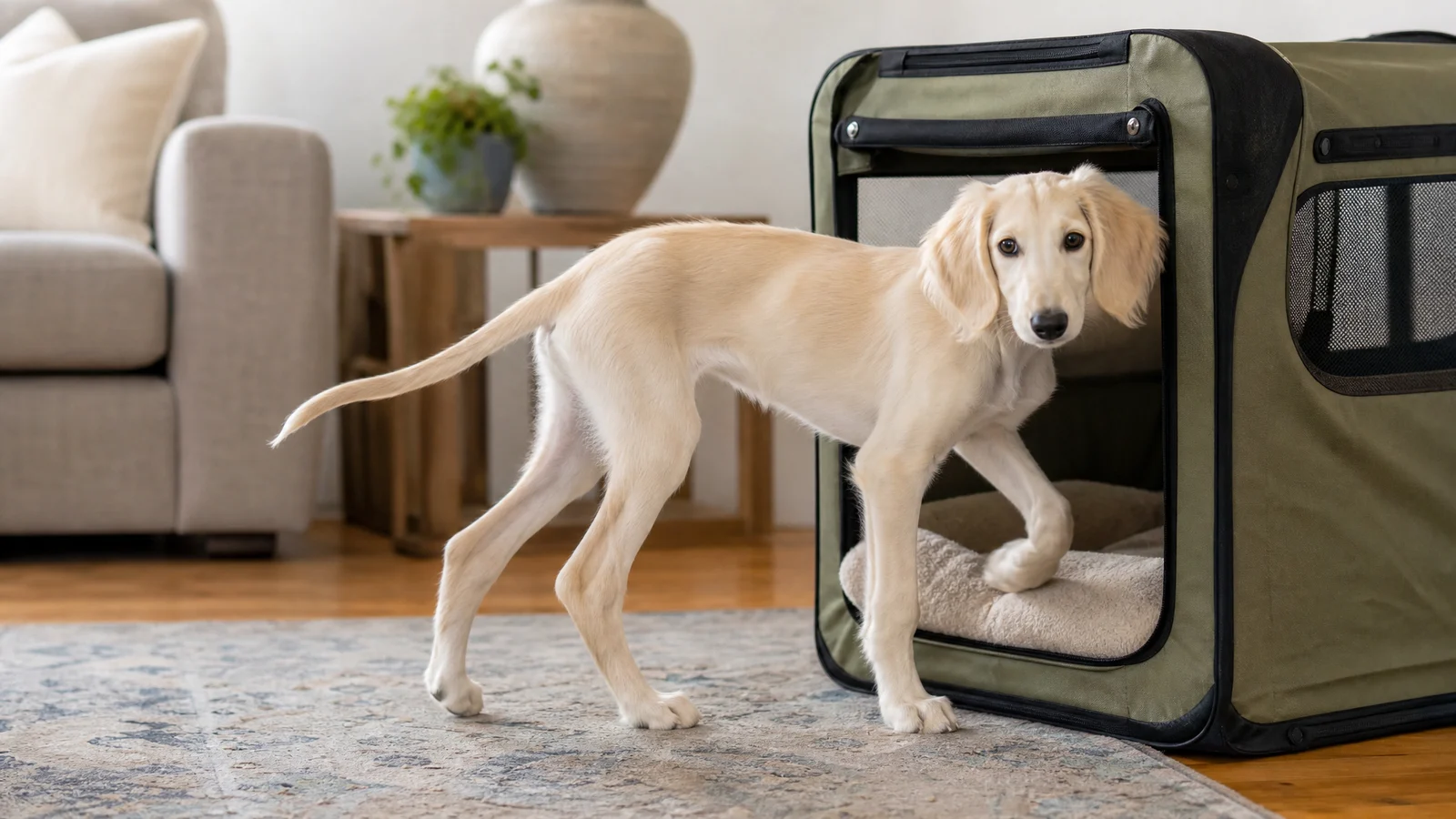 Puppy trainingCrate Training Your Saluki Puppy, Step by Step
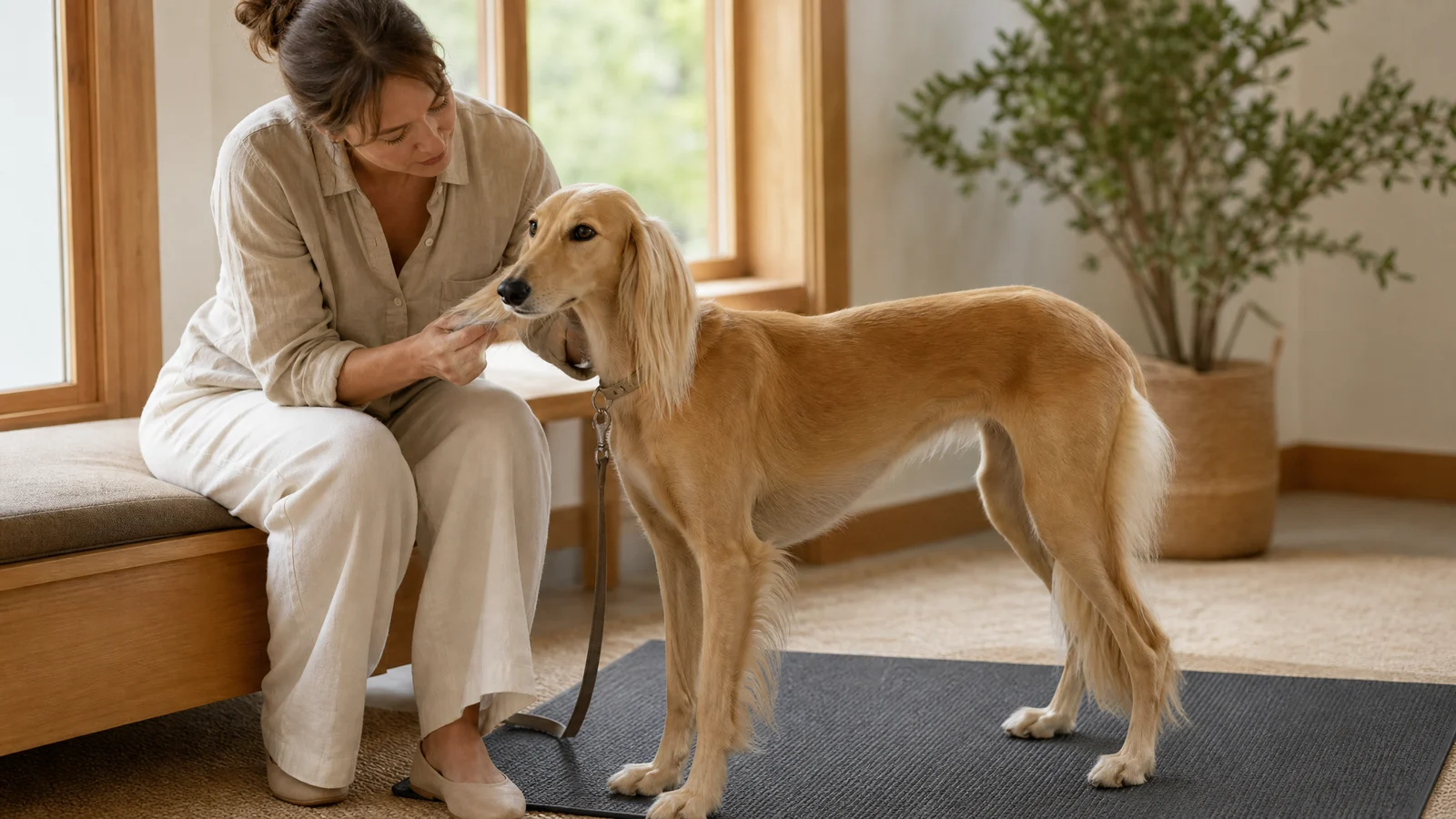 CareDo Salukis Shed? Grooming and Handling Practice Made Easy
