 Saluki
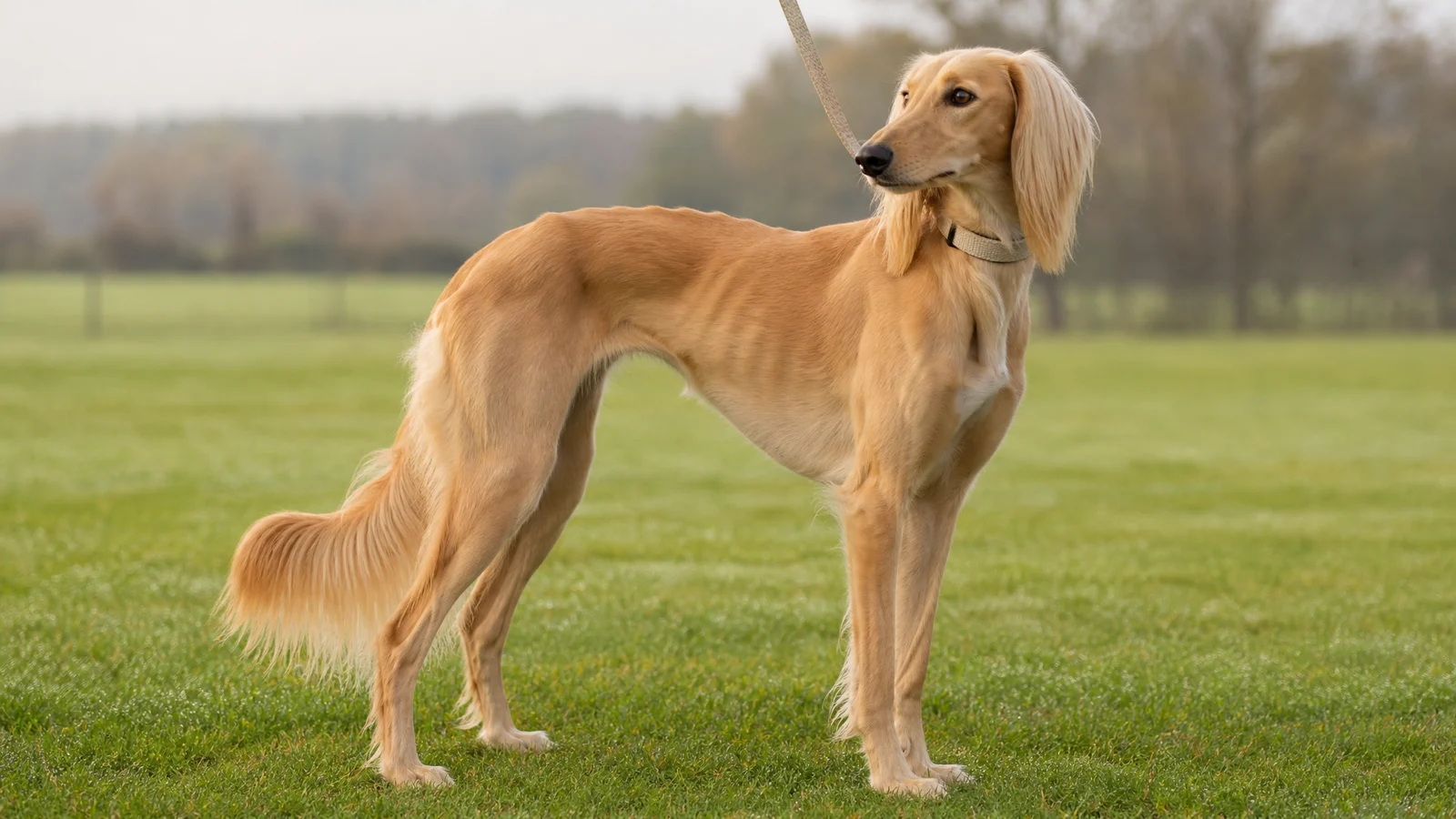
Every trainer's pitch makes a promise, and with a Saluki on the leash the one to read slowest is the promise about coming when called. A hound whose instinct is to run after anything that moves can make a confident claim about open ground look hollow in a second, so confidence deserves a harder look than honesty does.
The person worth hiring is the one who will not make that promise, who understands this kind of dog, who matches the kind of help to your actual problem and whom you have watched work before you pay. In the sections below you'll find how to hear each of those things, plus the practical loose ends that are left once the choosing is done. None of it requires a Saluki specialist, only better questions than most pitches invite.
Trainer Promises That Deserve a Second Look
A promise about recall is one member of a bigger family, and its best-known relative is the guarantee. The Merck Veterinary Manual advises owners to avoid trainers who offer guarantees, because such trainers are either ignoring or do not understand the complexities of animal behavior, and to avoid trainers who object to using food as a training reward, since food is one of the best ways to motivate a dog.
With a living animal, nobody can sell you an outcome, only a method and a plan. That matters most for the likeliest promise, a dependable response in open ground or off leash. For a hound who chases by instinct, a pitch that treats that as a quick job should send you to a better question: how would the lesson run in a fenced or enclosed place first, and what keeps your dog safe while the skill grows? Our Saluki recall training guide covers how that skill is built.
Talk about winning the dog over by force deserves the same caution. A trainer who leans on fear, discomfort or intimidation, or who describes lessons as settling who comes out on top, is working against the traits that make a Saluki who they are. That is a reason to end the search. A reward-based trainer, by contrast, can tell you what they will pay your dog for, what you will practice between lessons and how the plan changes when your dog struggles.
What Sighthound Sense Sounds Like in a Trainer
Avoiding bad promises is a low bar, and the next test is whether the person across from you understands the dog on the end of the leash. A Saluki is an independent thinker, dignified, gentle with their own people, reserved with strangers and slow to settle into adult steadiness. You do not need a trainer who owns one. You need one whose plan could carry those traits, and the first thing we listen for is how they talk about independence.
Talking About Chasing and Fenced Space
Ask a plain question about what the trainer would do if your Saluki spotted something running. Good answers include practice in enclosed or low-risk places, distance from whatever sets the chase off, rewards that can compete with the view, and something that keeps the dog safe while the skill grows.
The most reassuring answer is an honest one, that chasing is managed and taught around, not erased. A trainer who says it will be gone in a few lessons has just made the promise from the last section again, in friendlier words.
Meeting a Reserved, Slowly Maturing Dog
A reserved dog should be allowed to come to the trainer. Look for a low profile, no looming and no grabbing, and a first meeting that stays calm and brief. Our Saluki visitor guide shows how this approach works with guests at home, and a good trainer will follow the same logic.
A trainer who calls a reserved dog rude, cold or stubborn has misread a Saluki's ordinary manners, and that misreading will shape every lesson that follows, however kind the treats.
Maturity is the other half. Salukis grow up slowly, so answers that flicker during the teenage months are ordinary, and the trainer should treat them that way instead of blaming the dog or the plan. Our guide to slow-maturing Saluki training covers what that stretch looks like. Ask about experience with the specific problem you have, because general experience with dogs says less than it sounds like it does.
Which Kind of Professional a Saluki Needs
A trainer with the right attitude can still be the wrong door for the problem you have. Trainers teach skills and everyday manners, such as walking politely or coming away from a distraction, and a good one is a pleasure to work with. Some trouble, though, belongs to a different professional, and the label on a card does not always tell you which.
The American College of Veterinary Behaviorists notes that obedience training does not usually get to the root cause of a behavioral issue, that veterinarians may only call themselves behaviorists if they have achieved its board certification while trainers face no such restriction, and that for any animal displaying aggressive behaviors it recommends professional help from a veterinary behaviorist.
So when you interview anyone, ask what their title rests on and who issues it, and ask what they do when a case turns out to be bigger than lessons. A trainer who names a veterinarian or a veterinary behaviorist for those cases is showing judgment, not a gap in the service. If you are unsure which door you need, ask them to say honestly whether they are it.
A sudden change in how your Saluki acts is a question for your own veterinarian before it is a training question. Regular veterinary visits are also part of keeping any dog's behavior on an even keel, so book them whether or not a trainer is involved.
Choosing a Format for a Reserved Saluki
Once you know what kind of help fits, the setting decides whether your dog can actually learn from it. A Saluki's comfort in the room matters as much as the curriculum.
The ASPCA places group classes with basic manners and skills like sit, down and come when called, and private sessions with a specific behavior problem that needs a custom plan and individual attention. Board-and-train means leaving your pet in the trainer's kennels, so you should know and agree with the methods because you will not be there to supervise, and it is only effective if the trainer teaches you some skills to maintain the new behaviors.
For a reserved Saluki, those descriptions need one more layer. A private start lets your dog meet one new person in a calm place instead of a room full of them, and a class can follow once dog and trainer know each other. Neither format is automatically right, and a hound who is overwhelmed in a class is not learning the manners the class was meant to teach.
If the plan is board-and-train, ask where your dog will sleep and spend the day, and how secure that space is. A Saluki who gets out of an unfamiliar yard is in real danger, and our Saluki escape-proofing guide shows what a secure setup has to cope with.
Watching a Trainer Work Before You Pay
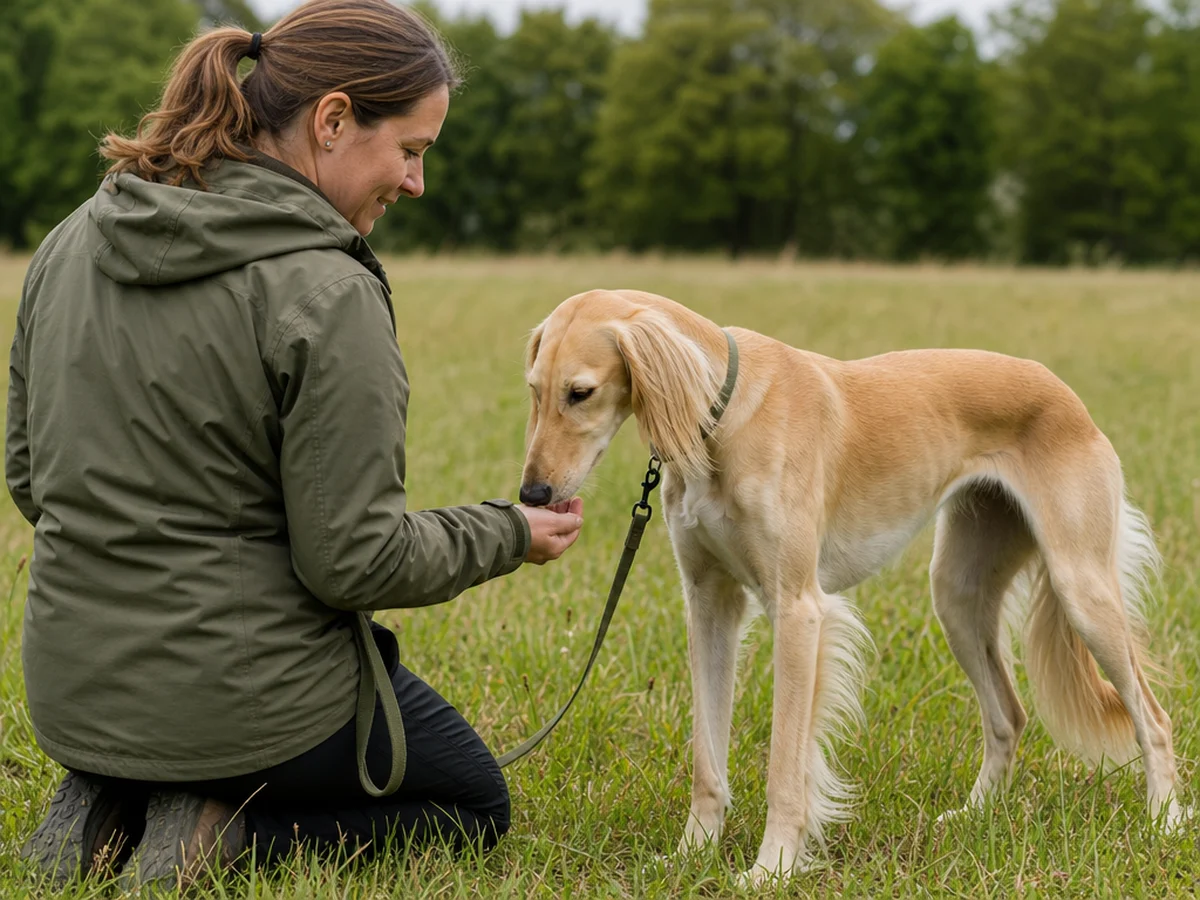
A format settled on paper still tells you nothing about the lesson itself, and the lesson is where a trainer's promises either hold up or do not. If you can see a trainer work with other people's dogs, do it, and pay attention to the moment a dog gets overexcited or worried. Anyone looks skilled while a dog is doing well, so what the trainer does next is the interview no website can give you, and we would rather you judge on that than on any line of the pitch.
Notice what happens when a dog gets something right, too: a quick reward and a pause is a good sign, and a rush straight to the next demand is not. While you watch, these are the signs that matter most:
- Dogs are given room to look away or leave, and nobody is crowded into a greeting.
- Treats come out readily and rewards arrive quickly, so the dogs are being paid for what they get right.
- The handlers are coached as much as the dogs are managed, because the skills have to go home with them.
- The trainer's voice and hands stay calm when a dog is overexcited or unsure.
A trainer who handles the hardest dog in the room kindly is the one to book, and you do not need a Saluki in the class to see it. If you can watch more than one trainer, the contrast teaches you what you are looking for.
One more point belongs to you, not the trainer. If a handling choice makes you wince, say so in the moment. A good trainer will explain it or change it, and one who bristles has answered your biggest question for you.
Leftover Points About Hiring a Trainer
Watching a trainer handle the hardest dog in the room settles most of the choosing. What it cannot settle are practical points that depend on the dog you have and the life you give them.
Can a Sports Instructor Replace a Trainer?
An instructor in a sport such as lure coursing teaches the sport, and a good one is worth finding as an outlet for a Saluki. That is a different job from teaching household manners or working through a problem at home, so the instructor does not replace a trainer for those. The same questions about methods, promises and rewards apply to both, and it is fair to ask a sports instructor how they treat a dog who is not ready to run.
What If No Good Trainer Is Nearby?
Keep your standards and widen the search before you lower the bar. A nearby trainer who guarantees results or leans on force is worse than no trainer, because your dog learns from those lessons too. Ask your veterinarian's office who they trust with the dogs they care about, and weigh the drive against how often you will really attend. Our guides cover the everyday skills in the meantime, so the wait is not wasted.
Every Lesson Also Teaches a Saluki About Strangers
Practical points aside, this choice does something that no schedule or price list shows. To a dog who is reserved with strangers, the trainer is a stranger who keeps coming back, and each visit adds to what your Saluki expects from people outside the family. A trainer who lets the dog approach in their own time, pays for calm and finishes a session before it becomes too much can teach a reserved hound that new people are safe company.
One who crowds the dog, hurries the greeting or answers hesitation with pressure can teach the opposite, and a dog who learns it may be harder to introduce to anyone afterward, including you.
Both outcomes can grow out of the same hour in the same room, which is why how a trainer handles your dog's reserve deserves as much weight as how many commands fit into a lesson. While you vet trainers, you can start reading our free e-book, which sets out each of your Saluki's training needs in short, clear sections.
 Puppy trainingCrate Training Your Saluki Puppy, Step by Step
 CareDo Salukis Shed? Grooming and Handling Practice Made Easy
 Training basicsHow to Train a Saluki Who Would Rather Chase Than Sit
