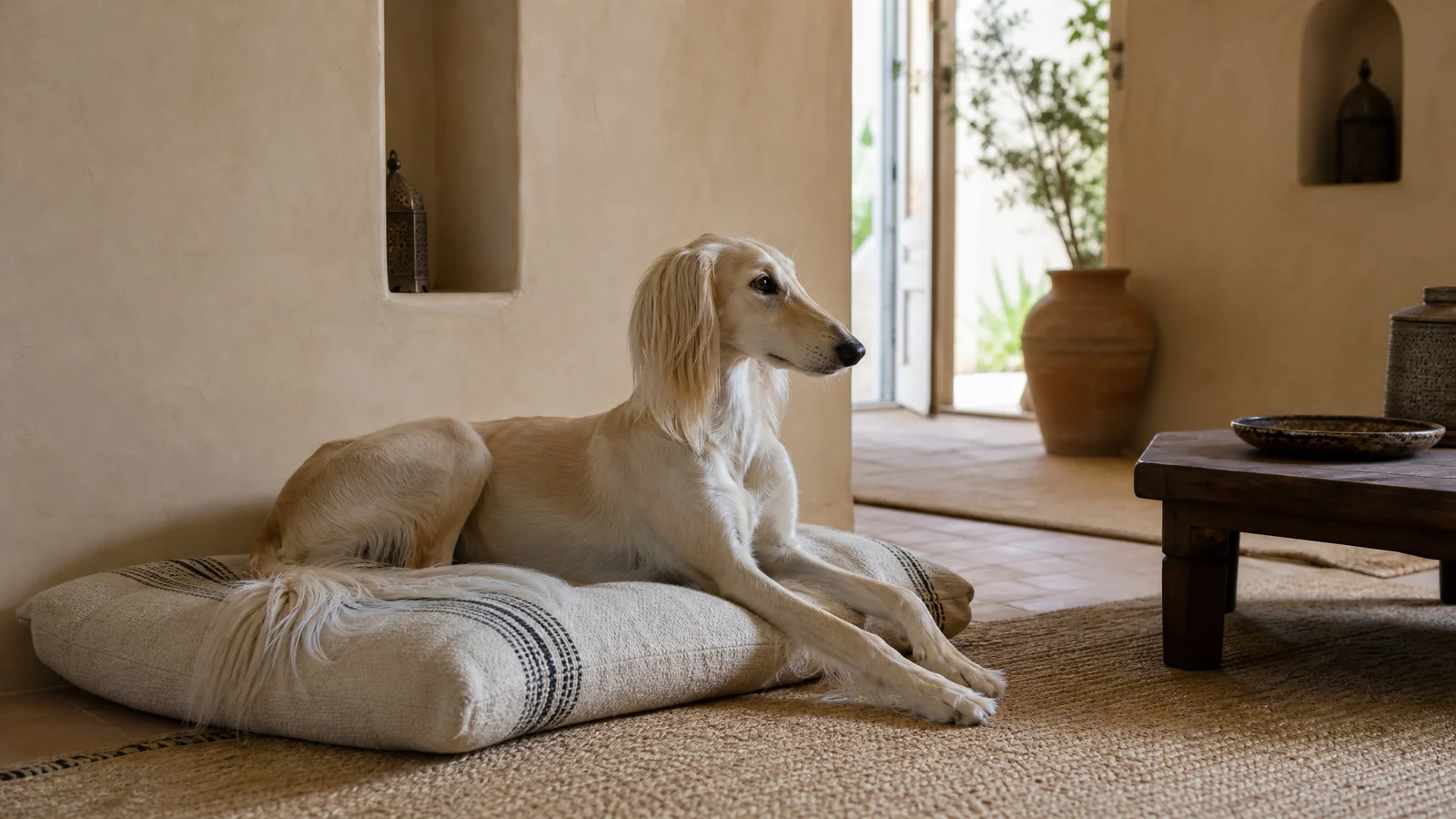
 Saluki
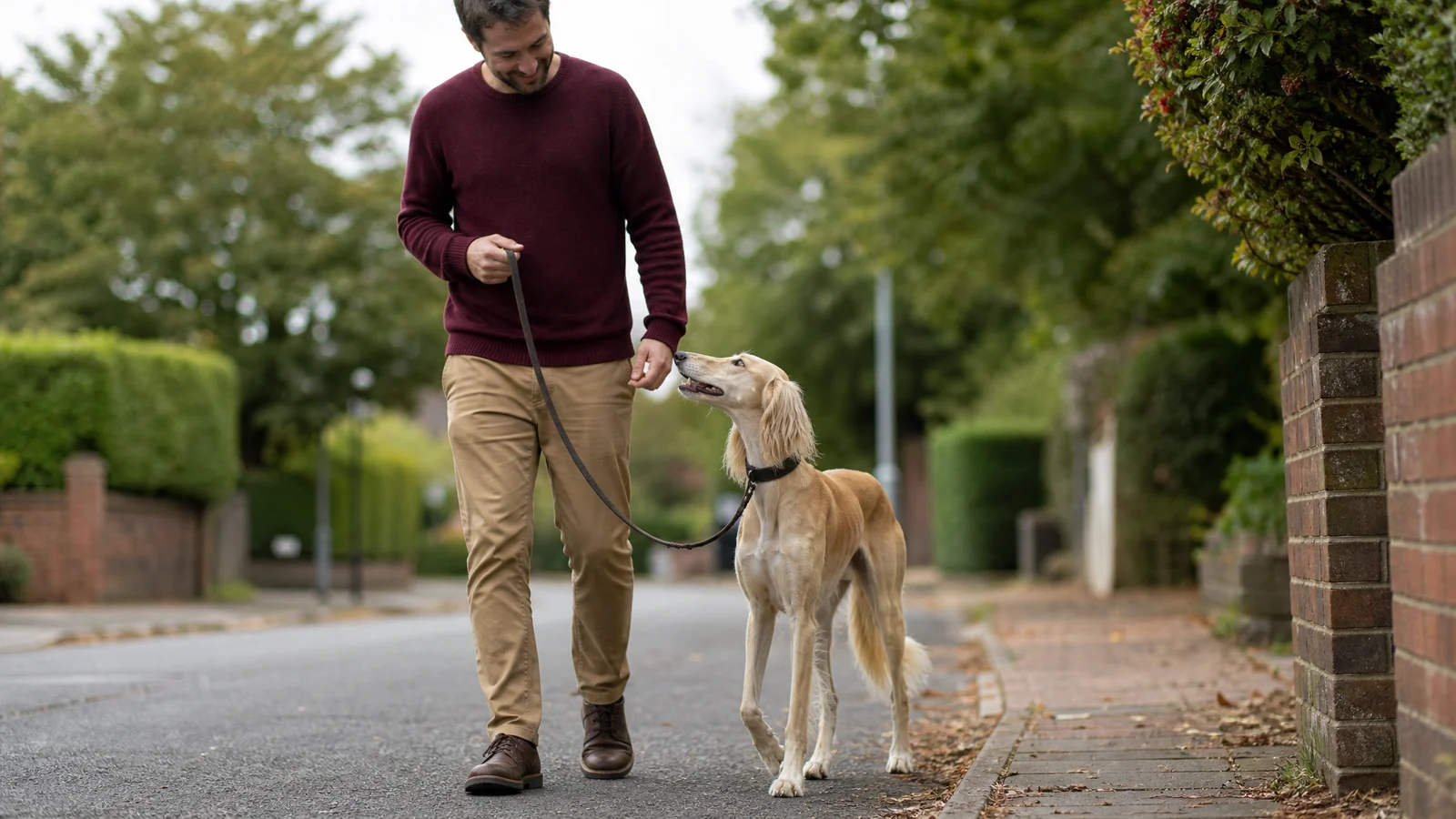
Yesterday, the young Saluki turned on the first cue: today, a drifting leaf seems to erase every lesson. That change can feel like defiance, but adolescence often brings fluctuating attention, stronger interest in the environment, and uneven recovery.
Think of this period as developmental weather rather than a broken training system. You cannot command the weather, yet you can read conditions, lower the difficulty, protect safety, and reward the behaviors that remain available. Skills are still being built beneath the clouds.
Salukis are described by their national club as slow maturing. That is context, not a month-by-month prediction for an individual dog. Use observed behavior and professional guidance instead of expecting a fixed calendar. In this article, we track attention, movement, social confidence, energy, and recovery as separate weather systems that can shift at different rates across the same week.
The Saluki Puppy Training Forecast
The Saluki Club of America says in its code of ethics that the breed cannot be adequately assessed before two years: this does not mean training waits until then. It means a temporary adolescent pattern should not be mistaken for the finished adult.
General canine guidance provides a broad frame. The PDSA places the onset of adolescence around 8 to 12 months, with variation by breed and size. The AKC also says the phase is individual and may continue toward two years.
- Notice where a familiar cue still works and where it falls apart.
- Track recovery after excitement, not only the exciting event.
- Record changes in sleep, appetite, movement, and social comfort.
- Separate one difficult day from a pattern lasting across contexts.
Numbers are boundaries from sources, not promises about your dog: avoid inventing monthly milestones or comparing siblings as if they share one clock. The useful forecast comes from repeated observation.
We make the forecast practical by naming the condition, not judging the dog. The label might be low sleep, high movement, unfamiliar place, or slow recovery. Each condition points toward a change the handler can actually make.
Keep the training record narrow enough to use: one line about name response near quiet traffic is more informative than a broad note saying the dog was bad outside. Specific context protects both accuracy and patience.
Changing Attention in Saluki Puppy Training
Adolescent attention often looks available at home and absent outside. That difference tells you the environment is carrying more value than your current reward. Return to easier distances and shorter repetitions before assuming the cue has vanished.
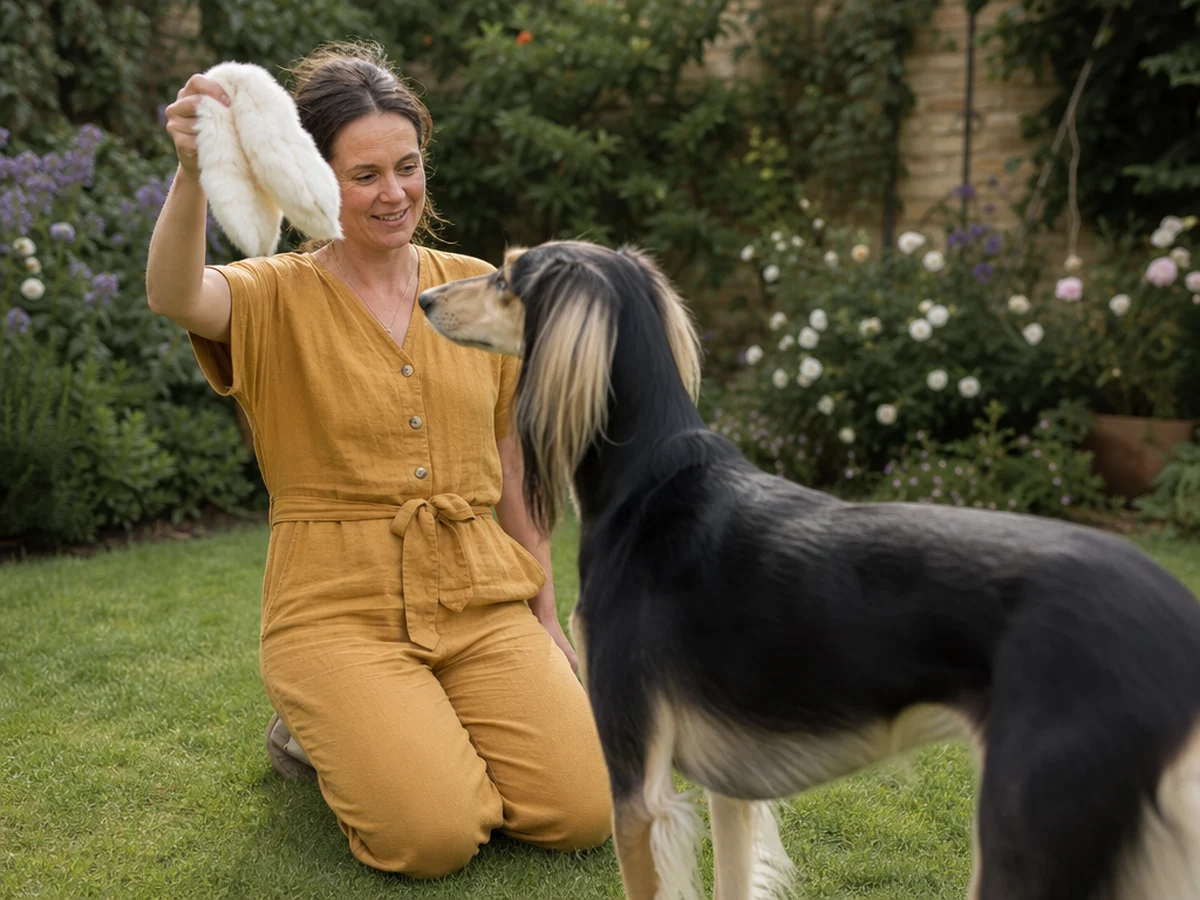
Lower Criteria Before Raising Rewards
First make the task possible: ask for a glance instead of a long heel, one step instead of a full approach, or a pause instead of prolonged stillness. Then reinforce generously enough that choosing you remains worthwhile.
A high-value reward cannot rescue an impossible setup every time. If the dog cannot eat, orient, or recover, create distance and reduce stimulation. Learning needs a nervous system that is able to engage.
Use familiar cues as anchors rather than constant tests: one successful name response, hand target, or mat settle can open a path through a difficult moment. End while the dog is still able to win.
Rehearse the easy version before entering a harder place. Reward orientation in the doorway, again at the sidewalk, and once more before movement becomes absorbing. These small checkpoints give the dog a familiar route into attention.
When a cue fails, avoid immediately increasing volume or repeating it: pause, change distance, and ask for an easier behavior. We want the cue to predict a solvable choice, not a rising argument.
Movement Safety During Saluki Puppy Training
Adolescence can strengthen interest in fast movement while judgment remains unfinished. Saluki history as a speed-focused sighthound explains the sensitivity to motion, but owners do not need operational pursuit training. They need secure management and rewarded orientation.
The AKC Saluki page recommends daily walks on leash and regular exercise: keep leash rules and secure-area boundaries stable even when recall looks excellent in the yard. One good session does not remove environmental risk.
- Practice check-ins where moving distractions are distant and predictable.
- Reward the first orientation back, before staring becomes fixation.
- Leave enough space to turn away without tightening into conflict.
- Use enclosed areas for free movement and inspect boundaries regularly.
- Increase difficulty only after success repeats in the easier setting.
Management is not an admission that training failed. It keeps the young dog alive and prevents powerful chase rehearsals while skills mature. Safety rules should be pleasantly boring.
Recall practice belongs in carefully controlled conditions: reward returning, then release the dog back to safe exploration often enough that returning can lead back to safe exploration instead of ending it every time. Use a secure boundary as the real safety system.
Equipment should support safety without becoming the lesson. Check fit before leaving, hold the leash so sudden movement cannot pull the handler off balance, and keep reinforcement easy to reach. Practice these mechanics in a quiet place first.
Visual motion can arrive from several directions at once: parked cars, hedges, or greater distance can simplify the scene while the dog learns. Choosing a better route is skilled handling, not avoidance of all progress.
Social Weather in Saluki Puppy Training
A Saluki who approached visitors as a younger puppy may become more reserved, or a reserved puppy may gain confidence in familiar settings. Neither shift should trigger forced greetings. Preserve distance, allow withdrawal, and reward neutral observation.
Forecast Confidence by Recovery
The UKC standard describes reserve with strangers while rejecting extreme fear or aggression: look beyond whether the dog touches a stranger. Ask whether they can sniff, eat, disengage, and settle again.
Use the consent-and-distance plan in our guide to socializing a Saluki puppy. Adolescence may require more space than last month. Giving that space protects confidence rather than indulging fear.
Sudden, intense, or spreading fear deserves attention: consult your veterinarian to rule out physical contributors, then involve a qualified reward-based professional when needed. Punishing warnings can suppress information without improving comfort.
Familiar people can help by becoming predictable. Ask them to pause, avoid leaning over the dog, and let contact end quickly. A changing adolescent should not be required to accept touch because they accepted it as a younger puppy.
Neutral passing is a valuable adult skill: reward the dog for moving with you while another person remains background information. Social success does not require turning every passerby into a friend.
Energy Without Exhaustion for a Young Saluki
Teenage energy can tempt owners to add more and more exercise. The RSPCA says adolescent dogs can learn well and recommends structured play and exercise. Structure includes recovery, not only activity.
Build the day from different forms of work. Let recovery separate the demanding pieces:
- Leashed exploration with time to sniff and observe.
- Brief reward-based training built around one clear criterion.
- Safe free movement in a genuinely enclosed area.
- Approved chewing, food puzzles, and quiet problem solving.
- Undisturbed rest after stimulation.
Watch what happens after the activity: a dog who returns home frantic, mouthy, or unable to settle may need a quieter transition or a different balance. Fatigue and fulfillment do not always look the same.
Keep play cooperative. We use shared games to rehearse starting, pausing, trading, and reconnecting without turning fun into a prolonged test.
Use play to rehearse starts, pauses, trades, and returning to you. Let the dog win access through simple choices without turning every game into an obedience exam. Cooperative rules make arousal easier to navigate.
If the dog disengages, do not pursue them with the toy or repeat cues: reset the environment and try a shorter game later. Independence becomes easier to work with when opting out does not create pressure.
Use the safe Saluki chewing plan on high-arousal evenings when the young dog needs an approved outlet. Chewing does not replace exercise or social needs, but it can support the transition toward rest.
Alternate demanding and easy days when the environment has been unusually intense. The dog may need familiar routes, simpler cues, and more sleep after travel or visitors. Recovery is part of conditioning for life, not time stolen from training.
We also protect food motivation by keeping rewards small and meals nutritionally complete: training food should fit the veterinarian-approved diet rather than displacing it. Toys, access, sniffing, and social connection can share the reinforcement work.
Training Trends Across Saluki Adolescence
Progress during slow maturity is easier to see in trends. Track one skill in one setting for several sessions, then note the distance, distractions, reward, and recovery. Avoid a score that reduces the whole dog to pass or fail.
Useful signs include quicker orientation, softer movement, easier recovery, voluntary rest, and the ability to take familiar food: a rough outing can coexist with improvement. Change the plan only when the pattern, not your frustration, supports it.
Regular veterinary visits provide another view of development and physical comfort. Bring sudden changes in appetite, elimination, movement, sleep, or behavior to your veterinarian. Training should not be used to cover possible pain or illness.
Compare performance only when the conditions are reasonably similar: a quiet-yard response and a response beside fast traffic do not measure the same skill. Fair comparisons reveal development without turning environmental difficulty into a character judgment.
A Clear-Skies Review of Training Progress
Review the record every few weeks instead of after every rough walk. Look for broader access to attention, faster recovery, and fewer situations that require emergency distance. Those trends show the climate changing even when storms still occur.
Ask whether the adult expectation belongs in the current setting: prolonged stillness, immediate response around movement, and effortless recovery may each need separate preparation. Breaking the picture apart keeps standards clear without making them premature.
If progress stalls, simplify one variable at a time. Changing the route, distance, reward, cue, and session length together hides what helped. A clean experiment is kinder to the dog and more useful to the handler.
Saluki Puppy Training Toward Adulthood
As skills strengthen, keep occasional easy repetitions in the schedule: mature behavior is maintained through reinforcement and sensible environments, not graduation from every reward. The adult Saluki still benefits from reasons to choose the handler.
The adult dog is not produced by demanding adult focus too early. They emerge from many safe repetitions in which attention, distance, rest, and movement are adjusted to current conditions. Patience is active work. It preserves the young dog's willingness while the skills underneath become more durable and portable.
Next, strengthen the household framework with the daily Saluki routine, then revisit crate comfort if recovery is difficult. Those practical systems give adolescent skills somewhere stable to land. The forecast will keep changing, but the training climate can remain fair.
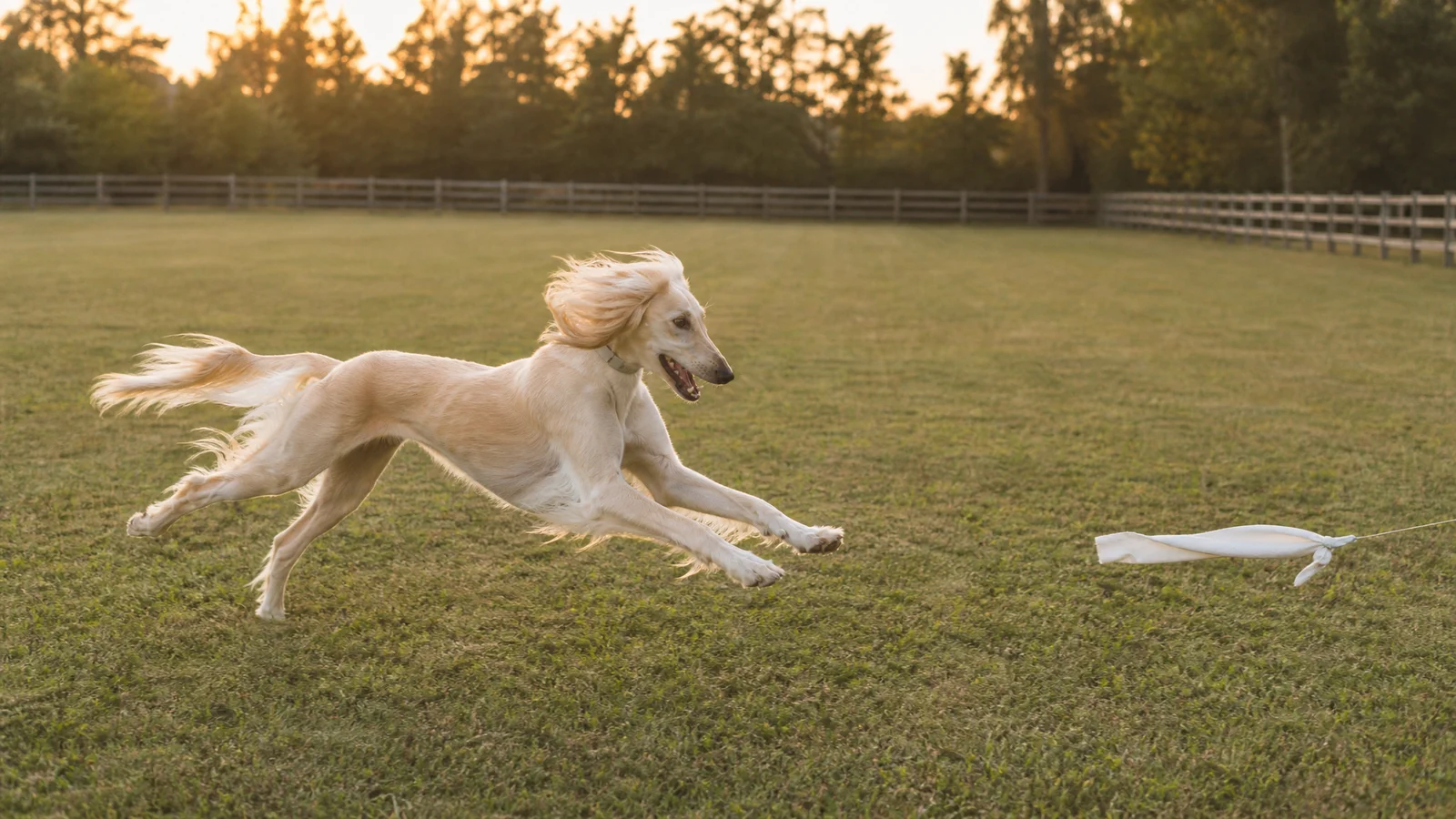 Exercise and jobsSafe Ways to Let a Saluki Chase What They Spot
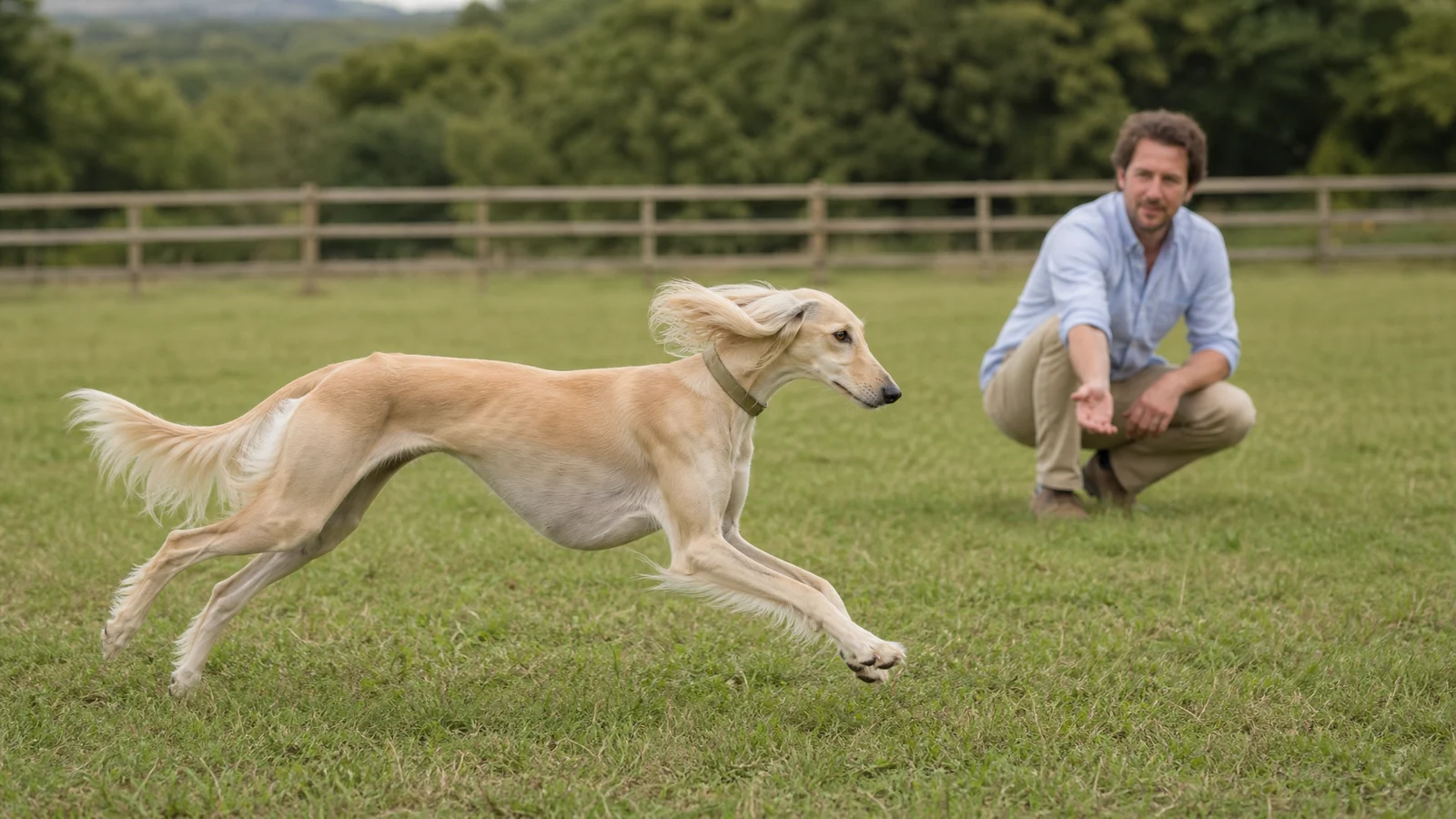 Training basicsRecall for a Dog Built for Speed
 BehaviorReserved With Visitors: Guiding a Saluki's Personality Traits
