 Saluki
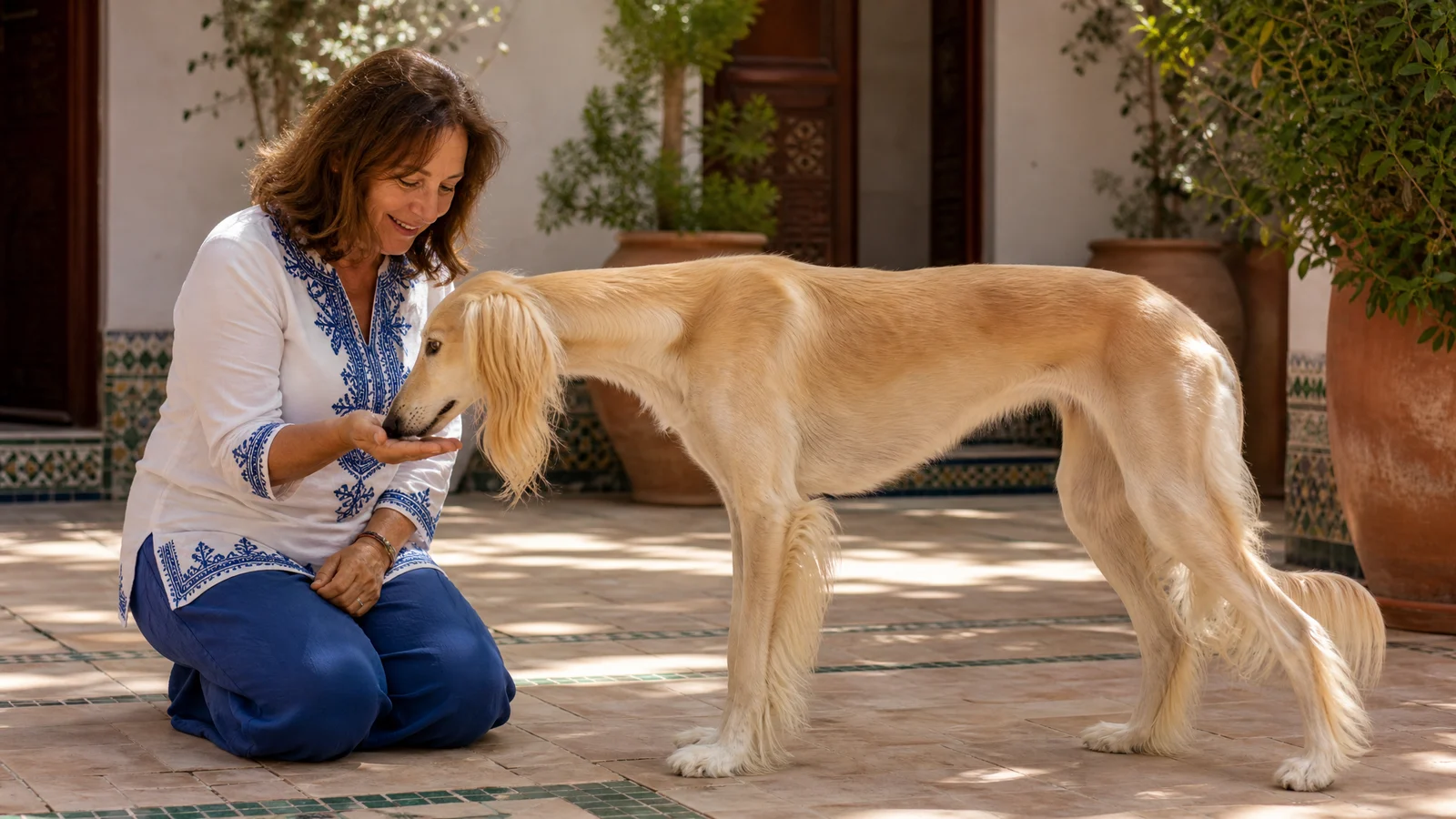
Ask a Saluki for a paw and you may get a long, level look instead. That is a hound weighing the offer, not refusing it, and tricks are one of the gentlest places to show an independent dog that your offers are worth taking.
Tricks need no fence and almost no floor space, and they give a mind that needs a job something to do on the days when the sprint has to wait. Every lesson below breaks the trick into stages small enough for your Saluki to say yes to, with a reason for each step and a fix for the moment a stage stalls.
We teach three: touch, shake hands and a nod for yes. All three grow from one habit, a hound who watches your hand and expects good news from it.
Easy Saluki Tricks Begin With a Pay Worth Earning
That level look is mostly a question about pay, and it shapes the choice of tricks here. Touch, shake hands and the nod each ask for something small and visible, none needs you to move your dog's body, and all three can be taught from a kitchen chair or the living room floor. Our trainers prefer touch as the first lesson for exactly that reason: your dog does the moving and you do the paying.
Use tiny, soft treats your Saluki already loves, small enough to swallow in a gulp, and pay from the same hand in the same spot every time. A hand that always delivers from one place gives a reserved dog something predictable to trust.
A Marker Word and a Quiet Room
Pick one short marker word, such as yes, and say it at the instant your dog does the right thing. The marker pins down the moment you liked, and the treat should follow within seconds, because a dog may not connect a late reward with the behavior you meant.
Begin each new trick in a distraction-free space, which in most homes means a quiet room with the television off and other pets elsewhere. Salukis are sighthounds, so a window can compete with your hand, and a closed door or drawn curtain helps.
Keep each session brief and stop while your Saluki is still willing, then try again later if your dog is keen. Regular vet visits belong in any training plan, and a hound who seems sore or stiff partway through a lesson should see the vet before the tricks continue.
Teaching Touch, the Trick Everything Else Borrows From
With the pay and the marker settled, touch comes first because shake and the nod both depend on your Saluki tracking your hand. The behavior itself is tiny: your dog's nose meets your open palm. What makes it a good first lesson is that the nose gets there on its own, so nobody has to be coaxed, pushed or handled.
Work in a quiet room with your marker word ready and a treat hidden in your other hand. Sit low or kneel so your palm lands at nose level without you looming over a cautious dog, then follow these steps in order.
- Hold one flat hand a couple of inches from your Saluki's nose, palm facing them, and keep the treat hand behind your back so the food does not steal the attention.
- Wait without moving. When the nose meets your palm, even lightly, say yes at that exact moment.
- Bring the treat hand around and pay right in front of the palm, so your dog learns that the reward lives where the nose just was.
- Lower your hand for a breath, offer it again, and repeat until your Saluki bumps your palm with obvious interest.
That last sign matters more than any count: eager bumps tell you your dog has understood the game, so move on once the touch arrives smoothly several times in a row.
When Your Saluki Only Stares at the Hand
A stare is not a failure, it is the first piece of the behavior, so pay it. Then wait for a lean toward the hand, pay that, and ask for a little more each time until the nose arrives. Rewarding small steps toward the finished touch is called shaping, and a cautious hound often needs the steps cut finer than a bold one would.
If the nose still will not move, rub a trace of a smelly treat on your palm for the first few tries so there is something worth leaning toward. Keep the hand low and still, because reaching toward a hound's face can make a careful dog lean away instead of in.
Cue, Distance and a Busier Room
Once the nose bump is reliable from a few inches away, say touch just before you present your hand, then mark and pay as before. The word comes after the habit because a cue attached to a shaky behavior mostly teaches a dog to tune the word out.
Next, move the hand a little farther away, then higher, lower or off to one side, so your Saluki learns that touch means finding your hand wherever it is. Add small distractions last, such as another family member sitting in the room, and keep busy practice indoors or inside a secure fence, since a hound who spots movement may decide the chase is more interesting.
Shake Hands Without Ever Reaching for the Paw
Touch taught your Saluki to bring a nose to your hand, and shake turns that around: now a paw travels, and it travels only because your dog chooses to send it. Nothing in this lesson involves taking hold of a foot. If your Saluki flinches whenever feet are touched, build that comfort first with the handling practice in our grooming guide.
Waiting for the Paw to Lift
Hold your hand out low and open in front of your dog's chest and let them investigate it. The sequence from here is short. A sniff or a lick earns nothing here, which may feel odd after touch, where a nose on your palm paid every time. The hand now means something different, so your Saluki needs a moment to notice that this game pays for a paw.
- When a paw moves toward your hand, say yes and pay.
- If the movement is only a twitch or a small lift, pay that too, because a small lift that earns a treat tends to get bigger.
- Repeat until your dog is pawing at your hand with purpose.
If they stop offering the paw, go back to paying the smallest movement for a few tries. Letting the paw rest on your hand comes next, once the lift is dependable.
Letting the Paw Rest on Your Hand
Now wait for the paw to land and stay before you say yes, starting with a second or two and building slowly as your Saluki understands. The pause is what turns a swipe into a handshake, and it keeps the paw from becoming a scrabble at your hand. If the paw leaves too fast, pay it a little sooner for a few tries and then ask for the longer rest again.
A Cue Word and a Gentle Wobble
When the paw lands reliably and waits for the reward, say shake just as your hand goes out. Then turn your hand upright, the way you would offer it to a person, and add the smallest up-and-down movement before you pay. Keep that wobble gentle, since your aim is a handshake your hound enjoys, not a tug on a paw.
A Nod for Yes That Suits a Reserved Hound
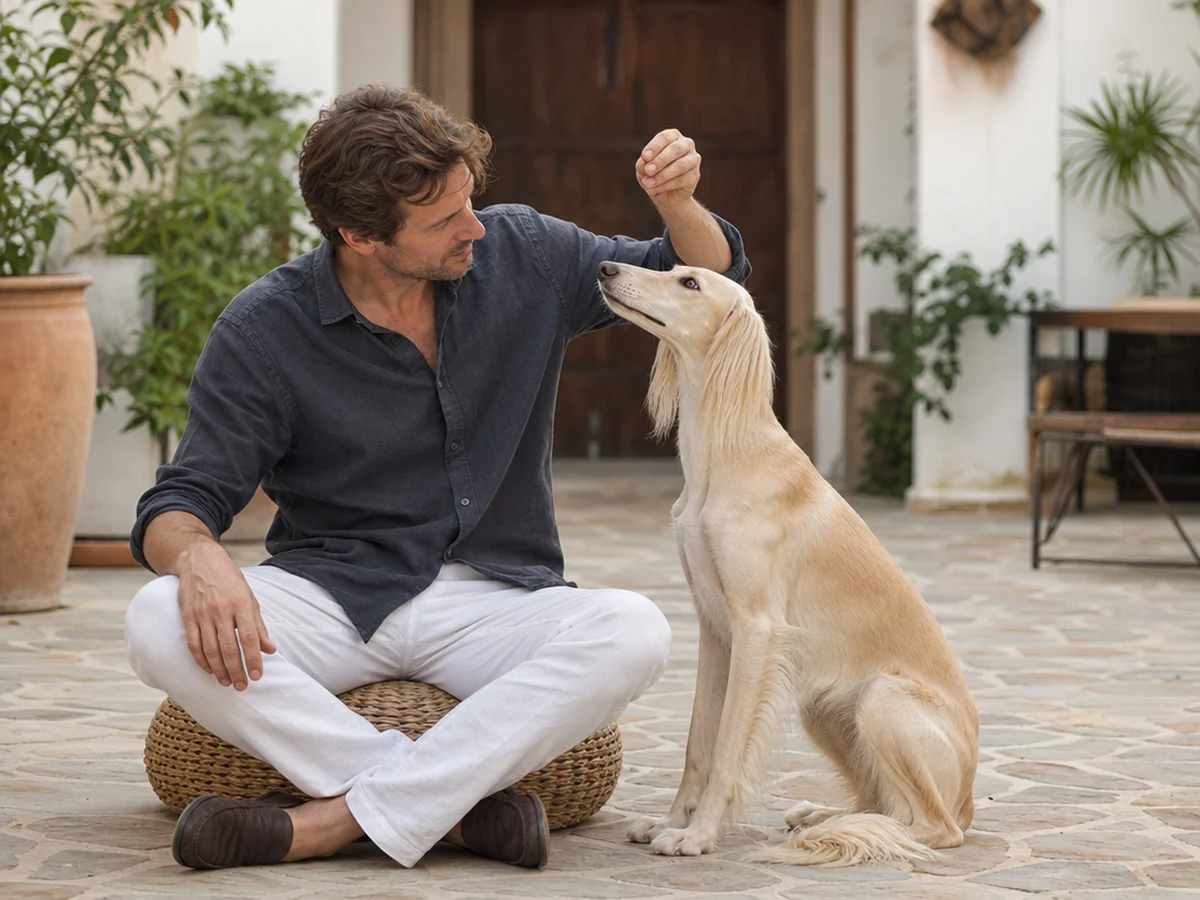
Shake asks a Saluki to send a paw to your hand, and the nod asks for something quieter: a head that follows a closed fist up and down. It needs no touching at all, and the whole effort lives in a small, unhurried movement of the head. We call it the nod rather than yes because yes is already your marker word, and a cue that sounds like the marker would blur both.
Sit or kneel facing your dog with your fist at nose level. Go slowly, because a head that is allowed to follow at its own speed learns the pattern sooner. Put a high-value treat inside a closed fist and bring the fist close enough for your Saluki to smell it.
Then move the fist slowly up a few inches and back down, so your dog's nose follows and the head dips and lifts. Say yes the moment the head has followed the fist, then open your hand and pay, and repeat with small, slow movements. If your Saluki walks forward or stands up to chase the fist, shrink the movement and keep it close to their nose. The nod is only a head movement, and a smaller path asks for exactly that.
Fading the Treat Out of the Fist
When the fist is followed smoothly several times in a row, take the treat out of it. Hold the reward in your other hand, move the empty fist up and down, and pay from the other hand the moment the head follows. If your dog stops following once the treat is gone, return to a treat in the fist for a few tries and then fade again more slowly.
Over several sessions the closed fist becomes the signal, and you can shrink the movement until a small lift of the fist is enough. Say nod just before the fist moves if you also want a word. A headshake for no uses the same idea with a different hand shape, a fist with the pointer finger raised and moved from side to side, and this lesson on teaching yes and no lays out both.
Beginner Saluki Tricks for Reserved and Young Dogs
Each of these answers adjusts the steps for a different Saluki: the cautious one, the young one and the one who already knows a marker word from other lessons. None changes the lessons themselves, only the pace and the person running them.
Which trick suits a very reserved Saluki?
Choose the nod. It needs no contact, your hand never reaches toward your dog's face, and your Saluki can pick how close to sit. Teach it yourself rather than handing the lessons to a visitor, since Salukis are reserved with strangers by nature, and let anyone else watch from across the room.
If even that feels like too much, start by paying your dog for simply glancing at your closed fist and build from there, with the same patient pacing described in our notes on socializing a reserved puppy.
Is a young puppy ready for tricks?
Yes, in very short, playful lessons. Salukis mature slowly, so a puppy's nod may be wobbly and the paw clumsy, and both are worth paying anyway because the body and the attention keep changing. Touch is the easiest place to begin, and a few quick moments fit inside a puppy daily routine without taking over the day.
Should trick time use my usual marker word?
Yes. The marker says the same thing in every lesson, that the reward is on its way, so it stays put while the cues change from touch to shake to the nod. A marker that shifts from one lesson to the next gives your Saluki less to hold on to, and an independent dog may simply stop trying.
Three Tricks, Three Hand Shapes a Hound Can Tell Apart
Look back at what your hand did in each lesson and you will find three different shapes: a flat palm held at the nose for touch, an open hand held low and then upright for shake, and a closed fist for the nod. Those differences are how your Saluki tells the games apart without a single word, so keep each shape the same every time.
Resist borrowing one shape for another, because a palm that sometimes means touch and sometimes asks for a paw leaves an independent hound guessing, and a hound who guesses wrong a few times may stop offering anything. Once a shape is solid, the word can ride along as a bonus, while the hand stays the quiet language between you.
Hand shapes are a small vocabulary next to everything else a Saluki can learn, and our free e-book sets out the whole of their training in everyday language, with every need covered. Put your address into the sign-up box and the book goes out to you by email.
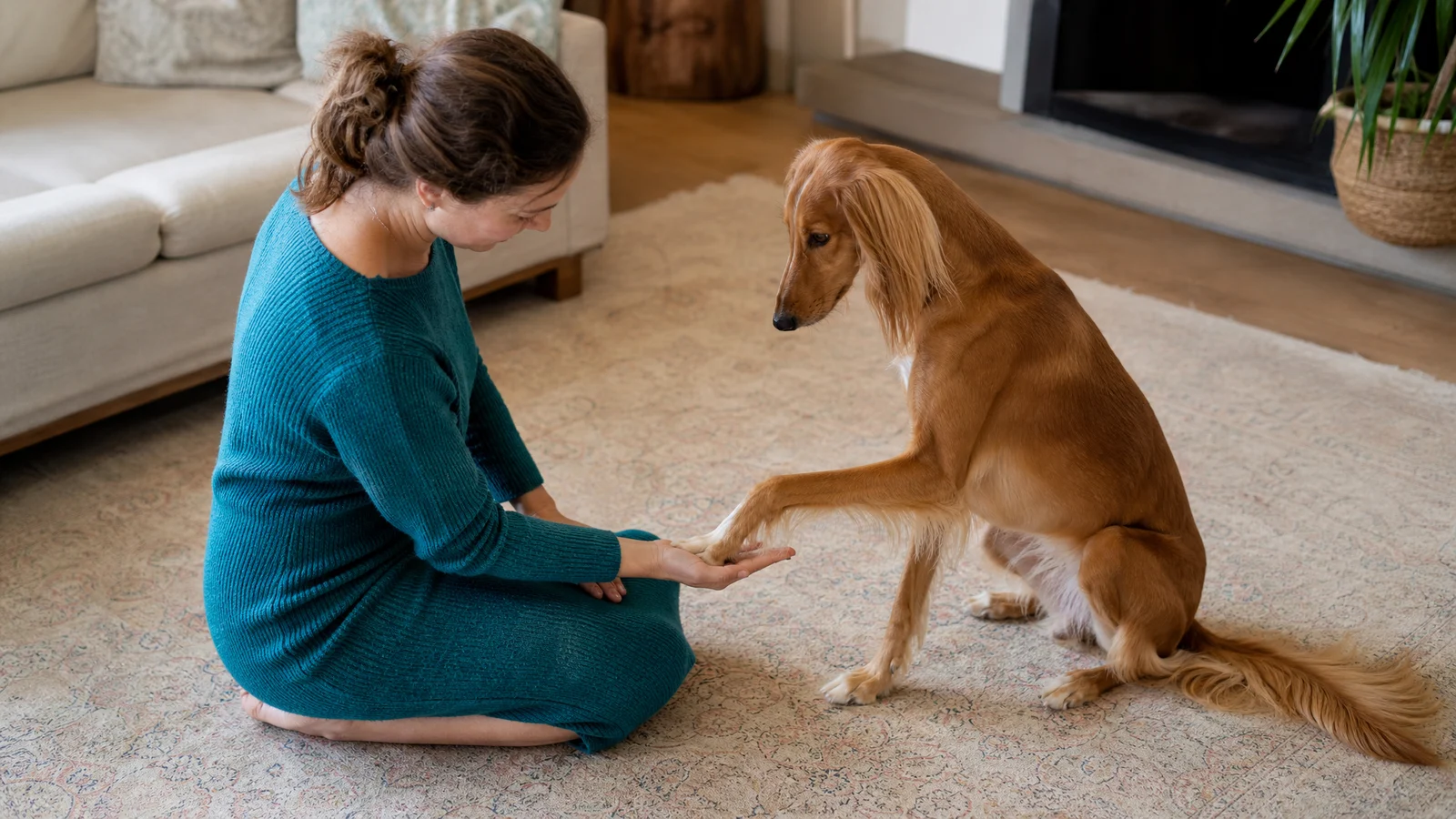 Exercise and jobsHow to Teach a Saluki to Shake and High Five
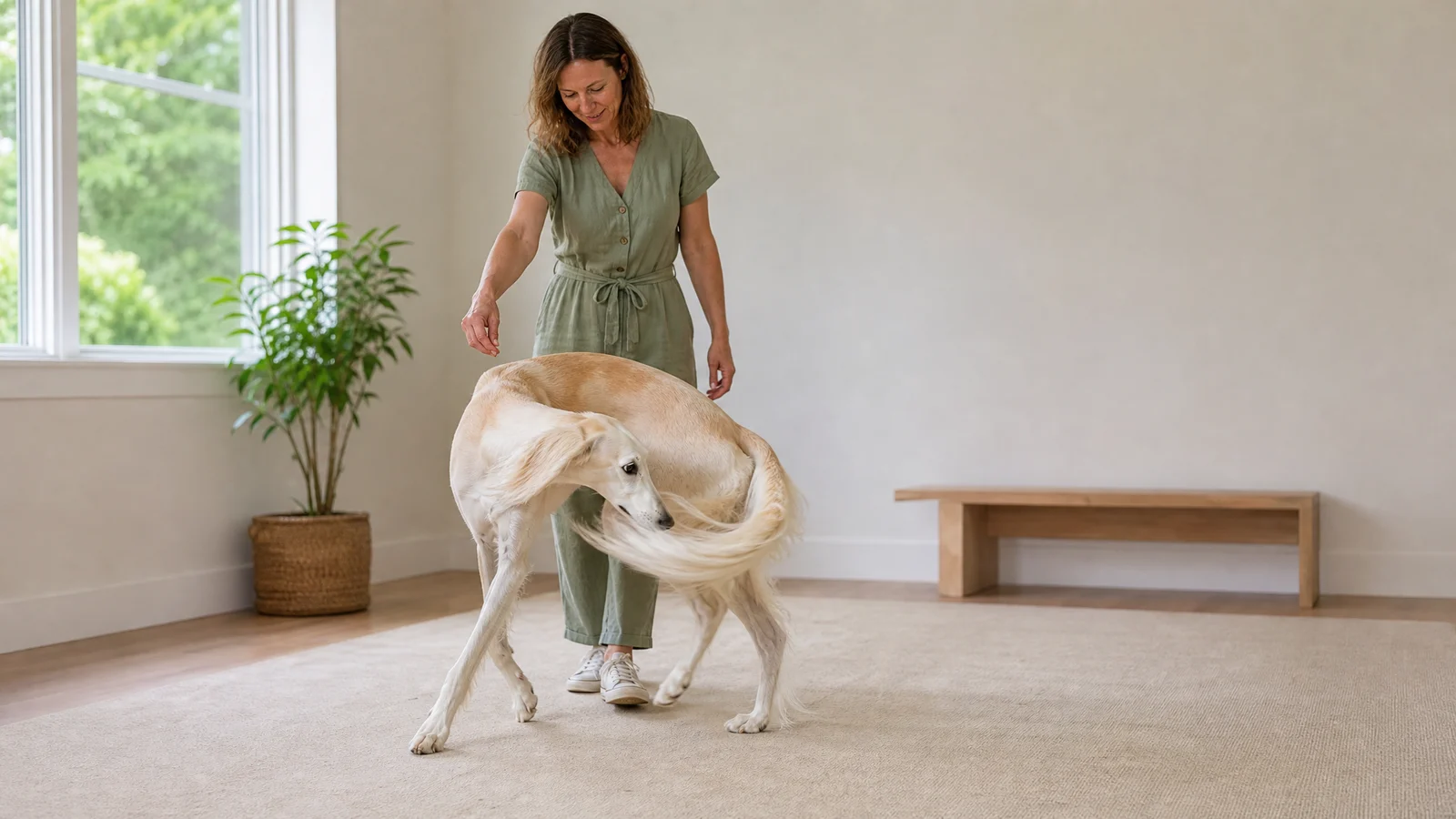 Exercise and jobsHow to Teach a Saluki to Spin
 Exercise and jobsHow to Teach a Saluki to Roll Over
