 Saluki
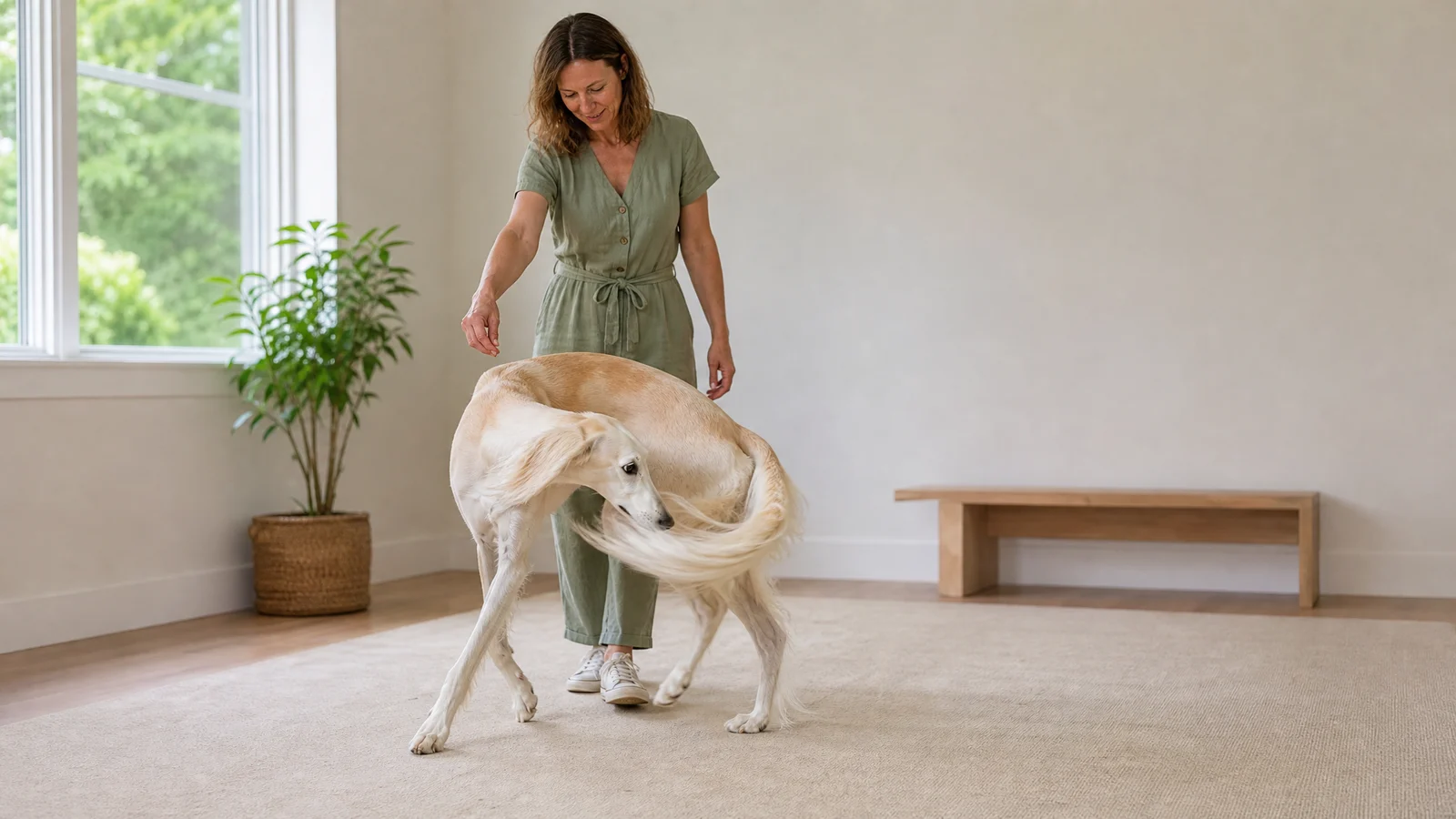
Everything in a spin happens at the end of your hand. For a tall, long-necked Saluki, that hand has to move slowly enough for the whole dog to keep up.
By the end of this page, your Saluki will turn one smooth circle toward a treat, then toward an empty hand, and finally on a spoken word with nothing in your hands at all. Below, each stage comes with what to hold, when to pay and what to change if your dog stalls, because a Saluki can simply stroll away from a lesson that stops paying, and you want pieces small enough to keep paying for.
Before the first treat comes out, though, two things need settling: the floor under those long legs and whether turning is comfortable for your dog's body. The first section covers both, and neither takes long.
What Does a Saluki Need Before the First Spin?
Very little, which is part of the trick's appeal: a patch of floor, a few tiny treats and a decision about which way to turn. The floor deserves the most thought for a hound this tall, because long legs on a slick surface give a turning body little to push against, and one early slip can put any dog off the whole game.
Four small choices make the first session easier for a tall dog with long legs, and each takes under a minute to arrange, so it is worth settling all of them before you lift a hand:
- Footing: a dry, non-slip floor with room for your dog to turn all the way around with space to spare, since a tall hound's circle is wider than it looks.
- Rewards. Soft treats cut to the size of a pea, so each one disappears in a second and the next try can start right away.
- One direction picked now and kept for the whole lesson, so your dog is never guessing which way you mean.
- Your own position: face your dog, stand upright and hold the treat low at nose level, so the head stays level instead of reaching up for it.
None of this takes long to arrange, yet it decides whether the first turn feels easy or awkward to your dog. If your hound is still wary of hands near their body, build that ease first with our Saluki handling practice.
Checking Comfort and Choosing a Reward
One check comes before the first treat: your Saluki should have no medical or joint issues that might be made worse by the spinning. If you have any doubt about your dog's comfort, ask your vet before you start, and stop the lesson if a turn ever looks uncomfortable rather than simply new.
Food is not always the right pay, either. Because some dogs are more motivated by play or attention, it is worth offering your Saluki a few different rewards in the first session and watching which one makes them lean toward your hand. Keep that one for this lesson.
Building the Spin Circle One Stage at a Time
With the floor ready and one direction chosen, the circle gets built in three stages, and your hand does all of the explaining. Never push, pull or turn your Saluki's body. Your dog follows the treat as far as feels comfortable, and you pay for every bit of progress.
Nose Follows Past the Shoulder
Stand facing your Saluki with a treat pinched between your thumb and fingers, close to the nose but not touching it. Draw your hand slowly sideways toward your dog's shoulder on the side you chose, just far enough for the head to turn and the eyes to follow. The instant the nose reaches the shoulder, say your marker word, such as "yes," and bring the treat straight to the mouth so your dog stays curled toward your hand while eating.
That is all this stage asks: one turned head, one marker, one treat. Move on once your Saluki turns toward your hand smoothly several times in a row.
If your Saluki backs up, lifts their nose or wanders off, the hand is probably too high or too quick. Lower it, slow it down and ask for a smaller turn, because a tiny turn paid on time teaches more than a big one paid late.
Back Legs Catch Up to the Nose
Next, let the hand travel on past the shoulder toward the hip before you mark. The front feet usually step first and the back feet follow a beat later, so this stage rewards patience rather than speed. Mark the moment the back legs take a step, then pay low and near the nose, which keeps the body curled around your hand instead of straightening out to reach the treat.
In our experience, a stall here often means the hand is moving faster than four long legs can sort out. Shorten the arc, pay the smaller turn again, then stretch it a little at a time. If a turn ever seems uncomfortable rather than confused, stop and ask your vet, and keep up regular vet visits so any change in how your hound moves gets noticed early.
Closing the Saluki Circle Trick Facing You
Last, carry your hand all the way around until the nose arrives back where it started and your Saluki is facing you again. Mark as the front feet settle at the finish, and deliver the treat directly in front of you so the reward always arrives at the same spot on the circle.
Two stalls are common at this point. If your dog keeps circling past the finish, hold your hand still when the nose is back in front of you, so the stop becomes the clearest part of the circle. If your Saluki walks across the floor instead of turning in place, bring your hand closer to the nose and make the arc tighter around your dog's own body.
That is the whole circle. Once it comes smoothly several times in a row, the work left is taking your hand out of it, one change at a time.
Taking Your Hand Out of a Saluki's Spin
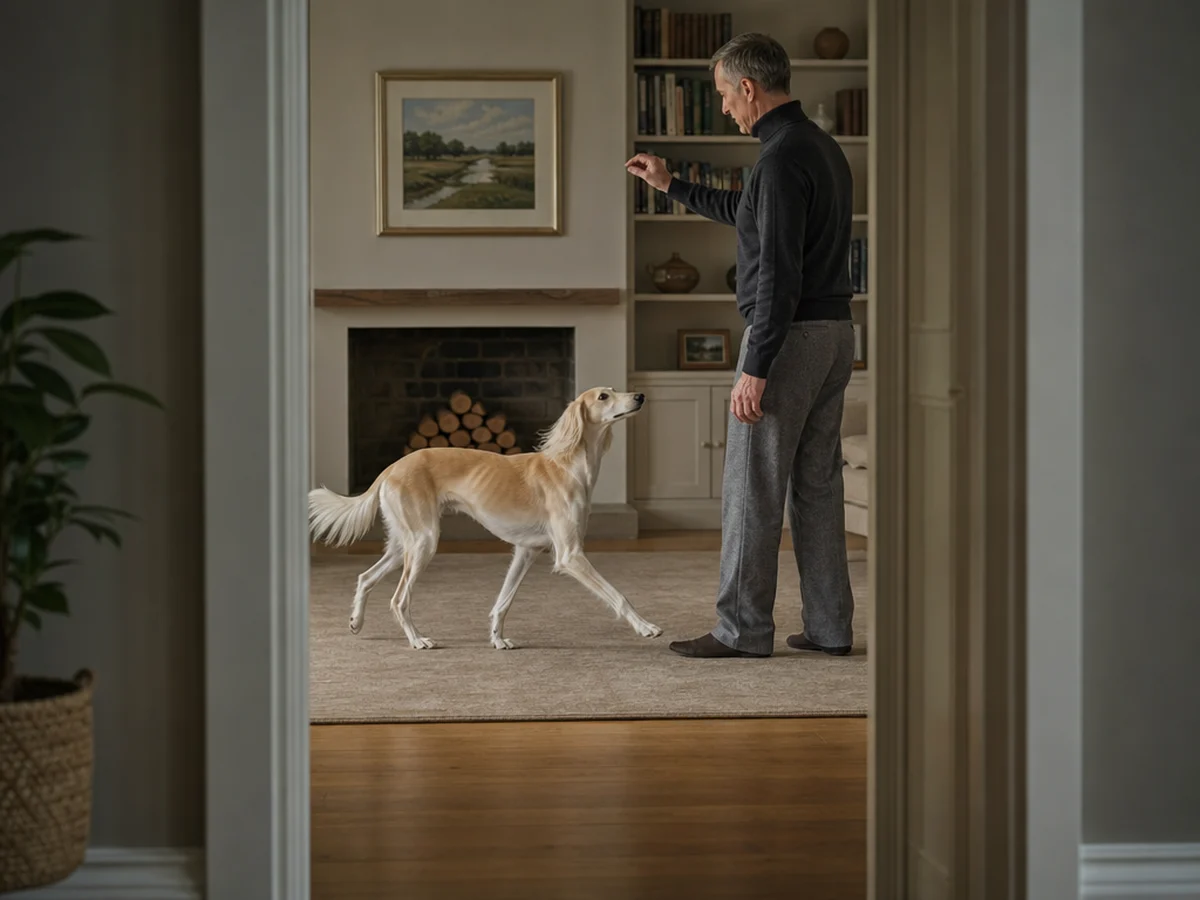
A circle that only happens when food leads it shows your dog has learned to follow treats rather than to spin, so the next job is moving the information out of your hand a little at a time. Change just one thing per step, and if your Saluki seems unsure, ask for the easier version once, pay it and try the new step again.
An Empty Hand on the Same Path
Trace the very same circle with nothing in your guiding hand and keep the treat in your other hand, out of sight at your side. Mark the finish exactly as before and pay from the hidden hand. Expect a pause on the first try, because the treat that used to lead the nose is gone, so move slowly and pay well the moment the nose follows your empty fingers around.
A Small Signal Replaces the Sweep
Now shrink the signal gradually. Make the sweep a little smaller, then point one finger and draw a small circle at your hip, then reduce that to a quick flick of the wrist. Pay at each change, and mark only when the whole circle is finished, so your dog learns that the small signal means the entire turn rather than just a head movement.
If a change breaks the circle, make the signal bigger again for a moment. Smaller comes back once the circle does.
Adding a Spin Command for Your Saluki
Add the word only once the small signal produces a full circle reliably, because a word attached to a wobbly circle just teaches the wobble. Then run the same four beats each time:
- Say "spin" once, in an ordinary voice, with your hands still.
- Wait a moment, long enough for your Saluki to think.
- Give the small hand signal if your dog has not started the turn.
- Mark the finished circle and pay from your other hand.
Over the next sessions, let the pause before the signal grow a little each time. Eventually your Saluki starts the circle on the word alone and the signal becomes unnecessary, which is the moment for your biggest reward.
Taking the Cue Past the First Room
A word that works on your living room floor has passed only its first test, so move it to another room and then onto another surface, with treats ready each time. Each new place asks your Saluki to find the circle again, so expect it to look a little rougher at first.
As the SF SPCA's tricks guide puts it, you will probably want to start training indoors and move outdoors once your dog has mastered the trick. For a Saluki, outdoors means a securely fenced yard, since a hound who is always ready to chase anything that moves needs the fence doing the safety work while you teach.
What Else Owners Ask About Spin Practice
The stages above leave a few handler-side decisions open, and these three come from your hands, from what your dog remembers between sessions and from how the lesson ends.
Which hand goes with the other direction?
The opposite one. Move the treat to your other hand, ask the circle to travel the other way and walk through the stages again from the shoulder turn, because a Saluki who spins smoothly one way has not yet learned the other. Teaching both directions is a choice, not a requirement, and one clean direction is plenty for a first spin.
What if my Saluki forgets a stage overnight?
Begin the next session one stage easier than where you stopped, so your dog opens with an easy win. Young hounds are still growing, and a lesson that was solid yesterday can wobble today, which our Saluki six-month guide covers in more depth. Then try the stage that slipped again.
Should the spin end in a sit?
Not at first. A spin is finished when your dog is facing you and the treat arrives, and adding a sit turns one behavior into two. Once the circle is reliable, you can ask for a sit afterward as a separate lesson, taught on its own terms.
The Part of the Spin You Actually Teach
The last question points at what this lesson is really about. A Saluki is always ready to follow whatever moves, and that readiness is the engine of the whole trick, so you never had to teach the following. What you taught was the ending: a circle that stops where you chose, with four feet settled and a face turned toward you, and then a word that brings it on without a treat in sight.
Once the word works, every other cue you add will follow the route you just walked, and our free Saluki e-book covers each of those training needs one after another, thoroughly and in language a first-time hound owner can follow. Share an email address with us and the book is sent along.
 Exercise and jobsHow to Teach a Saluki to Roll Over
 Exercise and jobsHow to Teach a Saluki to Weave Through Your Legs
 Exercise and jobsHow to Teach a Saluki to Jump Over Obstacles
