 Saluki
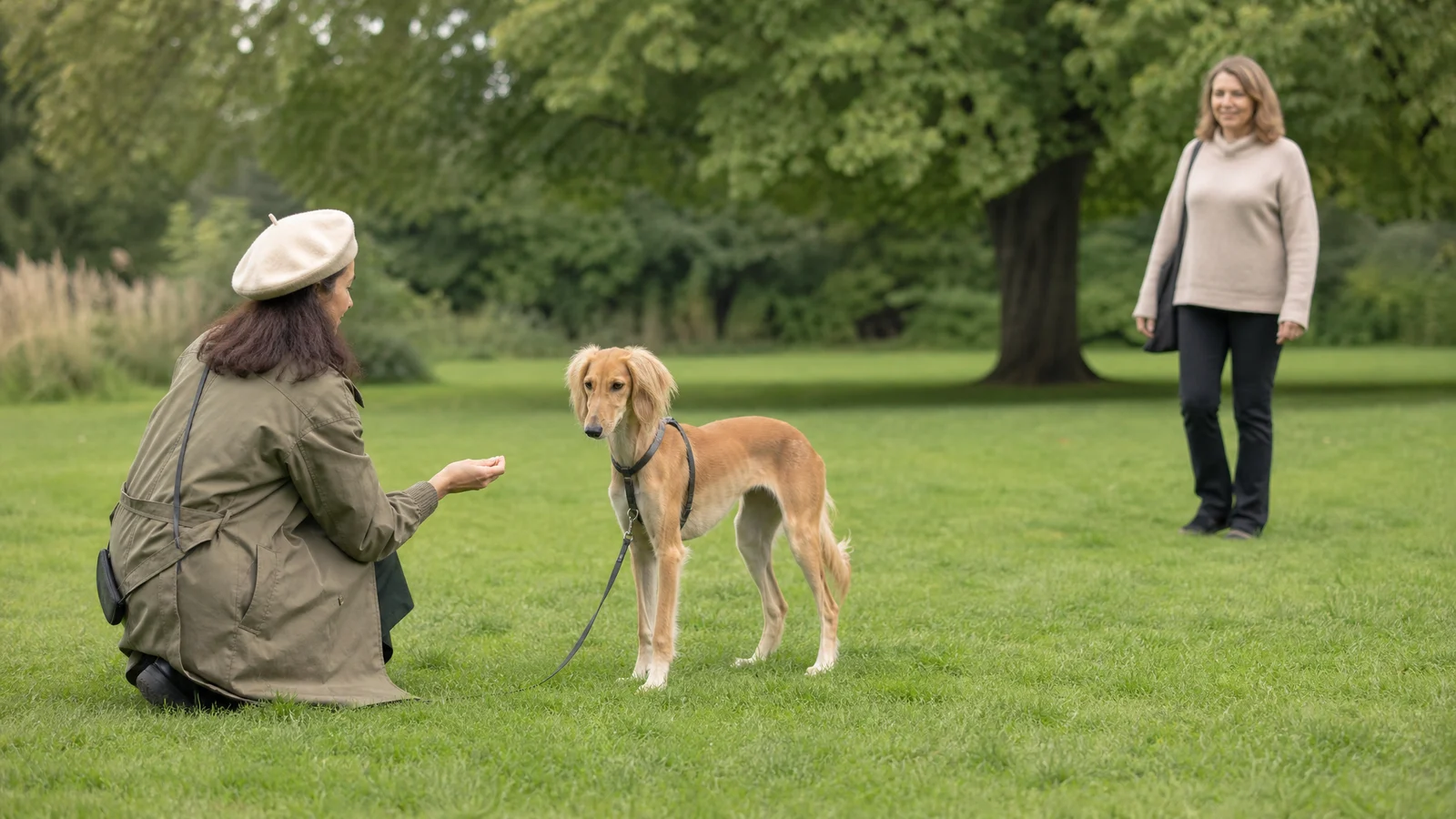
A reserved Saluki puppy can pass people without making contact to become well socialized. The goal is a puppy who can notice people, places, sounds, and movement while feeling safe enough to eat, explore, recover, and choose whether to approach.
That distinction fits the breed: the UKC describes Salukis as reserved with strangers but never shy or aggressive. Socialization should protect thoughtful reserve while preventing fear from shrinking the puppy's world.
Consent plus distance are the most useful field tools for this work. We use them to preserve curiosity while making retreat ordinary and available. Below, we show how to read those tools during observation, optional contact, visitor routines, and recovery.
Saluki Puppy Training Starts With Field Rules
Consent means the puppy can approach, pause, retreat, and decline contact without being followed: distance means arranging enough space for the puppy to observe without escalating. Together, these rules replace forced greetings with learning.
Read Approach and Retreat as Information
A curved approach, loose body, sniffing, and the ability to turn away suggest room for choice. Freezing, leaning away, repeated escape attempts, tucked posture, or inability to take familiar food suggest the setup is too hard. Move away before asking for more. We would rather preserve one clear retreat than collect several contacts the puppy only endured.
The AVMA guide advises reinforcing neutral or positive responses while letting an uncomfortable puppy move away. Withdrawal is not disobedience. It is communication that helps you set the next useful distance.
Separate neutrality from affection. Passing calmly without contact is a complete social skill, not an unfinished greeting.
A puppy who watches a stranger and returns attention to you has succeeded even without touching them: calm neutrality is valuable in sidewalks, waiting rooms, and busy homes. Affection may develop with familiar people, but it is not the entry fee for confidence.
| Puppy response | Your field move | What to reinforce |
|---|---|---|
| Looks, then checks in | Stay at the same distance | Orientation back to you |
| Sniffs and explores | Keep the route open | Curiosity and recovery |
| Leans or moves away | Increase distance | Following you to safety |
| Approaches with loose movement | Let the person remain still | Voluntary approach |
The table describes choices, not a temperament test. One difficult moment does not define the puppy, and one friendly greeting does not mean every greeting is welcome. Look for patterns across contexts and days.
We choose the observation point before the puppy arrives: look for a wide path, a simple retreat, and enough room that another person cannot accidentally trap the puppy. Good geography prevents many social mistakes.
Keep the leash slack enough for body language to remain visible while still protecting safety. A tight line can pull the puppy forward or hold them near the trigger. Move your feet to create space instead of using leash pressure as persuasion.
Distance in Saluki Puppy Training
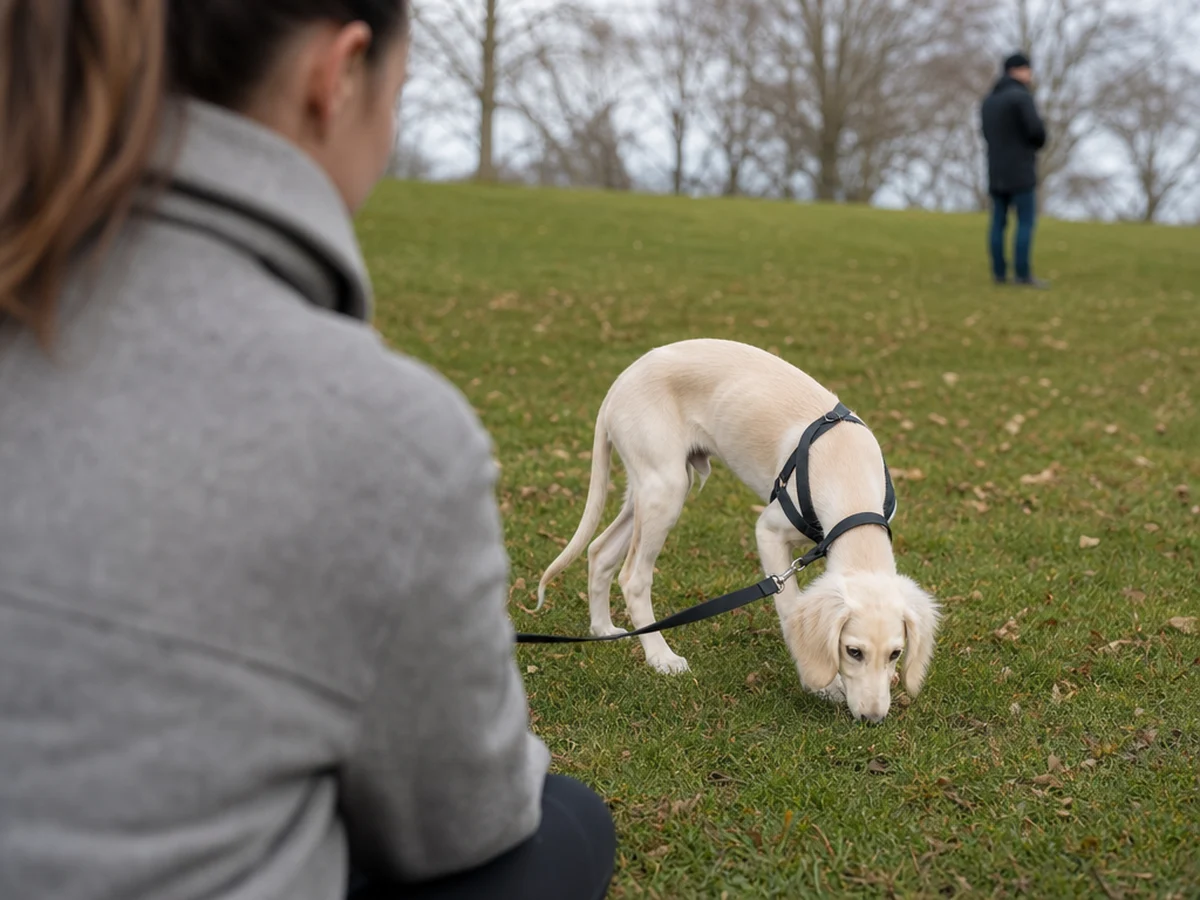
Start farther away than you think you need: the puppy should be able to notice the person and still perform ordinary behaviors such as sniffing, eating, or turning toward you. Distance is productive when learning remains possible.
Pair the Sight With Something Good
When the puppy notices a person at a comfortable distance, mark the look and provide a reward. Let the person pass or move away before tension builds. The puppy learns that seeing people predicts safety and good outcomes without requiring contact.
The AVSAB management guide explains that behavior work must match what the dog can handle, with practical management shielding the learning process: management might mean crossing the street, using a visual barrier, or leaving early. It is part of training.
Change One Feature at a Time
A seated person, a moving person, a person carrying an object, and a group are different pictures. Change one feature while preserving generous distance. Avoid stacking novelty until the puppy cannot identify a safe option.
Use brief outings with clear recovery afterward: a successful observation followed by rest teaches more than a long exposure that ends in shutdown. Duration should follow the puppy's body, not a socialization quota.
Use landmarks to remember productive distance. The puppy may cope beside a parked car but struggle at the curb, or relax across a lobby but not beside the desk. These details turn vague impressions into a repeatable field plan.
Reward different forms of recovery, including sniffing the ground, shaking off, softening the face, or choosing to move with you: recovery is not always a sit or eye contact. Let the dog show how regulation looks in their body.
- Choose an exit before beginning the observation.
- Keep the person outside the puppy's direct path.
- Reward noticing, disengaging, and returning to exploration.
- Leave before repeated retreat or freezing becomes necessary.
Optional Greetings in Saluki Puppy Training
Tell strangers the plan before they reach for the puppy. Ask them to turn slightly sideways, keep hands to themselves, and let the puppy control whether any approach happens. If the puppy declines, thank the person and move on.
Let the Puppy Start and End Contact
If the puppy approaches loosely, the person can remain still while you reward the choice: after a brief interaction, guide a pause and see whether the puppy returns. Reapproach is stronger consent than simply tolerating contact.
Do not lure a worried puppy into touching distance with food held beside a stranger. The puppy may stretch forward for the treat while the rest of the body wants to retreat. Deliver rewards where the puppy already feels safe.
Greeting criteria should remain small: one voluntary step, a loose sniff, or a quick return to the handler can be enough. We do not wait for the puppy to become trapped between curiosity and social pressure.
Children, people using mobility aids, and people carrying large objects may look different to a puppy. Start with observation from comfortable space and do not recruit strangers into training without permission. The puppy and the person both retain a choice.
Protect the Exit Route
Avoid corners, tight leashes, surrounding people, and hands reaching from both sides: stand so the puppy can move behind or away from you. An open exit often makes curiosity possible because the puppy does not need to fight for distance.
The UKC Saluki standard provides the useful distinction between reserve and extreme fear or aggression. Do not punish growling or retreat, since those signals tell you pressure is too high. Create space and reassess.
End the Encounter Before Recovery Fades
A greeting can be successful and still need to end quickly: step away while the puppy can follow, reward reconnection, and give them time to sniff. This ending teaches that contact never removes the route back to safety.
We do not ask the stranger to keep offering food when the puppy retreats. Rewards come from the handler at a distance the puppy selected. This prevents food from pulling the body into a choice the puppy cannot sustain.
Carry the Field Rules Into Real Life
Before widening the social map, repeat success with one familiar helper in a few positions: a person sitting, standing, and walking at distance creates variety without a crowd. Familiarity lets the puppy study one changed detail.
Real life includes people who move unpredictably, surfaces that feel strange, household visitors, veterinary handling, and days when the puppy is less resilient. Generalization means preserving choice across those changes. It does not mean collecting the largest number of encounters.
- Prepare a quiet station before the visitor arrives.
- Ask the visitor to ignore the puppy unless invited into the plan.
- Keep a clear route from the station to a private resting area.
- End access when the puppy's recovery begins to slow.
Plan visitors before the door opens. A prepared route and resting station prevent the doorway from becoming a social test: we brief the visitor before the puppy enters the picture.
Give the puppy a safe station away from the entrance and ask visitors to ignore them at first. Reward observation from that station, then allow optional movement if the body remains loose. A gate or leash can create distance without forcing proximity.
Link this routine with the Saluki puppy daily routine so visitors do not arrive when the puppy is already overtired: rest changes coping. A puppy who handled a guest yesterday may need more space today.
Respect developmental weather. Confidence can change across growth and context. The plan should change with it without forcing the puppy to prove anything.
Battersea notes in its puppy socialization guide that fear periods can appear early and again during adolescence: the exact socialization window is outside this article's verified breed facts, so avoid a deadline mentality. Keep exposures safe and adjustable throughout development.
The Saluki Club of America calls the breed slow maturing and says adequate assessment comes after two years. That does not predict one puppy's behavior. It supports patience when confidence changes during a long development.
Saluki Puppy Training Across Development
Link social practice with adolescent Saluki training because reserve may look different as the dog develops: keep the consent rule even when yesterday's encounter was easy. Familiarity does not create permanent permission.
The first Saluki puppy lessons also provide simple orientation cues that help the puppy leave a scene with you. Use those cues as an exit route, never as a demand to remain close to a stranger.
If fear intensifies, daily life narrows, or recovery takes longer, speak with your veterinarian and a qualified reward-based professional. Sudden behavior change can have a physical component. Regular veterinary visits also create chances to practice consent-based handling with clinical guidance.
- Offer water, a familiar resting place, and freedom from greetings.
- Watch whether ordinary eating, sniffing, and sleep return.
- Make the next exposure easier when vigilance lingers.
After an outing, protect a low-demand recovery period: a puppy who settles, eats normally, and resumes ordinary exploration gives you useful evidence that the exposure was manageable. Lingering vigilance suggests the next outing should be easier.
Keep a short field note with location, distance, body language, reward use, and recovery. Do not assign labels such as friendly or fearful from one entry. Over several outings, the notes reveal which settings support confidence.
Keep success small enough to repeat: one person at a useful distance gives clearer information than a busy gathering where several variables change at once. We can widen the picture later.
Today, choose one place where your puppy can watch a person from comfortable distance for a few moments. Reward a look, a sniff, or a check-in, then leave while the puppy is still coping well. One voluntary observation is useful socialization.
 Puppy trainingTraining Through Adolescence: A Slow-Maturing Hound
 Exercise and jobsSafe Ways to Let a Saluki Chase What They Spot
 Training basicsRecall for a Dog Built for Speed
