 Saluki
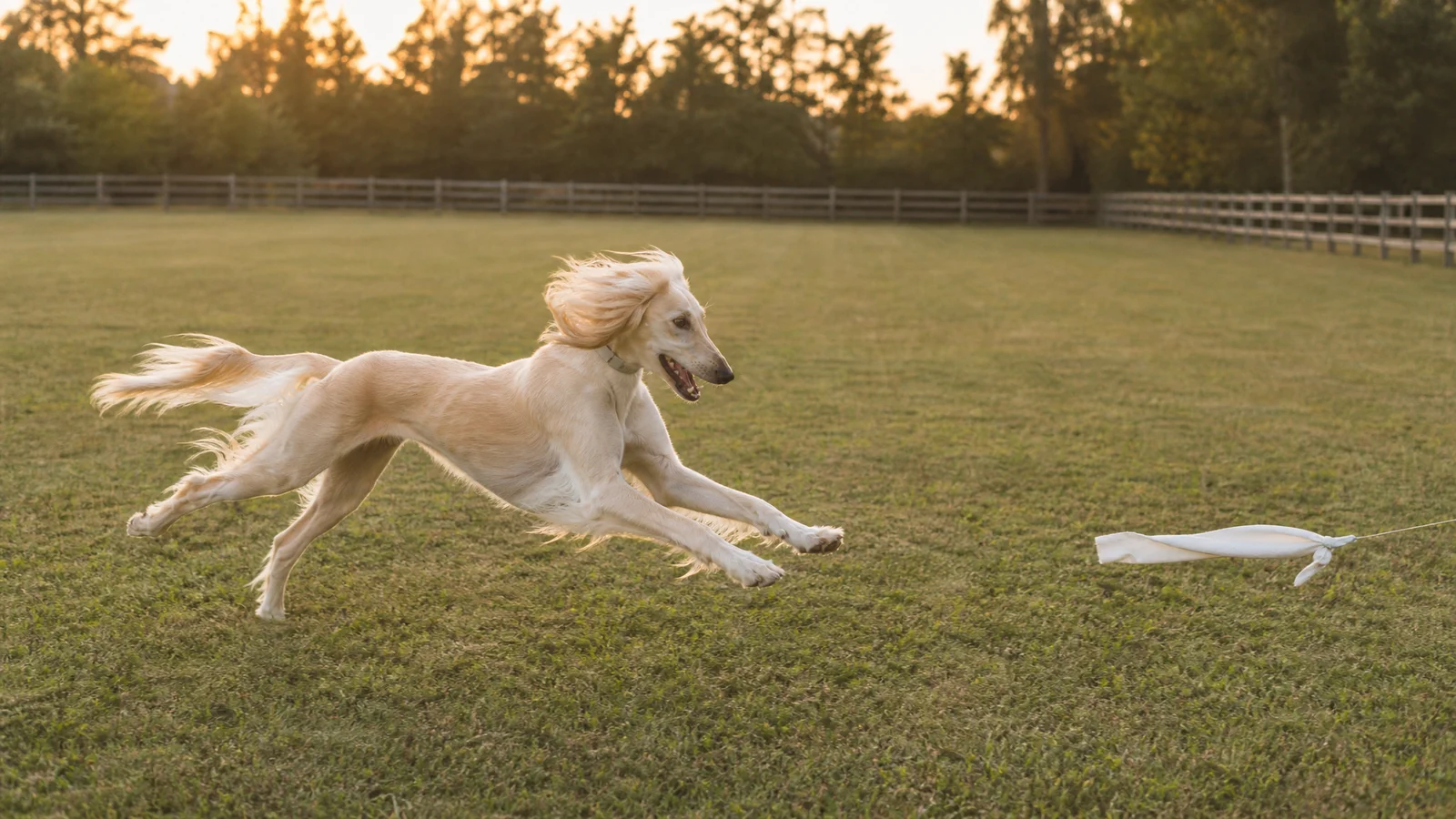
A Saluki can notice a flicker at the far edge of a field before the person holding the leash knows anything moved. The hound's eyes lock, their weight shifts forward and the chase is already gathering force. This is inherited equipment doing its job, not a deliberate refusal to listen.
Safe outlets begin by preventing uncontrolled chases, then giving running a clear place and a reliable finish. This guide clearly maps the risky moments, compares suitable outlets, builds an orienting response and lays out a fenced chase session. We finish with practical recovery signs that show whether the activity helped the Saluki settle or merely left them more frantic afterward.
Map Saluki Hunting by Sight Before Choosing an Outlet
Start with a quiet observation week. Note what launches the Saluki, where it happens and how long they remain absorbed after the moving target disappears. A rabbit at close range, a bicycle across the road and a toy moving inside a fence create very different safety problems even though all three invite pursuit.
The Saluki Club history describes a hound developed to follow moving quarry across demanding ground. That background helps explain why distant movement can matter more than food already in the owner's hand. It does not mean an individual needs access to wildlife or an unfenced run.
Separate the trigger from the environment when you review the notes. The same bird may be manageable through a window and impossible beside an open parking lot. The useful question is not whether the hound wants to chase, but whether the setting gives the person enough control to interrupt safely.
Include the earliest visible change, not only the final lunge. Ears may orient, the head may rise or sniffing may stop before the body moves. That first shift gives the handler a practical moment to add distance, while a record limited to the dramatic finish makes every episode seem instantaneous.
Match the Chase Risk to the Setting
| What you observe | Main risk | Safer next choice |
|---|---|---|
| Scanning begins near a road | A sudden launch reaches traffic | Shorten the leash and create distance |
| Interest stays soft inside a secure yard | A toy session may become overlong | Use brief runs with planned pauses |
| The hound cannot turn after motion stops | Arousal is too high for learning | Leave and recover in a quiet area |
| The Saluki checks back without prompting | Current conditions allow learning | Pay the choice and keep this level |
Do not use the first chase of the day as a test of freedom. Management must already be in place when the trigger appears. The PDSA leash guidance explains that excitement and exploration can strengthen pulling when forward movement keeps paying, which is another reason to plan the route before the dog surges.
Read Recovery Separately From the Launch
Map recovery in the same notes. Record when the Saluki resumes sniffing, accepts food at their usual pace or chooses to look at the handler. A trigger that disappears quickly can still be too difficult if the hound remains vigilant for the rest of the walk.
Choose a Safe Saluki Hunting by Sight Outlet
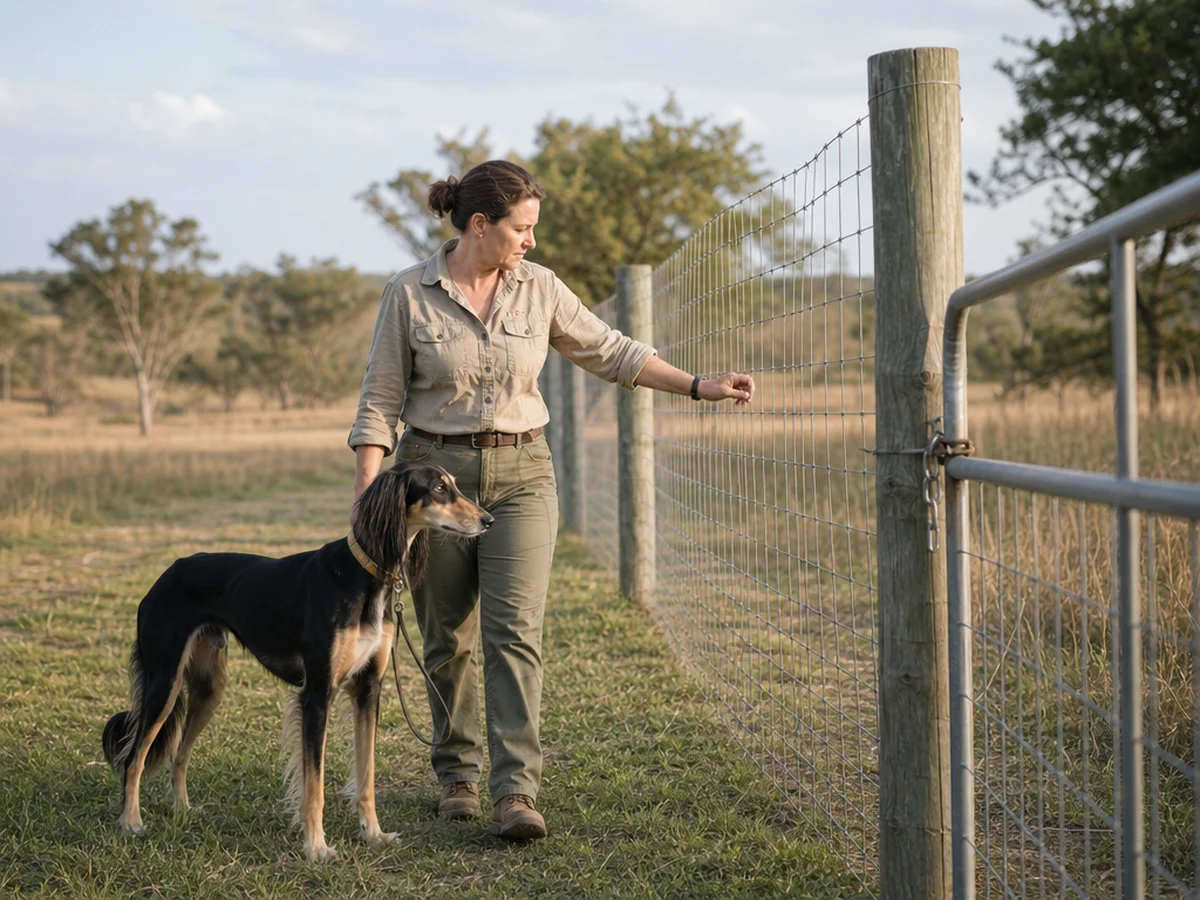
A useful outlet gives the Saluki room to accelerate without giving them a route toward traffic, livestock or an unknown dog. A fully enclosed field, a secure private yard or an organized dog sport setting can fit. Inspect the boundary yourself rather than relying on a description or another dog's history there.
The outlet also needs a controllable target. A toy dragged by a person, a rolling toy that stays inside the enclosure or a formal lure activity can provide movement without involving wildlife. Keep the pattern visible so the hound is not encouraged to search beyond the fence after the game ends.
Surface and weather belong in the decision. Look for hidden holes, loose debris and slick turns before releasing the hound. On warm days, choose a cooler period and shorten the work. A secure boundary does not compensate for footing or conditions that make fast movement unsafe.
Shared dog fields require another layer of judgment. A Saluki focused on a target may not respond normally to an unfamiliar dog entering the path. Reserve the space when possible, or choose a private enclosure where the session does not depend on strangers reading the plan.
Running Is Not the Same as Wandering Loose
Open acreage can look generous while offering no real containment. Speed changes the calculation because a Saluki can cover ground while the owner is still reacting. Use a leash or long line outside secure areas even if ordinary neighborhood walks appear calm.
The RSPCA recall guide recommends a training line during outdoor recall practice. That equipment supplies freedom to move while preserving a physical safety layer. It should attach to well-fitted walking gear and remain under active supervision, never trail where it can snag.
The Outlet Must Include an Ending
Decide how the chase stops before it begins. The target can become still, the handler can scatter rewards away from it and the Saluki can move to a sniffing area or water break. A predictable ending prevents people from chasing the dog around the enclosure to recover the toy.
Practice the finish when the hound is only mildly interested. If the Saluki cannot disengage after a short pass, the target is moving too intensely or the session has lasted too long. Reduce the difficulty on the next repetition instead of waiting for exhaustion.
Walk the dog through the finish without a moving target on another day. Approach the rest area, scatter a few rewards and leave through the planned gate. This rehearsal makes the route familiar before the Saluki must follow it while aroused.
A Saluki Check-In Comes Before More Speed
Teach an orienting response away from chase sessions. In a quiet room, say the chosen cue a single time, then mark the head turn and place the reward near your leg. The cue should predict a quick turn toward the person, not a demand to sit while exciting movement continues nearby.
Move the practice to the yard, then to the outside edge of a secure field with no moving toy. Reward voluntary glances as well as cued turns. The related Saluki training guide explains why short sessions and valuable rewards suit a hound who is deciding whether engagement is worthwhile.
Add Motion Only After the Turn Is Easy
Once the response is easy, add low-level motion far away. A helper can move the toy slowly for a moment, freeze it and wait while the handler cues the turn. Mark as soon as the Saluki shifts attention, deliver several good rewards and move farther from the target before repeating.
The check-in does not make an unsafe place safe. It is an extra communication skill layered over a leash, secure boundary and sensible distance. If the hound is already lunging or unable to eat normally, leave the scene rather than repeating the cue until its meaning weakens.
Do not turn every voluntary glance into a recall. Sometimes reward beside the hound and continue walking in the same direction. This keeps check-ins from predicting that exploration always ends, while still teaching the Saluki that sharing attention is worthwhile.
For the full return behavior, use the site's Saluki recall plan. The check-in in this outlet is intentionally smaller. It confirms that the hound can still exchange attention before another controlled chase begins.
Run a Fenced Saluki Hunting by Sight Session
Begin inside the inspected enclosure with the toy still. Walk the perimeter together, allow sniffing and reward a few voluntary returns. This opening gives the Saluki information about the space before fast movement starts and lets the handler notice a gate or gap missed during the first check.
Start the target at low speed and allow one brief pursuit. Freeze the toy while the hound is still responsive, use the practiced check-in and reward away from the target. A pause should lower the intensity enough that the next choice is visible rather than simply restraining a dog who is desperate to resume.
Watch the quality of movement rather than counting laps. A smooth pursuit followed by an easy turn offers more useful exercise than repeated hard pivots near the fence. Change the target path when it funnels the Saluki into a tight corner or encourages a collision with the boundary.
Keep the Session Legible to the Saluki
Use the same start cue, pause routine and release each time. Predictability lets the dog understand when running is available and when it is finished. Randomly teasing with a toy throughout the day can keep the hound scanning for motion instead of resting between activities.
We prefer to stop while the Saluki can still turn, sniff and take food gently. Ending at that point protects the quality of the final repetition. More speed is not automatically better exercise when the dog leaves the field unable to settle.
Carry Only What Supports the Plan
Prepare the session before opening the gate. The essentials support containment, communication and an orderly finish:
- Bring a secure leash and well-fitted walking gear for entering and leaving the enclosure.
- Use a chase toy that stays visible and can become completely still during pauses.
- Carry small, high-value rewards in a place you can reach without fumbling.
- Have water and a quiet decompression route ready after the final repetition.
- Keep the phone away unless it is needed for access or an emergency.
Do not add several dogs, unfamiliar people and a new target in the same session. Change one feature after the current version produces easy check-ins and calm exits. That restraint makes progress easier to read and prevents the outlet from turning into uncontrolled group pursuit.
Allow a quiet transition before the ride or walk home. Clip the leash on, stroll the perimeter and give the Saluki time to sniff. That change of pace helps the handler see whether the dog can move from pursuit into ordinary behavior without another burst.
Judge Whether Saluki Chasing Ends in Recovery
A productive outlet has an aftereffect you can live with. The Saluki drinks, sniffs, walks out on a manageable leash and rests after ordinary needs are met. If they patrol windows, grab at movement or stay unable to settle, shorten the next session and add more quiet transition time.
Keep regular veterinary visits and discuss any sudden change in stamina, gait or recovery before resuming hard running. The right outlet preserves safety, satisfies the hound's interest in motion and leaves them able to rejoin daily life without searching for the next chase.
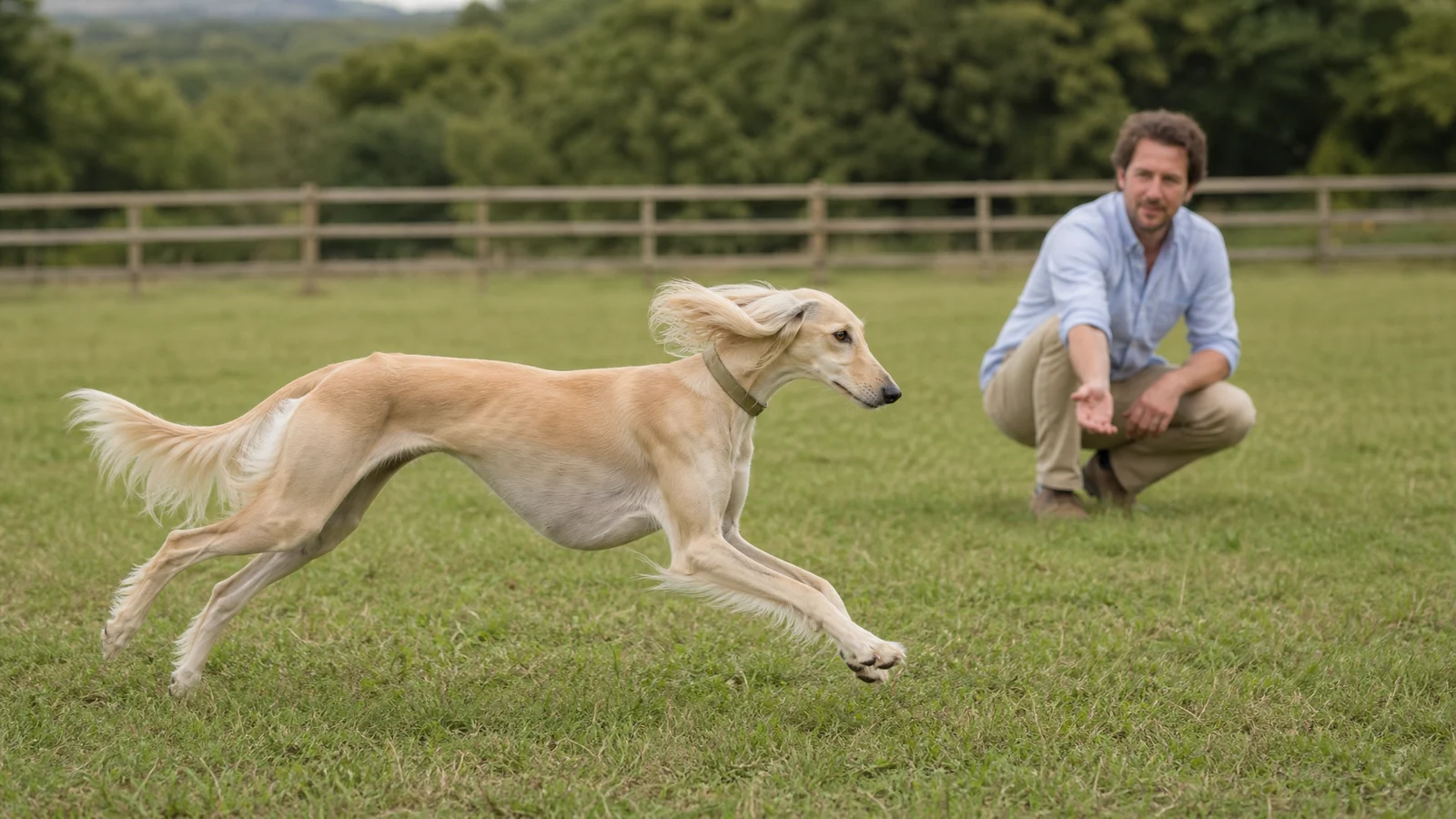 Training basicsRecall for a Dog Built for Speed
 BehaviorReserved With Visitors: Guiding a Saluki's Personality Traits
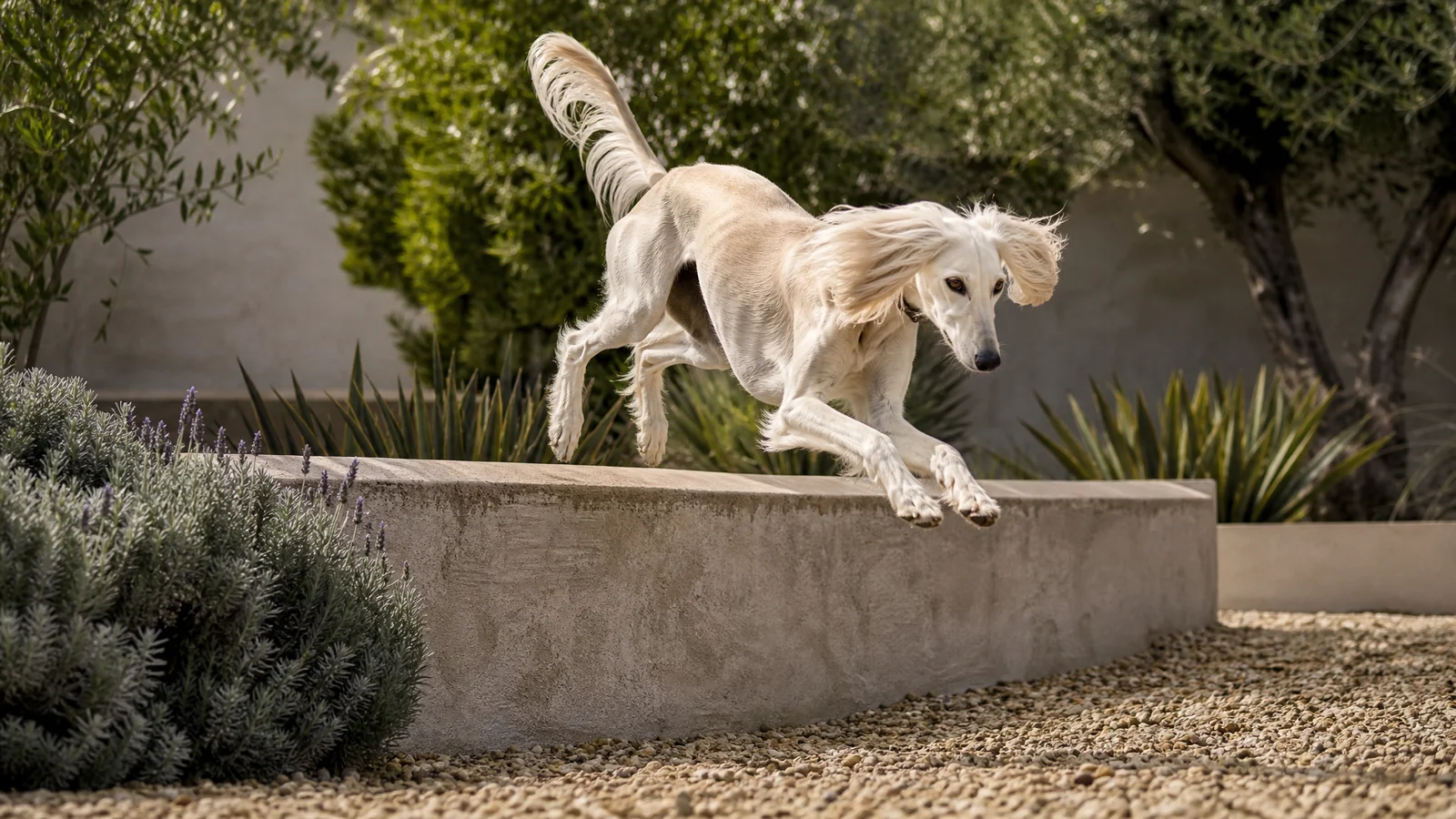 BehaviorHow High Can a Saluki Jump? Escape-Proofing Your Yard
