 Saluki
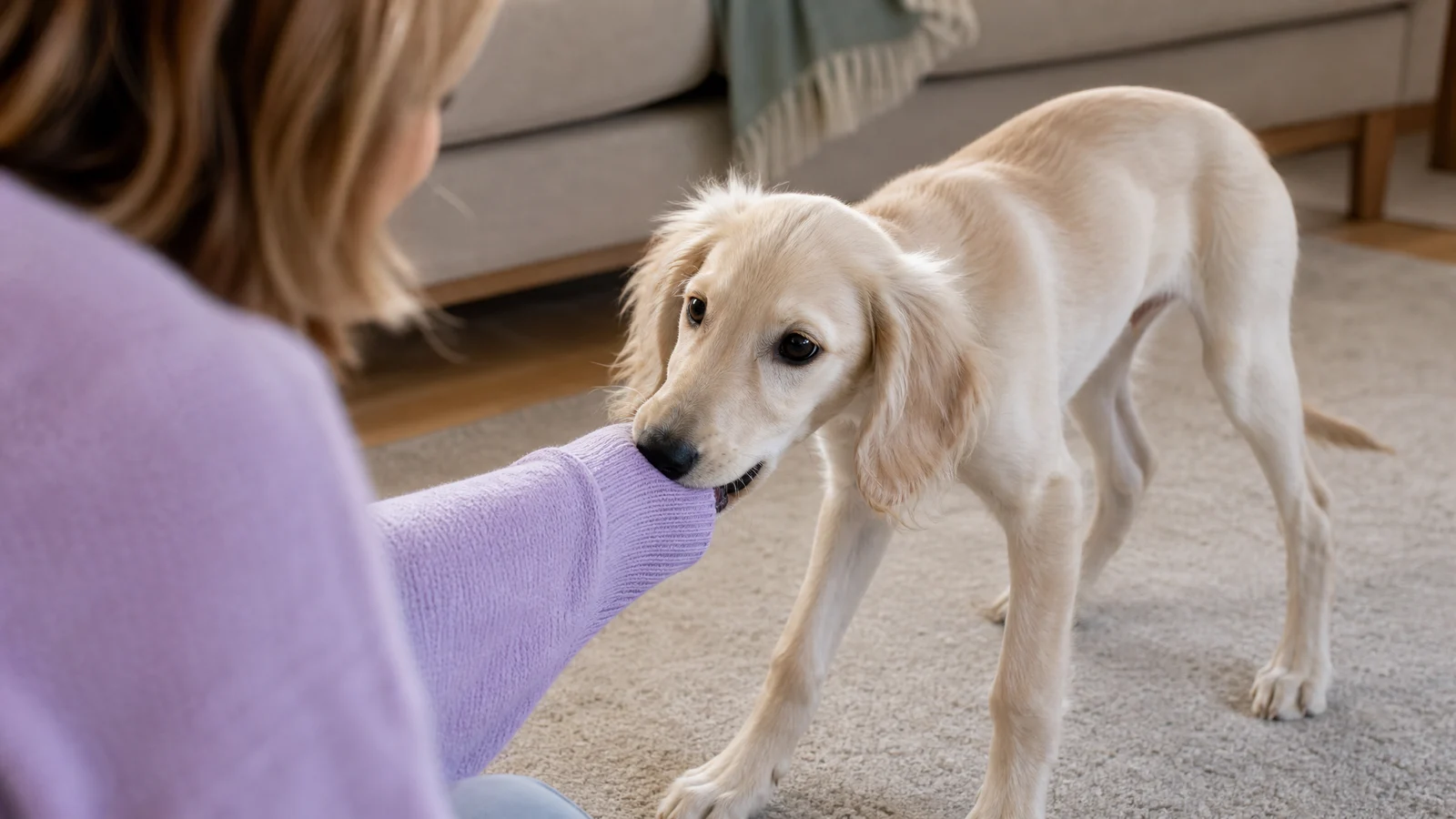
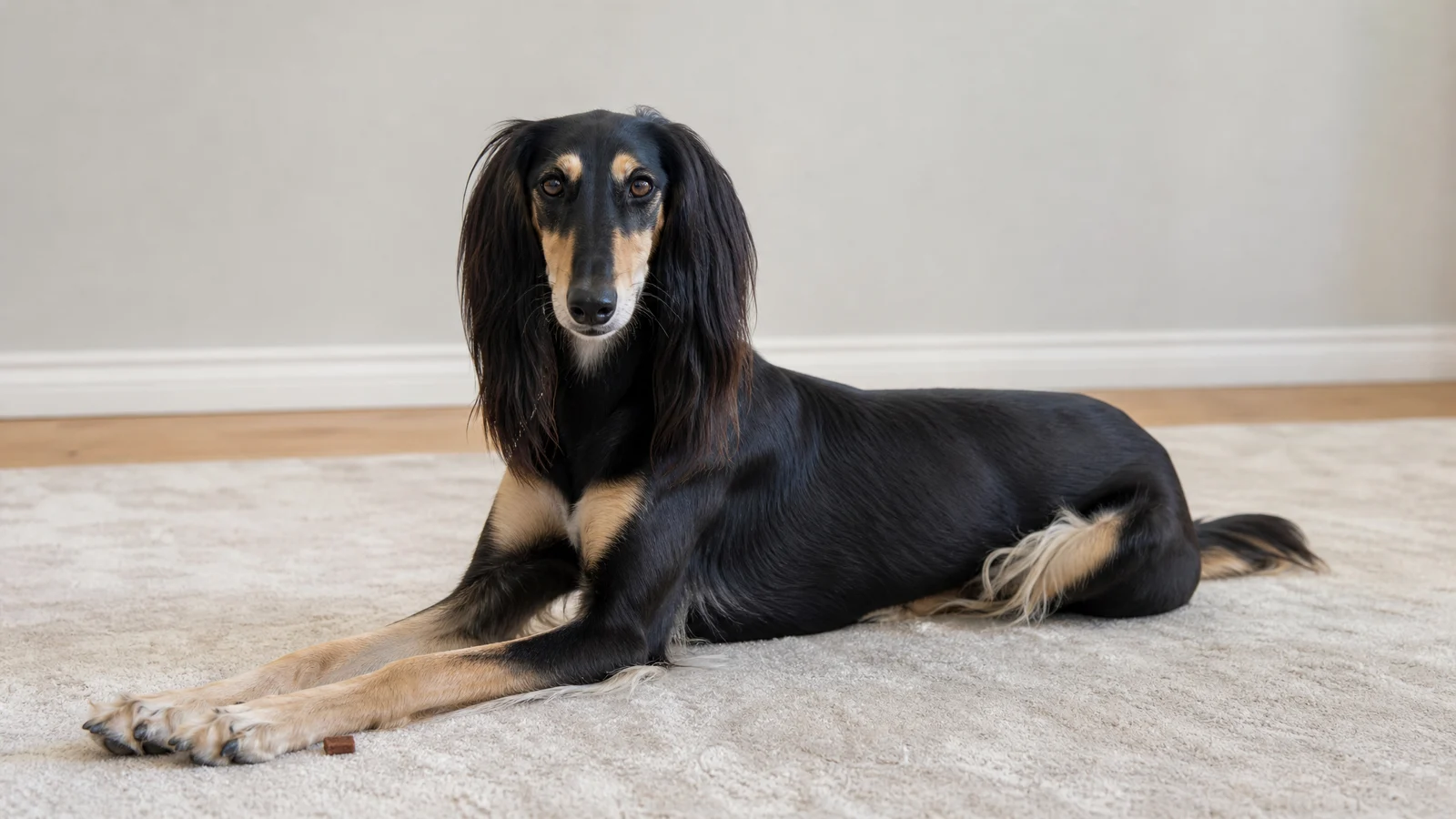
A Saluki puppy can spend an hour draped across your lap like a long-legged scarf, and then you reach for your coffee and a set of needle teeth closes on your wrist. That lunge is rarely temper. It is a young hound reacting to something that moved, with the only tool a puppy has for handling things.
Biting at this age is normal, and it is very fixable, because most of it comes down to three things you control: what moves near the puppy, what sits within reach of their mouth, and what happens in the second after teeth meet skin. Below you will find why this breed grabs at motion, how to handle teething, a calm four-step reply, and how to cope with ankles, children and visitors.
Why Saluki Puppy Biting Follows Motion
The coffee moment shows the pattern: a still hand was ignored, and a reaching one got grabbed. A Saluki is a hound who stays ready to chase anything that moves, and a puppy has not yet learned that people are not on that list. Wrists, trouser legs, trailing sleeves and swinging hair all look like things worth catching, and a mouth does the job that grown-up legs will do later.
None of this makes your puppy mean. Puppies handle the world with their mouths, and a breed known for being gentle and dignified still starts life as a baby with sharp teeth and a lot of speed. Our work is to change what moves, what is available to grab and what a grab earns.
Where Normal Ends
PetMD's vet-authored page on puppy biting calls it a normal part of development, especially during teething. The same page draws a line: where bites also include any combination of holding with pressure, tension in their body, deep growling or shaking of their head from side to side, it advises contacting a behavior professional.
The rest of this page covers the ordinary side of that line: play grabs, teething chewing and the lunges that come from excitement. If you see the other pattern, start with a call to your veterinarian.
Teething Gums and the Toys That Win
A puppy who is allowed to grab moving things also needs to know what they can chew, and sore gums make that question urgent. Gums that ache make nearly anything in reach look like relief, including your hand, so what you leave within reach decides a lot about how the day goes.
In Humane World's guide to chewing, teething lasts about six months and usually creates some discomfort, while chewing makes sore gums feel better. The same guide says to try freezing a rubber toy, since the cold rubber will soothe their gums, and to supervise so the puppy doesn't chew and swallow any pieces.
A Toy Shelf That Beats Hands
So build a small toy shelf that is clearly toys, and keep shoes, socks and anything shaped like them out of the mix, because a puppy cannot tell your sneaker from a toy that looks like one:
- A frozen rubber toy. Reserve it for the worst teething days, with someone watching.
- A soft toy to carry. A grabby mouth gets a legitimate job, and a trot around the room with it burns off some of the grabbing.
- A rope or tug toy. Games with it end with the toy in the mouth and your sleeve left alone.
Rotate the toys so each one keeps feeling new, which keeps the shelf a better offer than your hand, and retire any toy that starts coming apart so no pieces get swallowed.
A Saluki who is bored or unhappy at home can turn into a destructive chewer, so a puppy with nothing good to chew and no outlet for their energy will go looking for their own. Safe exercise on a leash or inside a secure fence takes the edge off, and our guide to safe chase outlets covers where a fast young hound can run.
Regular vet visits are also a good time to mention sore gums or a chipped tooth. For toy choices in more depth, see our Saluki puppy chewing guide.
A Calm Reply to Biting, Step by Step
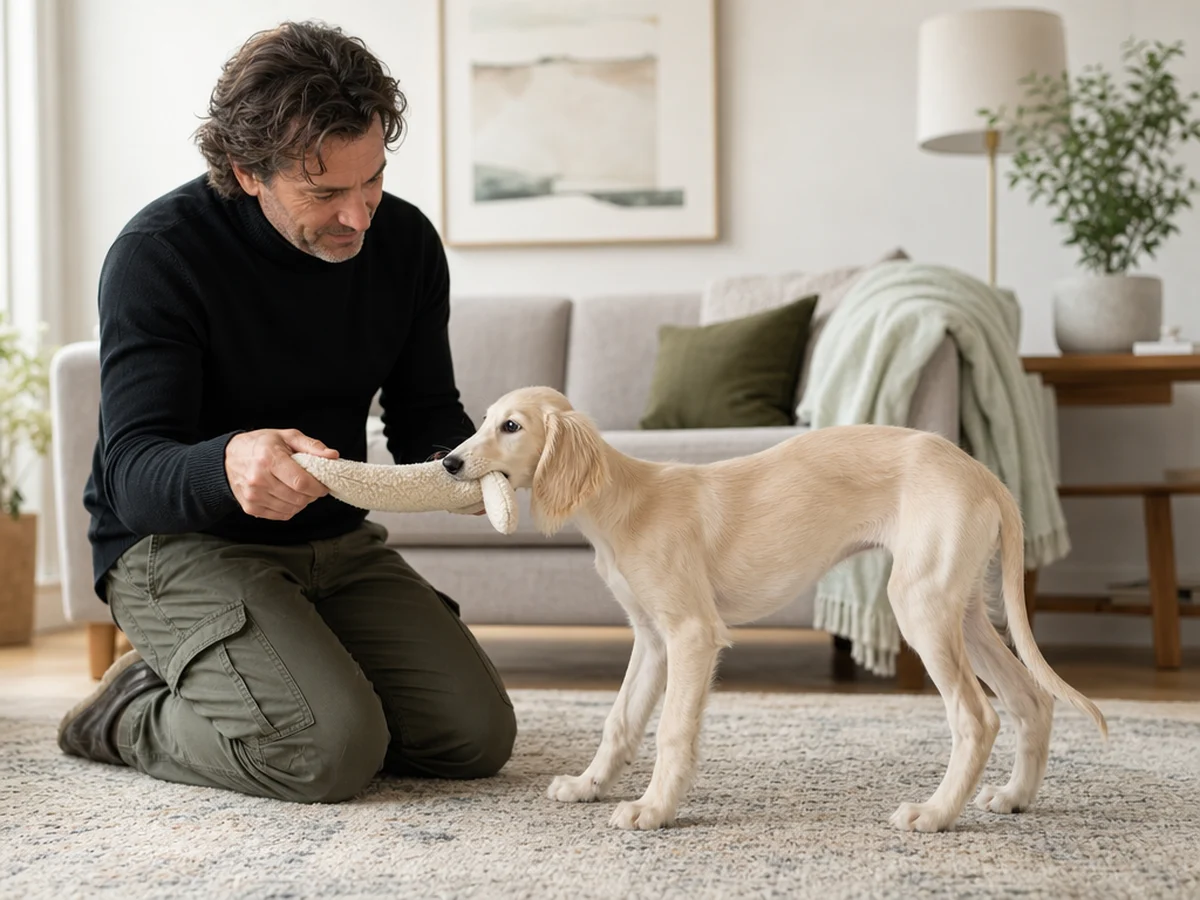
With good toys in reach, you can answer the actual moment, and the answer is deliberately dull. Your reply has one goal: teeth on skin end the fun, and the toy brings it back.
Run these four steps every time teeth land on you, the same way, whoever is standing there, because a puppy learns from the pattern across every pair of hands in the house:
- Go still. Stop moving the hand or foot and keep your voice low. Pulling away or flapping turns you into the thing the puppy is chasing, while a still hand is the least interesting object in the room.
- Offer a toy. Slide one in front of the mouth and let the puppy take it. The second they grab the toy, praise them warmly and keep the game going with it, because that is the payment.
- Leave if the teeth come back. If the puppy drops the toy and goes for your skin or sleeve again, stand up and step away behind a baby gate or a door, calmly and without scolding. The fun leaving the room is the lesson.
- Return with a toy in hand. After a short break, come back already holding a toy and restart the game with it. Then repeat from step one as often as needed.
Those four steps work because the puppy meets the same result every time: skin ends play, and a toy keeps it going. A young puppy learns this the way they learn everything, by running into the same answer again and again until it becomes their guess.
Why the Reply Stays Quiet
Keep the whole reply quiet. Scolding and rough handling teach a puppy to be wary of your hands, which is the opposite of what you want from a breed that is gentle and a little reserved by nature. The break itself can be short, and a puppy who is still wound up when you return simply earns another one. If the grabbing gets frantic each time you leave, leave sooner, at the first touch of teeth, and let a nap in the pen replace the next round of play.
Paying for the Calm Moments
Do not save all your attention for the bites. When the puppy is chewing a toy or lying beside you while your hands move, drop a small treat between their paws or murmur some praise, so the calm moments earn more than the grabby ones. A puppy who only hears from you during trouble learns that trouble is how to get you.
When Biting Goes for Ankles and Sleeves
That reply handles teeth that arrive at lap height. Feet and fabric are harder, because you keep walking and the thing the puppy is chasing keeps moving after you freeze. As Saluki people, we plan for this by treating legs and sleeves as the real targets and giving the chase somewhere else to land.
Start by never starting the game yourself. Wiggling fingers or toes to tempt a puppy teaches them that hands and feet are toys, and the same teeth will be much sharper in a few weeks. Choose the target instead: drag a toy along the floor ahead of your feet so the puppy goes after it and catches it.
Habits for Busy Days
A few small habits make busy days easier, and each one is cheap to set up before the next lunge happens, so keep them close to wherever the puppy spends most of the day:
- A toy in your pocket. Keep one where you can reach it, so the answer to a lunge at your trousers arrives in a second.
- A treat at nose height. Walk a few steps with a treat in your hand and let the puppy follow it with their eyes up instead of down at your shoes, then pay for staying with you.
- A gate or pen for busy moments. When you carry laundry or cook, put the puppy where they can watch you but cannot reach your legs, with a chew to work on.
Each of these removes the chase before it starts rather than correcting it afterward. The nose-height treat also lays groundwork for walking beside you on a leash, which is a skill worth having in a sighthound.
If a puppy hangs on to your trouser leg, stand still and bring a toy to the mouth rather than shaking the leg free, because shaking is just another game. Once the puppy lets go for the toy, pay and walk on.
Kids and Visitors Around a Biting Puppy
A reply that only you use will not hold up in a home where other people come and go, and children are the biggest test because they move the way puppies love to chase.
Quick, jerky movements, high-pitched voices and running are what pulls a puppy in. In Oregon Humane's advice on children and dogs, any dog may respond to that by chasing, nipping at heels or jumping up, and teething puppies tend to chew on everything, including hands and arms, so a chew toy kept handy diverts the teeth.
Take that as your plan. Treat every moment a child and a puppy share a room as supervised time, and let the adult run the four steps, since a child cannot be expected to enforce them, and keep the children's own toys put away so the puppy's shelf is the only one in play. Teach children to sit on the floor when they want to hold the puppy, and to freeze with their hands folded like a tree when the puppy leaps at them.
Visitors and a Reserved Puppy
Visitors are the other half. A Saluki is reserved with strangers without being shy, so a guest who bends over, reaches out or waves a hand can set off both wariness and grabbing. Ask guests to sit down, hold still and let the puppy come to them, with a toy within reach. Our guide to a Saluki who is reserved with visitors has the full greeting plan.
Mouthing Questions Saluki Owners Raise
After the basic reply is working, three situations tend to catch people off guard: a puppy who gets worse as the day wears on, a puppy who mouths during petting, and a puppy well past teething who is still at it.
Does a tired puppy bite more?
Yes, it can. A tired puppy loses what little self-control they have, so what looks like a biting streak is sometimes a sleep problem. When mouthing turns frantic, skip another round of play and put the puppy in the crate or pen with a chew so they can nap. Then check that the day leaves room for rest, because a puppy who sleeps well tends to bite less.
Can I pet a puppy who keeps mouthing?
You can, with a plan. Hands moving over a body look like fun to chase, so keep a chew in your other hand and let the puppy hold it while you stroke. If teeth find your fingers anyway, go still, offer the toy and let the petting pause for a moment before you try again.
Why is my older puppy still mouthing?
In Animal Humane Society's advice on adolescent dogs, puppies after 6 months of age start to use their nose and eyes more, and if mouthing persists, it's being reinforced in some way.
That points you back to the four steps: check whether anyone still plays through teeth, and make every reply the same. A slow-maturing breed can take its time to settle, and our guide to training through adolescence covers that stage.
Should I hold my puppy's mouth shut?
No. Clamping a muzzle or pulling the mouth open teaches a puppy to be wary of hands, and wary puppies often mouth harder. Stay with the four steps and a toy instead, and let the puppy learn what the mouth is for.
What a Moving Hand Means to a Saluki
Hands and feet will keep moving around a Saluki all day, and nobody wants a home that holds still. What changes is the meaning the puppy gives that movement. A reaching wrist used to promise a chase, and after enough quiet, matching replies it promises something better: a toy appearing, a game with the right rules or a treat for settling.
That shift is what this page has been working toward, and it comes from the same few responses repeated by everyone in the house, one ordinary day after another, until nobody has to think about it.
When you are ready for everything else a young Saluki has to learn, register on this page and our e-book is yours to keep, emailed to you in a thorough but easy-to-follow form.
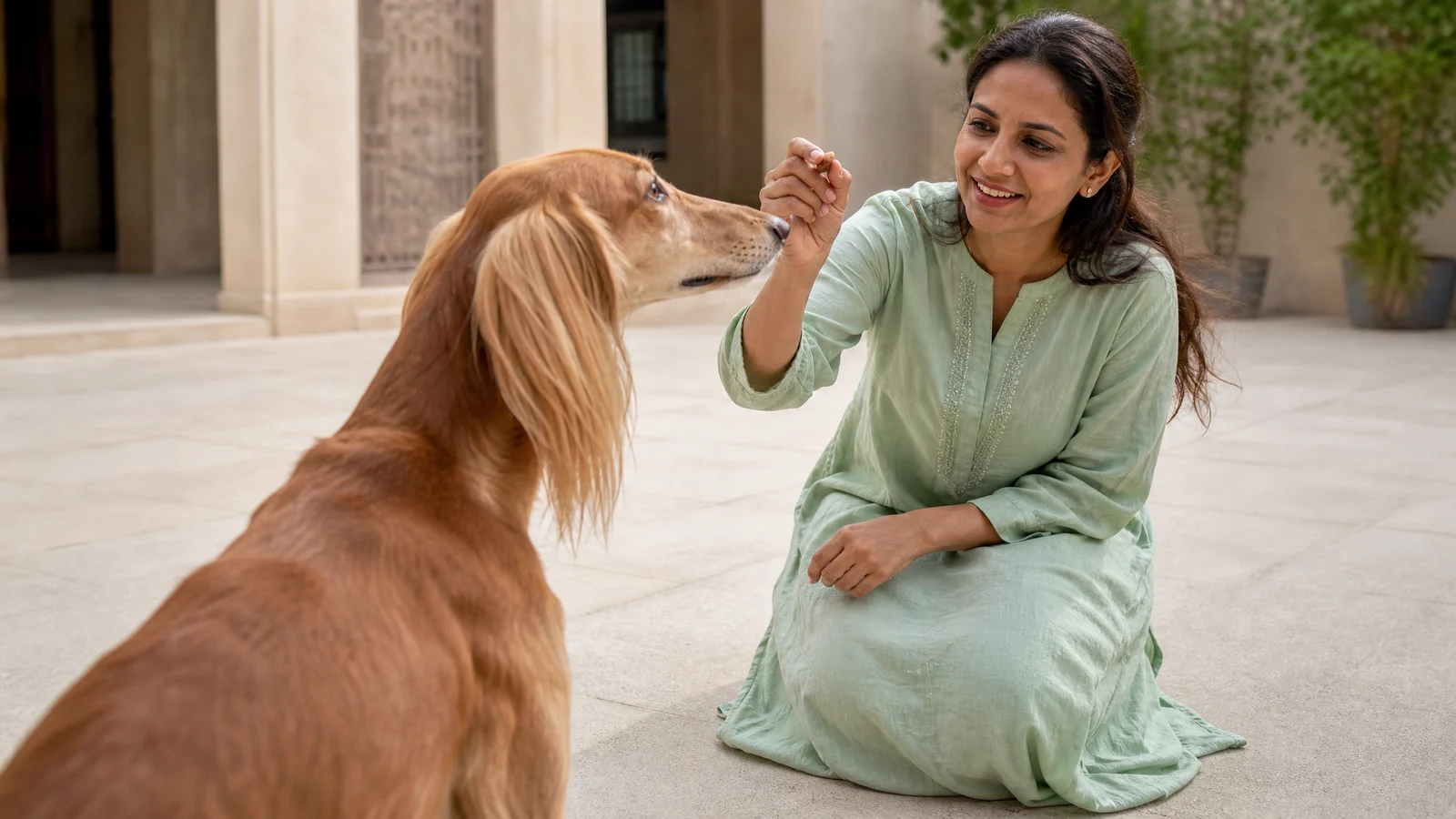 Training basicsHow to Teach a Saluki to Sit
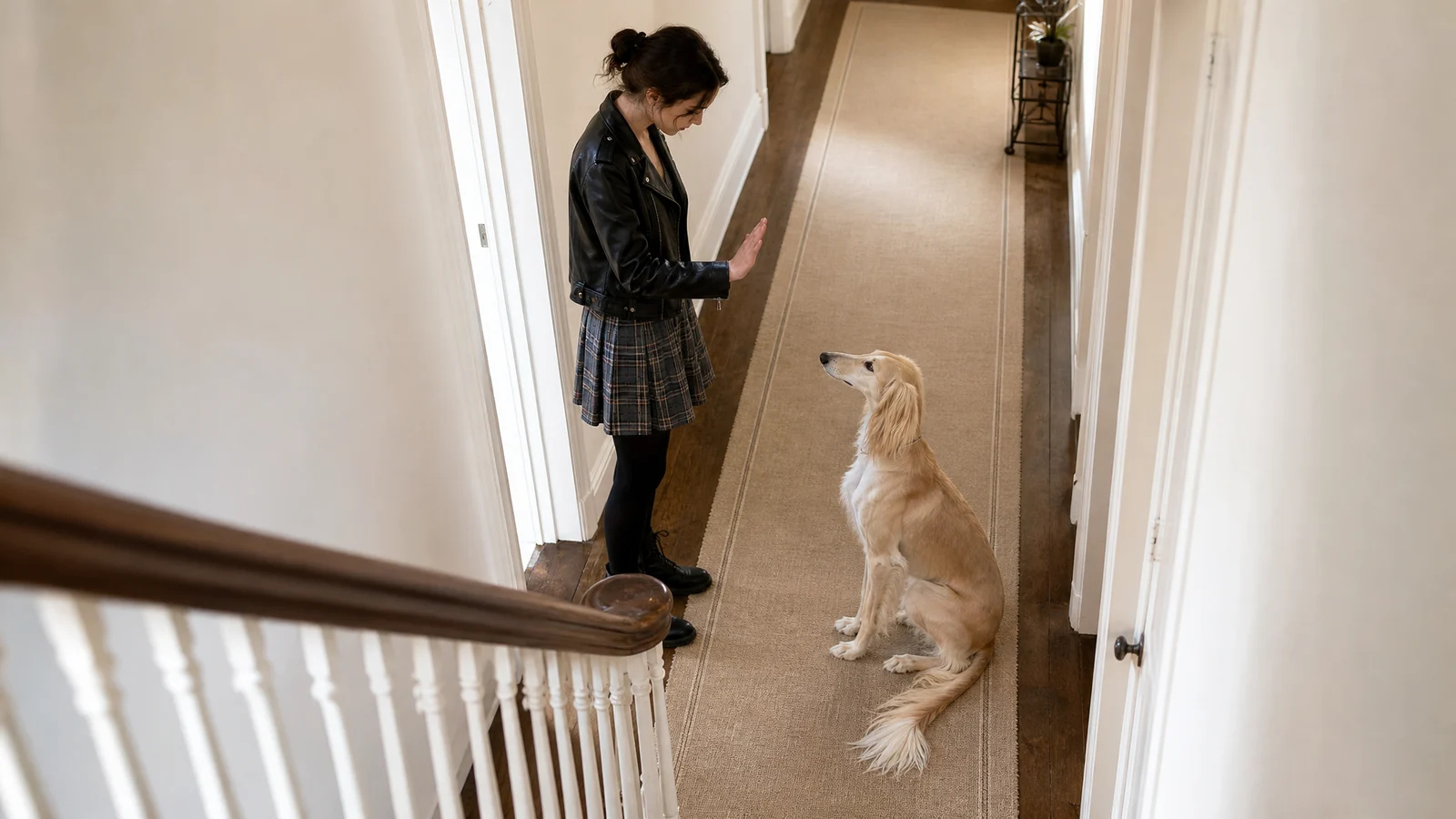 Training basicsHow to Teach a Saluki to Stay
 Training basicsHow to Teach a Saluki to Lie Down
