 Saluki
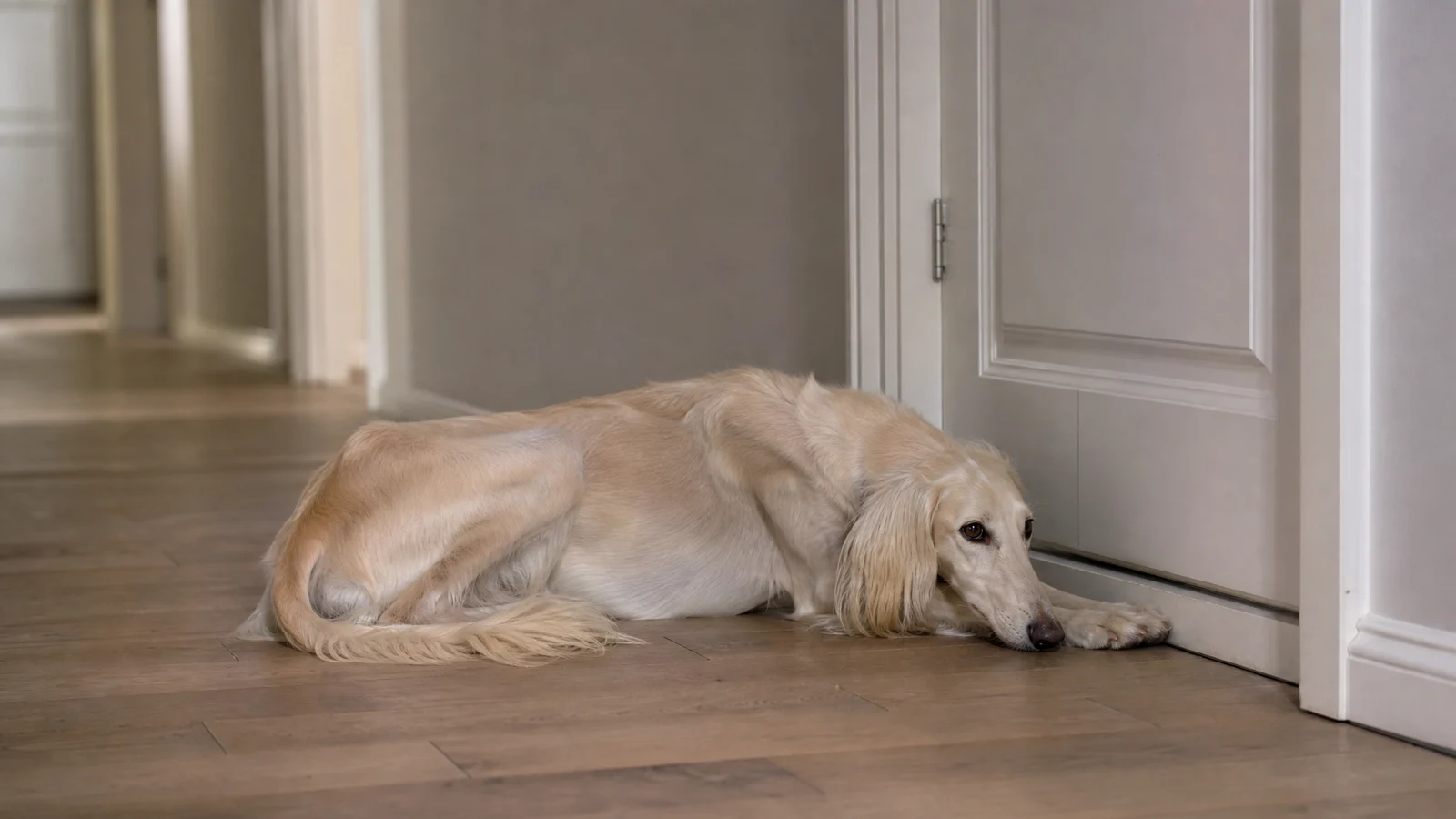
You can love how composed your Saluki looks on the sofa and still dread the moment your keys come off the hook. Independence runs deep in this breed, and it does not always reach as far as the front door.
Separation anxiety is distress about being apart, not stubbornness or spite, and it says nothing about how well you trained. It responds to patient, reward-based practice that starts below the point where your dog gets upset, plus cover for the hours you cannot be home while that practice sinks in. Some Salukis only need to learn that an empty house is ordinary, while a few need a professional working beside you.
Below, we sort real distress from plain boredom first, because the two leave the same mess behind and call for different fixes. Then we build the practice around the doors you already use.
Telling Saluki Separation Anxiety From a Bored Hound
The mess by the door looks the same either way, so the first job is working out what produced it. Timing is the quickest test, and it is the first thing our trainers ask about: distress appears when your dog is alone, often within minutes of your leaving, while boredom turns up whenever the day runs dull, with you home or away.
Salukis make independent but loyal pets, and that mix matters here, because a dog can look self-possessed in the living room and still worry when the person they are loyal to disappears. Like other dogs, they can also be escape artists or destructive chewers when bored or unhappy at home, so a chewed door frame alone proves nothing.
In most cases, a dog who does something almost exclusively when alone is dealing with separation-related distress. Some dogs are more frustrated than anxious, and some are simply restless, so what you see matters more than the label. A sudden start deserves a vet exam first, because dogs in pain often do not settle well.
Look-Alikes to Rule Out First
Three common problems leave the same evidence as separation anxiety, and one pattern points the other way. Check them against what you have seen before you start the plan:
- Boredom: The chewing or digging happens on dull days even when you are home, and your Saluki looks relaxed rather than worried.
- Unfinished house training. Puddles show up with you in the house too, which tells you the lesson never fully landed.
- Barking at the window happens whenever something passes outside, so it is about the street rather than about your absence.
- Real distress arrives with drooling, pacing or clinging as you get ready to leave, and the trouble stays away when someone is with your dog.
If the trouble happens only when you are gone and the worry starts as you pick up your things, treat it as distress and keep reading. If it happens with you at home, the plan below is the wrong tool.
Cover the Hours Your Saluki Cannot Be Alone Yet
Once the mess has a name, the next move is an unglamorous one: stop your dog from rehearsing distress while you work on it. Every long absence at the old level repeats the experience you are trying to change, so practice only works if real life stops undoing it between sessions.
That means finding company for the hours you are out. A family member, a friend, a sitter who comes to your house or a daycare can all do the job, and it does not need to be you. If you work away from home, look at the coming weeks and decide who covers each long stretch. The arrangement is temporary, and it is what lets the practice below take hold.
Where your dog waits matters too. A crate is a calm place for some dogs and an added stress for others, and a Saluki who panics behind a closed door is rehearsing exactly what you want to undo. If the crate is not restful for yours, a small room behind a baby gate is the usual alternative. Our guide to crate training for Saluki puppies covers the setup, and a room needs the same care about footing and safe chews.
A worried Saluki can also get out, so check the boundaries before you trust any room or yard. The guide to escape-proofing your yard shows what to look at, and it is worth doing before the first practice session rather than after.
Saluki Alone Training From Doorway to Driveway
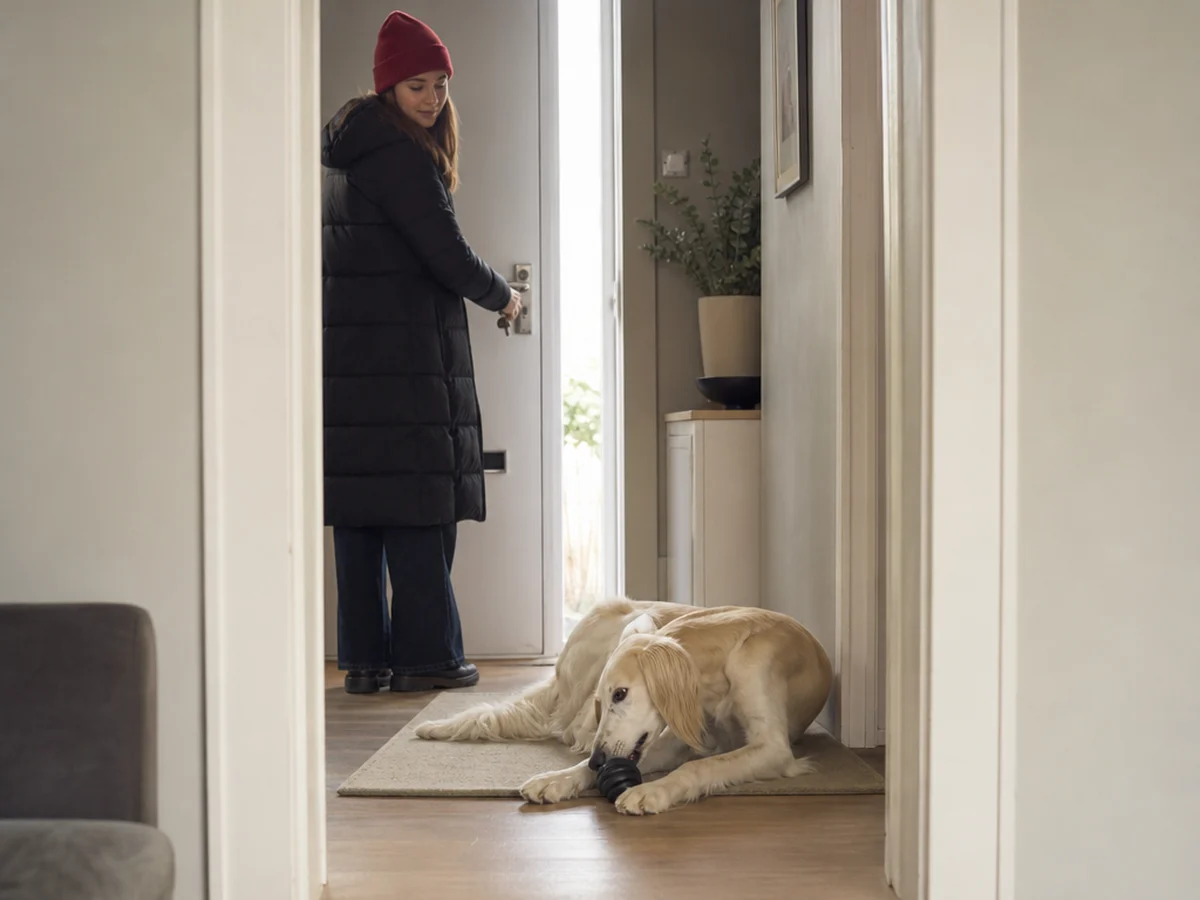
With the hours covered, practice can begin, and it begins earlier than most people expect: before you leave at all. The plan is a ladder of five rungs, and your Saluki sets the pace on every one. A rung should feel dull to your dog before you climb to the next, and a dull rung is a good sign, not a wasted session. Here are the rungs in order, each one a small change from the last:
- Rehearse your leaving cues without leaving: pick up your keys or put on your coat and shoes, then sit down and read or watch television.
- Teach a calm rest spot while you are home, paying your Saluki for settling on a bed and paying again as you move around the room.
- Put a door between you: ask for the settle, step behind an inside door for a moment, return and pay before any worry shows.
- Repeat the exercise at the bedroom door, then the back door, then the door you really use, still stepping out of sight for only a moment.
- Take real exits that last a second or two, hand over a stuffed food toy just before you go and lengthen the exits a little at a time.
Each rung gets its own notes below, because the steps are where most plans stall. The notes also cover what to do when your Saluki will not move on from one.
Make Keys and Coats Boring
Dogs read departure routines closely, and some start to worry while you are still hunting for your shoes. If yours does, run the routine without the departure: boots on, then a coffee on the couch, or keys in hand, then back on the hook. Mix the order and repeat it through the day until the cues stop meaning anything.
This is slow, because your dog has years of learning behind those signals, so expect many repetitions over many weeks rather than days. If your Saluki shows no worry as you get ready, skip ahead to the rest spot.
Add Distance Room by Room
Pay a settled Saluki quietly, then step behind a bathroom door for a moment, come back and pay again before any fuss starts. Add a second or two, then move the same game to the bedroom, the back door and finally the door you use every day. Moving to a new door is a new rung, so shorten the wait when the place changes.
Between repetitions, wait until your dog is fully relaxed again. Leaving while they are still excited about your return starts the next absence from a higher level of arousal, and that makes staying calm harder.
Step Outside With a Food Toy
When the door steps are dull, take real exits. The ASPCA's departure plan begins with absences that last only one to two seconds and adds a stuffed food toy just before you step out once absences reach five to ten seconds. The toy doubles as a signal that this goodbye is a safe one, and the plan's main rule is to keep each absence shorter than the time it takes your dog to become upset.
Keep the toy for these moments only, so the door starts to predict something good, and pick a chew your Saluki can enjoy without supervision (see safe chew options). Over the following weeks, stretch the same ladder outward: the porch, the mailbox, the driveway, the car door. Each new setting is a new rung, so drop back to short exits whenever you change places.
Reading Stress Signs Before You Add Time Away
Each new rung needs a verdict before you climb it, and your Saluki's body gives you one if you know where to look. Panting that has nothing to do with heat, yawning, drooling, trembling, pacing and a frantic greeting when you come back all tell you the last step was too big. When you see them, return to the length where your dog stayed relaxed and move forward more slowly from there.
Stepping back is the plan working as designed, not a failure, and it will happen. A new schedule, a move or a missing family member can make a Saluki who was doing well wobble, and a step back after a change is ordinary.
Keep your own exits and returns low-key. A quiet word and out the door, then a calm hello on return and no more attention until your dog settles. If you come home to damage or a puddle, clean up quietly with your dog out of the way. Scolding teaches nothing about being alone and adds worry to the next goodbye.
A Day That Leaves a Hound Ready to Rest Alone
Practice sessions are only minutes of a long day, so what happens in the rest of it decides how much your Saluki has left for those minutes. As Saluki people, we think of the day as the setup for each session, and a few habits do most of the work.
Sprint First, Then Settle: A hard run in a secure space gives a hound built for speed a way to spend energy, and a quiet rest afterward makes it easier to settle before you leave. Keep the sprint somewhere safe, with a leash or a fence you trust.
Give the empty hour a job. A food puzzle or a long-lasting chew that appears only at departure time turns the door into a signal for something good, and a mind that needs work gets some. Block the best view if passersby set your Saluki off, and leave a radio or white noise playing on low so the house is not silent. A closed door or a baby gate across the entrance to the room can also hide the busiest window.
Keep the rhythm steady: Meals, walks and departures at similar times make the day predictable, which helps an uneasy dog relax. The daily routine for Saluki puppies shows how one looks.
Bringing In Help When a Dog Cannot Settle Alone
Some dogs do not settle even when the plan is followed carefully, and knowing when to hand part of the job to a professional is part of doing it well. According to Tufts' veterinary school, pain, itching, illness and discomfort can all lower a dog's threshold for anxiety, and some dogs have anxiety that stays unmanageable even in an excellent environment and may need help from a veterinary behaviorist.
Start with your regular vet, who can rule out physical causes and tell you whether a behaviorist makes sense. A reward-based trainer with real experience in separation work can then coach you through the steps and adjust the plan as your dog responds, which matters because every step depends on reading small signals. Ask how they would teach, and walk away from anyone who talks about punishing a dog for being upset.
Keep regular vet visits on the calendar even when things are going well. They give you a baseline, and they make a change in your Saluki's behavior easier to spot early.
Everyday Questions About Leaving a Saluki Alone
These three questions are about the setting around your plan: where your Saluki waits, how exercise fits and how you check on a session. Each one affects whether practice stays below the point where your dog gets upset.
Can my Saluki wait in the yard instead?
A yard does not change the fact that your dog is alone, so for a worried dog it moves the problem outdoors instead of solving it. It also puts everything that moves past the fence in view, and a Saluki is always ready to chase anything that moves. Keep practice indoors, where you control the room.
Does a hard run before I leave fix it?
A safe sprint followed by a rest is a useful part of the day, but it does not teach your Saluki that being alone is safe. Only practice does that. Treat the run as the setup for a session, not a replacement for one.
Is a camera worth setting up?
For most households, yes. A camera shows what really happens, so you can end a session before worry builds and spot early signs like pacing or panting that you would never see from the driveway. Watch for a few minutes rather than constantly, and judge by what you see, not by sound alone.
What Is Left Once a Hound Rests Alone
When the questions are answered and the plan has done its slow work, the dread goes first and the long hours stay. What remains is an ordinary Saluki with spare time, a mind that wants a job and a body built to run, and that combination can still wreck a sofa on a dull afternoon whether or not any worry is left.
That is a good trade. A hound with spare hours and a restless mind is an ordinary household puzzle with ordinary answers, and it is a far better puzzle to have than a dog who dreads the door.
Handling ordinary puzzles well is one more piece of raising a Saluki, and our e-book takes on the remaining lessons a sighthound needs, in thorough but everyday language, arranged so a busy household can find each lesson quickly. Add your email here and the copy is sent without charge.
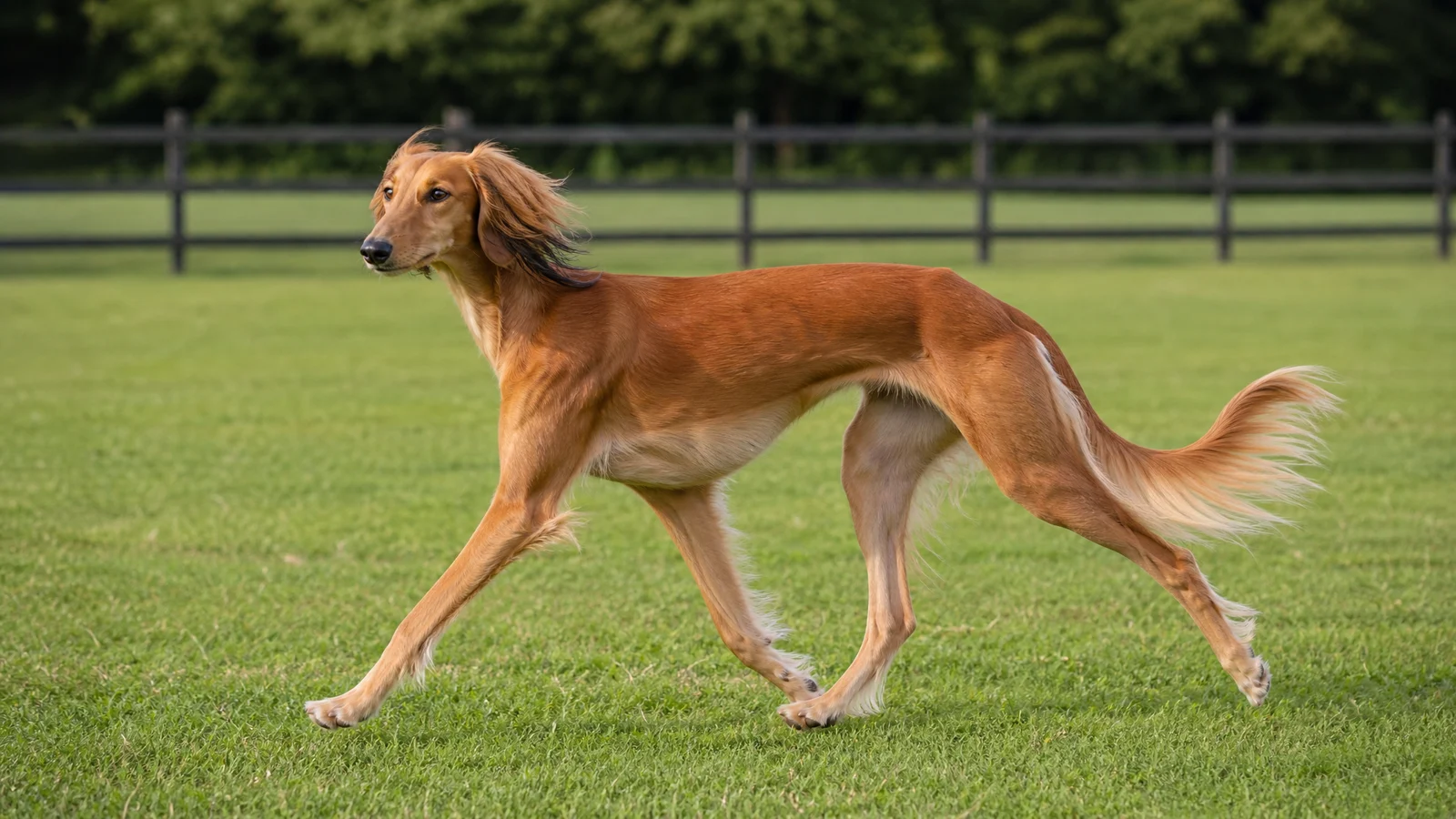 Puppy trainingSaluki Training Timeline: Stage by Stage
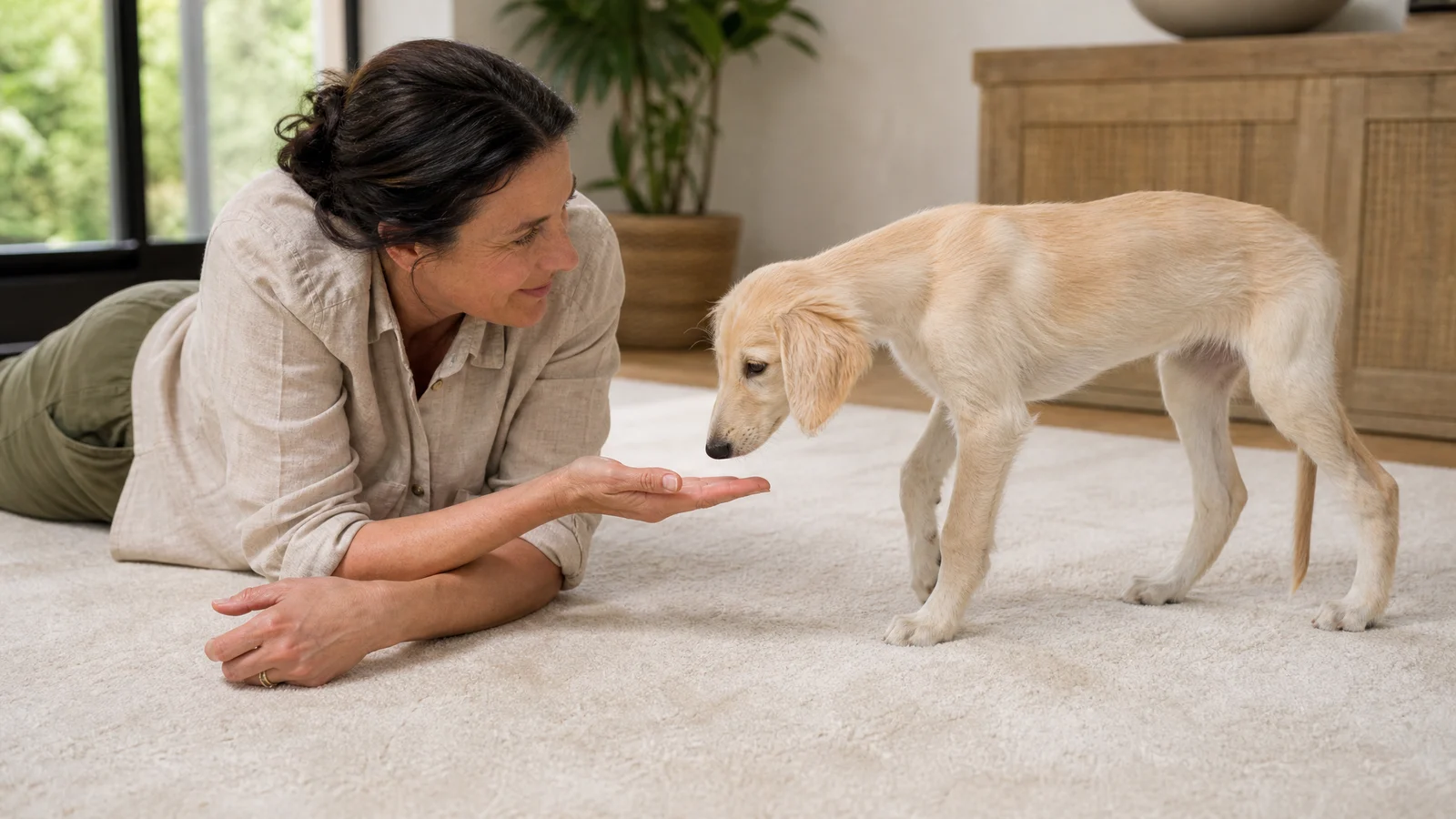 Puppy trainingSaluki Puppy at 8 to 12 Weeks: The First Month Home
 Puppy trainingSaluki Puppy at 3 to 4 Months: Teething and Mouthing
