 Saluki
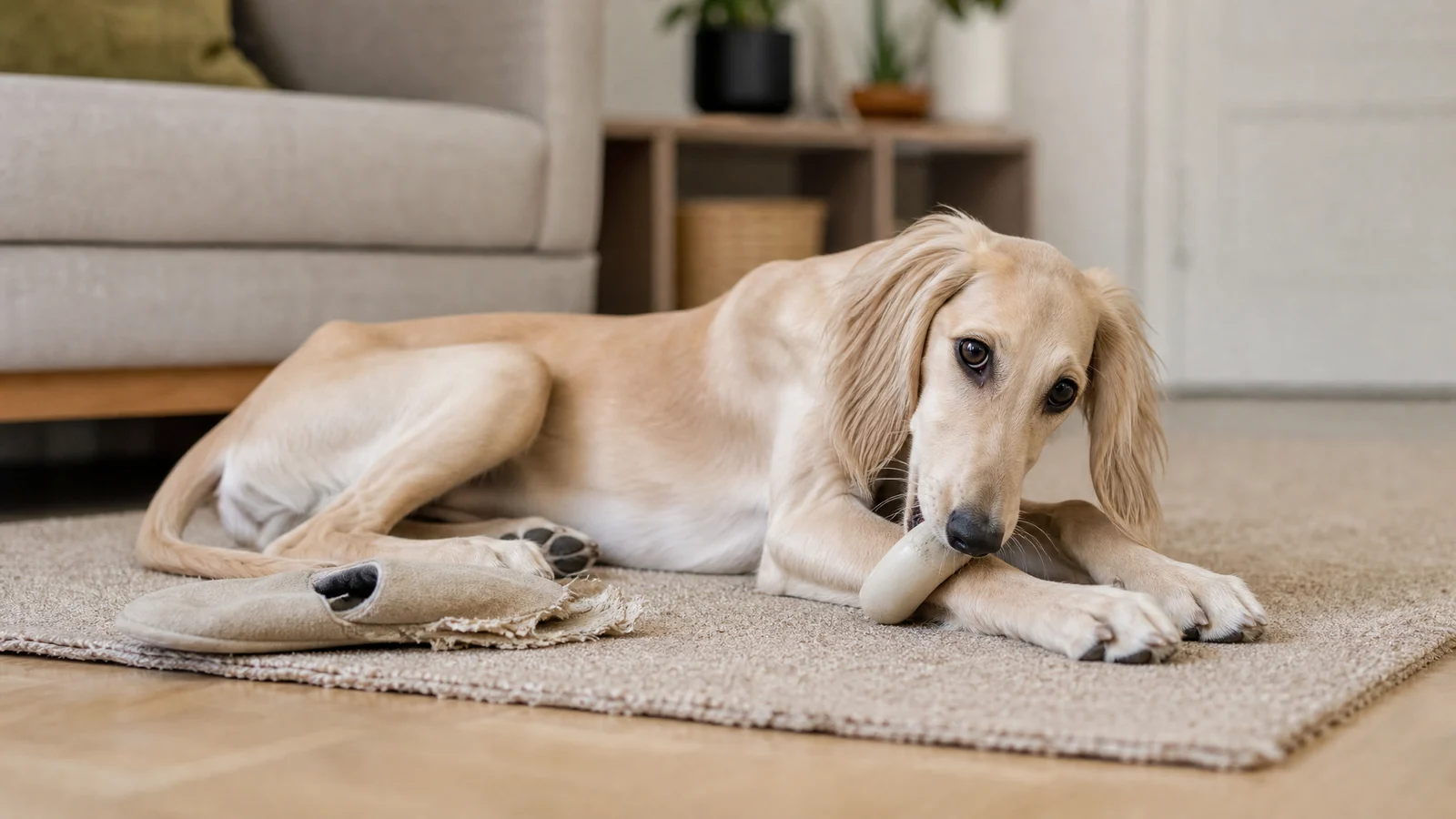
A chewed chair leg is evidence, not a confession: it tells you what was available, when supervision failed, what texture held the puppy's attention, and whether the puppy had a permitted alternative. It does not show spite or a plan to ruin the room.
Saluki puppies need a humane response that accounts for a breed that may become destructive when bored or unhappy. Investigate the setting, prevent another rehearsal, and reward the approved choice. We treat each object and location as a clue, not a reason to punish. This article carefully and methodically opens all five primary evidence drawers from access and redirection through alone-time patterns, trades, and late-day setup.
Saluki Puppy Training Starts With Chewing Evidence
Begin with location and timing. Damage beside a resting area tells a different story from damage that appears only after everyone leaves. A puppy chewing whatever falls within reach may need better management, while a narrow pattern can point toward a specific context.
Record plain observations rather than motives: note whether the puppy had rested, moved, relieved themselves, eaten, or practiced a brief skill before the chewing. Also note whether they could choose a safe chew without competing clutter.
- Identify the object, room, time, and who was present.
- Check whether the puppy was loose, gated, crated, or directly supervised.
- List the safe options that were actually available in that moment.
- Notice other behavior such as pacing, barking, resting, or searching.
- Remove assumptions such as stubborn, naughty, jealous, or vengeful.
This early list prevents random fixes. It also shows when a pattern changes suddenly. A new appetite for nonfood objects, chewing paired with pain, or any swallowed material deserves prompt veterinary advice.
We also inspect the shape of success: if the puppy carried an approved object from another room before sampling the chair, the safe habit already exists but access or timing failed. Reinforce that earlier choice more often.
Photograph the room rather than the damage if a visual reminder helps. The image should show tempting access points, safe zones, and barriers. It should not become a gallery used to shame the puppy after the event.
Scene Control in Saluki Puppy Training
Training cannot compete with unlimited access: use doors, gates, storage, a puppy-safe room, or a positively conditioned crate to keep tempting objects out of the active zone. Put cables, cleaning products, batteries, sharp items, and small swallowable pieces completely beyond reach.
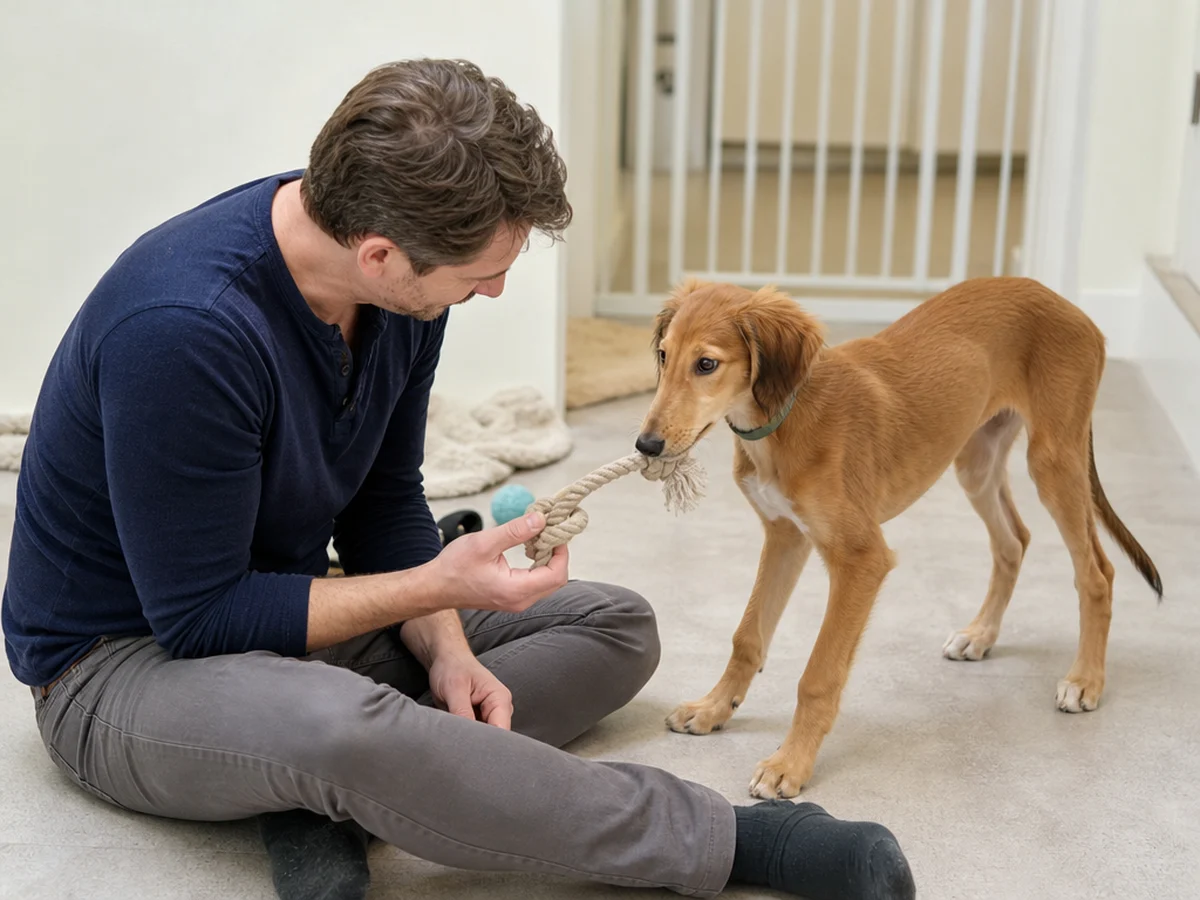
Management is not giving up. It prevents the puppy from practicing a rewarding behavior while you teach another one. Each prevented rehearsal makes the safe choice easier to notice and reinforce.
Rotate access instead of opening the whole home at once: a puppy who makes reliable choices in one prepared room can earn supervised access to another. Freedom should grow from observed skills, not age alone.
Inspect barriers from the puppy's height. A cable that looks hidden from above may be obvious beneath a table, and a basket can become a climbing aid. Management works only when it reflects the dog's actual route through the room.
Plan for transitions when supervision commonly breaks, such as cooking, calls, or children arriving home: set up the puppy zone before attention is divided. Prevention done early feels calm rather than corrective.
Redirection in Saluki Puppy Training
The PDSA advises owners to redirect rather than punish. If you see the puppy choose a household item, calmly present a safe alternative and praise engagement with it. Punishment can create fear and may teach hidden chewing instead.
Do not chase: movement can turn the object into a game, especially for a puppy tuned to notice speed. Reduce your own motion, offer a worthwhile trade, and secure the original item once the puppy releases it.
Specific toy types and a teething timeline are not established in this brief, so use individual fit and professional guidance. Choose dog-safe items suited to the puppy's current size and chewing style. Supervise new items and remove anything that cracks, frays, or sheds pieces.
Redirection should match the puppy's current arousal: a frantic puppy may need relief and rest before any object can hold attention. A curious puppy may accept a trade and return quickly to calm engagement.
We keep our hands slow and our voice ordinary. Sudden reaching can increase possession value or start a chase game. Present the alternative where the puppy can see it, then wait for a choice.
Reward Safe Saluki Puppy Chewing Choices
Catch the decision before trouble: when the puppy walks past furniture and selects an approved object, mark that choice and add a reward. The object itself may be reinforcing, but food, play, or calm attention can make the distinction clearer.
The AVSAB position statement describes reward-based training through cues, markers, and reinforcers, including shaping and capturing. Capturing fits chewing well because you can reinforce a choice the puppy offers without prompting. Timing connects the consequence to the right object.
Battersea notes that a training click should land on the behavior and a reward should follow quickly in its clicker guide: a verbal marker works too if it is consistent. Mark while the puppy is engaging safely, not after they abandon the object.
- Mark the first safe selection before adding another reward.
- Reinforce calm engagement as a separate step from touching the object.
- Change the room only after the choice is reliable in the easier place.
Reinforce duration gradually after selection. A puppy who touches the approved item has made a promising first choice, while a puppy who settles with it has completed a different behavior. Mark and reward both stages without demanding a long session immediately.
The puppy's daily rhythm can reveal why safe objects lose value: use the Saluki puppy routine to compare chewing after rest, exploration, and social activity. The same object may work differently in each state.
Early foundation skills help too. The first Saluki puppy lessons build name response, handling, and calm settling that support trades without turning them into confrontations. Chewing is one part of the household picture.
Location can become part of the cue: keep one safe option near the family resting area and another in the prepared puppy space, then reward use in both places. This helps the habit travel without turning every room into an object pile.
Saluki Puppy Chewing When Nobody Is Home
Spread rewards across the day. One approved choice after waking, another during family activity, and another before rest create a broad habit. A single formal session cannot cover all the contexts where chewing happens.
A bored puppy may sample whatever is nearby even when people are home: improve the daily pattern with suitable movement, sniffing, short training, rest, and approved chewing. More frantic exercise is not automatically the answer because overtired puppies also make poor choices.
The ASPCA explains that separation-related chewing often occurs mainly when the dog is alone and may appear with barking, pacing, whining, or house soiling. That cluster is more important than the damaged object alone. Do not label one incident as separation anxiety.
If the pattern appears only during absences, gather a short, privacy-safe video and discuss it with a qualified professional: avoid testing how long panic lasts. Management and gradual training should protect the puppy while the cause is assessed.
Compare a normal home video with an absence video only if recording is safe and lawful in your household. Look at the minutes before chewing begins, not just the act itself. Pacing, scanning exits, or immediate vocalizing may change the question you ask.
Do not leave an untested chew as a cure for distress: an object cannot replace a gradual alone-time plan, and unsupervised use may add safety risk. Professional advice should fit the individual dog's behavior and environment.
Trading Unsafe Objects During Puppy Training
Grabbing an object from the puppy can create a keep-away game or conflict around possessions. Teach trades during calm moments with low-stakes objects. Offer the reward, wait for release, mark it, and return the safe object sometimes so giving things up does not always end fun.
For dangerous items, safety comes first: make the trade generous, move the puppy away, and secure the object. If the puppy stiffens, freezes, growls, or guards items, stop rehearsing close confrontations and seek reward-based professional help.
Practice the trade sequence when nothing valuable is at stake. Present a modest reward, mark release, and sometimes return the safe object. Repetition in calm conditions gives both the person and the puppy fluent mechanics for an urgent moment.
Household members need one shared response: if one person trades and another chases, the puppy receives conflicting lessons. Post the plan where everyone can follow it quickly.
The Late-Day Saluki Chewing Cabinet
Many households need their clearest plan during the busy evening transition. Prepare a small cabinet of puppy-safe options approved for the individual dog, plus treats for trades and rewards. Store household temptations elsewhere rather than beside the alternatives.
Use the cabinet with a sequence that everyone recognizes. Keep the response calm and repeatable:
- Check relief, thirst, fatigue, and the need for a quieter space.
- Offer one safe option and supervise how the puppy uses it.
- Mark voluntary engagement before the puppy searches elsewhere.
- Trade and remove any item that begins to break or becomes unsafe.
- End with rest when the puppy's movement becomes frantic or unfocused.
Observe whether an option encourages calm, sustained engagement or increasingly frantic destruction: those are different outcomes even when both involve chewing. Retire an item before pieces loosen or arousal becomes difficult to interrupt.
Keep the selection modest. Too many objects can blur the lesson and make inspection difficult. The important contrast is between safe, available choices and household objects that never enter the puppy zone.
We review the cabinet weekly: remove worn items, check whether the puppy's chewing style has changed, and verify that every household member knows the trade plan. A safe object yesterday still needs inspection today.
How Saluki Puppy Chewing Changes
Chewing may rise and fall as the puppy develops, the household changes, or new freedoms appear. Do not promise that a particular birthday will end it. Expand access after repeated safe choices and reduce it again when the evidence changes.
Use the daily Saluki puppy routine to keep rest, movement, learning, and supervision in balance: regular veterinary visits remain part of the plan because oral discomfort or other physical changes can alter behavior. Conservative management protects both the puppy and the home.
Contact your veterinarian promptly about swallowed material, mouth pain, broken teeth, sudden behavior change, or repeated eating of nonfood objects. Regular veterinary visits also help owners raise oral and safety concerns before they become emergencies.
Over time, the useful evidence should shift from damaged objects to boring successes. You will see the puppy seek an approved chew, accept a trade, and settle after activity. Those ordinary choices are the case closing in your favor.
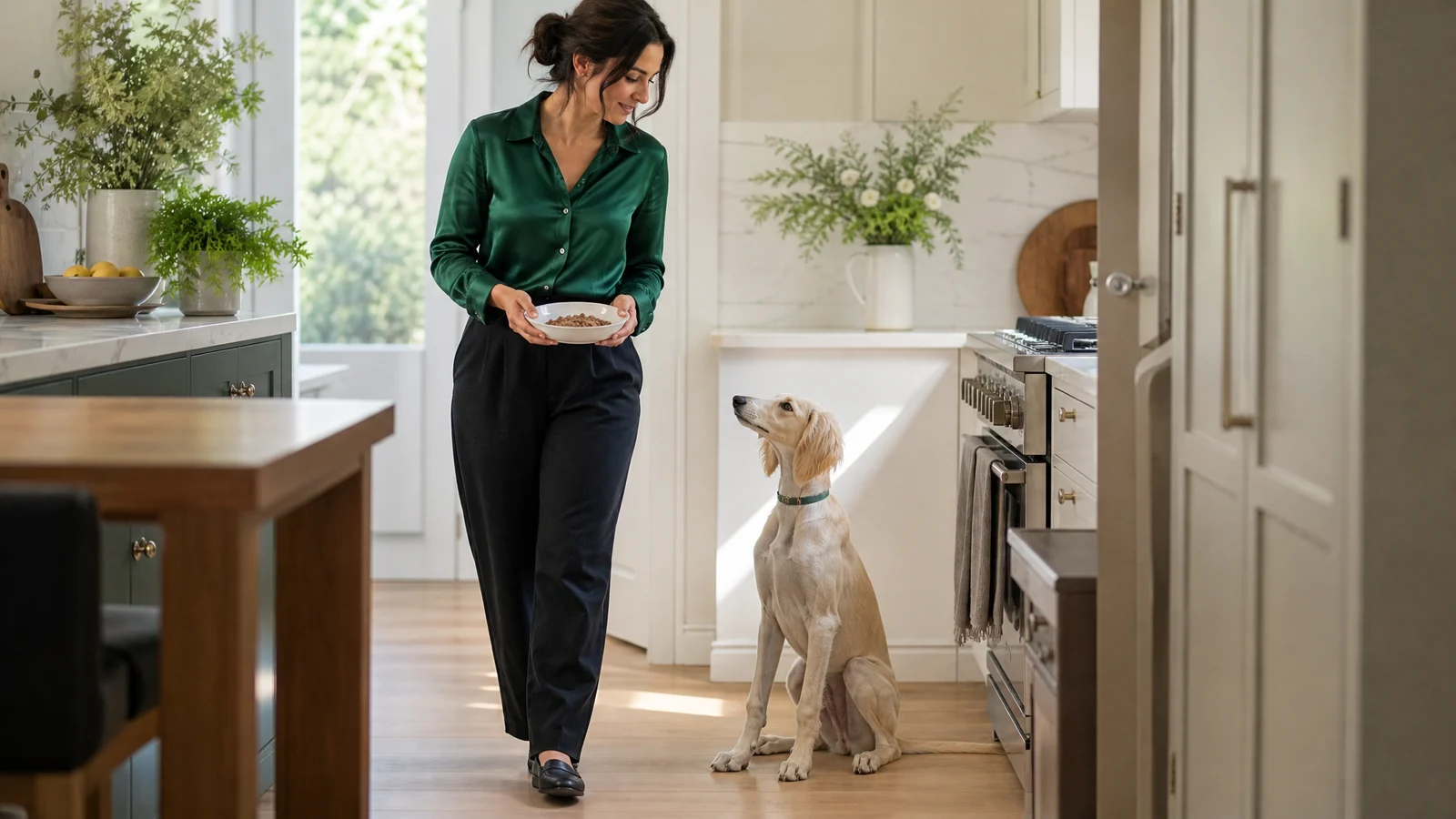 Puppy trainingA Reward-Based Daily Routine for Saluki Puppies
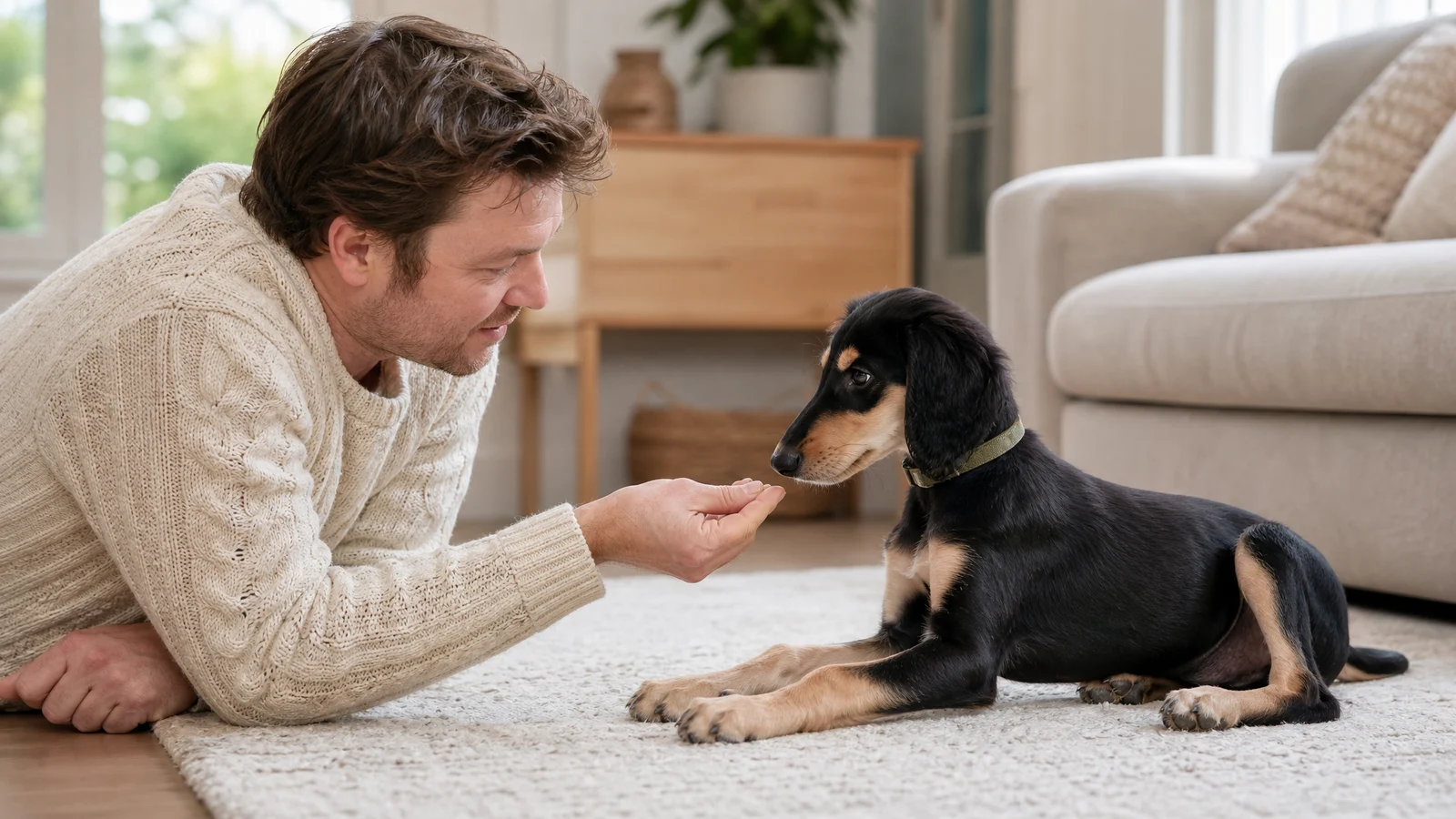 Puppy trainingWhat Should You Teach a Saluki Puppy First?
 BehaviorSaluki Temperament and What It Means for Your House Rules
