 Saluki
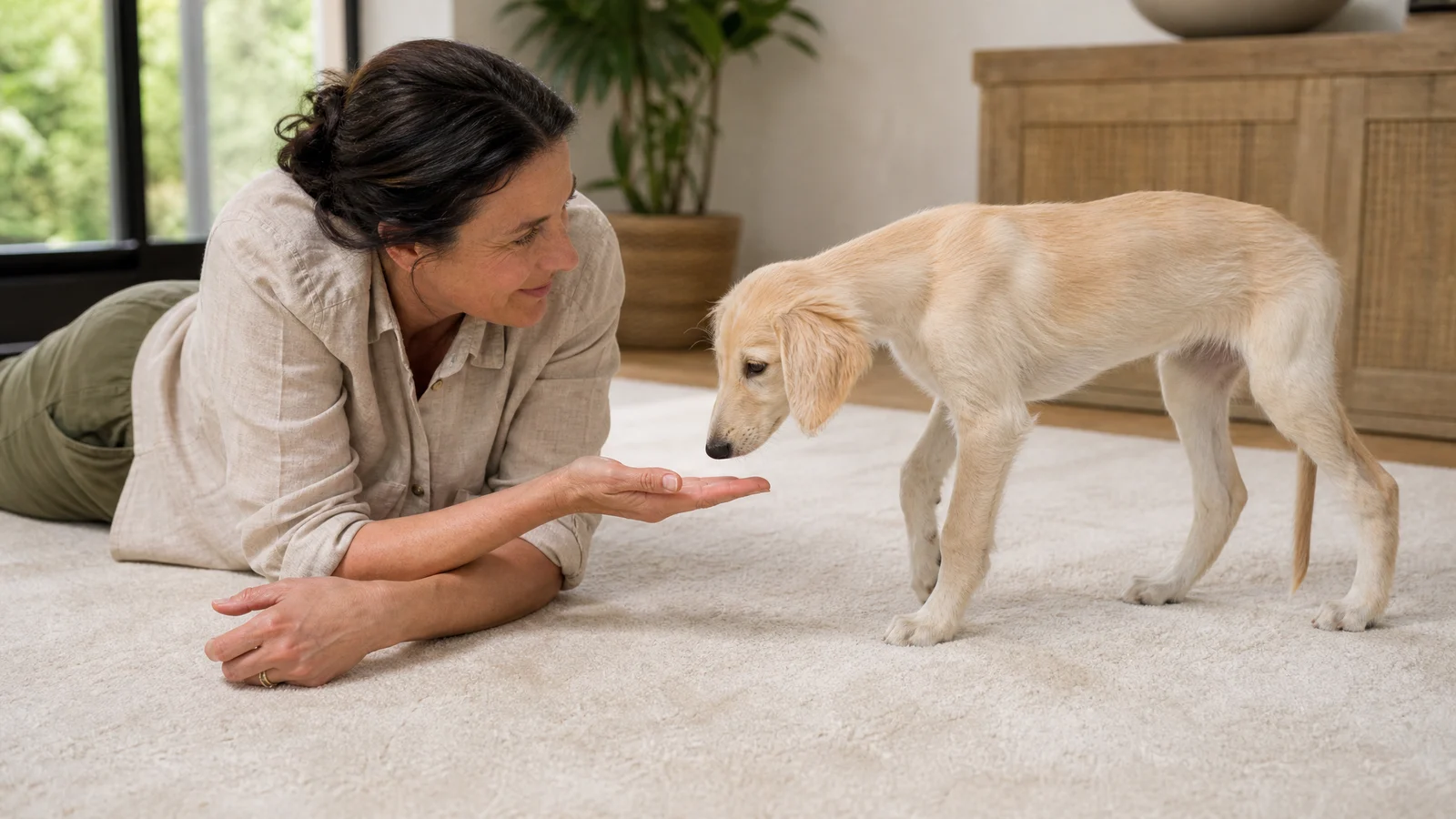
What a Saluki puppy learns in the first month home will rarely look like training. It shows up later, in a hound who lets a stranger come near without bolting, stands still for the vet's hands and settles when the house gets loud. Those are the jobs of these four weeks, and they are gentler and more particular than a generic puppy checklist suggests.
A Saluki arrives reserved with strangers, ready to chase anything that moves and slow to mature, so the early weeks reward patience far more than speed. Read on for what to put first at 8 to 12 weeks, the daily practice that suits the age and the limits worth keeping until your puppy is older.
Why a Reserved Saluki Puppy Needs a Quiet First Month
A quiet month is a plan and not a mood: it gives a puppy who studies new things carefully enough time to decide they are safe, and these weeks make that decision count for more than it will later.
From about 6 to 8 weeks of age until a puppy is about 14 weeks old, gentle introductions to other animals and different people will shape their future response to introductions, and after about 3 months of age fear responses may outweigh their sociability. Your puppy is inside that stretch right now, so we care far more that each introduction is safe and comfortable than that there are many of them.
As Saluki people, we think that stretch asks a lot of this breed. A hound who is reserved with strangers has plenty to gain from early introductions that go well, and a hound ready to chase has plenty to lose from a puppy stage that goes badly. Because Salukis are slow to mature, this month is the first draft of a dog who keeps changing for a long time.
Priorities in Order
That gives the month a clear order of priorities. Here is the order we would follow, with the home first because every other step depends on it:
- A home that already works: a rest spot the puppy can retreat to, gates wherever a small hound could slip through and every outing on a leash or inside a secure fence.
- Small, pleasant experiences: new people, floors, sounds and places, one at a time and at the puppy's own speed, in the way our guide to socializing a reserved puppy describes.
- Tiny lessons taught as games: a puppy who already enjoys their handler can pick up a name and a sit in passing moments, and nothing in this month needs more.
Limits That Stay in Place
Limits matter as much as priorities. A hound ready to chase anything that moves can be gone before anyone reacts, which is why the leash or the secure fence is not optional, and the guide to safe Saluki chase outlets covers where an older puppy can run.
Hands and Bowl Practice for a Saluki Puppy
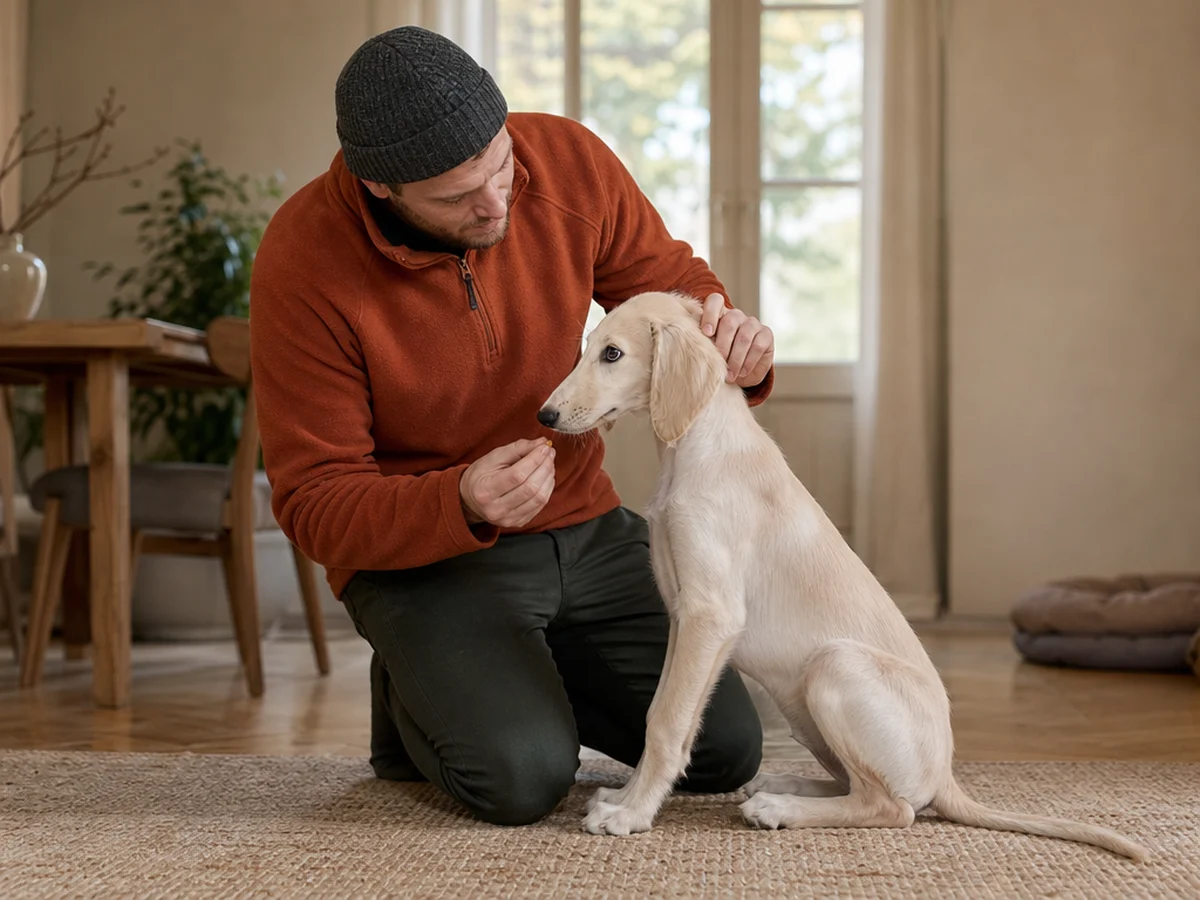
Quiet confidence starts with the two most ordinary kinds of contact in a puppy's day, being touched and being fed. Both are easy to practice on purpose, and both teach a reserved puppy that a person moving closer is good news.
Handling goes best one person at a time, with the puppy coming to the hand instead of the hand reaching in. Let your puppy sniff, touch a shoulder or a paw for a moment, then feed a treat and stop while it is still easy. Build gradually toward the ears, muzzle, back and feet, and invite a calm second person in once the puppy relaxes. Nail and teeth work have their own steps in our Saluki handling practice guide, and this daily touching makes those jobs much easier.
Bowl Practice at Mealtimes
Food is the other contact worth rehearsing. Bowl practice teaches a puppy to enjoy people approaching while they eat, which helps prevent resource guarding, the anxiety dogs feel when others approach their own valued resources. It works because an approaching person starts to predict something even tastier than dinner.
Run the routine at each meal in this order. Each step stays in place until the puppy is relaxed with it, so the list is a ladder and not a schedule.
- Walk toward the bowl while the puppy eats, drop a tastier treat into it and walk away, so your approach predicts a bonus.
- Repeat once or twice during each meal until the puppy is visibly excited about your approach, which tells you when to move on.
- Then walk up, lift the bowl, add a treat and hand it back before you walk away, so even losing the dish ends in a gift.
- If the puppy stiffens or stops eating at any step, you came too close or moved too fast, so go back a step and approach from farther away.
Keep the routine with the adults in the household at first. Children and visitors can watch the plan without trying it, because the person who approaches the bowl should be someone the puppy already knows well.
Household Noise Without Startling the Puppy
Hands and bowls cover what a puppy feels, but a house also makes noise. The vacuum cleaner is usually the loudest thing in it, so it makes the clearest first example.
The Fear Free vacuum routine starts with the machine switched off. The puppy explores it at their own pace and eats treats you toss closer and closer, because the choice to investigate has to be the puppy's. When it first runs, it runs on the lowest setting with the puppy across the room, and a puppy who cannot have this practice yet waits somewhere out of hearing and sight until there is time to do it properly.
The same thinking works for any loud thing in the house. Here is the sequence we would follow, one rung at a time:
- Machine off and in sight: let the puppy sniff it and collect treats nearby, with no pressure to touch it.
- The quiet version: run it at its lowest setting or volume with the puppy across the room, and let a treat arrive while the sound is on.
- One change at a time: move closer or turn it up, never both in one session, so each step stays small enough to enjoy.
- A way back down: if the puppy startles, freezes or hides, you moved too fast, so end the sound, let them recover and start again from a quieter version.
The dishwasher, a hair dryer and the doorbell all take the same rungs. Doing them early matters because a puppy who has already met the sound as a harmless background to treats is far less likely to treat it as an emergency later.
Happy Vet Visits for a Saluki Puppy
The biggest new room of the month is usually the clinic. The touching and noise practice above is also practice for it, so the visit does not have to be a first for everything at once.
A happy visit is a trip to the clinic on a day when nothing needs treating, made only to build good feelings about the place, and the best time to start is during puppyhood. Begin with treats in the car or the parking lot, call ahead to make sure the clinic is not too busy, and ask whether a staff member can greet your puppy outside with a treat. Only then work toward going inside, always at your puppy's pace.
Your puppy's reactions set the speed of these visits. Three signals are worth reading:
- Treats are taken readily: the step is the right size, so repeat it once more and then move one small piece closer to the door.
- Treats are refused: the step is often too big, so go back to the car or parking lot and make the next try shorter.
- The puppy pulls away from a touch: let them go, because walking away tells you the practice needs smaller, slower steps.
Treat these trips as a regular part of puppyhood. Keep up regular veterinary check-ups as your puppy grows, and use each one to rehearse the same easy routine.
Puppy Outings, Classes and Early Cues
Three decisions tend to land in the middle of the month, once the practices above are underway: who your puppy may meet, whether to join a class and what to teach on purpose. Each has a short answer.
Can my Saluki puppy meet other dogs yet?
Only with the right dog and only when your vet agrees. Ask which settings and playmates are safe for a puppy who is still completing their vaccines, then choose one calm, healthy adult dog you know well and let the two meet at a distance first. A boisterous young dog is the wrong first meeting for a fast puppy who is also ready to chase.
This is general information, not medical advice. Ask your veterinarian which places, classes and playmates are safe for your puppy right now, and how often to schedule check-ups.
Is a puppy class worth it at this age?
It can be one of the month's good experiences if the class is reward-based, small and happy to let a puppy sit out. Visit once without your puppy to see how the trainer treats a worried youngster, and leave early on any day your puppy has had enough. We would pick a class that treats a reserved Saluki as a puppy who needs room, not one who needs pushing.
Is it too early to teach sit?
Not if it stays a game. Ask for a sit when it happens easily, such as before the bowl goes down, and pay it; if your puppy is not interested, nothing is lost. The order of the first cues sits in our guide to first lessons for a Saluki puppy, and none of it is the main job of this month.
One Skill Under the Whole First Month
Set the practices from this month side by side and they turn out to be one lesson in different clothes. A hand reaches toward the puppy, a person walks up to the bowl, a machine starts up and a stranger at the clinic door offers a treat, and each time the puppy is asked to stay easy while something comes close.
For a hound who is reserved by nature and fast by design, staying easy near what is new is a skill in its own right. Nobody can teach it with a cue, and it grows from small approaches that end well, in the kitchen, at the clinic door or across the yard from a calm adult dog.
A Saluki's training does not stop at twelve weeks, and our e-book, which reaches your inbox at no charge once you sign up, covers every need a growing Saluki has in thorough detail that never feels like homework.
 Puppy trainingSaluki Puppy at 3 to 4 Months: Teething and Mouthing
 Puppy trainingSaluki Puppy at 4 to 6 Months: What Changes
 BehaviorSaluki at 1 Year and Up: When Do They Calm Down?
