 Saluki
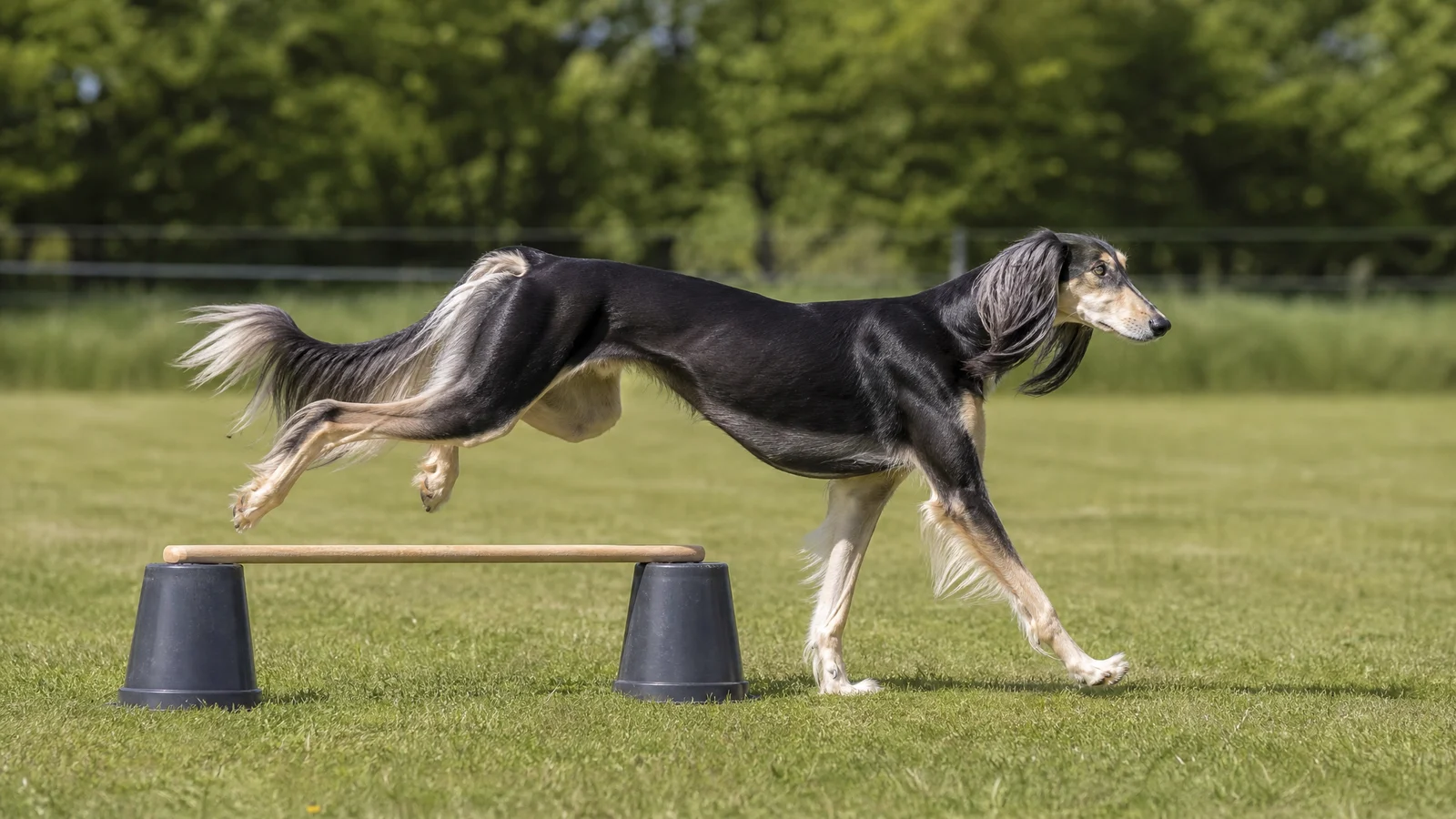
Lay a pole on the floor in front of a Saluki and watch where the eyes go. They skip the pole and settle on the far side, on the doorway or the window or whatever might move out there, and that long look is the habit this lesson builds on. A jump for this breed is best taught as a calm stride over something low with a treat after the landing, never as a leap for height, so everything below is about teaching that crossing well.
You will not raise the bar to find out how high your hound can go. The pole stays low, and the lesson stays a game of walking over it.
Read on for the space to set up, the stages in order with a fix for each one that stalls, and answers to the small questions that pop up mid-lesson, so you can teach the whole trick from this page.
A Long, Low Step Is the Point of Saluki Jump Training
Asking a long-legged sighthound to jump sounds like asking for height, so the first job is to say it is not. The trick we teach is a steady stride over a pole so low that your Saluki could step across it without trying, with a treat waiting once the landing is done. Nothing about it measures how high your dog can go, and nothing in it needs to.
Before you call any stage finished, look for three signs that the crossing is really there. They are easy to spot from across the room, and they apply whether the pole lies flat or sits just off the floor:
- An easy approach: your Saluki walks or trots toward the pole at an even pace, without speeding up or sneaking a look at the gap around the end.
- A clean crossing. All four feet clear the pole in one smooth step, with no tick on the pole and no scramble afterward.
- A settled landing that ends with a pause and a glance at you, so the treat arrives while your dog is calm instead of mid-bounce.
If all three are there, you have the whole trick, whatever the height of the pole. Any height added later is a bonus, never the goal.
Even a low pole is still a jump, so growth matters in a slow-maturing hound (our Saluki at six months guide shows how much changes). Regular vet visits are the time to ask whether your Saluki is ready for more. AKC guidance on jumping safely is that puppies shouldn't be asked to jump in extreme or competitive situations until they're at least 12-15 months old (or older for giant/slow-maturing breeds).
Set Up a Lane Your Saluki Can Use Without Thinking
A crossing looks effortless when the setup has done the work, so give the lane a few minutes before any treat comes out. Your Saluki will tell you quickly whether it was built well.
Choose a closed room with a straight run of floor and a surface that grips, such as a rug on a rubber pad or a yoga mat. A Saluki is tall and long in the leg, so leave room for several unhurried steps before the pole and a few after it, because a dog who lands with a sofa right there stops thinking about the lesson. Keep doors, gates and the fence line well out of the picture, since this is a game and a game does not belong beside an exit.
Use something light for the pole, such as a broom handle or a length of plastic pipe. Start with it flat on the floor, and later rest it on two low supports so it rolls off if bumped. A bump then costs your dog nothing, and a hound who learns that early stays relaxed. Keep small, soft treats and your marker word, a bright yes or a click, within reach.
The First Jump Stages Stay on the Floor
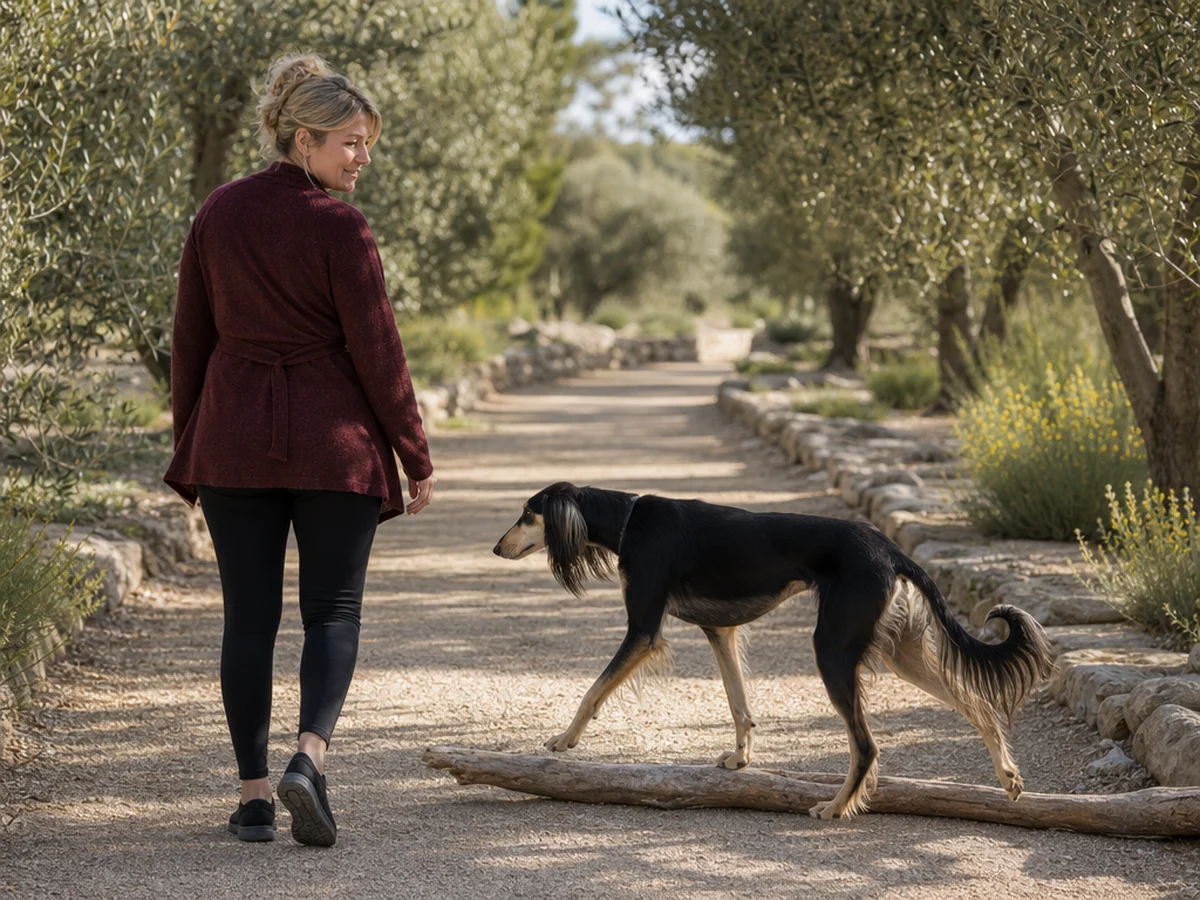
With the lane ready, the first two stages use no height at all, and each has a clear point where you move on. Spend your time here, because a Saluki who understands a pole lying flat makes every later stage easier.
Stage one teaches that stepping across the pole is how treats happen. The lure does the steering, and you walk beside the pole so your dog's path stays straight:
- Stand beside the pole near its middle with your Saluki at one end of the lane, and hold a treat at their nose in the hand closest to them.
- Walk slowly along the pole and let the treat lead your dog's nose, and then their feet, straight across it.
- Say your marker the moment all four feet are over, then feed the treat where they landed, not back where they started.
- Walk a small loop to begin again, and repeat from the same end until the crossing looks smooth.
Move on when your Saluki steps over smoothly several times in a row without searching for a way around. If they slip around the end instead, slide the pole against a wall or sofa so going over is the only easy route, and hold the treat low enough that the nose points at the floor beyond the pole.
Send Your Saluki to a Waiting Treat
Stage two takes the treat away from the nose. Stand on the far side of the pole with a treat in a still, low hand beside your leg, and wait while your Saluki walks across to find it. Mark as the last foot lands and feed at your side, so the pay always comes after the crossing, never before it.
Once that is easy, back away from the pole one pace at a time, and your dog crosses farther toward you without ever seeing a lure. If they stop and stare from the near side, step back toward the pole, show the treat for a moment and lower your hand beside it before trying again. A pause here is normal, while a rush toward your hand tells you to back up a pace and slow the next walk.
Raise the Pole, Then Teach a Saluki to Jump on Command
Once the floor stages are smooth, the pole can leave the floor by the smallest amount your dog still notices. The last stages change one thing at a time, so you always know which change a stall belongs to.
Rest the Pole Barely Off the Floor
Rest the pole on its low supports so it sits barely above the floor, then repeat stage one and stage two in that order, lure first and treat on the far side second. If a bump rolls the pole off, pay the next clean crossing as if nothing happened. If your Saluki hesitates, the change was too big, so lower the pole to flat again and pay the next few crossings generously before you try the supports a second time.
Trade the Lure for a Signal and a Word
This stage fades the lure and adds the cue, so start it only when your Saluki already crosses the raised pole without hesitating. Then work through four small steps:
- Hold your empty hand where the treat used to be, with the treat in your other hand behind you, and let your dog cross toward that hand.
- Mark as the feet land and pay from the other hand.
- Shrink the hand movement a little each time until it is a small point toward the far side of the pole.
- Say cross just as your dog starts to move, then point, mark and pay. When they move on the word before your hand does, drop the point and keep the word.
Move on when your Saluki crosses on the word alone with a quiet hand. If they look at the hand and wait, go back one step and shrink the movement more slowly, because the signal was fading faster than your dog could follow.
Carry the Cue Into New Places
Expect the crossing to look rusty in each new place, so lower the pole to the floor for the first few passes and build back up. A new room comes first, then a quiet corner of the yard, because the usual advice for a new trick is to begin in a distraction-free environment and move outdoors only once your dog has mastered it.
A fenced yard needs one more precaution, so keep the lane well away from the fence line. Plan the first visit as a harness-and-long-line outing, since some dogs can jump surprisingly high, and a secure, back-clip harness and long line are recommended the first time your dog explores a fenced space.
Odds and Ends From Saluki Jump Practice
Three practical decisions are worth settling before your next session: how long to practice, how long the pole should be, and where the word belongs. Each one affects how relaxed your Saluki stays.
How long should one session run?
Stop while your Saluki is still keen, which usually means a handful of crossings and a settled landing on the last one. A tired or bored hound starts drifting toward the window, and a short session you end yourself beats one your dog ends for you.
How long does the pole need to be?
Long enough that stepping around it takes more effort than stepping over, which on open floor is longer than most people expect. Against a wall or in a narrow hallway a shorter pole works because the wall closes one side, though a slippery hall floor needs a mat first.
Can the cue help with jumping up?
Keep cross for the pole only. A word that sometimes means step over this and sometimes means something about guests or counters will blur for a hound who likes to work things out for themselves, so give those habits their own lessons, starting with our Saluki counter manners guide.
Room to Stride Is the Real Teacher
Look back over the lane, the supports and the treat spot and one thing runs through all of them: room. A long-legged hound needs space to approach at their own stride and space to settle after the landing, and many of the stalls in this lesson trace back to one of those two being too short.
So when a stage goes wrong, walk the lane before you change anything about your dog. Add a stride or two at the front, clear the landing, and try again.
A Saluki who will cross a pole on cue is ready for plenty more, and our complimentary e-book sets out the rest of a sighthound's training needs, stage by stage, in clear everyday language.
 Training basicsIs a Saluki the Right Dog for You? What Training Takes
 Training basicsHow to Choose a Saluki Trainer
 Puppy trainingCrate Training Your Saluki Puppy, Step by Step
