 Saluki
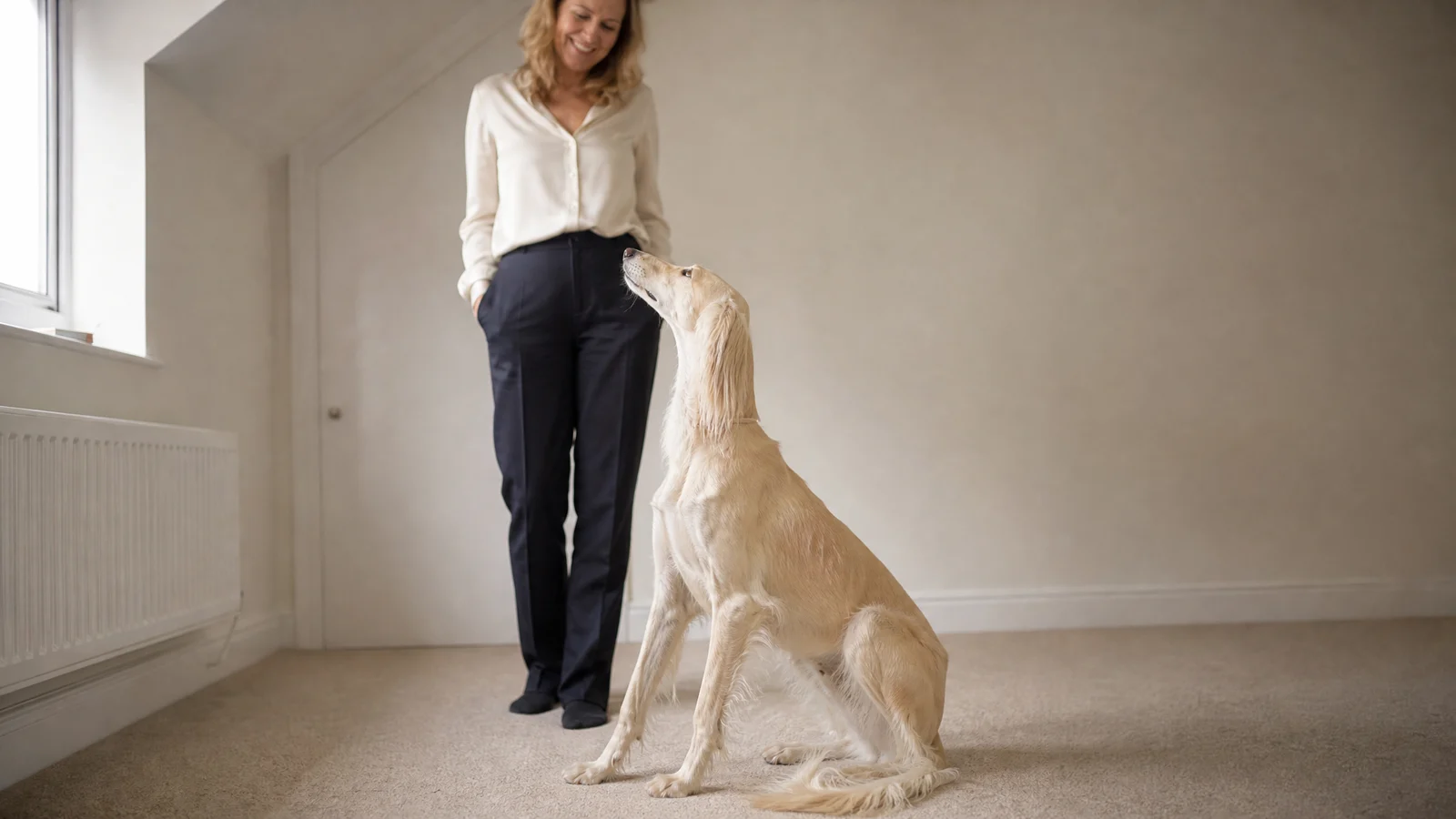
Call a Saluki's name from across the living room and watch the order of events. The ears turn first, the far-seeing eyes follow whatever just moved outside the window, and a moment later, maybe, the head comes around to you.
None of that is rudeness. It is an independent hound weighing what you offer against everything else in sight, including things you have not noticed yet. Focus training changes the weighing: you pay a Saluki for looking at you, and before long the look is the first thing they try. This guide builds that look in stages, from a quiet room to a busier world. Along the way it sorts out what to do when the look stalls.
Saluki Focus Is One Look, Paid and Released
The weighing only tips your way if the look is worth something, so it helps to be exact about what you are paying for. Focus, in this lesson, is a single voluntary look at you. The exchange has four beats:
- Your Saluki turns their head or eyes toward your face.
- You mark the moment with a short word such as "yes."
- A treat arrives.
- You release your dog to go back to the view.
That is the whole exchange, and it lasts about as long as a blink. It is not a stare. A Saluki is dignified and independent-minded, and a held gaze asks more of that temperament than most dogs are glad to give. Keep the look brief and the payment quick, and your dog learns that glancing at you is a good deal they can take or leave, which is exactly why they will take it.
The look also has a limit worth knowing before you start. Because a Saluki is always ready to chase anything that moves, the look is a request your dog can answer, not a brake. Fences and leashes handle safety, and focus sits on top of them.
Saluki Attention Training Starts in a Quiet Room
A look that has to compete with the window will lose, which is why the first lessons happen where nothing else is going on. Begin in a distraction-free place, because you will probably want to start indoors and move outdoors only once the behavior is learned. For a Saluki that means a quiet room with the blinds drawn and no other animals wandering through. Pay with something your dog truly wants, cut small enough to swallow fast.
Three Stages That Build the Look
Three stages build the look, and each one is worth leaving only when your Saluki does it smoothly several times in a row. Take them in order, even if the first one feels too easy.
- Catch the look. Sit with treats in a closed hand at your side. The moment your Saluki glances at your face for any reason, say your marker and pay, then let them look away again. You are not asking yet, only showing your dog that glancing at you is what makes a treat appear.
- Add the name, once: When your dog is looking elsewhere, say their name one time in a friendly voice. Starting with the name is a familiar move, since you might need to say your dog's name first to get their attention. If the head comes around, mark and pay. If nothing happens, make the next try easier instead of saying it again.
- Wait a beat before you mark once the name reliably brings the head around. Let the look settle for a moment, then say your marker and pay. Finish every round with a release word and a step away, so the look always ends on your terms and the next one starts fresh.
When a Stage Stalls
If your Saluki stalls at a stage, shrink the ask rather than repeating it: go back to the stage that worked, quiet the room and pay a little faster. A stall tells you the step was too big or the room too busy, not that your dog has decided against you. In our experience, the quiet room does more of this work than any treat does.
Rounds this small fit into any day, as in our Saluki puppy daily routine, and an adult hound's day has just as many gaps for them. End each round while your Saluki is still keen, so the next one starts with a dog who wants to play.
Saluki Focus Away From the Living Room
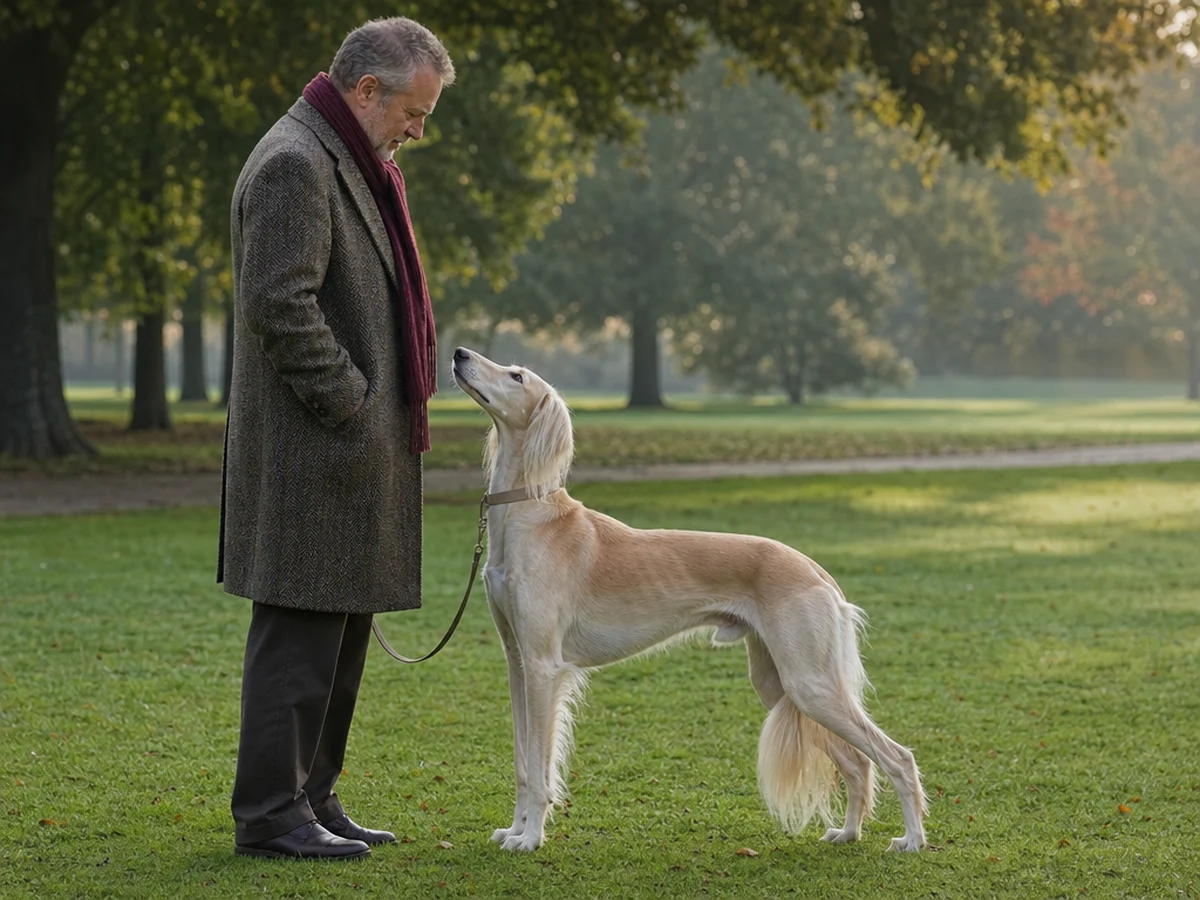
A look that is smooth in the living room is still a beginner's look, because the world your Saluki actually lives in is full of moving things. Distance is your main difficulty dial: a moving thing far away is easy to ignore for a moment, and the same thing close by is much harder, so change where you stand before you change anything else.
Training a Saluki to Look at You Near Toys
The first real distraction should be a dull one. Step-by-step distraction practice starts easy, with a toy your Saluki is not particularly fond of placed a few feet from a leashed dog, and a treat for the moment they look back at you. Notice what that pays for: your dog chose you over a toy, and the choice is the lesson.
Safety stays on top of the lesson. Practice on a leash or inside secure fencing, because a hound who is always ready to chase may not stop to weigh a treat once something bolts.
Raising the Difficulty One Step at a Time
Once the toy is easy, raise the difficulty by changing only one thing at a time. The order below suits most households.
- A busier room. Another room of the house, with family moving through.
- A quiet outdoor corner: The fenced yard at a calm hour, or a leashed spot away from traffic.
- A sidewalk at a calm hour with a loose leash and generous distance from anything that moves.
When looks start to wobble at any step, the step was too big, so return to the last place where it worked, add distance and pay faster. If new people are the hard distraction in your house, our guide to socializing a reserved Saluki puppy goes deeper on that side. A sudden change in how your dog responds to food or to you is worth mentioning at a regular vet visit.
Setup Snags That Stall Saluki Focus
When a session stalls, setup is the first thing to change, and three setup questions are worth settling before you blame the dog. Each answer below is short on purpose.
Can I say their name more than once?
Say it once, then give your dog a few seconds to answer. Repeating it adds nothing the first try did not, so make the next attempt easier instead: stand closer, quiet the room or wait until your Saluki is less busy.
Where should I stand near a window?
Put yourself between your Saluki and the glass, or turn your dog so the view is behind you, and you become the most interesting thing in front of them. If the window still wins, practice in another room until the look is easy, then bring the window back later as a distraction step.
What if they have already locked on?
Do not expect a look to beat a locked-on stare at something that moves. Walk calmly away from the target with your dog on a loose leash, and ask for the look only once the distance makes it easy. Treat that moment as a reminder about distance, not a failed lesson.
Focus Is the Smallest Job for a Hound Who Wants Work
A Saluki's mind wants work as much as their legs want a sprint, and a hound without a job tends to invent one at the window or the fence. A check-in is a job small enough to give anywhere: in the hallway, at the gate, at the start of a walk.
It takes a moment, it pays at once, and it asks nothing your dog's dignity cannot spare. Hand it out often and it stops feeling like a lesson and becomes one more ordinary thing your Saluki does for the people they live with.
Every job still ahead for a hound who wants work gets its turn in our e-book, a gift that finds its way to your mailbox once you hand us your address, with every detail worked out and no jargon in the way.
 Training basicsClicker Training a Saluki
 BehaviorSaluki Leash Reactivity: What Helps
 BehaviorHow to Stop a Saluki Pulling on the Leash
