 Saluki

The AKC describes the Saluki as dignified, gentle and independent-minded, and the UKC standard adds that they are reserved with strangers but never shy or aggressive. Live with one for a week and you see exactly that: a quiet, soft-footed dog who watches a new visitor from across the room, leans a narrow shoulder against the people they love, and decides in their own time whether a cue is worth following.
That temperament is a pleasure and also easy to mismanage. A fast, independent dog who is bored in a poorly fenced yard will invent entertainment, and the usual results are chewed furniture and a dog who has vanished over the fence. Below, you'll find house rules for guests, cues, socializing, closeness, barking and boredom, including what a settled adult looks like once the slow years of maturing are behind you.
Let a Saluki Be Reserved With Strangers
Reserved is the word the standards choose, and it pays to take it literally. A Saluki will often stand back from a visitor, watch for a while, accept a touch on their own terms, and then drift to a favorite spot as though nothing had happened. This is not fear or hostility. The breed is described as never shy or aggressive, and viciousness or extreme shyness is a disqualification in the show ring, so a calm, watchful distance is the normal healthy picture.
The breed's openness-to-strangers rating sits in the middle at 3 of 5, labeled ambivalent, and in your hallway that means a dog who neither mobs the guest nor hides from them. Protect that neutrality instead of trying to turn it into enthusiasm. Pushing a reserved dog to greet everyone is common advice, and we think it backfires, because a dog who is crowded learns that strangers are people to get away from.
The watchdog rating is only 1 of 5, so do not expect your Saluki to announce or screen visitors. They simply observe. That makes one rule for guests cover nearly every situation: the dog sets the distance and the visitor follows it. In practice that looks like this:
- Ask guests to ignore the dog at first, with no reaching over the head, no hugging and no direct stare, so the Saluki can approach when ready.
- Give the dog a bed or crate as a retreat that guests never enter, and introduce it with treats so it always feels like a safe place.
- Let visitors toss a treat near the dog without looking, and reward every step the dog takes toward them.
- Praise and treat quiet behavior at the door, so the arrival of company predicts good things.
A patient guest is usually rewarded with a Saluki who ends the evening lying near their feet.
Independence Is Not Disobedience in Saluki Temperament
The standards pair intelligent with independent, and those two words explain more about training than any list of cues. The breed's trainability rating is 3 of 5, labeled agreeable rather than eager to please, which means a Saluki usually understands your request well before deciding whether it is worth the effort.
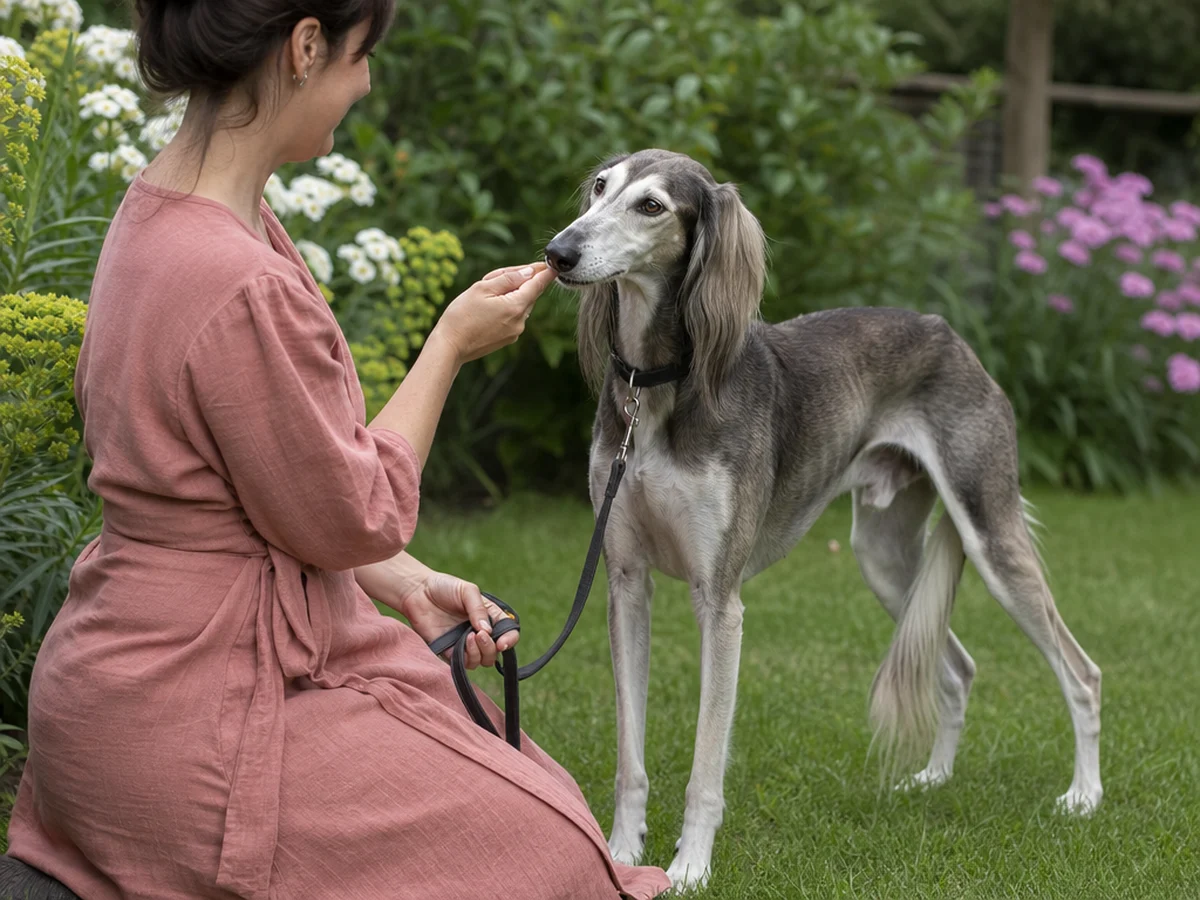
That is a question of motivation, not defiance, and it changes how you respond to a slow answer: you make the answer more rewarding instead of repeating yourself louder.
Short sessions, treats the dog truly loves, a moment of play, and a clear marker word at the instant they get it right will carry a Saluki further than repetition ever will, because a thinking dog tires of drills quickly. Timing matters too, so rewarding immediately after the behavior keeps the connection obvious. Stop while the dog is still keen, and the next session starts with enthusiasm rather than negotiation.
House Manners Within Reach
Basic obedience builds the manners that make a household calm. Sit, wait, settle on a mat and a polite pause at doorways can all be taught gently and kept up with small rewards. If your dog seems reluctant to sit, reward a down or a stand instead and move on. Practice in the rooms where the behavior matters, because a settle taught in the kitchen does not automatically carry to the front hall.
Recall Stays Conditional
What you should not expect is a recall that holds under temptation, because a Saluki is always ready to chase anything that moves. Treat reliability as conditional, keep walks on a leash, and allow running only in a secure fenced space. Reward every check-in you get on walks, even a glance, so the habit of looking back at you grows. Patience and consistency are the real tools here, and they pay off in a dog who cooperates because the arrangement suits them.
Does a Reserved Temperament Need Socializing?
It does, and gently. Quiet dogs are the easiest to under-socialize, since they cause no trouble while they are avoiding things, and a reserved nature can slide into wariness if nothing new ever happens.
The breed's adaptability rating is a moderate 3 of 5, so new people, surfaces and noises are not automatically easy for a Saluki. Aim for many calm, short, rewarded experiences rather than one overwhelming crowd, and let the dog leave a situation whenever they want to.
People, Children and Other Pets
Start with one calm adult at a time, keep visits brief, and pay the dog for staying relaxed. Handling belongs here as well, because Salukis started young can learn to hold still for nail trimming and daily teeth brushing, and our guide to grooming and handling practice walks through the steps. Children and other dogs both rate 3 of 5, meaning with supervision, and supervision should be a plan rather than a hope.
With children, teach them to move slowly, never to chase, grab or hug, and to toss a treat on the floor instead of reaching over the dog's head. Give the dog a bed they may always retreat to, and end any interaction while it is still going well.
With other dogs, meet on neutral ground with leashes on and choose calm partners. Cats and other small animals deserve extra care, since quick movement can trigger the chase, so use gates, separate rooms and rewarded calm at a distance.
Places and Everyday Sounds
Take your Saluki to quiet streets, patios, friends' porches and the car, always on a leash, and reward curiosity with treats. Keep each outing short enough that the dog is still comfortable at the end. Because Salukis are slow to mature, repeat these experiences through adolescence instead of treating socialization as finished at a certain age.
Deep Family Affection Sets the Tone for Temperament
Affection with family is rated 5 of 5, the lovey-dovey end of the scale, and it shows in a particular way. The same dog who ignores a stranger will follow you from room to room, lean on your legs and settle where they can see you. That closeness is a gift, but it asks for a few decisions in advance, because a dignified dog on a soft couch becomes a habit very quickly.
Decide about furniture before the first week is out. If the couch is allowed, make it an invitation with a cue and reward the dog for waiting to be asked, and if it is not, offer a comfortable bed in the same room so the closeness is not lost. Either rule works provided the whole household agrees, because mixed messages are what make an independent dog stop listening.
Teaching Alone Time
Alone time is the other half. A dog this attached to family needs to learn that departures are boring and returns are reliable, so build absences in small steps, pair them with a chew or food puzzle, and keep arrivals calm. Crate training helps for the times a dog needs safe confinement at home or while traveling, and a good run beforehand helps even more, given the breed's energy rating of 4 of 5.
The body can offer clues too. In adults the tail is not carried above the line of the back except in play, so a tail carried high is most often seen during a game.
Will Saluki Barking Become a House Problem?
Probably not, though it depends on what is going on in the dog's day. Barking sits at 3 of 5 on the breed's scale, labeled occasional, and the watchdog rating is only 1 of 5, so the Saluki is not built to announce every footstep. Most noise has another cause, and finding the cause is most of the fix.
The usual triggers are boredom, being left alone, excitement during play, and movement outside a window, which matters for a breed that watches the horizon. Battersea notes that for boredom barking, mental stimulation such as scent games and puzzle feeders helps, and that advice fits a dog who needs a job. Add short training sessions to the mix and the barking often fades without further effort.
For window barking, manage the view with film on the lower panes or by rearranging furniture, and reward the dog for glancing outside and then looking back at you. For barking you want to quiet, mark the first second of silence and treat, then slowly lengthen the wait. If play gets noisy, pause it briefly and restart once they settle, so they learn the fun resumes with quiet.
A Bored Saluki Makes Up Their Own Rules
Salukis can be escape artists or destructive chewers when bored or unhappy at home, and the rating for mental stimulation explains why: it is 5 of 5, labeled needs a job or activity. A dog with energy at 4 of 5, hindquarters built for galloping and jumping, and a mind that wants a purpose will find a use for the day if you do not provide one.
Fencing and Escape Attempts
Fencing is the first line of defense. These dogs love to run and need a well-fenced yard to stay safely away from traffic, so check the fence line often for gaps, low spots and places where a determined dog could dig or climb. Supervise yard time rather than treating the yard as a babysitter. For escape attempts, redirect calmly to a game or a cue, reward them for coming back to you, and shorten unsupervised time outside while you fix the weak point.
Digging and Chewing
Digging responds well to a designated spot, such as a sandbox with treats buried in it, which you reward them for using. Chewing is solved by supply and routine. Safe toys and chew-bones are a must, rotated so they stay interesting, and a chew offered when the dog is most restless, such as while you cook or get ready to leave, prevents most damage.
A Daily Structure That Works
The common advice to simply tire a hound out misses the point, because a physically tired Saluki still wants something to think about. Daily structure might look like this:
- A leashed walk with time to sniff, plus off-leash running only inside a secure fence.
- A short training session or two, ending with a favorite treat.
- A scent game or food puzzle each day, so the brain works as hard as the legs.
- A safe chew and a settle on the mat when the house goes quiet.
What Saluki Temperament Looks Like at Five
Salukis mature slowly, and the breed's own code of ethics holds that a dog's true quality is hard to judge until around two years old. Until then, expect an adolescent who swings between dignified and goofy, who may seem to forget cues they knew last month, and who still needs the same patient, reward-based handling. Treat that stretch as part of the process rather than a verdict on the adult you will have.
What arrives on the other side is a calm, devoted and independent adult who keeps their character. Indoors they are quiet, often sleeping in the spot with the best view of you. Outdoors they remain a chaser, so the fence, the leash and a recall you never rely on completely stay part of life, and with strangers they remain reserved, polite and unhurried.
Keep the structure that got you there: mental work every day, safe chews, handling practice and regular veterinary visits to track health as they age. The house rules in this article are not a phase. They are the lasting arrangement between you and a dog who gives affection deeply but on their own schedule, and who asks in return for a secure yard and a little purpose each day.
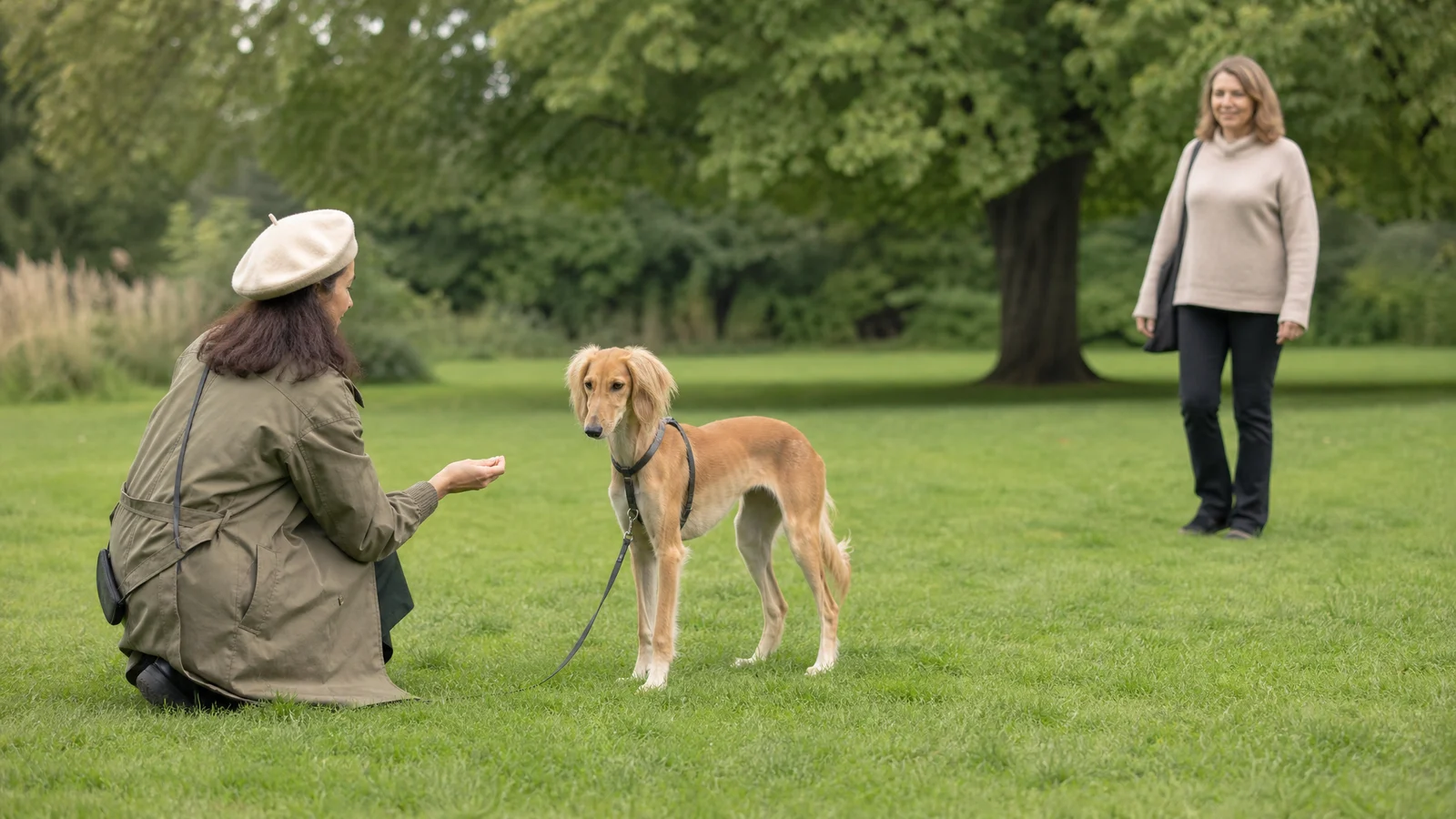 Puppy trainingSocializing a Reserved Saluki Puppy Without Pushing
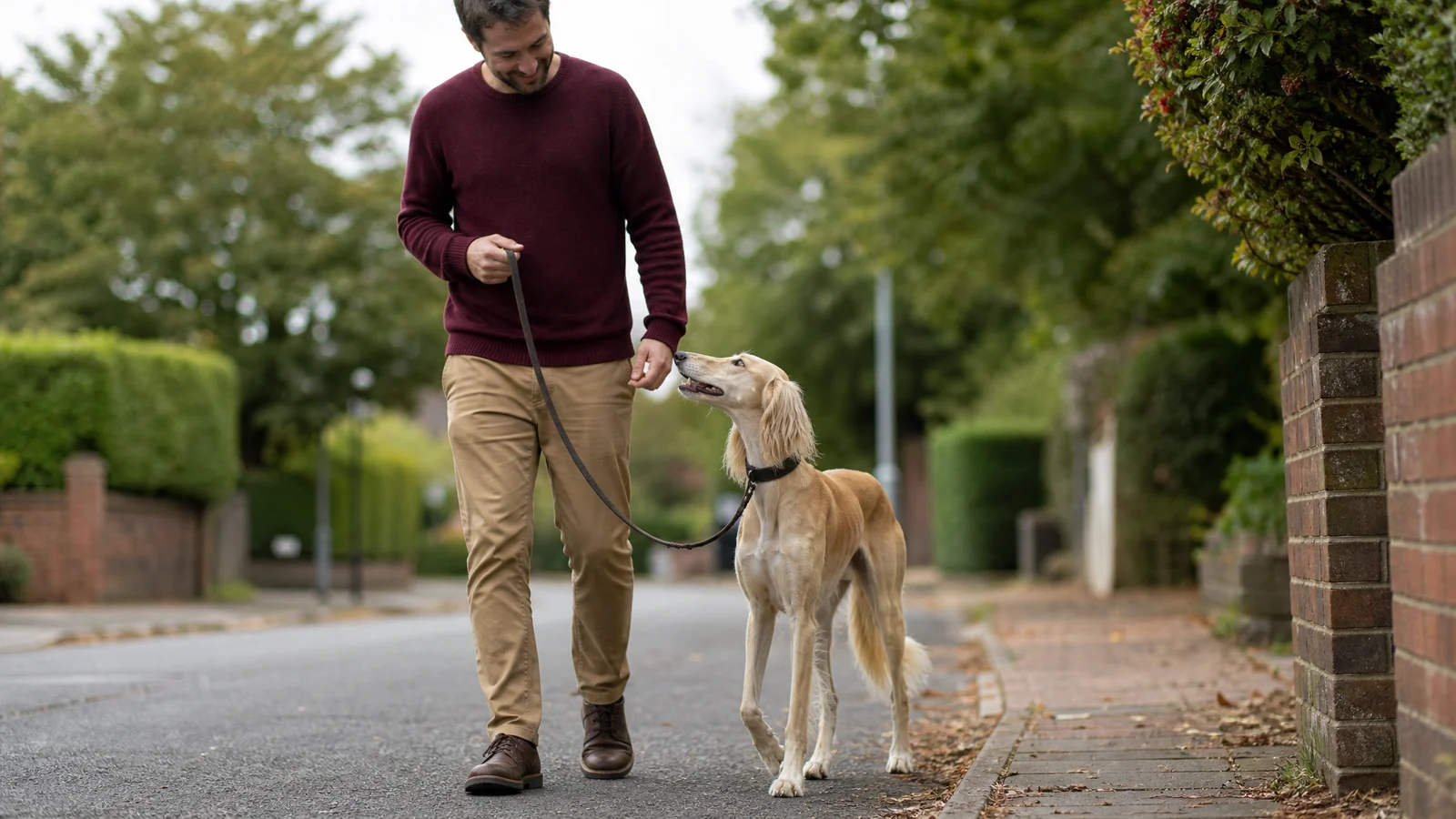 Puppy trainingTraining Through Adolescence: A Slow-Maturing Hound
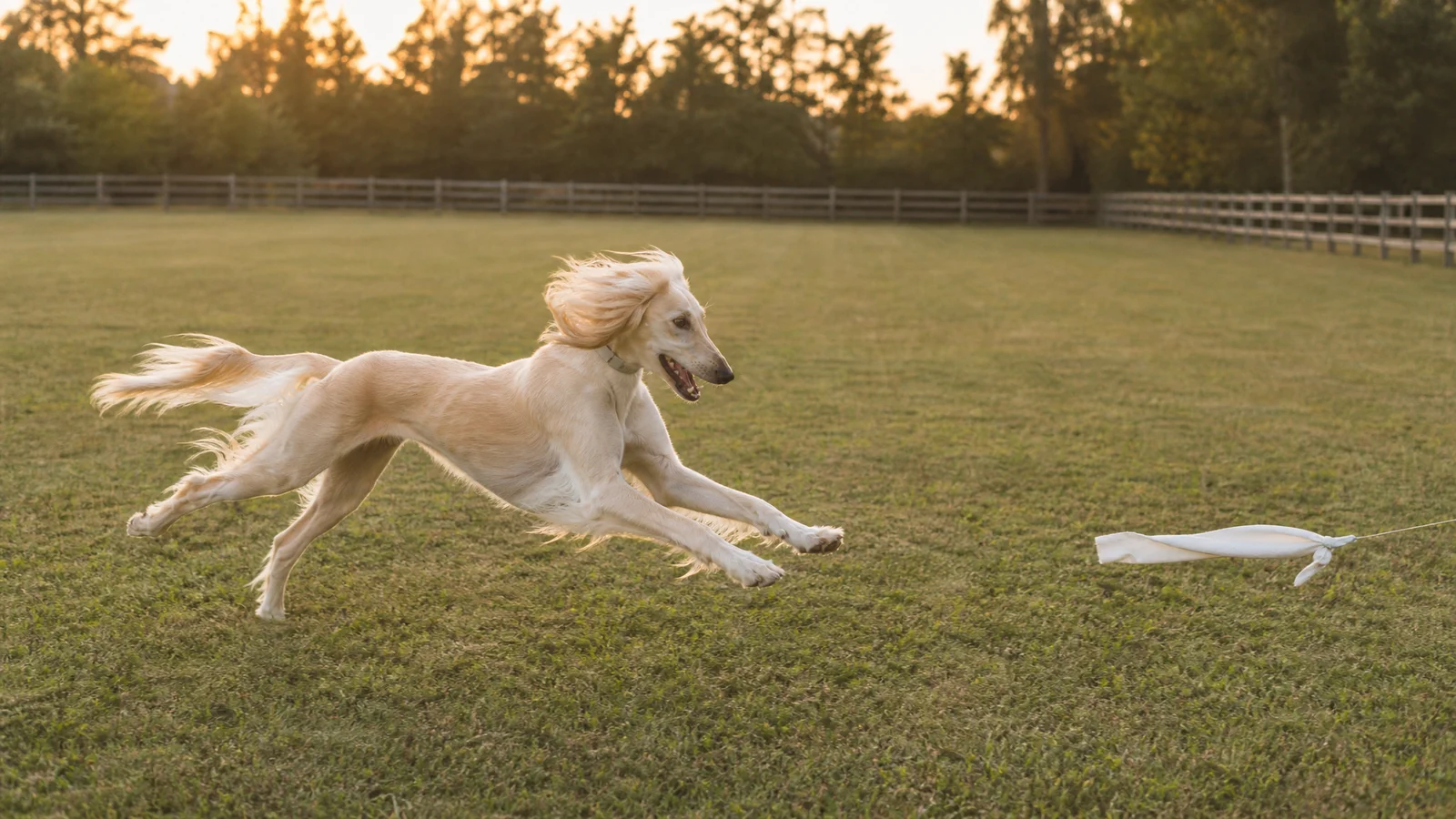 Exercise and jobsSafe Ways to Let a Saluki Chase What They Spot
