 Saluki
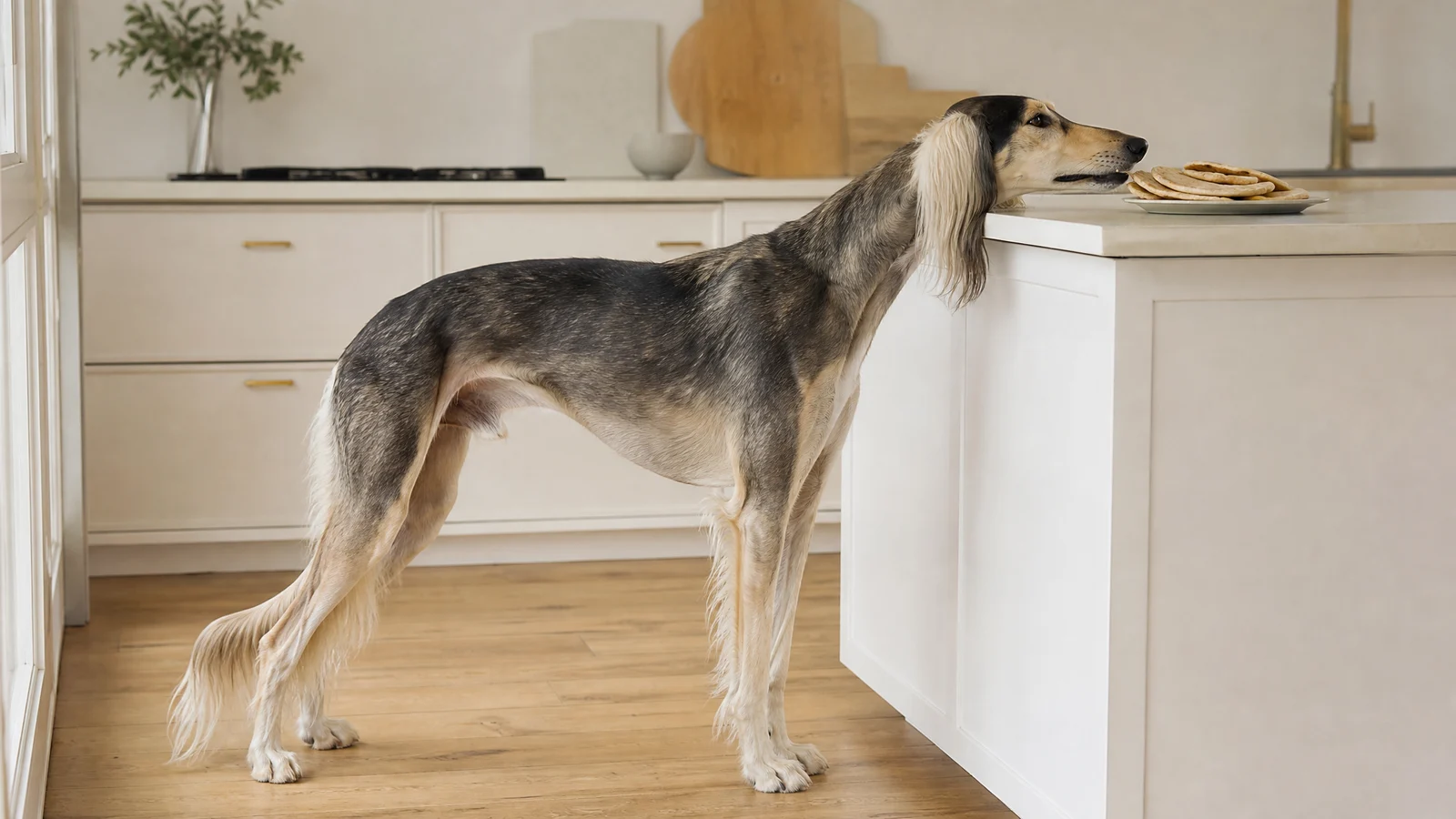
A counter keeps paying long after a person says no. One forgotten sandwich, cooling pan or dropped scrap can reward the Saluki for checking the surface, and the hound's reach makes a quick inspection easy. The solution begins with changing what the kitchen offers, not testing willpower beside exposed food.
This guide methodically resets the whole kitchen room, teaches a station and rewards four paws on the floor before everyday cooking becomes difficult. We add food in controlled layers, handle mistakes without a chase and give every household member the same routine. A late progress table shows exactly when safer kitchen manners are ready for more carefully supervised freedom during ordinary family meals.
Why Stealing Food Off the Counter Keeps Paying
Clear every reachable surface before training starts. Put food away, wipe preparation areas and move bowls, wrappers and utensils that carry scent. A clean counter prevents the Saluki from rehearsing the exact behavior the household wants to reduce.
The kitchen reset should include the edges people overlook. Work around the room in one direction so nothing remains available by accident:
- Push cooling food fully out of reach or place it behind a closed door.
- Store bread, fruit and treats inside cabinets rather than decorative bowls.
- Move chairs and stools that provide a step toward an island or counter.
- Use a gate when nobody can actively supervise the room.
- Give children a separate place to carry and eat food without the dog following.
The PDSA habit overview explains that repeated scavenging behavior can be maintained by habit, hunger, stress or boredom. Counter surfing has its own context, but the training lesson is useful: remove repeated payoff while examining the routine around it.
Management is not temporary housekeeping performed only during lessons. Keep surfaces empty between sessions too. A single unattended success can make the next week of clean counters less convincing.
Watch where food travels before reaching the counter. Grocery bags on the floor, a child's snack on a chair and a plate beside the sink can maintain the same search pattern. The reset covers the whole route through the room.
A Saluki Station Before Stealing Food Off the Counter
Choose a mat outside the main traffic lane but within view of the handler. The Saluki should not be placed where a cabinet door, hot pan or person carrying food will crowd them. Begin when the kitchen is quiet and empty.
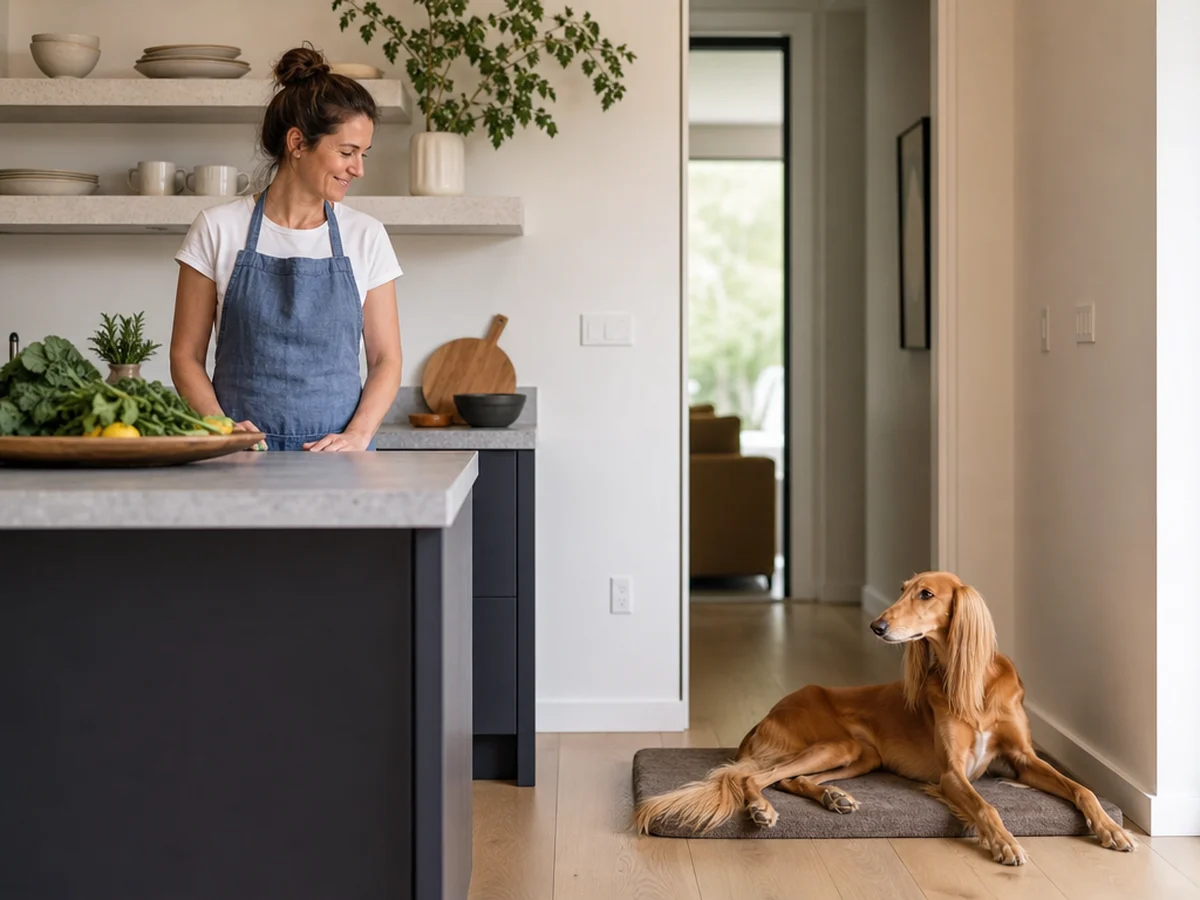
Mark any voluntary step onto the mat and deliver the reward low on its surface. Add a release cue after several easy repetitions. The station becomes a place where staying pays and leaving has a clear signal.
Build duration through frequent delivery rather than asking the dog to wait through an entire meal. Feed, pause briefly and feed again while the body remains loose. Release before the Saluki decides to inspect the counter.
Practice sending to the mat from several doorways. Real kitchen entries do not begin from one training mark, so the Saluki should learn the destination from the hall, dining area and center of the room.
Keep the release from becoming a race to the surface. Clear all food, pause, then release toward the room exit or another quiet activity. If the dog runs to inspect, shorten the next station period and improve the transition.
The site's Saluki house rules provide a wider framework for consistent spaces. The kitchen station should fit those rules instead of becoming a special command used only when food is already exposed.
Floor Rewards Replace Stealing Food Off the Counter
Notice the behavior before a jump begins. Mark the Saluki for standing with four paws on the floor, turning toward the handler or choosing the mat. Deliver the reward away from the counter so the next repetition starts in a useful position.
Do not wait with food exposed until the dog fails. Set up an empty plate, reward floor choices and remove the plate while attention is still available. The handler controls the difficulty instead of reacting after the hound reaches the surface.
Vary the person's movement before changing the food. Open a cabinet, carry an empty bowl and wipe the counter while rewarding the station. Ordinary kitchen motion should become boring before scent and visible food are added.
Reward spontaneous choices outside formal lessons. If the Saluki walks through the kitchen and keeps four paws down, quietly mark and pay away from the surface. Daily reinforcement helps the new habit exist without a visible setup.
Saluki Food Layers Without Stealing Food Off the Counter
Begin with food sealed in a container and positioned far back. Cue the station before bringing it into the room. Reward the Saluki on the mat, remove the container and release the dog after the surface is clear.
Next, use a low-value item on a plate for only a moment. If the dog leaves the mat, cover or remove the food and make the next repetition easier. The consequence is loss of access, not a confrontation.
Increase one feature at a time: stronger scent, a position nearer the edge or longer preparation. Never change all three together. A successful easy step gives more information than a difficult test followed by repeated jumping.
VCA behavior guidance describes replacing an established scavenging sequence with a return-and-reward habit. In the kitchen, the station and floor choices become that new sequence. Practice them before the old route to the counter starts.
Mix easy repetitions into every session. After one scented item, return to an empty plate or sealed container. The Saluki learns a stable station behavior instead of facing a staircase that only becomes harder.
Cooking Without Stealing Food Off the Counter
Cooking adds heat, sound, dropped ingredients and people moving in several directions. Use the gate for real meals until quiet practice is strong. Training should never place the dog near hot cookware or force the handler to divide attention dangerously.
Start with a simple cold preparation. Send the Saluki to the mat, reward several times, complete one short task and clear the counter before release. Gradually add another action as the dog remains settled.
Keep a container of station rewards away from the preparation food. This avoids reaching over the dog or feeding from the counter edge. The delivery path should always pull attention toward the mat.
If guests or children enter, end the training layer and use management. A busy meal is not a proofing session. The goal is a safe household routine, not a demonstration under the hardest conditions.
Plan a resting activity after the short cooking practice. The dog can move behind the gate with a suitable enrichment item while the meal continues. This preserves safety without asking the station to carry an unrealistic duration.
Mistakes While Stealing Food Off the Counter Declines
If the Saluki reaches the counter, secure the food and guide the dog away with the practiced station cue. Do not chase through the room or grab at food in the mouth unless immediate safety requires intervention. Excited pursuit can add attention to an already rewarding event.
Afterward, identify what changed. Food may have been closer, the gate absent or the handler occupied. Repair the setup before the next repetition rather than asking the dog for a harder version immediately.
The PetMD learning discussion notes that punishment around scavenging can create unhelpful avoidance patterns. Keep the kitchen response focused on preventing access and rehearsing the paid station behavior.
Log the missing management layer in a sentence, then move on. A brief factual note prevents frustration from turning into a story about stubbornness and gives the family one concrete repair for the next meal.
Share Counter Rules Across the Household
Write the routine in plain steps and place it inside a cabinet. Food is stored, the gate closes when supervision ends, the Saluki goes to the mat before preparation and the surface is cleared before release. Everyone uses the same station and release cues.
Plan for groceries, parties and takeout. Put the dog behind the gate before bags enter, then unload and clear packaging before beginning a short station practice. Unusual meals create more exposed food, so they need more management rather than higher expectations.
Agree on how food scraps are handled. Plates go directly into a closed dishwasher or cleared sink, and trash remains inaccessible. The routine continues after eating because cleanup can be the most rewarding part of the evening for a searching hound.
The site's Saluki household barrier plan shows how handoffs remain clear across family members. Kitchen management uses the same principle: responsibility is explicitly transferred before a barrier opens.
Measure Stealing Food Off the Counter Less Often
Review observable choices rather than waiting for a stolen item. Progress appears when the Saluki enters and chooses the mat, stays on the floor as an empty plate moves and returns to the station after release.
| Practice result | What to do next |
|---|---|
| Chooses the mat before food appears | Reward and repeat the same preparation |
| Stays down but watches the edge closely | Keep the food farther back and shorten the task |
| Leaves the mat as scent increases | Return to a sealed container or use the gate |
| Settles through several familiar actions | Add one new cooking movement next time |
Keep regular veterinary visits and discuss a sudden major increase in appetite or scavenging with the veterinarian. Training can change access and habits, while a new physical concern needs appropriate assessment.
Compare one practice feature at a time. If the Saluki succeeds with a stronger scent but not longer duration, keep the scent and shorten the task. Specific comparisons prevent the household from raising every demand after one good meal.
Make Saluki Counter Manners the Default
Continue paying the station during ordinary cooking even after the counter checks decline. Rewards can become less frequent gradually, but clean surfaces and barriers remain part of the household. The Saluki learns that floor choices lead to good outcomes while the counter never produces a private prize.
Success is not proved by leaving food at the edge and walking away. It is the quieter pattern built across daily meals: people manage the room, the dog has a clear place to be and an occasional mistake sends the household back to an easier setup rather than into conflict.
 Puppy trainingSalukis at 6 Months: Wobbly Confidence and Rewards That Still Work
 Training basicsAre Salukis Good With Kids?
 BehaviorHow to Stop a Saluki Barking
