 Saluki
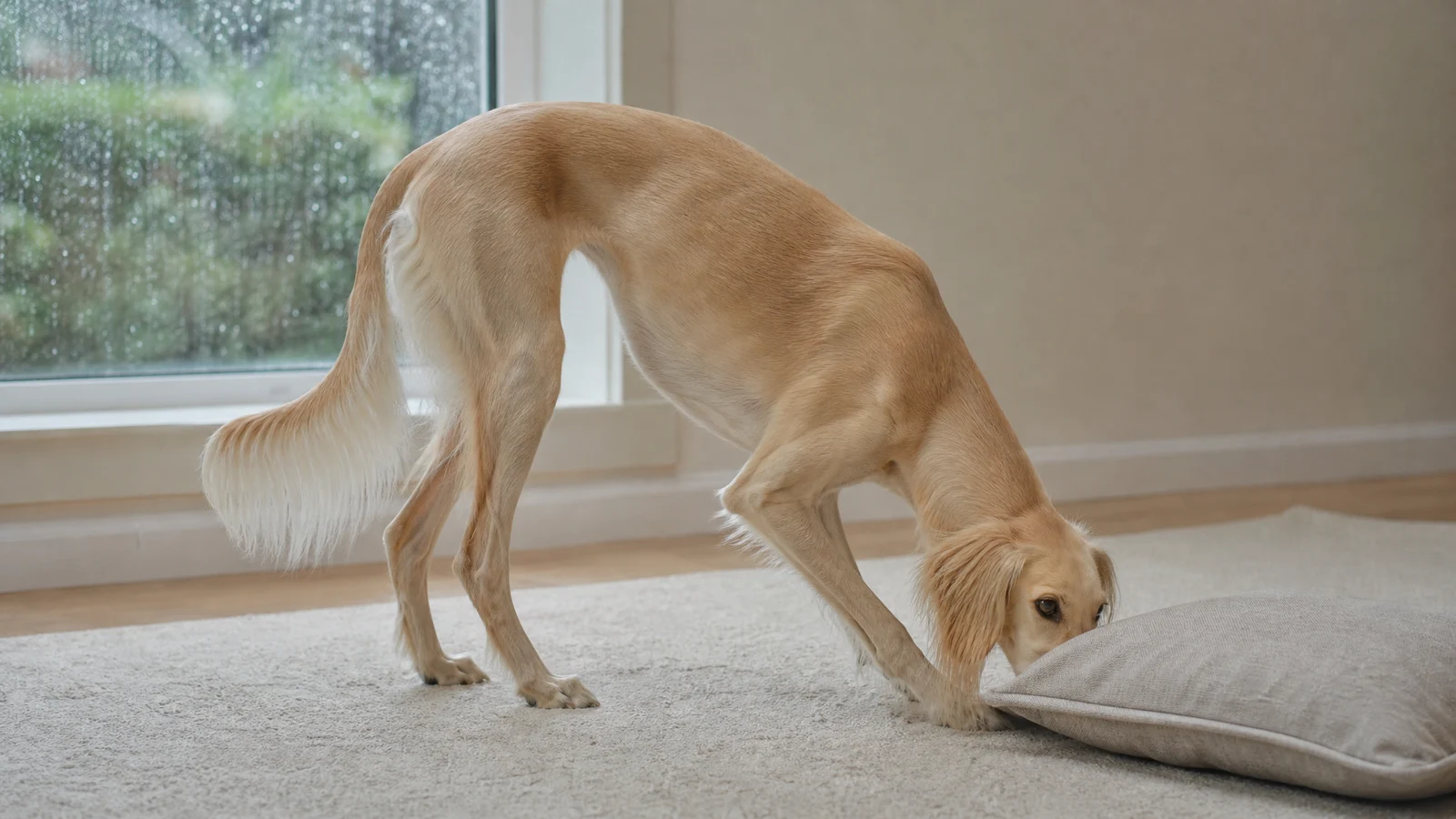
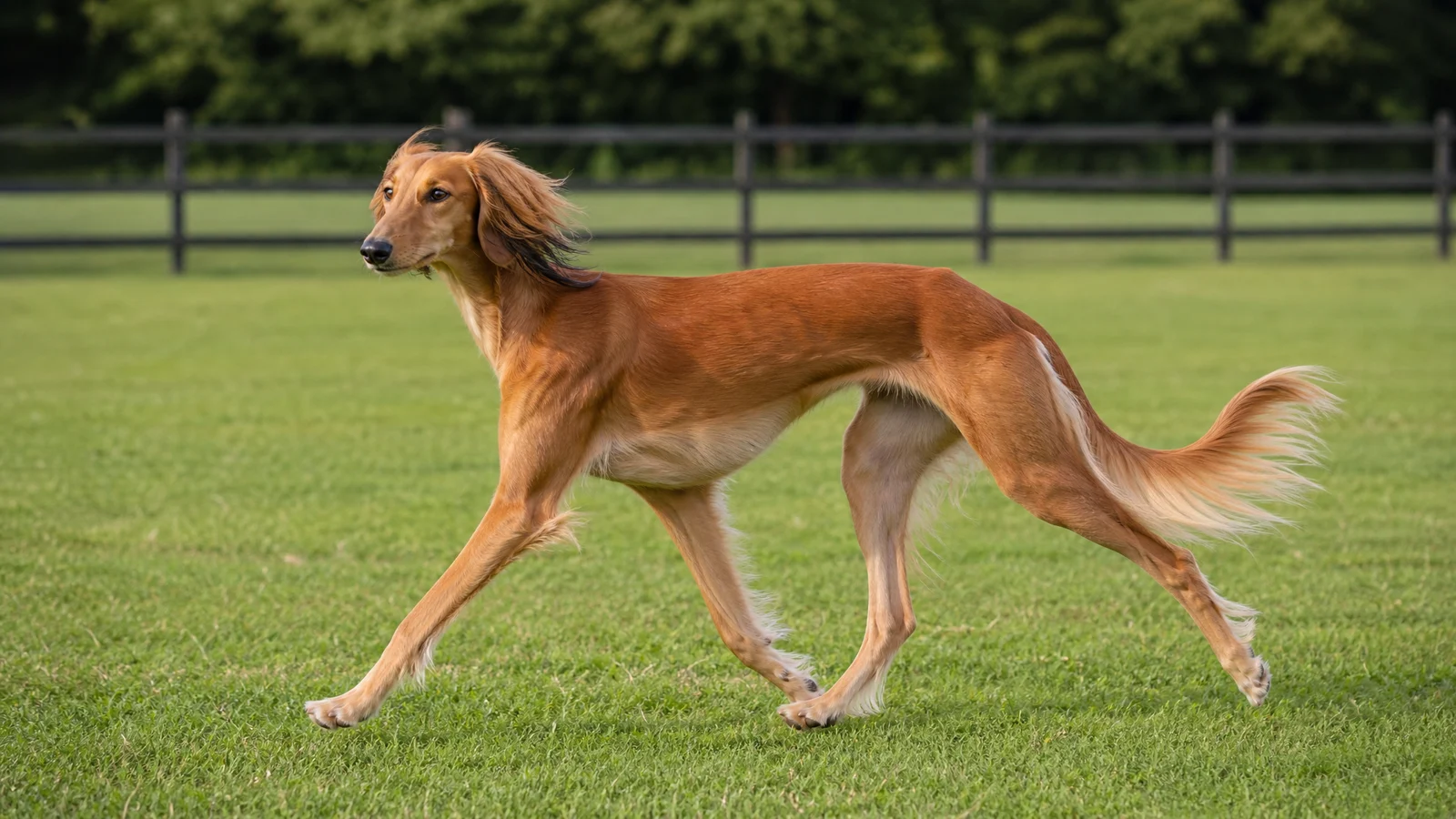
A Saluki on the sofa is rarely as asleep as they look. The eyes keep working at the window long after the body has settled.
That watchfulness tells you what a good day inside has to give them. A hound who is always ready to chase whatever moves does not need a faster game in the living room, and a bored one can turn to chewing or escape attempts. What suits them better is quiet work for the nose, because a scent search puts the head down, slows the pace and asks nothing of the legs, so the room stays calm for everyone in it.
Below you will find a first game taught in four stages, a few puzzle meals made from kitchen odds and ends, a safe way to set the room up, and short answers to the small details that usually decide whether a game works.
Why Indoor Hours Need a Job for a Watchful Hound
A calm Saluki is not always a satisfied one, and the gap shows up when nobody is looking. Left with nothing to think about, an independent-minded hound will find a project of their own, and the projects a house offers are the furniture and the gate. A search game hands that mind a better one, and next to a chase it has three things going for it.
- Eyes down. A search turns a dog who scans the horizon toward the floor, so the sighthound habit of watching for movement gets a rest.
- No sprint required: the dog works at a walk, which keeps a fast hound's speed away from table legs and glass.
- The dog sets the pace because the nose decides when a find is finished, so an independent hound gets to work in the way they prefer.
Put together, those three give a hound the thinking work they need while the legs stay quiet, which is why everything else on this page builds on the nose and never asks the dog to race.
Building a Find It Cue for Salukis
A nose game starts with a word, because a Saluki who knows what the game is called can begin it from across the room. Say find it in the same relaxed voice just before every reward, and the two words soon mean that a treat is waiting somewhere on the floor. Move up a stage only when the current one goes smoothly.
- Toss it close. Say find it, then drop one treat a step or two in front of your Saluki while they watch. Add a little praise when they walk over and eat, and repeat until they turn toward the floor the moment they hear the words.
- Hide it in plain sight: set the treat on the floor a little farther off or beside a chair leg, say find it and let your Saluki walk to it. Make the spot slightly less obvious each time.
- Take the hide out of sight by having a helper wait with your Saluki in another room while you tuck a treat behind a table leg. Bring them back, say find it and stay quiet while the nose works.
- Use open boxes. Lay out several open cardboard boxes, put a smelly treat in a few of them and let your Saluki sort it out, eating each find where it sits so the search pays for itself.
Keep every hide low, on the floor or in a low box, and never on a counter or table. A search that rewards sniffing at counter height would teach the very habit our Saluki counter manners guide works to undo.
When a Saluki Stalls
An independent-minded Saluki may stand and watch you instead of searching, and we see that as a sign the stage is too hard or the reward too ordinary, not a sign the game is wrong. Go back one stage so the next find comes easily, switch to a smellier treat and shorten the round. A win that arrives quickly is what makes a hound willing to try the harder version later.
Making the Boxes Harder
Once open boxes are a pleasure, change one thing at a time. Close the flaps loosely, raise one box slightly off the floor, or nest a small box inside a bigger one.
Beginner nose work often starts with a favorite treat hidden in boxes, and virtually any dog can do it, including dogs who cannot take part in more vigorous exercise because of age or physical limitations. Offer water between rounds, and let your dog rest whenever they like, since they do not have to find every treat first.
Rainy Day Saluki Activities From the Recycling Bin
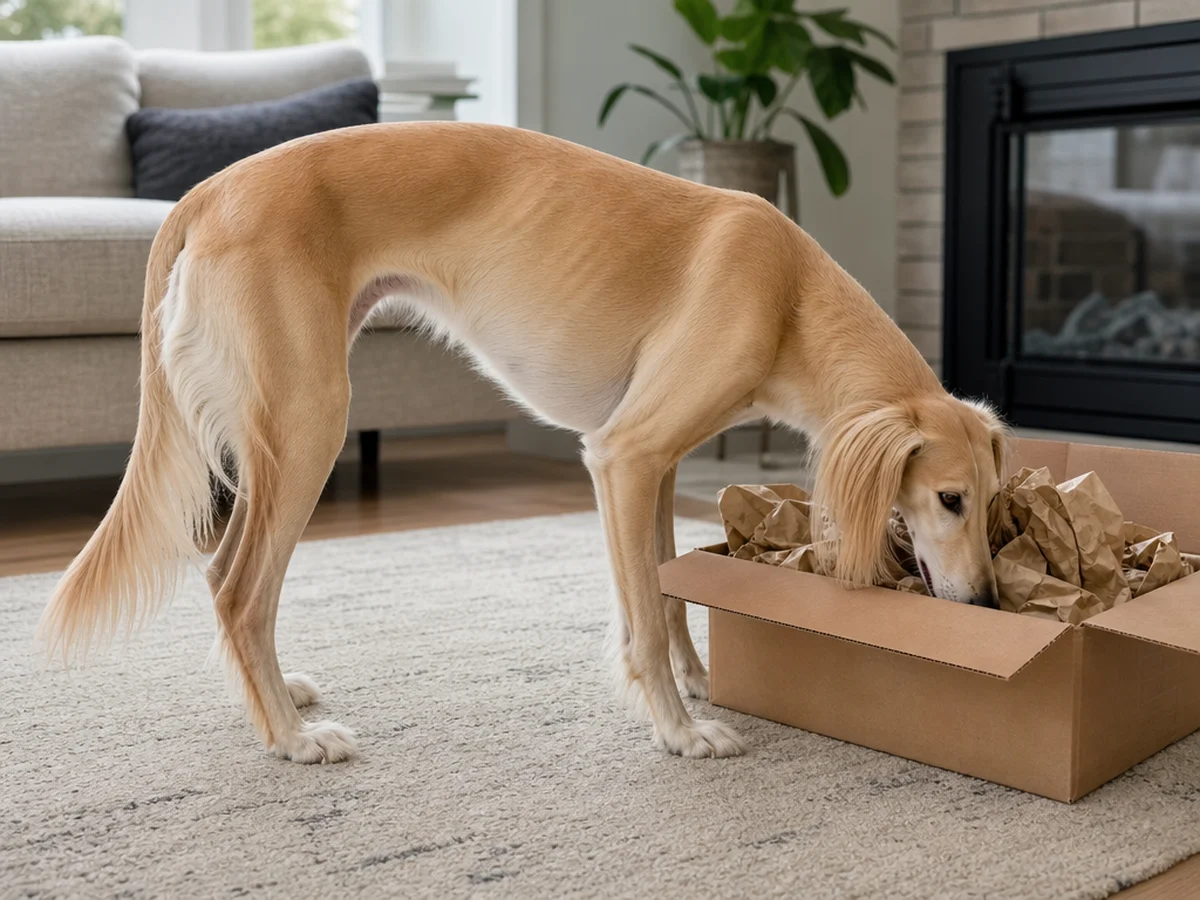
Once your Saluki is searching boxes happily, the same nose can work for dinner. A muffin tin with a little kibble in several cups and a tennis ball sitting on top of each one turns a meal into a puzzle, and a paper towel roll with both ends folded shut does the same job with even less equipment.
Moving Up to the Nested Box
Save the nested box for a day when the muffin tin has gotten too easy. Put the treat in the smallest box, fold the flaps, and let your Saluki work through the layers.
Keeping Household Puzzles Safe
Puzzles like these can stand in for a food bowl, and puzzles from household items work best when you start with an easy version, build up over time and stay ready to help your dog figure it out at first. Peel any tape and plastic labels off cardboard before the game begins, since those are not meant to be eaten.
Setting Up Indoor Searches Safely
A puzzle that works a Saluki's nose can also end up in their mouth, so the room needs a little planning before each game. Three habits cover most of it.
- Plan on closely and actively supervising every session with household items.
- If your Saluki tries to swallow a piece of cardboard, take it out of their mouth right away.
- When the game ends, gather every box, tube and stray treat before the dog gets the run of the room again.
Think about who else is in the room, too. A hound who is always ready to chase will notice anything that scurries, so cats, rabbits and other small animals belong behind a closed door while a game runs, and our guide to Saluki and small pets explains how to keep them apart. Regular vet visits are the right place to raise any worry about chewing or swallowing things around the house.
Details That Make Indoor Games Easier
Three details are left, and each is about what you do during a game rather than what you set out beforehand: your own voice, how much a dog has to find and whether a young puppy can join in.
Should I praise or pet during a search?
Keep your hands and voice quiet while the nose is working, because patting or chatting pulls a Saluki's attention off the floor. Praise calmly once they start to eat, and save any petting for after the round.
Does my Saluki have to find every treat?
No. A search that ends with a few boxes unopened is still a good one, and your Saluki can rest, drink and walk away whenever they choose. Collect whatever is left yourself once the game is over.
Can a Saluki puppy join in?
Yes, with supervision. The toss and open-box stages suit a young dog, since a Saluki puppy thrives on physical and mental exercise, but puppies chew, so keep the cardboard in sight and swap it for a safe toy if it starts to disappear. Our Saluki puppy chewing toys guide covers what to offer instead.
A Saluki Looks Down and the Room Gets Quiet
For a hound who spends the day watching the far end of every street, a nose game is a change of scenery that never leaves the room. The head comes down, the world shrinks to a few feet of floor, and the scanning that keeps a Saluki restless on the sofa gives way to the slow, absorbed work of sorting one smell from another.
That change of focus matters more than which game you reach for. Rainy days will come again, and a few boxes, a muffin tin and a word your Saluki already loves are all it takes to make one of them a good day. When the boxes are back in the recycling bin, our free Saluki e-book makes a good next read: it covers every other need your hound has, fully explained but in everyday words, and a copy is yours once you register an email with us here.
 Training basicsAre Salukis Easy to Train? Smart or Stubborn
 BehaviorHow to Fix Saluki Separation Anxiety
 Puppy trainingSaluki Training Timeline: Stage by Stage
